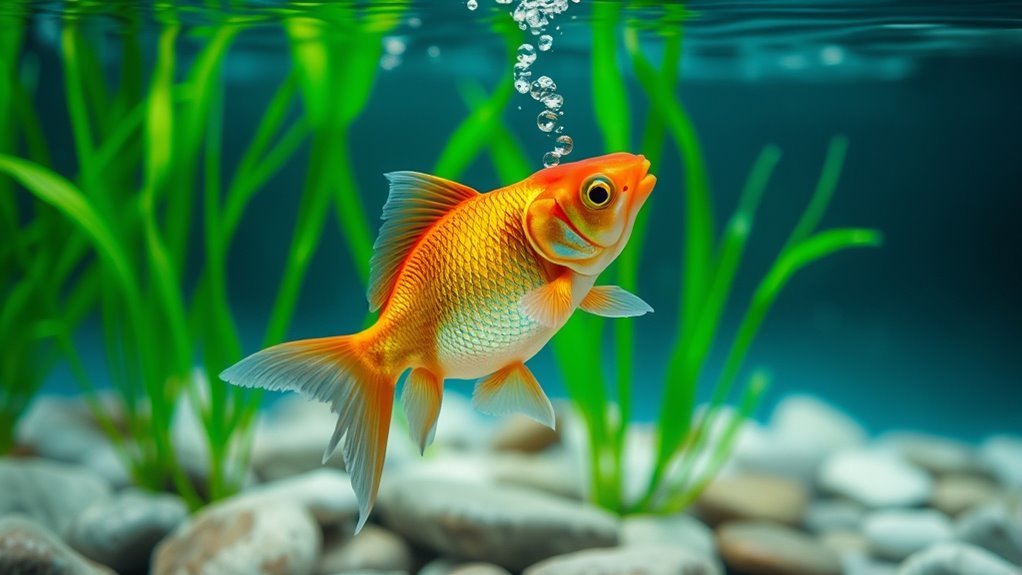
Why Is My Goldfish Swimming Sideways and How to Fix It
Your goldfish is swimming sideways likely due to a swim bladder disorder, a common issue in goldfish health. This condition is often caused by factors such as overfeeding, constipation, or poor water quality.
You can help by fasting your fish for a day or two and feeding cooked peas to relieve bloating. Keeping the tank clean with stable temperatures around 75°F is also important.
Monitoring water parameters and avoiding overcrowding can prevent future problems. If you want to understand more about symptoms, treatments, and prevention, there’s plenty to explore.
Understanding Swim Bladder Disorder in Goldfish
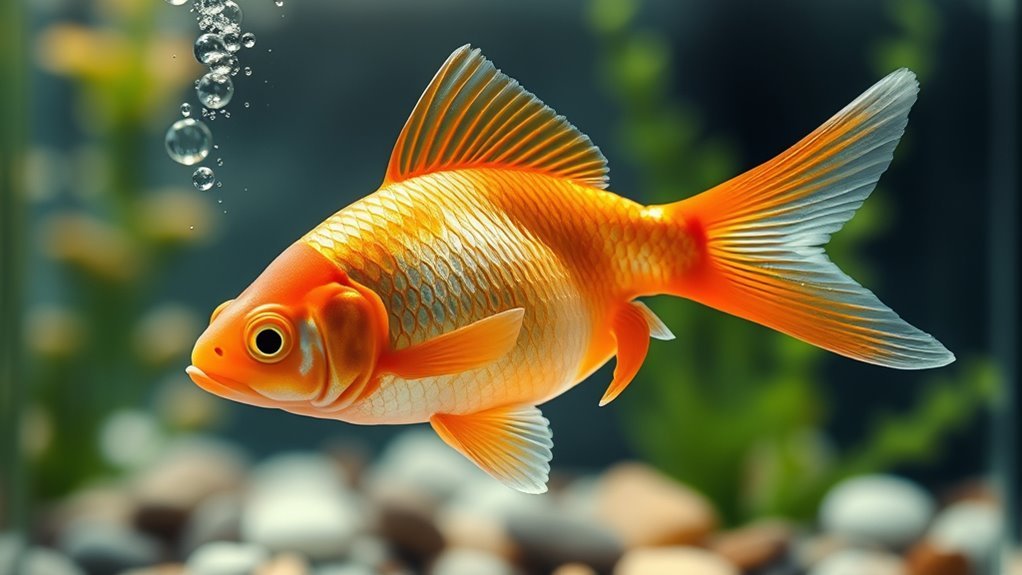
Although it might seem alarming at first, understanding swim bladder disorder in goldfish can help you address the issue quickly. This condition affects your goldfish’s swim bladder, an internal organ that controls buoyancy, making it hard for your fish to swim upright.
When the swim bladder malfunctions, your goldfish may tilt, float upside down, or swim sideways. You’ll notice unusual swimming patterns that don’t match their normal behavior.
It’s important to know that swim bladder disorder isn’t a disease itself but a symptom caused by various factors. Recognizing these signs early allows you to take prompt steps to improve your goldfish’s environment and health, helping them regain proper balance and swim normally again.
Common Causes of Sideways Swimming
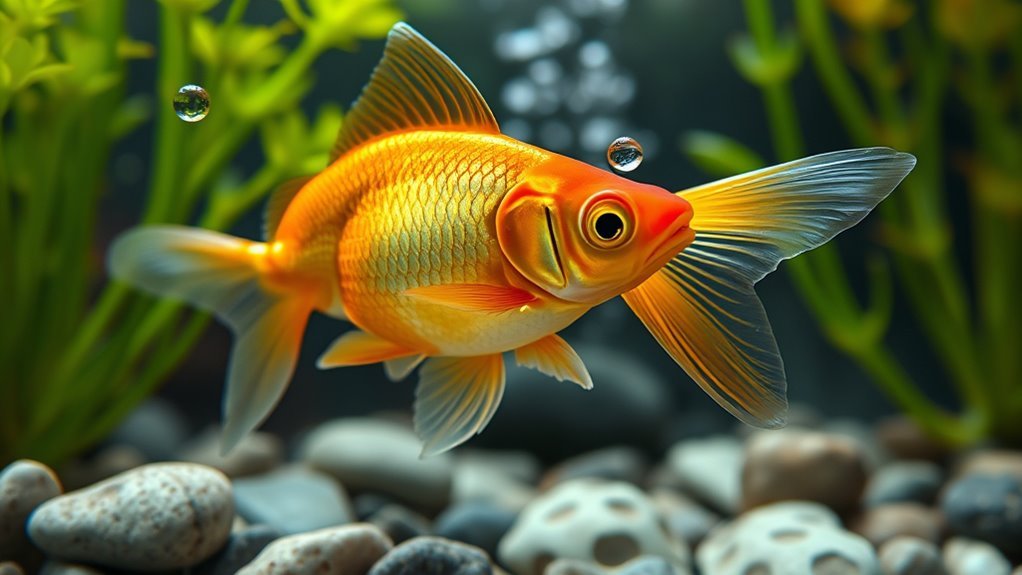
When your goldfish starts swimming sideways, several common causes could be at play, ranging from diet issues to bacterial infections. Overfeeding or feeding low-quality food can cause constipation, which puts pressure on the swim bladder, making your fish lose balance.
Poor water quality stresses your goldfish, weakening its immune system and increasing the risk of swim bladder problems. Sudden temperature changes can shock your fish, affecting its buoyancy.
Physical injury, such as a bump or rough handling, may also damage the swim bladder or internal organs.
Finally, bacterial or parasitic infections can inflame or damage internal tissues, leading to disorientation.
Identifying Symptoms Beyond Sideways Swimming
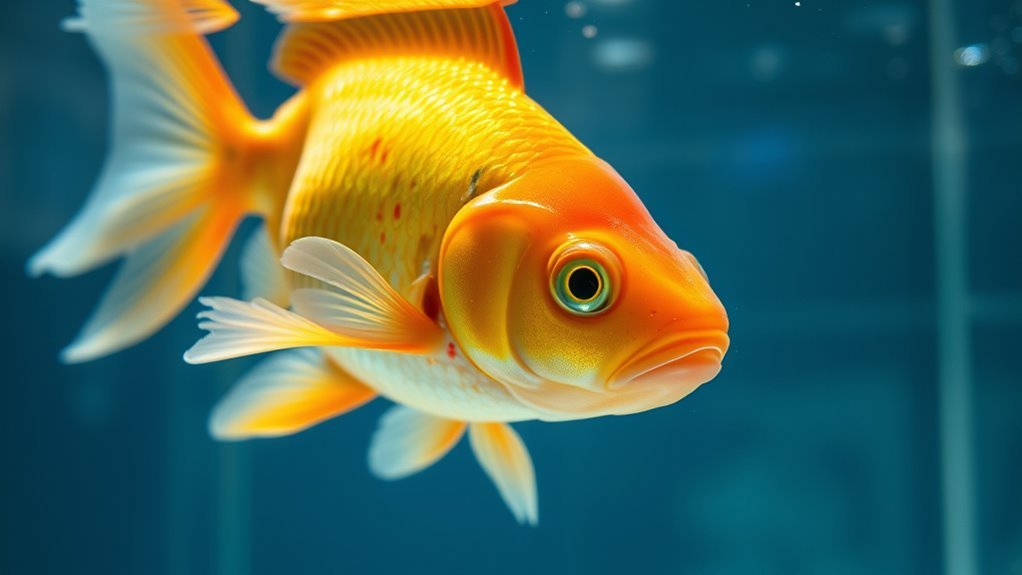
If your goldfish is swimming sideways, you should watch closely for other signs that could indicate a deeper problem. Look for changes in appetite. If your fish is eating less or not at all, that’s a red flag.
A sideways swimming goldfish with reduced appetite may be signaling a serious health issue.
Notice any unusual spots, discoloration, or swelling on its body or fins. Pay attention to breathing patterns. Rapid gill movement or gasping at the surface suggests distress.
Also, observe its overall activity level. Lethargy or erratic swimming besides sideways movement can signal illness. Check if your goldfish is spending more time resting at the bottom or floating near the surface.
Identifying these additional symptoms early helps you address underlying health issues before they worsen, keeping your goldfish happy and healthy.
How Diet Affects Your Goldfish’s Buoyancy
Because your goldfish’s diet directly impacts its buoyancy, understanding what and how you feed it is essential. Overfeeding or feeding inappropriate foods can cause swim bladder problems, making your goldfish swim sideways.
Foods that swell in the stomach, like dry flakes or pellets, may create pressure, disrupting balance. On the other hand, a fiber-rich diet helps digestion and buoyancy.
| Food Type | Effect on Buoyancy | Emotional Impact |
|---|---|---|
| Dry Flakes | May cause bloating | Worry over discomfort |
| Vegetables (peas) | Aid digestion | Relief and hope |
| Overfeeding | Leads to swim issues | Frustration & guilt |
| Balanced Diet | Maintains normal buoyancy | Peace of mind |
Feed thoughtfully to keep your goldfish swimming right-side up and healthy.
Steps to Diagnose Swim Bladder Issues at Home
Although swim bladder issues can seem alarming, you can quickly assess your goldfish’s condition at home with a few simple steps.
First, observe your fish’s swimming pattern. A goldfish struggling to stay upright or floating sideways often signals swim bladder problems.
Next, check for any physical abnormalities like bloating or unusual bulges in the abdomen.
Monitor your fish’s appetite; reduced or absent eating can indicate distress.
Also, consider any recent changes in diet or water conditions that might contribute to the issue.
Finally, test your aquarium’s water quality for parameters like ammonia, nitrites, and pH, as poor water can worsen swim bladder symptoms.
Treatment Options for Swim Bladder Problems
Once you’ve identified signs of swim bladder issues and checked your goldfish’s environment, it’s time to explore treatment options. You can help your goldfish recover with some simple steps that address the root causes of the problem.
Fast your goldfish for 24-48 hours to let its digestive system rest.
Feed peeled, cooked peas to relieve constipation, which often affects the swim bladder.
Maintain water quality by performing regular partial water changes.
Adjust water temperature to around 75°F (24°C) to boost metabolism.
Isolate your goldfish if necessary, to reduce stress and monitor progress closely.
These treatments usually improve your goldfish’s buoyancy and swimming behavior within a few days. If symptoms persist, consider consulting a vet experienced with fish.
Preventative Measures to Keep Your Goldfish Healthy
To keep your goldfish swimming smoothly and avoid swim bladder problems, you need to focus on preventative care. Start by maintaining clean water with regular changes and proper filtration. Test water parameters often to keep ammonia, nitrite, and nitrate levels in check.
Feed your goldfish a balanced diet rich in fiber and avoid overfeeding, which can cause constipation and buoyancy issues. Provide a varied diet including high-quality pellets, vegetables, and occasional treats.
Ensure your tank is adequately sized and not overcrowded to reduce stress and promote natural swimming. Monitor your goldfish daily for any signs of illness or abnormal behavior, and act quickly if you notice problems.
When to Seek Professional Help for Your Goldfish
If your goldfish shows persistent signs of distress, such as swimming sideways despite your care efforts, it’s time to consult a professional. A vet specializing in fish can diagnose underlying issues like swim bladder disease or infections that you might miss.
Don’t delay if you notice these warning signs:
Act promptly if you observe warning signs to ensure your goldfish receives the care it needs.
- Continuous sideways swimming lasting more than 24 hours
- Loss of appetite or lethargy
- Visible physical abnormalities like bloating or discoloration
- Difficulty breathing or gasping at the surface
- Sudden changes in behavior or unexplained weight loss
Seeking professional help early can prevent worsening conditions and improve your goldfish’s chances of recovery. Remember, timely intervention is key to keeping your pet healthy and happy.
Frequently Asked Questions
Can Goldfish Swim Sideways Due to Water Temperature Changes?
Yes, your goldfish can swim sideways if the water temperature changes suddenly. Rapid shifts stress their swim bladder, causing balance issues.
Keep the temperature stable and adjust gradually to help your fish swim normally again.
Does Tank Size Impact a Goldfish’s Swimming Behavior?
Yes, tank size impacts your goldfish’s swimming behavior. Studies show goldfish need at least 20 gallons each; cramped spaces stress them, causing erratic swimming.
Are Certain Goldfish Breeds More Prone to Swimming Sideways?
Yes, fancy goldfish breeds like Orandas and Ryukins are more prone to swimming sideways because of their body shape and swim bladder issues.
You’ll want to monitor them closely and adjust their diet and environment to help.
Can Stress Cause a Goldfish to Swim Sideways Temporarily?
You might think sideways swimming means permanent damage, but stress can cause your goldfish to swim sideways temporarily.
When stressed by sudden changes or overcrowding, they struggle to balance, but calming their environment helps them recover quickly.
Is Sideways Swimming Contagious Among Goldfish in the Same Tank?
No, sideways swimming itself isn’t contagious, but if it’s caused by an infection or parasite, that can spread.
You should isolate affected fish, maintain clean water, and monitor all goldfish closely to prevent illness.
Conclusion
Seeing your goldfish swim sideways is like watching a ship struggle against a hidden storm. It signals an internal imbalance, often linked to swim bladder issues that you can address with care and attention.
By adjusting diet, monitoring symptoms, and following simple treatments, you help your fish regain its graceful dance in the water.
Remember, your attentive hands are the lighthouse guiding your goldfish back to calm, steady seas. Understanding why your goldfish is swimming sideways is the first step toward effective care and recovery.