Do You Need to Know How to Swim to Snorkel?
You don’t need to be a strong swimmer to snorkel safely. With the right snorkeling gear like a life vest, mask, snorkel, and fins, you can enjoy snorkeling, especially in shallow, calm waters. Knowing the basics of how to snorkel confidently makes a big difference.
Staying relaxed, using flotation devices, and snorkeling with a buddy or guide keeps you safe. Basic water confidence helps, too. If you want to explore how to build skills, choose safe spots, and use the best equipment, there’s more helpful info ahead.
Understanding the Basics of Snorkeling
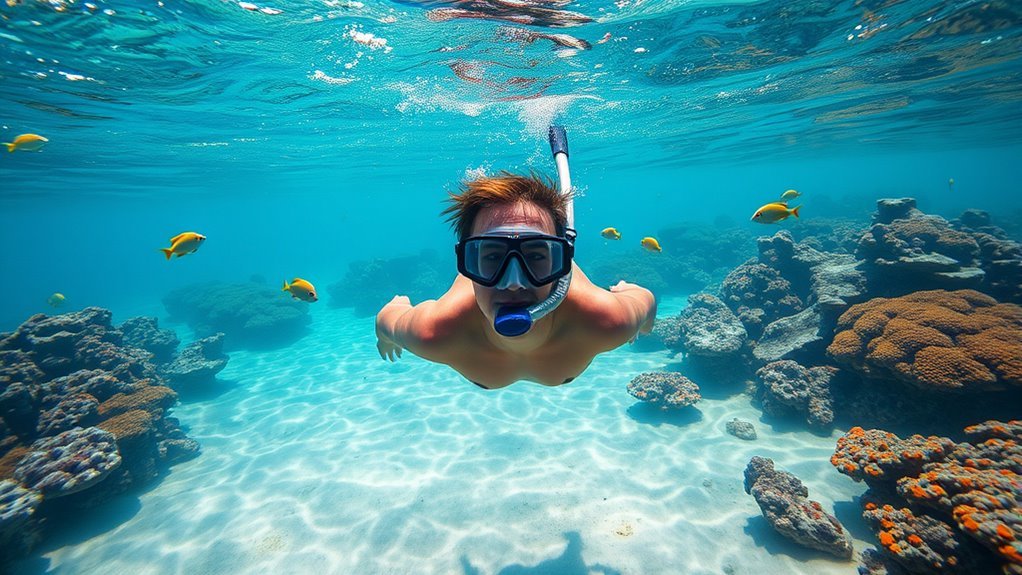
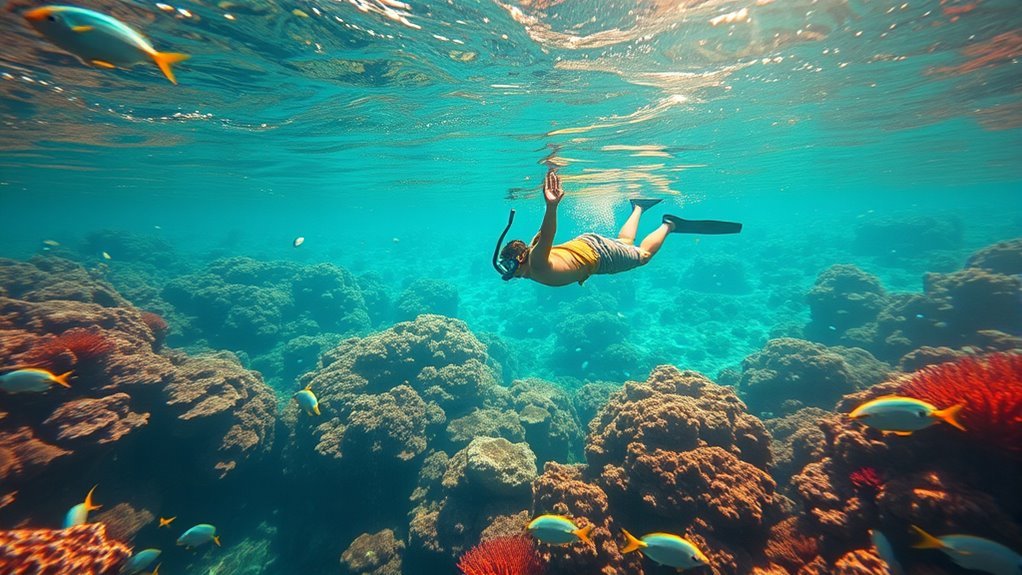
Before you plunge in, understanding the basics of snorkeling will help you feel more confident and safe. Snorkeling involves floating on the water’s surface while breathing through a snorkel tube.
You’ll wear a mask to see clearly underwater and fins to help you move efficiently. It’s important to learn how to clear your mask if water seeps in and how to blow water out of your snorkel.
You’ll also want to practice breathing calmly and evenly through the snorkel to avoid panic. Remember to stay relaxed and float on your stomach, keeping your face in the water.
Knowing these basics guarantees you enjoy your time exploring underwater without unnecessary stress or risk.
Swimming Skills That Enhance Snorkeling Experience
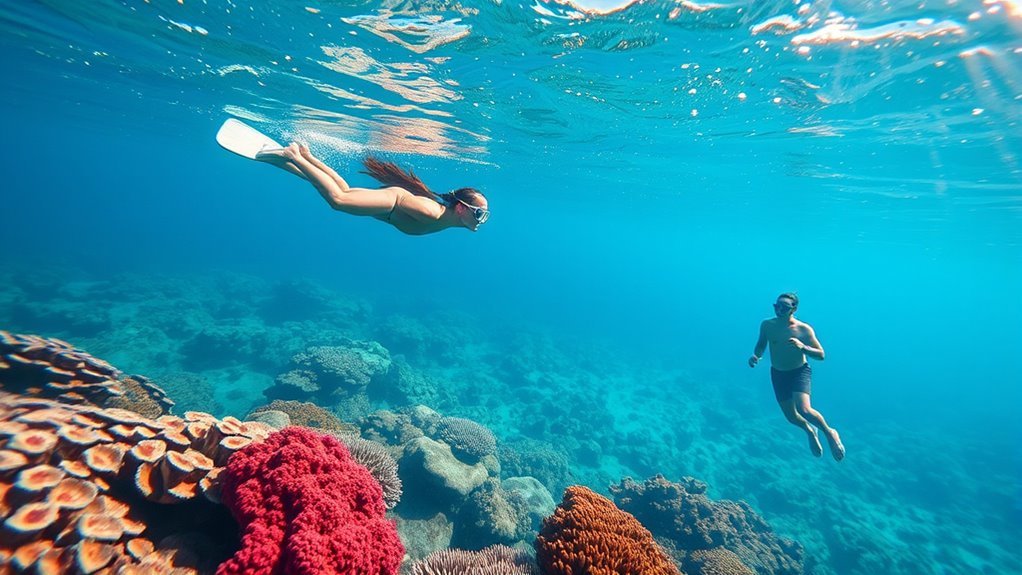
Although you don’t need to be an expert swimmer to snorkel, having basic swimming skills can considerably improve your comfort and control in the water. Being able to float effortlessly helps conserve energy, letting you focus on exploring underwater life.
Knowing how to tread water keeps you stable when you pause to observe marine creatures. Simple skills like gentle flutter kicks propel you smoothly without disturbing the environment.
Mastering tread water and gentle flutter kicks ensures stability and smooth movement while observing marine life.
You’ll also benefit from practicing breath control and relaxation techniques to stay calm and steady.
These abilities make steering currents easier and enhance your overall experience. By building your swimming confidence, you reduce anxiety and increase safety, allowing you to enjoy snorkeling with greater ease and freedom.
Safety Gear and Equipment for Non-Swimmers
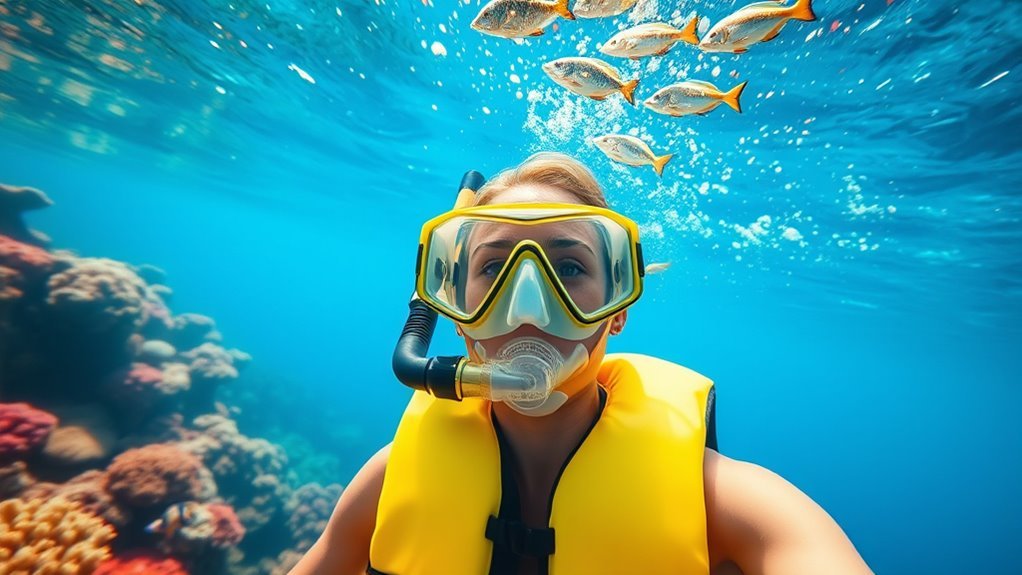
When you’re new to swimming, choosing the right safety gear can make snorkeling much more enjoyable and secure. Wearing a life vest, for example, helps keep you afloat effortlessly, so you can focus on exploring underwater without worry.
A well-fitted mask and snorkel ensure clear vision and easy breathing, preventing panic. Fins aid in smooth movement, conserving energy.
Here’s a quick guide to essential gear for non-swimmers:
| Gear | Purpose |
|---|---|
| Life Vest | Provides buoyancy and safety |
| Snorkel Mask | Enables clear underwater vision |
| Snorkel Tube | Allows breathing without lifting head |
| Fins | Helps with efficient swimming |
This gear supports your comfort and confidence, making snorkeling accessible even if you’re not a strong swimmer.
How to Stay Safe While Snorkeling Without Swimming Skills
Wearing the right gear gives you a solid foundation, but staying safe while snorkeling without swimming skills also means following smart practices.
First, always snorkel with a buddy or under professional supervision. Never go alone. This ensures help is nearby if you need it.
Second, choose calm, shallow waters where you can stand if necessary. Avoid strong currents or waves that could overwhelm you.
Third, use a flotation device like a life vest or snorkeling buoy to keep you afloat effortlessly. This reduces fatigue and increases confidence.
By sticking to these precautions, you’ll minimize risks and enjoy your underwater adventure safely, even if swimming isn’t your strong suit.
Safety comes from preparation and awareness, so stay alert and respect your limits.
Tips for Building Confidence in the Water
If you want to enjoy snorkeling without fear, building confidence in the water is essential. Start by spending time in shallow pools or calm water, gradually getting comfortable with your face submerged.
Practice breathing through your snorkel while holding onto the edge or using a flotation device. Familiarize yourself with putting on and adjusting your mask and snorkel to prevent leaks and discomfort.
Take slow, controlled breaths and stay relaxed to avoid panic. You can also try floating on your back to get used to buoyancy.
Consider taking a beginner’s water confidence or snorkeling course to learn proper techniques and gain reassurance.
Choosing the Right Snorkeling Spots for Beginners
Although snorkeling can be enjoyable almost anywhere, selecting the right spot is essential for beginners to feel safe and comfortable. You’ll want calm waters with minimal currents, clear visibility, and abundant marine life to keep your experience engaging without overwhelming you.
Here are three ideal features to look for:
- Shallow Bays or Lagoons These areas offer gentle waves and easy access, making it simpler to stay afloat and explore.
- Protected Marine Parks They often have calm waters, abundant fish, and coral reefs close to shore.
- Warm Water Locations Warmer temperatures make the water more inviting and reduce the risk of cramps or fatigue.
Professional Guidance and Lessons for Non-Swimmers
Since snorkeling requires basic water skills, non-swimmers can greatly benefit from professional guidance and lessons before heading out. A qualified instructor will teach you essential techniques like breathing through a snorkel, floating, and clearing your mask. These lessons build your confidence in the water and improve your safety.
Professionals also help you understand how to use flotation devices effectively, which is vital if you’re not comfortable swimming.
Plus, they provide personalized tips based on your comfort level and skills. Taking lessons reduces anxiety and prepares you for real snorkeling conditions.
Frequently Asked Questions
Can Snorkeling Be Done in Freshwater Lakes?
Yes, you can snorkel in freshwater lakes. Just make sure the water is clear and safe. You’ll enjoy exploring underwater life, but always be cautious of currents, temperature, and local wildlife to stay safe and comfortable.
What Is the Best Time of Day to Snorkel?
Imagine the ocean as a sleeping giant waking gently; the best time to snorkel is early morning when waters are calm and clear.
You’ll see vibrant life before the sun’s heat stirs the waves and crowds arrive.
How Do You Prevent Mask Fogging While Snorkeling?
You can prevent mask fogging by applying a defogging solution or using saliva on the inside of the mask lens. Rinse it gently before snorkeling.
Avoid touching the inside to keep it clear and enjoy better visibility.
Are There Special Snorkeling Techniques for Cold Water?
Yes, you’ll want to use slow, controlled breathing and stay relaxed in cold water. Wearing a wetsuit helps maintain warmth, and you should avoid hyperventilating to prevent cold shock.
Always monitor your body’s response carefully.
What Marine Life Is Commonly Seen While Snorkeling?
Imagine dancing with colorful fish and graceful sea turtles—while snorkeling, you’ll often see vibrant coral reefs, playful clownfish, curious rays, and even gentle sharks.
You’ll be amazed how close marine life lets you get underwater.
Conclusion
You don’t need to be an expert swimmer to snorkel, but feeling comfortable in the water helps you float like a leaf on a calm sea. With the right gear and a bit of confidence, you can glide alongside colorful fish and swaying coral.
Picture yourself breathing easy, the sun warming your back, as professional guidance keeps you safe. Embrace the adventure—your underwater world awaits, even if swimming isn’t your strongest skill yet.
In conclusion, while knowing how to swim can enhance your experience, it’s not a requirement to enjoy snorkeling. With proper preparation and a focus on water comfort, anyone can explore the vibrant marine life and enjoy the unique thrills of snorkeling.