How Do You Snorkel If You Don’t Know How to Swim?
If you don’t know how to swim, you can still snorkel safely by wearing a snug life vest for buoyancy and choosing calm, shallow waters. Using a well-fitting mask and snorkel helps you breathe comfortably and enjoy the underwater world. Practice slow, steady breaths while face down in the water to get used to the sensation.
Always snorkel with a buddy for extra safety and start near the shore to build confidence. Remember to keep these basics in mind, and you’ll be ready to explore underwater with ease and assurance.
Essential Safety Gear for Non-Swimmers
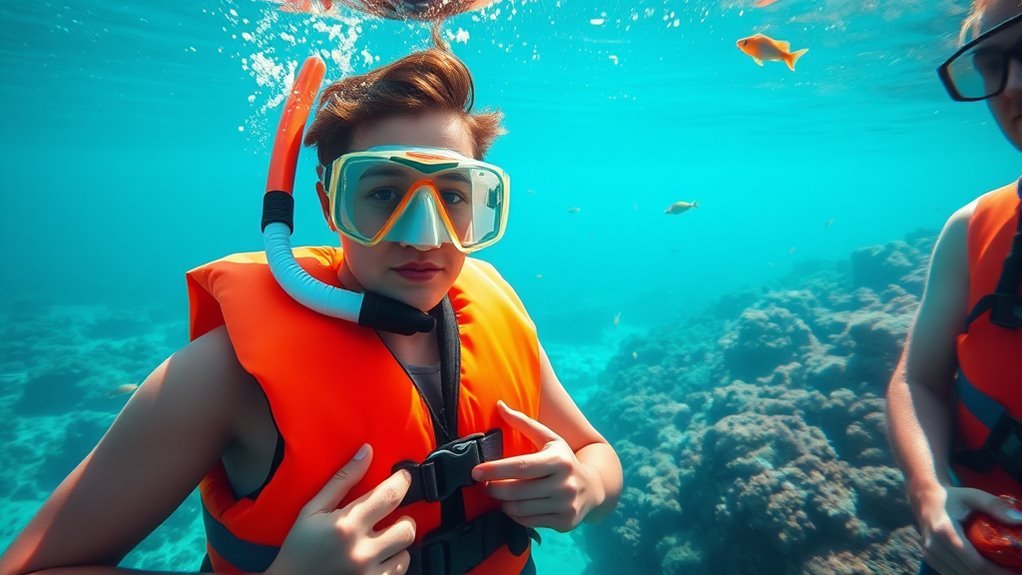
Although you mightn’t be a strong swimmer, having the right safety gear can make snorkeling both safe and enjoyable. Start with a high-quality life vest or snorkeling vest. It keeps you afloat effortlessly, so you won’t worry about treading water.
Choose a mask that fits snugly without leaking to ensure clear vision underwater. Don’t forget a snorkel with a splash guard to prevent water from entering your breathing tube. Fins help you move smoothly, reducing exhaustion.
Consider a safety whistle in case you need to signal for help. Finally, use a brightly colored swim cap or vest to stay visible to others. With this gear, you’ll feel confident exploring underwater without strong swimming skills.
Choosing the Right Snorkeling Location
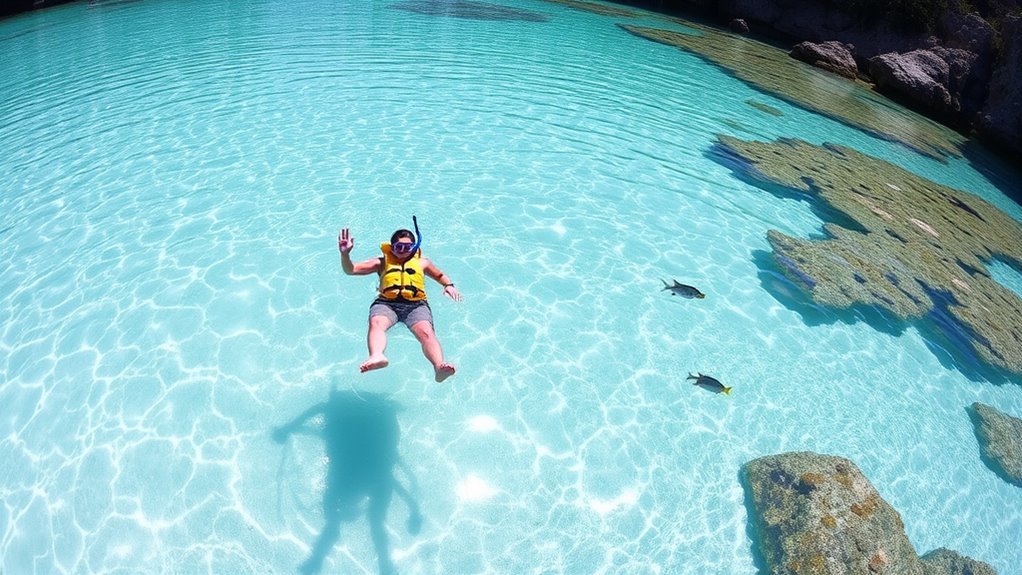
When picking a snorkeling spot, you want calm, shallow waters that make it easy to float and see beneath the surface. Look for sheltered bays or lagoons with gentle currents, as these conditions reduce the risk of being pushed around.
Choose calm, shallow waters like sheltered bays or lagoons for easy floating and clear underwater views.
Avoid open ocean areas with strong waves or tides, especially since you’re not a confident swimmer. Choose locations known for clear water and abundant marine life to keep your experience enjoyable and distraction-free.
Beaches with sandy bottoms are preferable over rocky or coral-filled areas, minimizing the chance of injury if you touch the seabed.
Also, consider spots with nearby lifeguards or guided tours for extra safety.
Prioritize comfort and safety when selecting your snorkeling site to build confidence and have fun exploring underwater.
Basic Breathing Techniques for Snorkeling
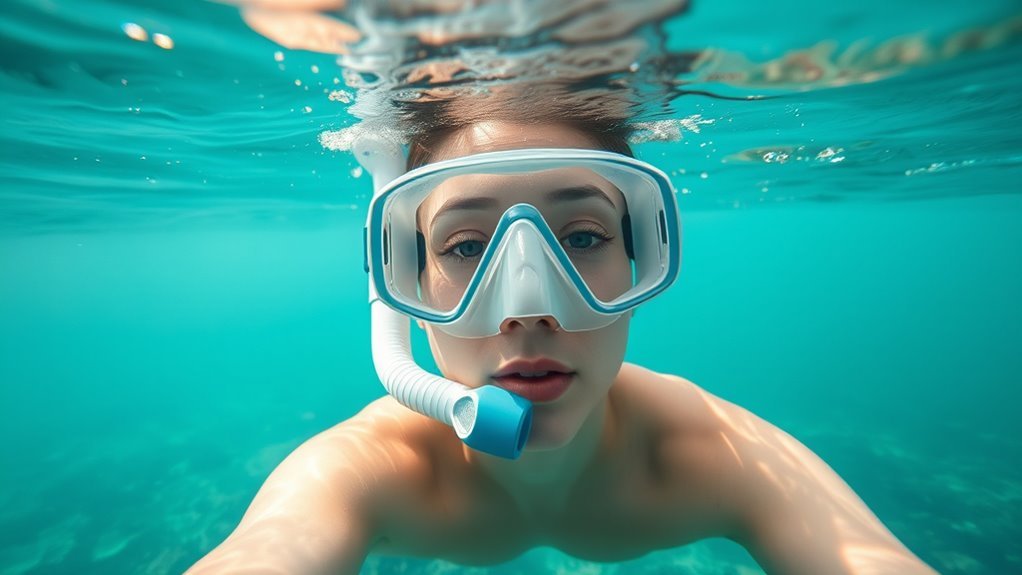
Selecting the right location sets the stage for a comfortable snorkeling experience, but mastering your breathing techniques will help you stay relaxed and focused underwater. Begin by practicing slow, deep breaths through your snorkel while standing or sitting comfortably.
Inhale steadily to fill your lungs without rushing, then exhale fully through the snorkel tube. This rhythm prevents panic and conserves energy.
When underwater, keep your mouth sealed around the snorkel mouthpiece and breathe naturally.
If water enters the snorkel, blow sharply to clear it before continuing. Focus on calm, controlled breaths to maintain buoyancy and reduce fatigue.
Using a Life Vest or Floatation Device
Since snorkeling doesn’t require strong swimming skills, using a life vest or flotation device can keep you safely buoyant and relaxed on the water’s surface. Choose a vest that fits snugly but allows freedom of movement.
The extra buoyancy helps you conserve energy and focus on observing underwater life without worrying about staying afloat. Make sure your vest is designed for snorkeling or water sports, as these provide better comfort and mobility.
Before entering the water, adjust all straps to ensure a secure fit and test the vest’s buoyancy in shallow water.
By relying on a flotation device, you can boost your confidence, reduce fatigue, and enjoy snorkeling even if you’re not a strong swimmer.
Safety and comfort come first, so don’t skip this essential gear.
Practicing in Shallow Water Before Going Deeper
Using a life vest gives you the confidence to stay afloat easily, making it ideal to start practicing your snorkeling skills in shallow water. Begin by standing or gently floating where you can touch the bottom, so you feel secure.
Focus on getting comfortable with your mask and snorkel. Breathe slowly and steadily through the snorkel tube. Practice clearing water from your snorkel by blowing out forcefully if needed.
Take time to adjust to the sensation of floating and looking underwater without panicking. As you gain confidence, try floating face down while keeping your body relaxed.
Shallow water lets you build these essential skills safely before moving to deeper areas, reducing anxiety and improving your control in the water.
Buddy Systems and Supervision While Snorkeling
Although snorkeling can feel relaxing, you should never go out alone. Having a buddy with you guarantees someone can assist if you face any challenges, especially since you’re not a confident swimmer.
Choose a partner who’s experienced and alert, so they can watch your safety and help guide you. If you’re snorkeling in an area with lifeguards or guides, make sure they know your skill level and keep an eye on you.
Always stay close to your buddy and agree on signals for communication underwater. This system reduces risks and boosts your confidence.
Tips for Building Confidence in the Water
Before you plunge into snorkeling, building your confidence in the water is key to enjoying the experience safely and comfortably. Start by familiarizing yourself with basic water comfort techniques in a controlled environment like a swimming pool.
Gradually progress to shallow waters where you can stand and get used to the feeling of water around you. Here are some tips to boost your confidence:
- Practice breathing through a snorkel while keeping your face in the water.
- Use a flotation device to support your body and ease any fear of sinking.
- Spend time floating and kicking gently to get a sense of movement.
- Take slow, deep breaths and stay relaxed to reduce anxiety.
With patience and practice, you’ll feel more at ease and ready to explore underwater.
Frequently Asked Questions
Can Snorkeling Help Me Learn to Swim Over Time?
Yes, snorkeling can help you get comfortable in the water and improve your breathing technique, which builds confidence.
Over time, with practice, you’ll naturally develop basic swimming skills, making it easier to learn to swim properly.
What Is the Best Age to Start Snorkeling if I Can’T Swim?
You can start snorkeling as young as 5 or 6, but it’s best when you’re comfortable in water. Always wear a life vest and snorkel in shallow, calm waters with supervision to stay safe and confident.
Starting in safe conditions helps build skills gradually. If you can’t swim, using a life vest is essential. It provides buoyancy and peace of mind while you explore underwater.
Are There Special Snorkel Masks Designed for Non-Swimmers?
Yes, there are special snorkel masks designed for non-swimmers that offer full-face coverage and built-in snorkels, making breathing easier.
You’ll find these masks provide better visibility and comfort, helping you stay safe and confident in the water.
How Do I Clear Water From My Snorkel Tube Safely?
About 70% of snorkelers encounter water in their tube. To clear it safely, blow forcefully through your snorkel, expelling water.
Keep your head above water initially, and practice this technique calmly to build confidence and skill.
Can Snorkeling Be Done in a Pool Instead of Open Water?
Yes, you can snorkel in a pool to practice skills safely. It’s a controlled environment, perfect for getting comfortable with your gear and breathing techniques before trying open water snorkeling.
Just stay cautious and relaxed.
Conclusion
Remember when you first learned to ride a bike with training wheels? Snorkeling without knowing how to swim is just like that—using safety gear like a life vest acts as your training wheels in the water.
With the right preparation, practice, and a buddy by your side, you’ll gain confidence and enjoy the underwater world safely.
So, take it step by step, and soon you’ll glide smoothly, just like riding that bike down a gentle hill. Snorkeling for beginners is all about building confidence and staying safe.