Do Swim Caps Keep Your Hair Dry and Effective?
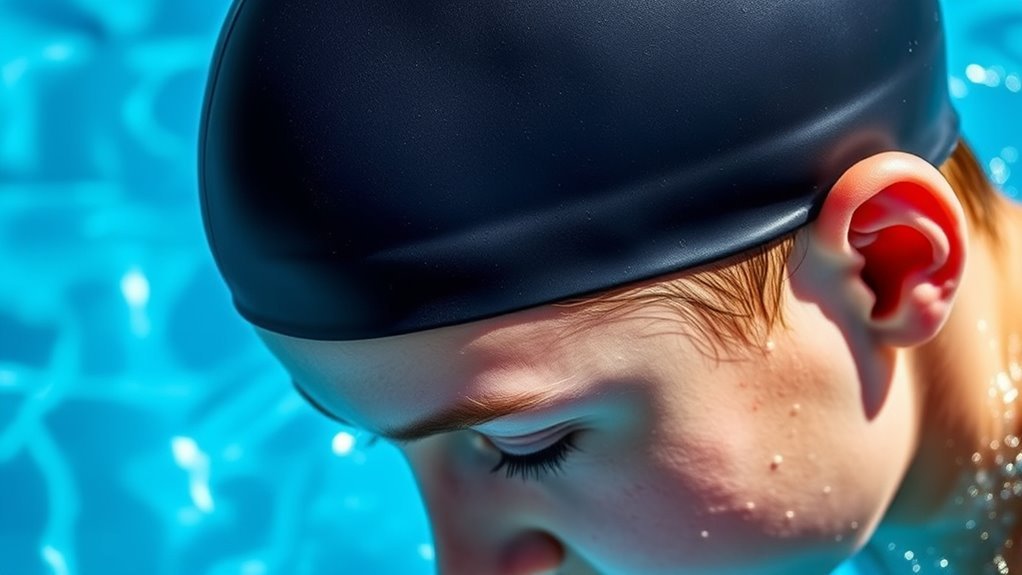
Swim caps are essential for protecting your hair while swimming, but they won’t keep your hair completely dry. They do, however, significantly reduce water exposure and help shield your hair from chlorine damage.
Choosing a snug, high-quality silicone cap creates a strong barrier that limits moisture and chemical contact. The fit and material are crucial because water can still seep in around the edges.
Wearing a swim cap helps maintain your hair’s natural oils and overall health during swimming. Keep exploring to find tips on maximizing their protective benefits and keeping your hair healthy in the pool.
How Swim Caps Are Designed to Function
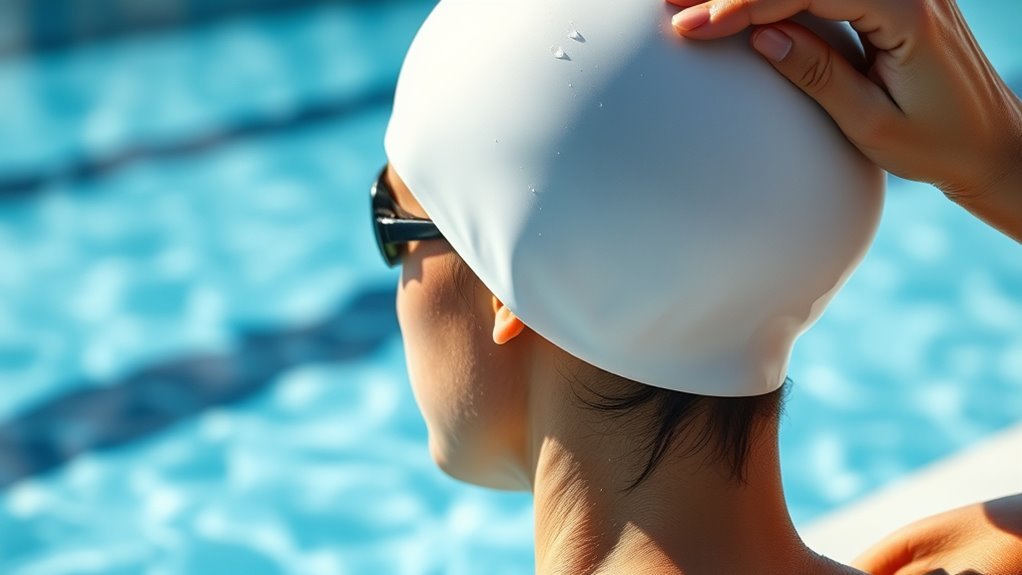
Although swim caps might seem simple, they’re carefully designed to protect your hair by creating a snug barrier against water. When you put one on, it fits tightly around your head, minimizing gaps where water can seep in.
The cap covers your hair completely, shielding it from direct contact with pool chemicals and moisture.
You’ll notice that the design contours closely to your head’s shape, reducing drag and helping keep the cap in place during your swim.
The elastic edge ensures a secure fit without being too tight, so you stay comfortable.
While the cap isn’t foolproof in keeping your hair dry, it considerably limits water exposure, which helps maintain your hair’s natural oils and prevents excessive dryness.
Materials Used in Swim Caps and Their Water Resistance
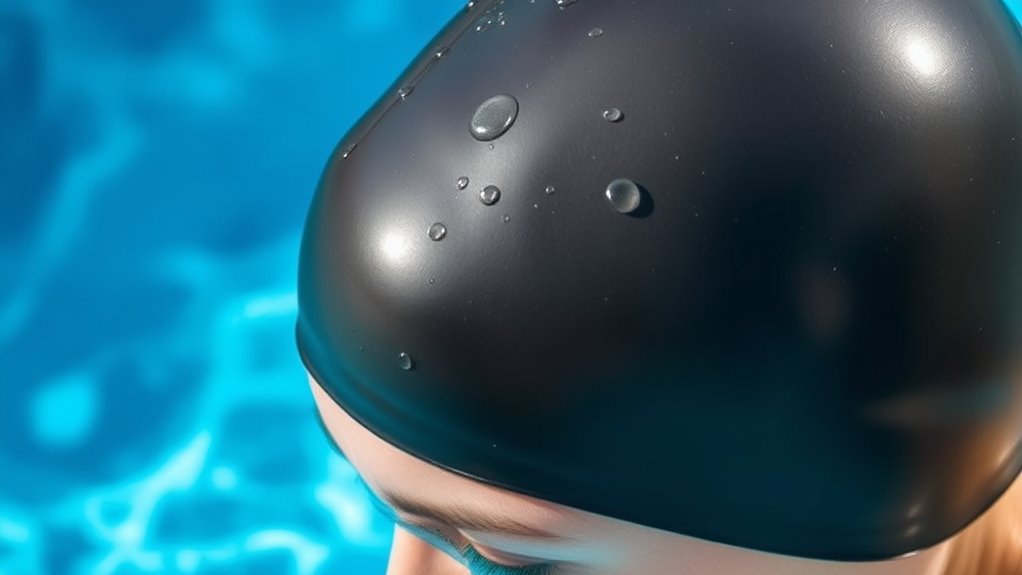
The effectiveness of a swim cap in keeping your hair dry largely depends on the materials it’s made from. Silicone caps offer excellent water resistance because they form a tight seal around your head, preventing water from seeping in. They’re durable, stretchy, and gentle on your hair.
Latex caps, while thinner and less expensive, provide a decent barrier but might allow some water through due to their thinner construction. Lycra or fabric caps, although comfortable and breathable, don’t keep water out effectively. They’re more for reducing drag than dryness.
When choosing a cap, consider how much water resistance you need: silicone is your best bet for dryness, latex is a budget-friendly alternative, and fabric is best for casual swimming without dryness concerns.
The Science Behind Hair Protection in Swimming
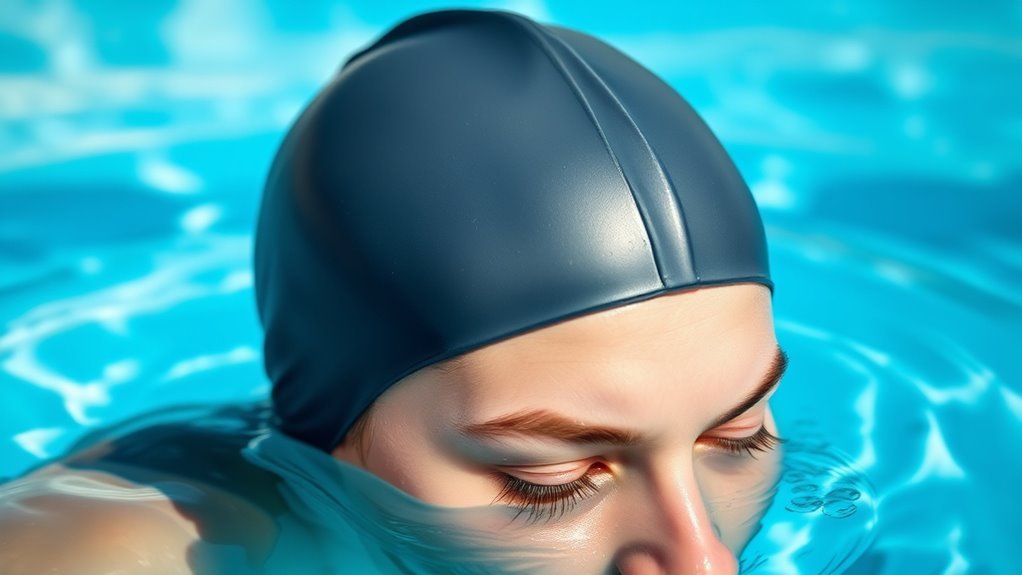
When you swim, water and chlorine can strip your hair of natural oils, leaving it dry and brittle. Wearing a swim cap creates a physical barrier that reduces direct exposure to these elements. This barrier slows water absorption and limits chlorine contact, preserving your hair’s moisture and strength.
However, no cap is completely waterproof, so some water will always seep in.
| Factor | Effect on Hair Protection |
|---|---|
| Material Type | Determines water resistance level |
| Cap Fit | Tighter fit reduces water entry |
| Duration of Swim | Longer exposure increases damage |
| Hair Condition | Healthier hair resists damage better |
Understanding these factors helps you choose and use swim caps more effectively to protect your hair.
Common Misconceptions About Keeping Hair Dry
Even if you wear a swim cap, you might think your hair will stay completely dry, but that’s rarely the case. Many believe swim caps create a perfect seal, keeping water out entirely.
In reality, most caps fit snugly but don’t fully prevent water from seeping in around the edges. You might also assume thicker silicone caps guarantee dryness, but thickness mainly affects durability and comfort, not waterproofing.
Another common misconception is that layering a cap over wet hair keeps it dry; however, water trapped inside still soaks your strands. Some swimmers think that any swim cap works equally well, but fit and material quality vary widely.
Understanding these myths helps you set realistic expectations and choose the right approach to protect your hair during swims.
Factors Affecting the Effectiveness of Swim Caps
Understanding why swim caps don’t keep your hair completely dry involves looking at several key factors. First, the fit of the cap is essential. If it’s too loose, water can easily seep in around the edges.
Second, the material matters because some fabrics aren’t fully waterproof, allowing moisture to penetrate.
Third, the way you put on the cap affects its seal; improper placement can create gaps.
Also, hair type and volume play a role. Thicker or longer hair makes it harder to achieve a snug fit.
Finally, swimming style and movement can cause water to push under the cap.
Comparing Silicone, Latex, and Lycra Swim Caps
Although all swim caps aim to protect your hair and improve swimming performance, silicone, latex, and lycra caps each offer distinct benefits and drawbacks. You’ll want to choose based on comfort, durability, and water resistance.
- Silicone: Durable, stretchy, and provides a tight seal, keeping water out better.
- Latex: Lightweight and snug but less durable and can cause allergies.
- Lycra: Comfortable and breathable but doesn’t keep hair dry since it’s porous.
- Ease of Use: Silicone and latex can be tricky to put on without pulling hair.
- Price: Lycra is usually cheapest; silicone tends to be pricier but lasts longer.
Consider these factors to pick a swim cap that fits your needs and keeps your hair as dry as possible.
Tips for Maximizing Hair Protection During Swimming
To keep your hair healthy while swimming, you’ll want to take several proactive steps beyond just choosing the right swim cap. First, wet your hair with clean water before entering the pool; this reduces chlorine absorption. Apply a leave-in conditioner or hair oil to create a protective barrier.
Make sure your swim cap fits snugly to minimize water exposure, and consider double-capping if you swim frequently. After swimming, rinse your hair immediately with fresh water to wash out any chemicals.
Use a gentle shampoo and conditioner designed for swimmers to restore moisture. Avoid heat styling right after swimming to prevent further dryness.
Alternatives to Swim Caps for Hair Care in the Pool
While swim caps offer solid protection, they’re not the only way to shield your hair from pool damage. If you’re looking for alternatives, consider these practical options to keep your hair healthier:
Pre-wet your hair with fresh water to reduce chlorine absorption.
Apply leave-in conditioner or oil to create a protective barrier.
Wear a waterproof headband to cover your hairline and absorb water.
Use a swim-specific hair mask regularly to repair and strengthen strands.
Rinse your hair immediately after swimming to wash out chemicals.
These methods can complement or replace swim caps, helping you maintain hair softness and minimize dryness without the hassle of a full cap.
Try combining a few to find what works best for your hair type and swimming routine.
Realistic Expectations When Using Swim Caps
Even if you wear a swim cap consistently, you shouldn’t expect it to completely prevent hair dryness or damage. Swim caps create a barrier that reduces water exposure but rarely seal out water entirely.
Chlorine and saltwater can still seep in, especially around the edges. Additionally, caps don’t shield your hair from friction or the drying effects of pool chemicals.
To protect your hair effectively, use a swim cap alongside other measures, like applying a leave-in conditioner or rinsing your hair before and after swimming. Remember, a swim cap’s main role is to minimize exposure, not eliminate it.
Setting realistic expectations helps you avoid disappointment and encourages combining strategies for better hair care in the pool.
Frequently Asked Questions
Can Swim Caps Help Improve Swimming Speed?
Yes, swim caps can help improve your swimming speed by reducing drag in the water. They streamline your head, allowing you to glide more efficiently and cut through water faster during your swim sessions.
Are Swim Caps Suitable for Children With Sensitive Skin?
Yes, swim caps can be suitable for kids with sensitive skin if you choose hypoallergenic, silicone-based ones. They reduce irritation better than latex, and you’ll want to guarantee they fit well without causing tightness or discomfort.
Choosing the right material is key to minimizing any potential skin issues. Always check for caps labeled as hypoallergenic to ensure they are gentle on sensitive skin.
How Often Should Swim Caps Be Replaced for Hygiene?
You should replace your swim cap every 3-6 months or sooner if it shows signs of wear, tears, or odor.
Regular cleaning and drying help maintain hygiene and extend its lifespan effectively.
Do Swim Caps Come in Sizes for Different Head Shapes?
You might think swim caps are one-size-fits-all, but they actually come in various sizes to accommodate different head shapes comfortably.
Choosing the right size guarantees a snug, secure fit without pinching or slipping during your swim.
Can Swim Caps Be Used for Water Aerobics or Other Sports?
Yes, you can use swim caps for water aerobics and other water sports. They keep your hair secure, reduce drag, and protect your scalp from chlorine, making your workout more comfortable and efficient.
Using a swim cap helps maintain hygiene in the pool by preventing loose hair from contaminating the water. It also helps keep your hair out of your face, allowing you to focus better on your exercises.
Conclusion
You might picture a swim cap as a sleek shield, snugly sealing your hair from every drop, but in reality, it’s more like a raincoat—water-resistant, not waterproof. While swim caps reduce exposure and protect against chlorine damage, they don’t keep your hair completely dry.
Embrace the balance: swim caps help, but combine them with other care tips for the best results. Your hair stays healthier—not bone dry, but far from soaked. Swim caps keep your hair dry and effective when paired with proper hair care routines.