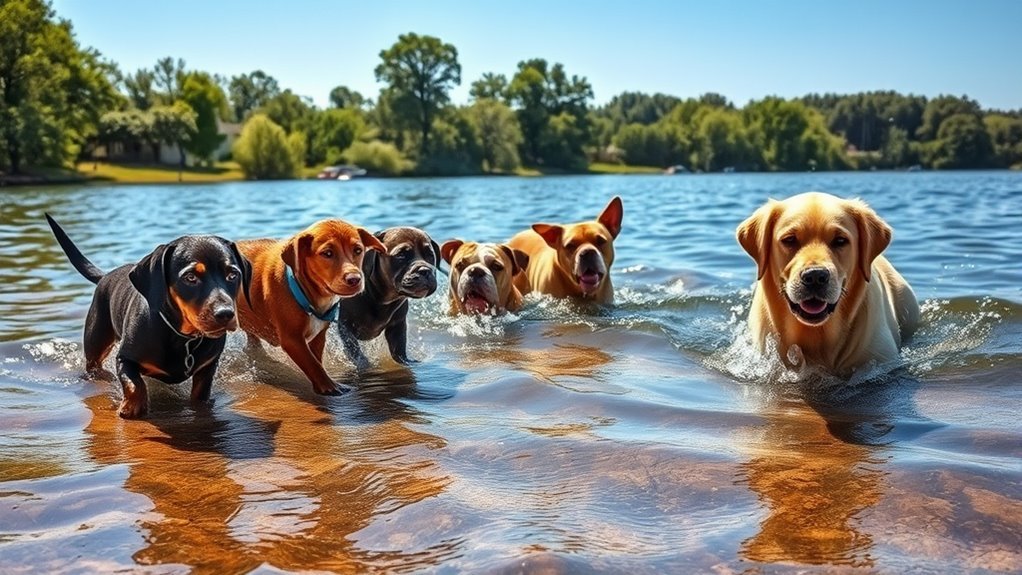
Do All Dogs Know How to Swim Naturally?
Not all dogs know how to swim naturally. Some breeds, like Labradors, pick it up quickly, but others with short legs or flat faces can struggle. Your dog’s body shape, confidence, and early water experiences play big roles in their swimming skills.
Without proper introduction, some dogs might panic in deep water. If you keep exploring, you’ll find tips to safely build your dog’s confidence and enjoy water fun together. Understanding these factors can help ensure a safe and enjoyable swimming experience for your furry friend.
Understanding Canine Swimming Instincts
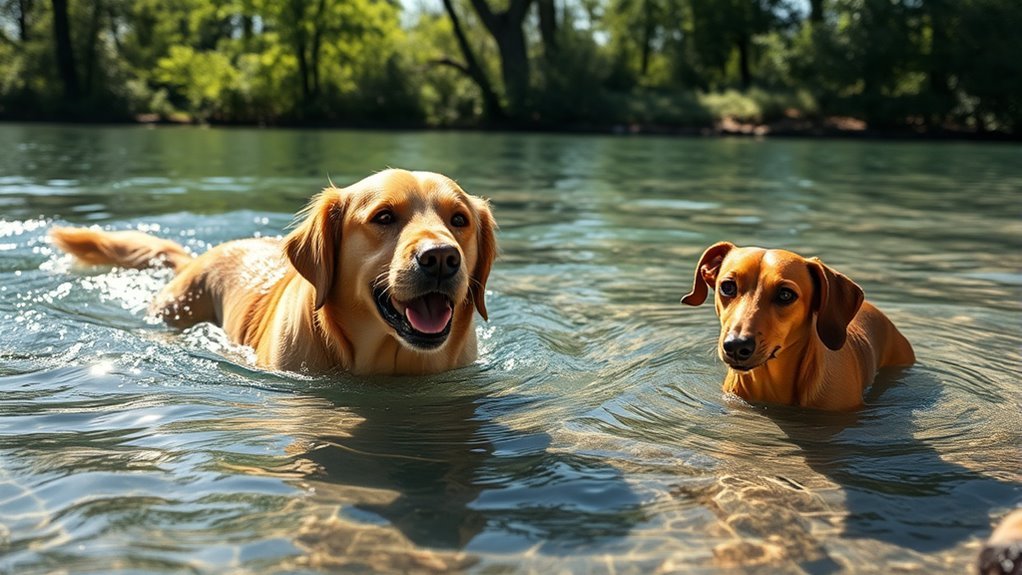
Although many dogs seem to take to water naturally, not all of them instinctively know how to swim. When you watch a dog paddle, you might assume it’s purely instinctual, but swimming actually involves coordination and confidence.
Some dogs will thrash or panic if dropped into deep water without prior exposure. You should understand that while the “dog paddle” motion is common, it doesn’t guarantee your dog can swim safely or efficiently.
Early experiences and positive reinforcement help build their swimming skills and comfort in water. If you introduce your dog gently to shallow water and encourage calm, controlled movements, they’re more likely to develop a strong swimming instinct.
Always supervise your dog around water, as instincts vary and accidents can happen quickly.
Breed Differences in Swimming Ability
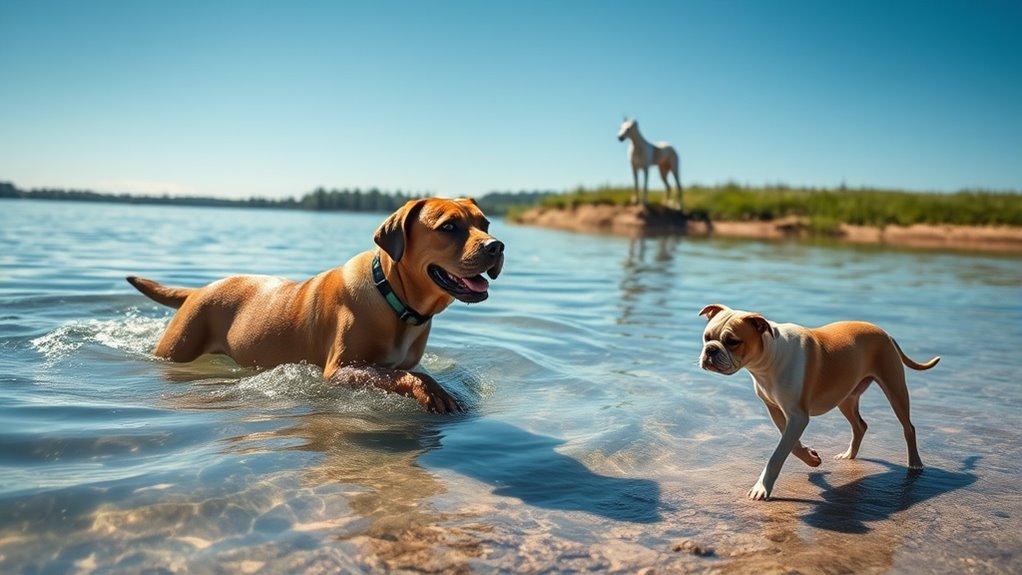
Not all dogs approach swimming the same way, and much of this comes down to their breed. Some breeds, like Labrador Retrievers and Newfoundlands, are natural swimmers bred for water work, so they take to swimming instinctively.
Dogs’ swimming styles vary widely, largely influenced by breed traits and natural instincts.
On the other hand, breeds such as Bulldogs or Dachshunds may struggle due to their body shapes and instinctual hesitation around water.
When you introduce your dog to swimming, consider their breed’s typical affinity for water. Some breeds will enthusiastically paddle, while others may need more encouragement and patience.
Knowing your dog’s breed tendencies helps you tailor swimming sessions safely and comfortably. Remember, breed influences swimming ability, but individual personality and experience also play a role in how your dog adapts to the water.
Physical Factors Affecting a Dog’s Swimming Skills
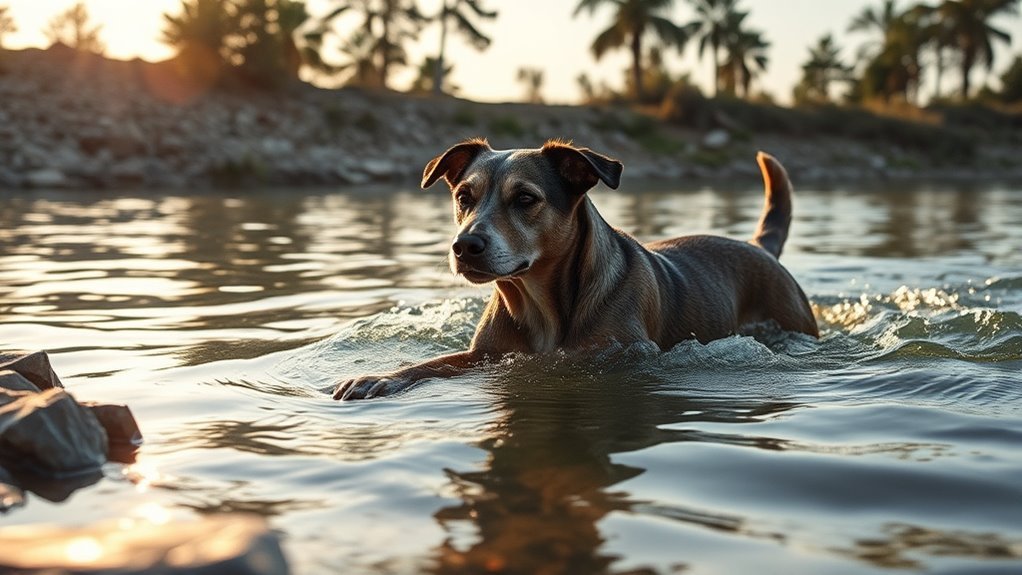
While breed plays a significant role, your dog’s physical traits greatly affect their swimming ability. Dogs with short legs or heavy bodies, like bulldogs or basset hounds, often struggle to stay afloat and paddle efficiently.
On the other hand, dogs with longer legs and leaner builds, such as retrievers, tend to swim more naturally.
Your dog’s tail also acts as a rudder, helping with balance and steering in the water.
Additionally, a dog’s lung capacity and muscle strength influence endurance and propulsion.
If your dog has a flat face or short snout, breathing while swimming can be more challenging.
Understanding these physical factors helps you anticipate your dog’s strengths and challenges in the water, ensuring you provide the right support and safety measures during swim time.
The Role of Early Exposure and Training
Physical traits give your dog a head start or pose challenges when swimming, but early exposure and consistent training shape how confidently they handle water. If you introduce your dog to water gently and frequently from a young age, they’re more likely to develop comfort and skills naturally.
Positive experiences build their confidence, making swimming enjoyable rather than stressful. You’ll want to use gradual steps, letting them explore shallow areas before moving deeper.
Consistent practice helps reinforce proper paddling techniques and water safety instincts. Even breeds not naturally inclined to swim can improve appreciably with the right approach.
Safety Tips for Swimming With Your Dog
Because water can present unexpected hazards, you should always prioritize safety when swimming with your dog. Begin by choosing calm, shallow areas free from strong currents or sudden drop-offs.
Always supervise your dog closely; never leave them unattended near water.
Consider a dog-specific life jacket, especially for beginners or breeds that tire easily.
Introduce water gradually, allowing your dog to get comfortable without pressure.
Ensure your dog knows how to exit the water safely; point out ramps or steps beforehand.
Avoid letting your dog drink lake or pool water, which can cause illness.
After swimming, rinse your dog to remove chlorine, salt, or algae and check for any injuries or ticks.
Finally, monitor your dog for signs of fatigue or distress, and end the swim promptly if they seem uncomfortable.
Helping Your Dog Build Confidence in Water
Keeping your dog safe around water is just the first step; helping them feel comfortable and confident will make swimming more enjoyable for both of you. Start slow by introducing your dog to shallow water where they can stand easily.
Use a calm voice and offer treats or toys to create positive associations. Never force your dog into the water; instead, encourage them to explore at their own pace.
Wearing a dog life jacket can boost their confidence and provide extra safety.
Practice short, frequent sessions to build familiarity without overwhelming your dog. Always praise and reward progress, no matter how small.
With patience and consistency, you’ll help your dog develop a love for water and become a confident swimmer over time.
Frequently Asked Questions
Can Dogs Swim in Saltwater as Easily as Freshwater?
Yes, dogs can swim in saltwater as easily as freshwater, but you’ll need to rinse them off afterward to remove salt and prevent irritation.
Always watch for signs of fatigue or distress while they swim.
Do Puppies Instinctively Paddle When Placed in Water?
About 90% of puppies instinctively paddle when placed in water. You’ll notice their natural reflex, but you shouldn’t rely solely on it—supervision and gradual introduction make certain they stay safe and confident while swimming.
How Long Can a Dog Typically Swim Without Getting Tired?
Your dog can typically swim for 10 to 30 minutes before getting tired, but it depends on their breed, age, and fitness.
Always watch closely and offer breaks to keep them safe and comfortable in the water.
Are There Health Risks for Dogs Swimming in Cold Water?
Diving into cold water can be a double-edged sword; you’ll risk hypothermia or muscle cramps in your dog. Always watch for shivering or fatigue, and limit exposure to keep your furry friend safe and warm.
It’s important to monitor your dog closely during and after swimming. If your dog shows signs of discomfort, get them to a warm place immediately. Taking these precautions will help ensure a fun and safe experience in cold water.
Can Dogs Drown Even if They Know How to Swim?
Yes, dogs can drown even if they know how to swim. You should always supervise them because fatigue, strong currents, or panic can overwhelm them.
Staying vigilant guarantees your dog stays safe in the water.
Conclusion
Not all dogs are born swimmers, but many have an instinct that can be nurtured. Like any skill, swimming takes practice, patience, and encouragement. Remember, a dog’s breed, body shape, and early experiences shape their comfort in water.
So, don’t just throw them in—gradually build their confidence and always keep safety first. After all, teaching your dog to swim isn’t just a lesson; it’s a lifesaving gift wrapped in fun and trust. Knowing if all dogs know how to swim naturally is important before you start.
By understanding your dog’s abilities and taking the right steps, you can help them become confident swimmers. Swimming skills in dogs vary, but with care and training, most can learn to enjoy the water safely.