
How Long After a Shock Can You Safely Swim?
You shouldn’t swim immediately after an electrical shock—knowing how long after a shock you can safely swim is crucial for your health. Your body needs time to recover and be checked by a medical professional.
Wait until a healthcare provider confirms you’re fully healed and free from symptoms like muscle pain, chest discomfort, or numbness. Start with gentle swims, watching carefully for any unusual signs.
Swimming too soon risks hidden injuries and complications. If you’re curious about how to safely return to water and avoid hazards, there’s important information to explore.
Understanding Electrical Shocks in Water

Although electrical shocks in water can be rare, they pose serious risks to anyone swimming or nearby. When electricity enters water, it spreads quickly, potentially affecting anyone in contact with that water.
Electrical shocks in water, though rare, can rapidly spread and endanger swimmers and bystanders alike.
You should know that water’s conductivity depends on impurities like minerals or salts, which can increase shock severity. Electrical currents can cause muscle spasms, making it hard to swim or even stay afloat.
You might experience burns, nerve damage, or heart complications, depending on the shock’s intensity and duration. Even if you don’t feel immediate pain, the shock can still cause internal injuries.
Understanding these dangers helps you recognize why avoiding water during electrical faults or storms is vital. Staying informed keeps you safer around pools, lakes, or any water source.
Immediate Actions After an Electrical Shock
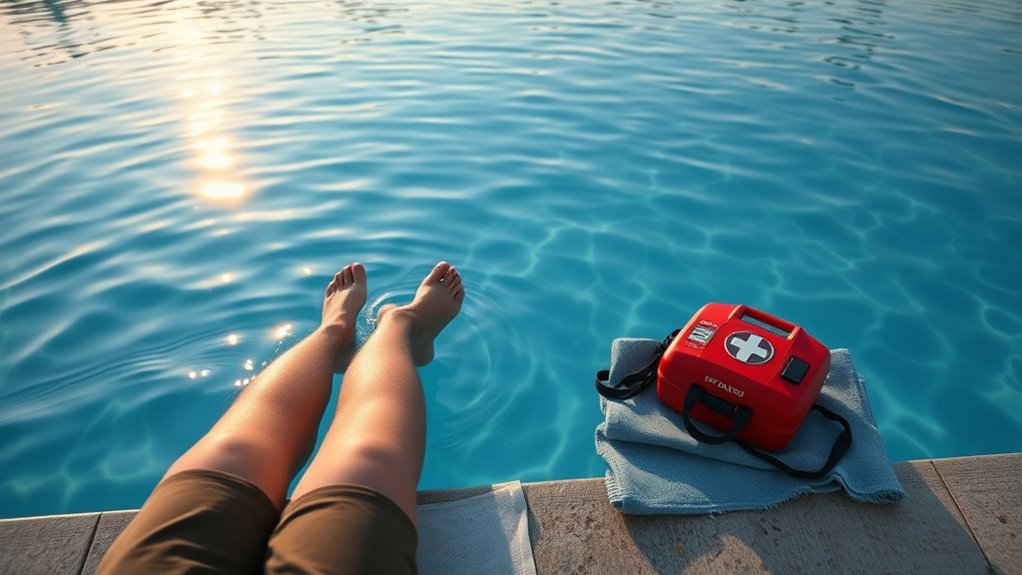
When you or someone else experiences an electrical shock in water, acting quickly can prevent further harm. First, you need to cut off the power source immediately to stop the electrical current. Never touch the person until the electricity is off.
Second, remove the person from the water carefully, using a non-conductive object like wood or plastic to avoid getting shocked yourself.
Third, call emergency services right away, even if the person seems fine; complications like cardiac arrest or internal injuries can occur.
While waiting for help, check if the person is breathing and has a pulse. If necessary and you’re trained, start CPR.
These immediate actions help minimize injury and increase the chances of a safe recovery after an electrical shock in water.
Assessing the Severity of the Shock

To understand how long you should wait before swimming again after an electrical shock, you need to assess the severity of the shock first. Consider the voltage involved and the duration you were exposed to the current.
High-voltage shocks or longer exposure times increase the risk of internal injuries, even if you feel fine initially.
Even if you feel fine, high-voltage shocks or prolonged exposure may cause hidden internal injuries.
Also, think about the path the electricity took through your body. Shocks passing through your chest or heart area can be more dangerous.
If the shock caused you to lose consciousness or experience muscle spasms, don’t ignore it.
In any case, it’s essential to get evaluated by a healthcare professional who can determine the extent of the damage.
Only after clear medical guidance should you consider returning to swimming safely.
Physical Symptoms to Monitor Post-Shock
Since electrical shocks can cause hidden damage, you should closely monitor your body for any unusual symptoms after the incident. Even if you feel fine initially, some signs might appear hours or days later.
Pay attention to:
- Heart irregularities: Notice any palpitations, dizziness, or chest pain, as shocks can affect your heart rhythm.
- Muscle pain or weakness: Persistent soreness or weakness may indicate nerve or muscle damage.
- Skin changes: Look for burns, redness, or numbness around the shock site.
If you experience any of these symptoms, seek medical evaluation immediately before considering swimming.
Monitoring these physical signs helps ensure you don’t risk further injury by entering the water prematurely. Always prioritize your safety and listen to your body’s signals carefully.
Risks of Swimming Too Soon After a Shock
Although you might feel ready to swim after an electrical shock, jumping into the water too soon can put you at serious risk. Your body could still be dealing with hidden nerve or heart damage that isn’t immediately obvious.
Swimming requires physical exertion and can strain your heart, increasing the chance of arrhythmias or cardiac arrest if your heart’s electrical system is compromised.
Swimming after an electrical shock can strain your heart and increase risks of dangerous arrhythmias or cardiac arrest.
Additionally, muscle weakness or numbness caused by the shock can affect your coordination, raising the risk of drowning.
Water can also interfere with any wounds or burns caused by the shock, leading to infection.
To protect yourself, wait until you’ve fully recovered and your healthcare provider confirms it’s safe to swim again. Don’t rush back into the water before your body heals.
When to Seek Medical Attention
If you experience any unusual symptoms after an electrical shock, you should seek medical attention immediately. Don’t wait or assume you’re fine. Some effects might be delayed but serious.
Here are key signs to watch for:
- Chest pain or irregular heartbeat – Electrical shocks can disrupt your heart’s rhythm, which requires urgent evaluation.
- Loss of consciousness or confusion – Any changes in alertness or memory indicate a need for immediate care.
- Burns or numbness at the shock site – These could signal tissue damage or nerve injury that needs treatment.
Even if you feel okay, get checked if the shock was strong or involved your chest. Prioritize your safety before swimming again.
Environmental Factors Affecting Safety
After confirming you’ve addressed any medical concerns following an electrical shock, you also need to contemplate the environment before swimming again. Check the water conditions. Avoid swimming in stormy weather or if lightning is present, as water conducts electricity and increases risk.
Assess the water source. Natural bodies like lakes or rivers might have hidden hazards such as submerged power lines or faulty electrical equipment near docks.
Also, consider water temperature, since cold water can affect your body’s recovery and increase shock risk.
Ensure nearby electrical devices are unplugged or properly maintained to prevent accidental current flow.
Preventing Electrical Shocks Around Water
To prevent electrical shocks around water, you need to stay vigilant about both your environment and the equipment you use. First, always ensure that any electrical devices near water are properly grounded and equipped with Ground Fault Circuit Interrupters (GFCIs).
Second, avoid using electrical appliances with wet hands or when standing on wet surfaces to reduce the risk of current passing through your body.
Third, regularly inspect cords and outlets for damage or wear; replace any faulty equipment immediately to prevent hazards.
Safety Checks Before Resuming Swimming
Before you jump back into the water following an electrical shock incident, you need to perform thorough safety checks to guarantee the environment is secure.
First, inspect all electrical equipment near the pool or water source for damage or faults.
Ensure ground-fault circuit interrupters (GFCIs) are functioning properly by testing them according to manufacturer instructions.
Check for any exposed wires, loose connections, or signs of water intrusion in electrical outlets and devices.
Confirm that the area is dry and free from puddles that could conduct electricity.
Additionally, verify that any repairs or inspections by a licensed electrician have been completed and documented.
Only when these conditions are met and you feel confident that the risk of another shock is eliminated should you consider getting back in the water.
How to Safely Return to Swimming After a Shock
Once you’ve confirmed the area is safe and all electrical issues have been addressed, you can focus on gradually returning to swimming. Start by easing back into the water to rebuild your confidence and ensure your body feels comfortable.
Follow these steps to safely return:
- Start Slow: Swim for short durations at a gentle pace to monitor how you feel physically.
- Stay Alert: Pay attention to any unusual sensations or fatigue; stop immediately if you experience discomfort.
- Consult Professionals: Before resuming full activity, get clearance from a healthcare provider, especially if you experienced a significant shock.
Frequently Asked Questions
Can Electrical Shocks Cause Long-Term Heart Problems?
Yes, electrical shocks can cause long-term heart problems like arrhythmias or damage to heart tissue.
You should get a thorough medical evaluation after a shock to make certain your heart is safe and to prevent complications.
Are Certain Types of Water More Likely to Conduct Electricity?
Yes, saltwater conducts electricity better than freshwater because of its higher mineral content.
What Devices Are Most Commonly Involved in Electrical Shocks Near Water?
You’ll most commonly find electrical shocks near water involving devices like hairdryers, electric razors, pool pumps, and underwater lights.
Always make sure these devices are properly insulated and grounded to prevent dangerous shocks.
How Does Water Temperature Affect Electrical Shock Severity?
Cold water’s icy grip tightens your nerves, making shocks sting deeper, while warm water soothes but still carries danger.
You’ll find electrical shock severity climbs as temperature drops, so be extra cautious when waters chill.
Can Pets Be Harmed by Electrical Currents in Swimming Pools?
Yes, pets can be harmed by electrical currents in swimming pools. You should always check for faulty wiring or devices around water to protect them.
Keep your pool’s electrical system well-maintained to keep your pets safe.
Conclusion
After experiencing an electrical shock, don’t rush back into the water like a moth to a flame. Give yourself time to fully recover and monitor any symptoms carefully—your body needs to signal when it’s truly safe.
Always perform safety checks and consider environmental factors before swimming again.
By taking these precautions, you’ll safeguard yourself from hidden dangers and ensure your return to the water is as smooth as a calm sea. Remember, understanding how long after a shock you can safely swim is crucial for your health and safety.