How Long After Adding Chlorine Can You Swim
You can swim about 4 to 6 hours after adding chlorine, once the levels settle between 1 and 3 ppm. Knowing how long after adding chlorine you can swim is essential for pool safety. This wait guarantees the chlorine has effectively sanitized your pool and prevents skin or eye irritation.
Factors like water temperature, sunlight, and pH can affect how quickly chlorine works. To enjoy safe, clear water, you’ll want to comprehend how chlorine dissolves, disperses, and how to know when your pool is truly ready for a swim.
Understanding Chlorine’s Role in Pool Maintenance
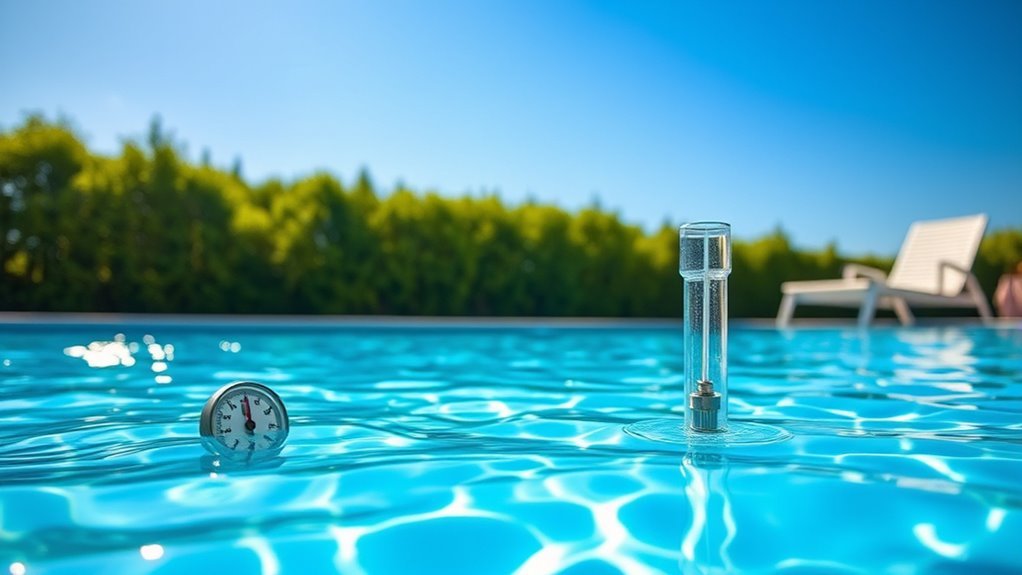
Although chlorine might seem like just another chemical, it plays a crucial role in keeping your pool clean and safe. When you add chlorine, you’re actively killing harmful bacteria, viruses, and algae that can quickly take over your water.
Without it, your pool becomes a breeding ground for germs that could cause skin irritations or infections.
Chlorine also helps break down organic debris like sweat and oils, keeping your water clear and inviting. You’ll notice that properly chlorinated water smells fresh rather than musty, which is another sign of a healthy pool.
Ideal Chlorine Levels for Safe Swimming
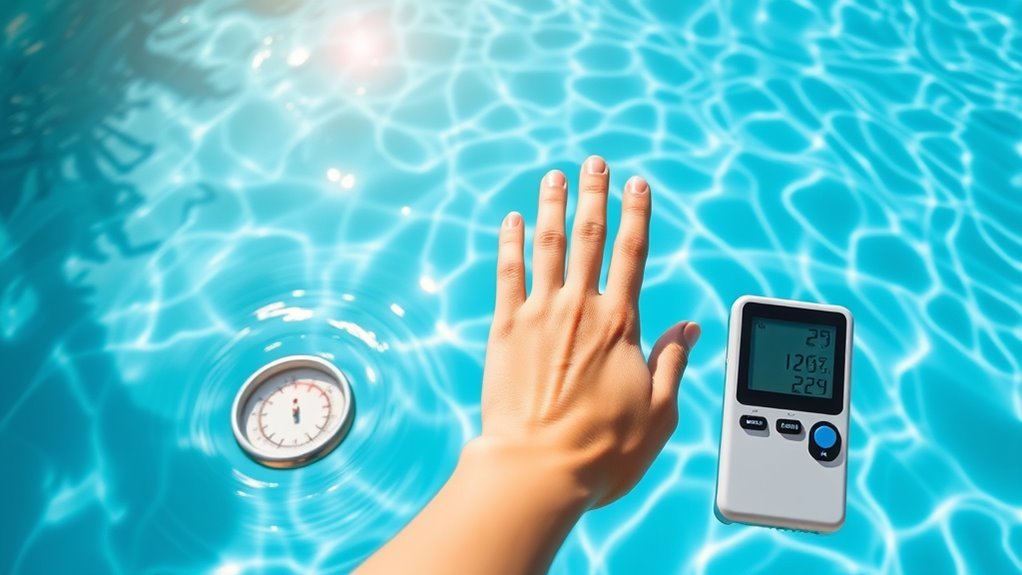
When you want to swim safely, maintaining the right chlorine levels in your pool is essential. Ideally, the free chlorine concentration should be between 1 and 3 parts per million (ppm). This range effectively kills harmful bacteria and algae without irritating your skin or eyes.
If chlorine levels drop below 1 ppm, your pool water may become unsafe, increasing the risk of infections. Conversely, levels above 3 ppm can cause discomfort and odor issues.
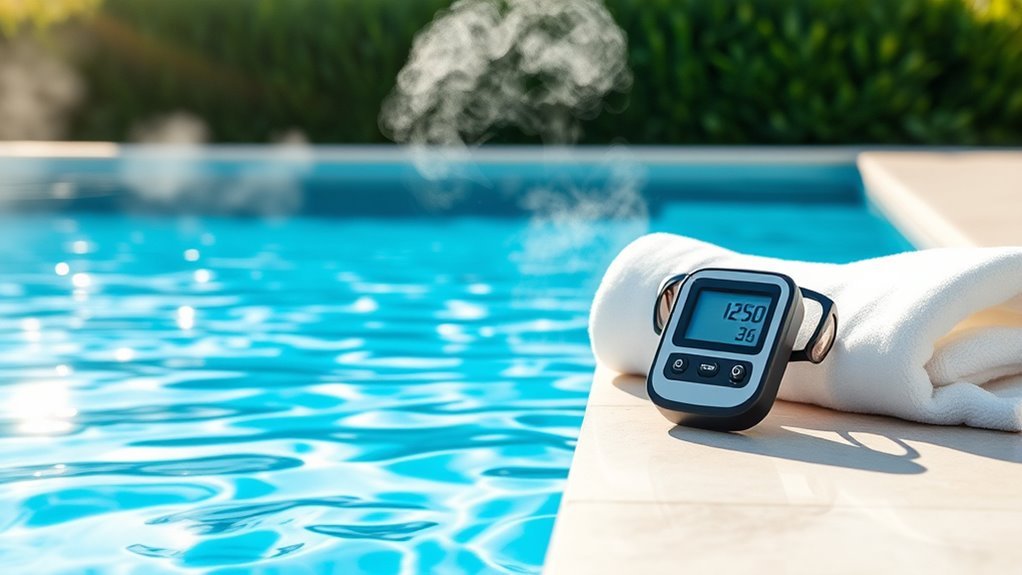
You can easily check chlorine levels using test strips or a digital tester before entering the pool.
Always wait until the chlorine stabilizes within this safe range after adding it, ensuring your swim is both enjoyable and hygienic.
How Chlorine Dissolves and Disperses in Water
Keeping chlorine levels within the ideal range is just the start; understanding how chlorine dissolves and spreads throughout your pool helps you know when it’s safe to swim.
When you add chlorine, it begins to dissolve quickly in water, breaking down into hypochlorous acid and hypochlorite ions. These are the active sanitizers.
For chlorine to work effectively, it must disperse evenly throughout the pool. You can speed this up by running your pool pump and using a pool brush to circulate the water.
Ensure chlorine spreads evenly by running your pump and brushing the pool for effective sanitation.
Without proper mixing, chlorine can remain concentrated in one spot, causing irritation or ineffective sanitation elsewhere.
Recommended Waiting Time After Adding Chlorine
Because chlorine needs time to fully sanitize your pool and dissipate harmful byproducts, you should wait before jumping in. Generally, waiting at least 4 to 6 hours after adding chlorine is recommended. This allows the chlorine to circulate evenly and ensures it has enough time to kill bacteria and other harmful organisms.
If you’ve added chlorine in liquid or tablet form, this timeframe usually applies. However, if you’ve used shock treatment, it’s best to wait even longer, often 24 hours, before swimming.
Always test the water’s chlorine levels before entering; safe swimming levels typically range between 1 and 3 parts per million (ppm).
Factors That Influence Chlorine Effectiveness and Safety
Waiting the right amount of time after adding chlorine helps guarantee your pool is safe, but several factors can affect how well chlorine works and how soon you can swim.
Water temperature, sunlight exposure, and pH levels all play vital roles. Warmer water speeds up chlorine’s action, while strong sunlight can break it down faster.
If the pH isn’t balanced, chlorine won’t disinfect effectively.
| Factor | Effect on Chlorine | Your Action Needed |
|---|---|---|
| Water Temperature | Faster reaction in warmth | Test and adjust timing |
| Sunlight | Breaks down chlorine quickly | Add chlorine in evening |
| pH Level | High pH reduces effect | Balance pH regularly |
Signs Your Pool Water Is Ready for Swimming
Before you jump in, you’ll want to check specific signs that show your pool water is safe and balanced. First, test the chlorine level with a reliable pool test kit; it should be between 1 and 3 ppm.
Next, verify the pH level sits comfortably between 7.2 and 7.8 to avoid skin irritation.
Clear water is another sign—if you can easily see the pool floor, it’s a good indicator that contaminants are under control.
Also, there shouldn’t be any strong chlorine smell, which means your water has the right chlorine balance.
Finally, make certain there’s no visible algae or debris floating around.
When all these signs align, your pool is ready for a safe swim.
Tips for Maintaining Balanced Chlorine Levels in Your Pool
Maintaining balanced chlorine levels in your pool requires regular testing and adjustments to keep the water safe and comfortable. You don’t want to swim in water that’s either too harsh or not clean enough.
Regularly testing and adjusting chlorine levels keeps your pool safe, clean, and comfortable for swimming.
Here are three tips to help you maintain the perfect chlorine balance:
- Test frequently: Use a reliable pool test kit at least twice a week to monitor chlorine levels and pH. This helps you catch imbalances early.
- Adjust gradually: When adding chlorine, do it in small doses and allow it to circulate before testing again. Avoid shocking the pool too often.
- Keep pH balanced: Chlorine works best when pH is between 7.2 and 7.6. Regularly adjust pH to ensure chlorine stays effective without irritating swimmers.
Following these steps keeps your pool inviting and healthy.
Frequently Asked Questions
Can Chlorine Cause Skin Irritation or Allergic Reactions?
Yes, chlorine can cause skin irritation or allergic reactions, especially if you’re sensitive or exposed to high levels.
You’ll want to rinse off after swimming and use moisturizers to help reduce dryness and discomfort.
How Does Sunlight Affect Chlorine Levels in Pools?
You might think sunlight boosts chlorine, but it actually breaks it down faster. So, when your pool’s in the sun, you’ll need to add chlorine more often to keep water clean and safe for swimming.
What Types of Chlorine Are Best for Residential Pools?
You’ll want to choose stabilized chlorine like trichlor or dichlor for residential pools since they protect chlorine from sunlight. Granular or tablet forms work well, keeping your pool clean and safe with minimal hassle.
Can I Swim Immediately After Shocking My Pool?
You can’t plunge in right after shocking; imagine a swirling chemical storm needing calm. Wait at least 8 hours or until chlorine levels drop below 5 ppm to guarantee a safe, crystal-clear swim without irritation or risk.
How Often Should I Test My Pool Water for Chlorine?
You should test your pool water for chlorine at least twice a week, more often during heavy use or hot weather.
Regular testing helps you keep chlorine levels safe and your pool clean.
Conclusion
After adding chlorine, you’ll want to wait at least 30 minutes to an hour before swimming to guarantee it’s properly dispersed and safe. Think of chlorine like a powerful cleaner—it needs time to break down contaminants and balance in the water.
Factors like sunlight and water temperature can speed up or slow this process. By checking chlorine levels and clarity, you’ll know when your pool’s ready.
This waiting period ensures your swim is both invigorating and safe. Knowing how long after adding chlorine can you swim helps maintain a healthy pool environment.