How Long to Wait to Swim After a Tattoo
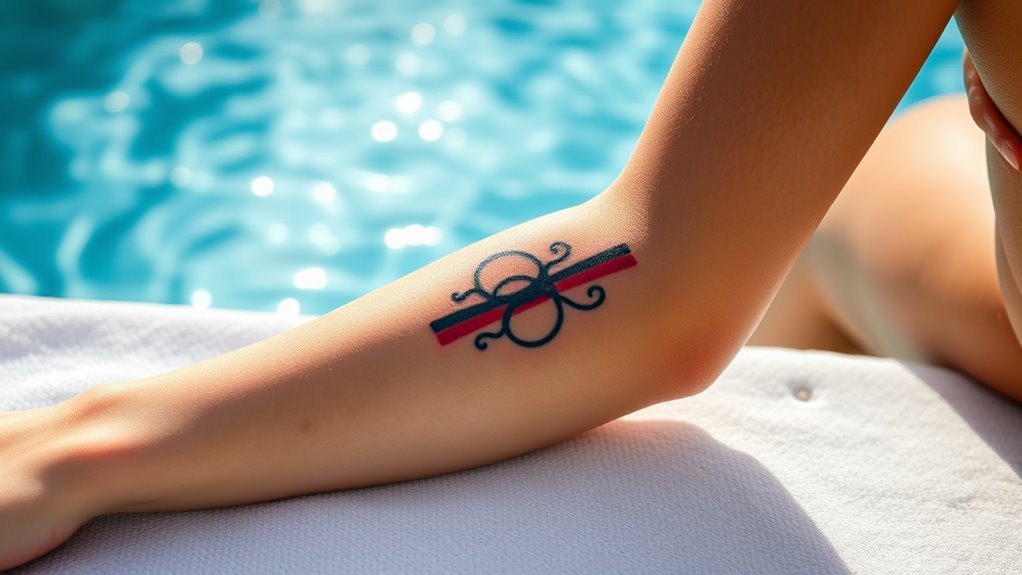
You should wait at least two to four weeks before swimming to let your tattoo fully heal and avoid infection. Proper tattoo aftercare is essential during this period to protect your skin. Your skin needs time to form a protective barrier, so jumping into pools, oceans, or lakes too soon can introduce bacteria and chemicals that harm your ink and skin.
Once your tattoo isn’t peeling, scabbed, or sensitive, it’s safer to swim. Avoiding water exposure early on helps prevent irritation and fading of your new tattoo. If you want to keep your tattoo looking vibrant and know how to protect it, there’s more important info ahead.
Understanding the Tattoo Healing Process
Although getting a tattoo is exciting, you need to understand how your skin heals to protect your new ink properly. Your tattoo is fundamentally an open wound after the needle deposits ink into the skin’s dermis.
Right away, your body starts repairing this area by forming a scab and peeling dead skin. This healing process usually takes about two to four weeks but varies depending on your skin type and tattoo size.
During this time, your skin is sensitive and vulnerable to irritation, infection, and fading. You’ll notice redness, itching, and flaking—these are normal signs of healing.
To support this process, keep your tattoo clean, moisturized, and avoid anything that could disrupt the skin’s recovery, ensuring your ink stays vibrant and sharp.
Risks of Swimming Too Soon After Getting a Tattoo
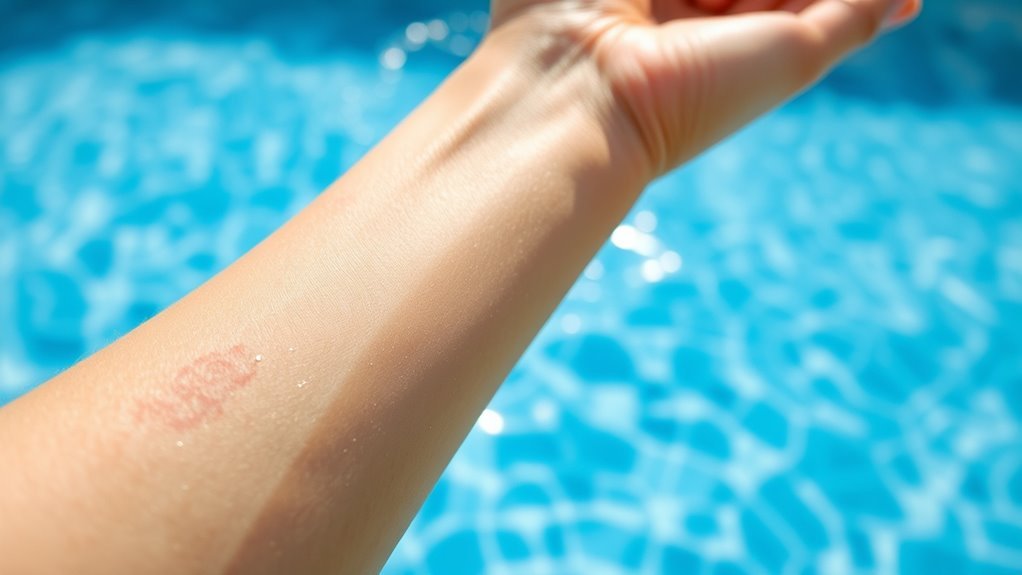
If you swim too soon after getting a tattoo, you risk exposing your fresh ink to harmful bacteria and chemicals that can cause infection and irritation. Your new tattoo is fundamentally an open wound, and water, especially in pools, lakes, or oceans, contains contaminants that can invade the skin.
Here are the main risks you face:
- Infection: Bacteria in water can lead to redness, swelling, and pus, requiring medical attention.
- Fading and Blurring: Chemicals like chlorine can break down ink pigments, ruining your tattoo’s appearance.
- Delayed Healing: Excess moisture softens scabs, increasing the chance of scarring or ink loss.
To protect your tattoo, it’s vital to avoid swimming until it’s fully healed. Swimming too soon compromises both your health and your tattoo’s quality.
Recommended Waiting Period Before Swimming
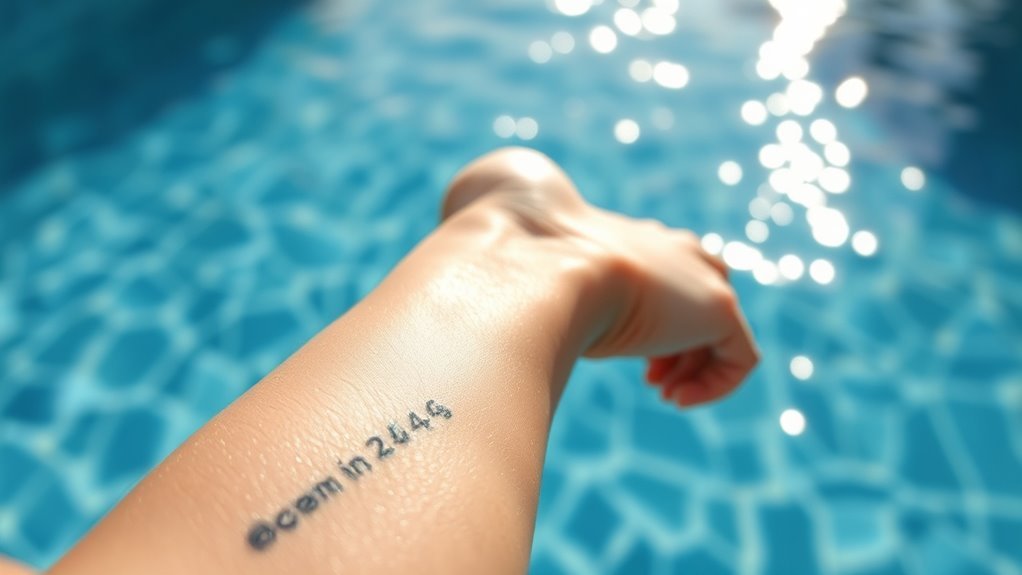
Since your tattoo is fundamentally an open wound, you should wait at least two to four weeks before swimming to guarantee it heals properly. This waiting period allows your skin to form a protective barrier, reducing the risk of infection and irritation.
Wait two to four weeks before swimming to ensure your tattoo heals and reduces infection risk.
Healing times can vary based on the tattoo’s size, location, and your personal healing rate, so listen to your body. Keep your tattoo clean and moisturized during this time, and avoid submerging it in water.
If your tattoo still appears red, swollen, or scabbed after two weeks, extend the waiting period.
Once healed, you can swim safely, but always take care to protect your tattoo from prolonged water exposure to maintain its appearance and health.
Differences Between Pool Water and Ocean Water
When you decide to swim after your tattoo has healed, it’s important to understand how pool water and ocean water affect your skin differently. Pool water contains chlorine, which can irritate your fresh tattoo and slow healing.
Ocean water, on the other hand, has salt and natural bacteria that might cause infection if your tattoo isn’t fully healed.
Here are three key differences to contemplate:
- Chlorine in pools can dry out and inflame your skin.
- Salt in ocean water may sting and increase infection risk.
- Bacteria levels are generally higher in the ocean, making it less sanitary for new tattoos.
Knowing these differences helps you protect your tattoo and skin when you’re ready to swim again.
Signs Your Tattoo Has Healed Enough to Swim
Although it’s tempting to jump in right after getting a tattoo, you need to wait until your skin shows clear signs of healing before swimming.
Look for a tattoo that’s no longer scabbed or peeling; the skin should feel smooth and not tight or itchy.
The redness and swelling should be completely gone, and the area mustn’t be sensitive or painful to touch.
Your tattoo should appear vibrant but not raw or shiny.
If you notice any cracking, flaking, or oozing, it’s not ready yet.
Keep in mind that healing times vary, but usually, this takes around two to four weeks.
Only when your tattoo looks fully settled and feels comfortable can you safely consider swimming without risking infection or damage.
How to Protect Your Tattoo When Swimming
To keep your tattoo safe while swimming, you’ll need to take specific precautions that minimize exposure to water and bacteria. First, always wait until your tattoo is fully healed before swimming.
When you do swim, protect the area by applying a waterproof bandage or tattoo cover designed for water exposure. After swimming, gently rinse your tattoo with clean water and pat it dry. Never rub it.
Follow these three essential steps:
- Use a waterproof, breathable cover to shield your tattoo during swimming.
- Avoid prolonged immersion in chlorinated or saltwater to prevent irritation.
- Moisturize your tattoo afterward with a fragrance-free, gentle lotion to maintain skin health.
Alternative Activities to Consider During Healing
Protecting your tattoo during swimming might mean you need to take a break from water activities for a while. Luckily, you can still stay active and entertained without risking your healing skin.
Consider low-impact exercises like walking, yoga, or gentle stretching to keep your body moving without exposing your tattoo to moisture or irritation.
Try gentle activities like walking, yoga, or stretching to stay active without risking your tattoo’s healing process.
If you enjoy indoor activities, try reading, crafting, or catching up on movies and shows.
These options help you relax and keep your mind off the itchiness or discomfort during healing.
Remember, the key is to avoid anything that could cause sweating or friction on your tattoo.
Tips for Maintaining Tattoo Vibrancy After Swimming
Once your tattoo has fully healed and you’re ready to swim again, taking steps to maintain its vibrancy becomes essential. Swimming exposes your tattoo to chlorine, salt, and UV rays, all of which can fade the ink.
To keep your tattoo looking fresh, follow these tips:
- Apply Waterproof Sunscreen: Always use a high SPF, waterproof sunscreen to protect your tattoo from sun damage before swimming.
- Rinse Immediately After Swimming: Wash off chlorine or saltwater promptly with fresh water to prevent irritation and fading.
- Moisturize Regularly: Keep your skin hydrated with a fragrance-free moisturizer to support the tattoo’s longevity and brightness.
Frequently Asked Questions
Can Tattoos Affect Swimming Performance or Comfort?
Yes, tattoos can affect your swimming comfort since fresh ink makes your skin sensitive and prone to irritation. You might feel discomfort or increased infection risk, so you should avoid swimming until your tattoo fully heals.
How Does Tattoo Ink React to Chlorine Exposure?
Chlorine attacks tattoo ink like a furious beast, breaking it down and fading your artwork faster than you can blink.
Are Waterproof Bandages Effective for Swimming With a Fresh Tattoo?
Waterproof bandages can help protect your fresh tattoo while swimming, but they’re not foolproof. Water and chlorine may still seep in, risking irritation or infection.
It’s best to avoid swimming until fully healed.
Does Tattoo Placement Influence Healing Time Before Swimming?
Think of your tattoo as a garden; if it’s in a spot that moves a lot, like joints, it needs extra care.
Yes, placement affects healing time before you can swim safely and avoid irritation or infection.
Can Swimming Help Reduce Tattoo Swelling or Redness?
No, swimming won’t reduce tattoo swelling or redness. In fact, it can irritate your fresh tattoo and increase infection risk.
It’s best to keep your tattoo dry and clean until fully healed to avoid complications.
Conclusion
Imagine your fresh tattoo as a delicate work of art, still tender and vulnerable like a blooming flower. Waiting at least two to four weeks before swimming allows your skin to heal fully, protecting your ink from fading or infection.
Picture yourself confidently diving into clear water, your vibrant tattoo glowing beneath the surface. By being patient and caring now, you ensure your new masterpiece stays bright and beautiful for years to come.
Remember, how long to wait to swim after a tattoo is crucial for proper healing. Giving your skin time to recover helps maintain the integrity of your tattoo and prevents complications.