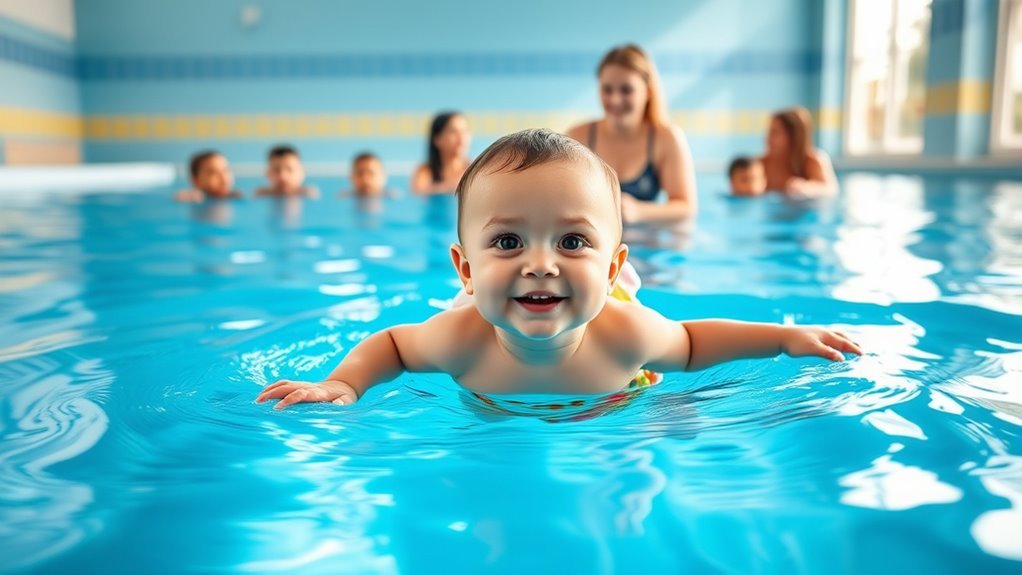
When Should Babies Start Swimming Lessons Step by Step
You should start your baby’s swimming lessons around 12 months when they show signs of water comfort and readiness. Introducing swimming to babies at the right time helps build confidence and safety in the water. Before formal lessons, begin with gentle water play during bath time to build familiarity and ease.
Choose a program with certified instructors and small class sizes to guarantee safety and personalized attention. Start with simple activities like holding and splashing, gradually building your baby’s confidence and swimming skills. Keep exploring different techniques to discover how to make swimming fun and safe at every stage.
Benefits of Early Swimming for Babies
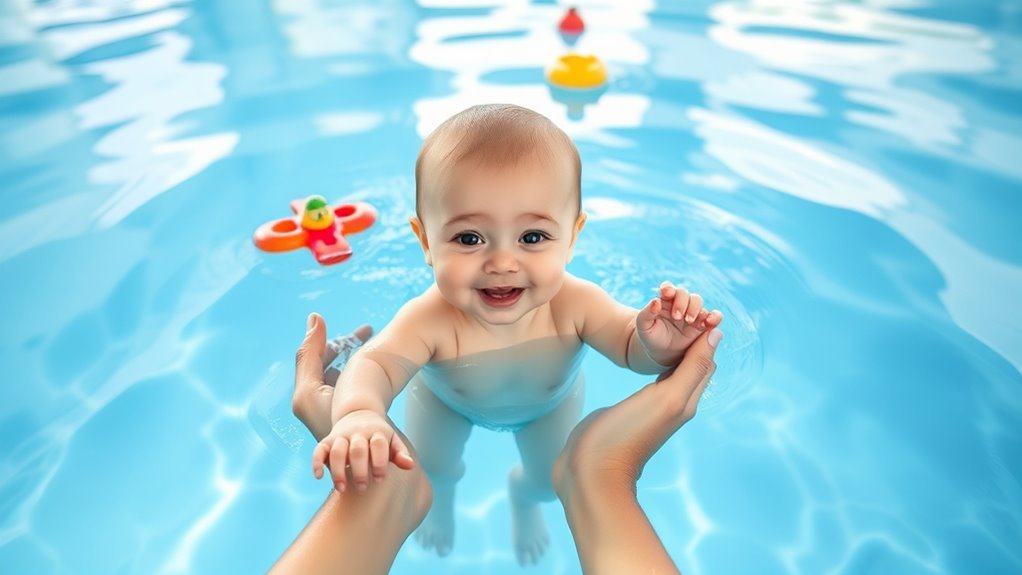
Although it might seem early, introducing your baby to swimming can offer numerous benefits. You’ll notice improvements in their motor skills as they move through the water, which helps strengthen muscles and coordination.
Swimming also supports cardiovascular health and can boost your baby’s lung capacity.
Beyond physical gains, these early water experiences promote water confidence and reduce fear, making future lessons smoother.
Plus, swimming sessions provide a unique bonding time, enhancing your emotional connection.
The warm water soothes babies, often helping with relaxation and better sleep patterns.
By getting your baby comfortable in water early on, you’re setting a foundation for a lifelong love of swimming and safety around water.
These benefits make early swimming a smart choice for your child’s growth and development.
Recommended Age to Begin Swimming Lessons
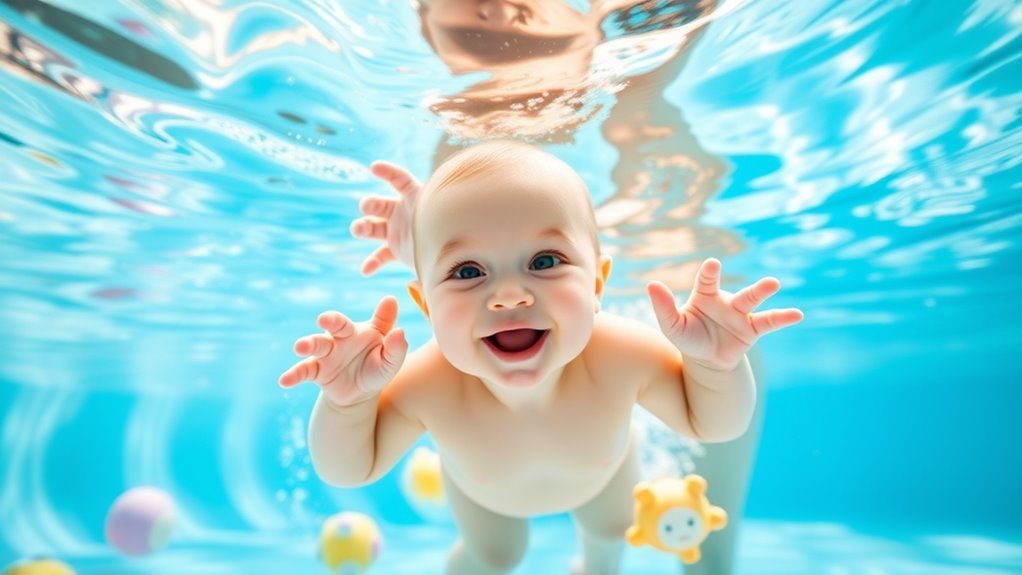
While every child develops at their own pace, experts generally recommend starting formal swimming lessons around 1 year of age. At this stage, your baby’s motor skills and coordination have improved enough to engage safely in basic water activities.
Before 1 year, you can introduce water play, but structured lessons might be too advanced. Starting around 12 months helps your child become comfortable in water and learn fundamental skills like floating and blowing bubbles.
Keep in mind that every baby is different. Some may be ready slightly earlier or later. Always consult with your pediatrician and choose instructors experienced with infants.
Preparing Your Baby for Their First Swim
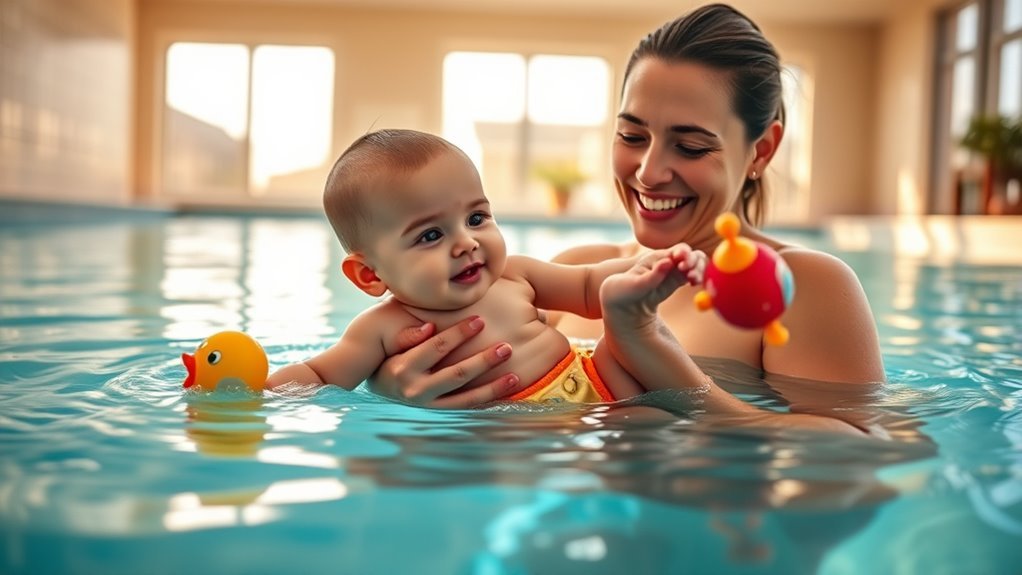
Once you’ve decided your baby is ready for swimming lessons, preparing them for their first swim can make the experience enjoyable and stress-free. Start by familiarizing your little one with water at home during bath time. Gently splash and play to build comfort.
Dress them in appropriate swimwear and a swim diaper to keep things hygienic. Bring familiar toys to the pool to create a sense of security. Before entering the water, stay calm and cheerful; your mood influences your baby’s reaction.
Always hold your baby securely and support their head and neck. Talk or sing softly to reassure them. Gradually introduce them to the pool’s temperature and environment, allowing them to adjust at their own pace. This preparation sets a positive tone for future lessons.
Choosing the Right Swimming Program for Infants
Because every baby develops at their own pace, choosing the right swimming program means finding one that matches your infant’s needs and your family’s schedule.
To make the best choice, consider these factors:
- Instructor Qualifications: Look for certified instructors experienced in infant swimming to guarantee safety and proper guidance.
- Class Size and Ratio: Smaller classes with a low child-to-instructor ratio allow for more personalized attention to your baby’s comfort and progress.
- Program Structure and Flexibility: Choose programs with flexible scheduling and a clear progression that suits your baby’s developmental stage and your availability.
What to Expect in Newborn and Infant Swimming Classes
After selecting the right swimming program for your infant, you might wonder what the sessions will actually look like. Typically, classes last about 30 minutes and focus on water familiarization rather than formal swimming skills.
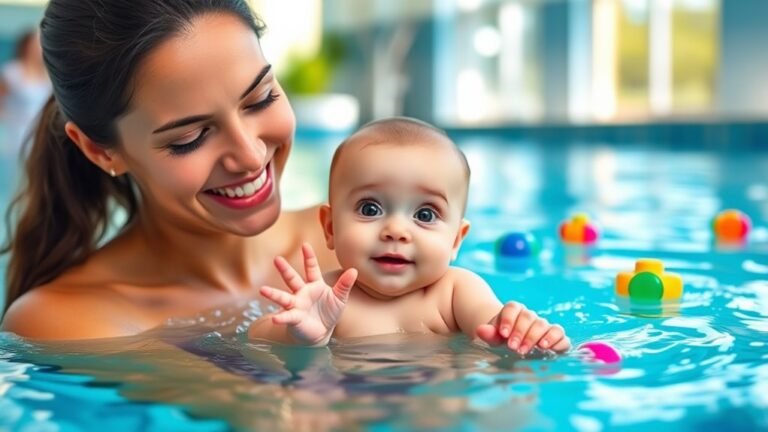
You’ll gently guide your baby through simple movements like floating or kicking while keeping them close for comfort and safety. Expect playful songs and games to keep your little one engaged.
The instructor will demonstrate techniques and provide tips to help you support your baby’s natural movements. These early classes emphasize bonding and confidence-building in the water, laying the foundation for future lessons.
You’ll also have opportunities to ask questions and observe your baby’s responses, ensuring the experience remains positive and enjoyable for both of you.
Safety Precautions for Baby Swimming Lessons
While introducing your baby to swimming can be exciting, you need to prioritize safety to guarantee a positive experience. Start by ensuring the water temperature is comfortable, ideally between 32-34°C (89.6-93.2°F), to prevent your baby from getting cold.
Always stay within arm’s reach, maintaining constant supervision to respond immediately if needed.
Maintain close supervision by keeping your baby within arm’s reach at all times during swimming.
Finally, verify that the swimming instructor is certified in infant CPR and trained in baby swimming techniques to handle emergencies appropriately.
- Check water temperature for your baby’s comfort.
- Keep your baby within arm’s reach at all times.
- Choose a qualified instructor with infant CPR certification.
Building Water Confidence Step by Step
As you introduce your baby to the water, start with simple, gentle activities that build comfort and trust. Hold your baby securely, splash water softly on their skin, and let them feel the water’s temperature.
Gradually encourage them to kick and move their arms while you support them. Use playful songs and smiles to create a positive experience.
Repeating these steps regularly helps your baby associate water with fun and safety. Watch for signs of enjoyment or discomfort, adapting your approach as needed. Keep sessions short to prevent fatigue.
Over time, your baby will become more relaxed and curious, laying the foundation for future swimming skills. Building water confidence is a patient process, so stay consistent and encouraging throughout each step.
Transitioning From Infant to Toddler Swimming Lessons
Once your baby feels comfortable and curious in the water, you can begin introducing swimming lessons designed for toddlers. This progression helps build independence and skills suited to their growing abilities.
To make the shift smooth:
- Gradual Increase in Independence: Let your toddler practice holding their breath, blowing bubbles, and floating with minimal support.
- Introduce Basic Skills: Teach kicking, arm movements, and simple water safety rules tailored to their comprehension level.
- Use Engaging Activities: Incorporate playful exercises that encourage movement and confidence without overwhelming them.
Tips for Making Swimming Enjoyable for Your Baby
Ensuring your baby enjoys swimming starts with creating a positive and relaxed environment. Keep sessions short and fun, so your baby stays engaged without feeling overwhelmed. Use gentle, playful touches and lots of smiles to build trust in the water.
Create a calm, fun atmosphere with gentle touches and smiles to help your baby enjoy swimming.
Bring along favorite toys or floating objects to spark curiosity and encourage movement. Always respond to your baby’s cues. If they seem uncomfortable, take a break or switch activities.
Singing songs or playing gentle games can make the experience joyful and soothing. Make sure the water temperature is comfortable, and dress your baby in appropriate swimwear to keep them cozy.
With patience and consistency, you’ll help your baby associate swimming with happiness and safety, setting the stage for a lifelong love of water.
Signs Your Baby Is Ready for More Advanced Swimming Skills
When your baby starts to feel comfortable and happy in the water, you can look for signs that they’re ready to learn more advanced swimming skills. Notice if they show excitement when entering the pool and willingly participate in activities.
Here are three clear signs:
- Improved Motor Skills: Your baby can kick their legs and move their arms with purpose, showing better coordination.
- Breath Control: They begin to hold their breath underwater briefly without distress.
- Increased Confidence: They try to move independently in the water, like floating or paddling with minimal assistance.
If you observe these signs, it’s a great time to introduce new techniques, like gliding and basic strokes, to help your baby build strength and water safety awareness.
Frequently Asked Questions
How Often Should Babies Attend Swimming Lessons Each Week?
You should aim for your baby to attend swimming lessons once or twice a week. This frequency helps build water confidence and skills without overwhelming them, keeping sessions fun and manageable for both of you.
Spacing lessons this way allows your baby to absorb what they learn and look forward to each session. It also gives you time to practice skills at home between classes, reinforcing their progress.
What Swimwear Is Best Suited for Babies During Lessons?
You’ll want snug, quick-drying swim diapers and soft, stretchy swimsuits that hug your baby like a gentle wave, keeping them comfy and secure while they splash and explore confidently in their watery playground.
Can Babies With Certain Health Conditions Participate in Swimming Classes?
You can often enroll babies with health conditions in swimming classes, but you should first consult their pediatrician. Swimming can be therapeutic, but some conditions require special precautions or tailored lessons to guarantee safety and comfort.
Always discuss your baby’s specific health needs with a healthcare provider before starting any swimming activity. This ensures the environment and instruction are appropriate.
In some cases, instructors experienced with special needs can provide the best support. This helps make swimming a positive and safe experience for your baby.
How Do Swimming Lessons Impact a Baby’s Sleep Patterns?
Swimming lessons gently rock your baby into better sleep; the physical activity and water’s soothing embrace help tire them out. This makes it easier for you both to enjoy peaceful nights.
Brighter, more rested days together become the norm as your baby benefits from the calming effects of swimming. The combination of exercise and relaxation promotes healthier sleep patterns overall.
Are There Any Certifications for Instructors Teaching Baby Swimming Lessons?
Yes, you’ll find certifications like those from the American Red Cross or Swim England specifically for baby swimming instructors. These guarantee they’re trained in safety, infant development, and effective teaching techniques for your little one’s swim lessons.
Such certifications ensure instructors understand how to create a safe, supportive environment tailored to babies’ unique needs. This specialized training helps them handle emergencies and promote water confidence effectively.
Conclusion
Starting swimming lessons with your baby is like planting a seed that will grow into a strong, confident swimmer. By beginning early and choosing the right program, you’ll help your little one build water confidence step by step.
Remember to prepare gently, keep sessions fun, and watch for signs they’re ready to advance. With your support, swimming will become a joyful adventure that nurtures their safety and skills for years to come.
When should babies start swimming lessons? The best time is when they show readiness and comfort in the water, usually around 6 months. Following this step-by-step approach ensures a positive experience that promotes both water safety and enjoyment.