7 Factors That Affect How Long It Would Take to Swim a Mile
Your mile swim time depends heavily on your technique and physical fitness—you’ll swim faster with efficient strokes and strong endurance. Whether you’re in a pool or open water changes conditions like currents and visibility, impacting your speed. Water temperature affects muscle performance, while gear like goggles and suits can reduce drag.
Pool length and the number of turns also matter, as does how well you manage pacing and stay mentally focused. Keep exploring these factors to improve your swim times. Understanding these 7 factors that affect how long it would take to swim a mile can help you train smarter and swim faster.
Swimming Technique and Efficiency

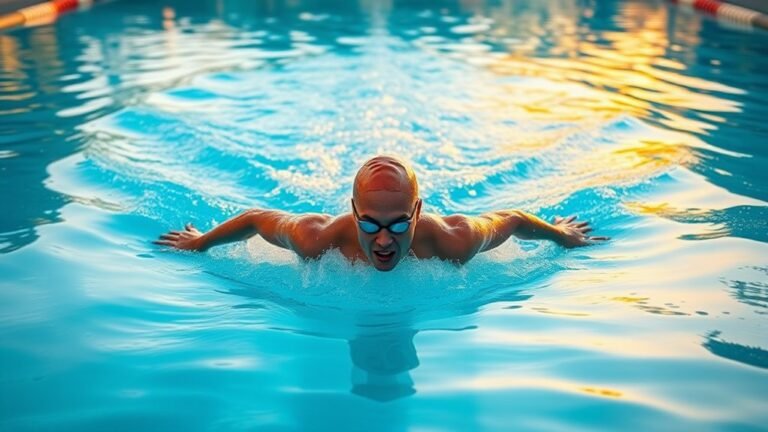
Although many factors influence your mile swim time, your swimming technique and efficiency play an essential role. When you refine your stroke mechanics, you reduce drag and conserve energy, allowing you to swim faster without extra effort.
Focus on maintaining a streamlined body position, proper breathing rhythm, and smooth arm pulls.
Maintain a streamlined body, steady breathing, and fluid arm movements for improved swim efficiency.
Efficient kicking prevents wasted motion and keeps you balanced. You’ll notice that improving your timing, coordinating breaths with strokes, helps sustain momentum.
Avoid unnecessary splashing or jerky movements, as these slow you down.
By honing your technique, you not only boost speed but also minimize fatigue, making your mile swim feel more manageable.
Consistent practice and feedback can help you identify weak points and steadily enhance your swim efficiency.
Physical Fitness and Endurance
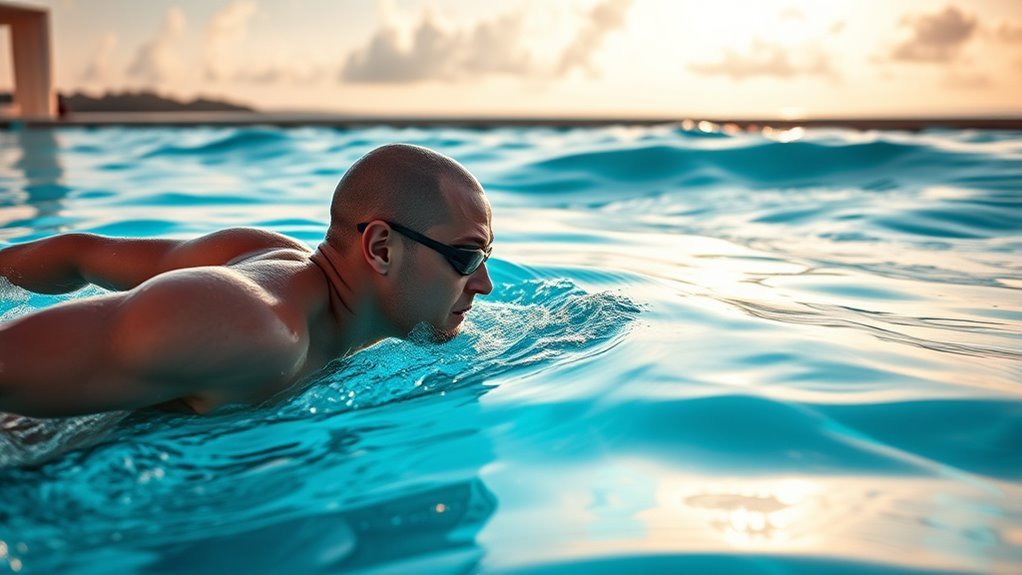
Mastering your swimming technique sets a strong foundation, but your physical fitness and endurance ultimately determine how well you sustain speed throughout the mile. Building cardiovascular fitness improves your body’s ability to deliver oxygen to muscles, which delays fatigue.
Regular aerobic training, like interval swims or cross-training with running or cycling, boosts your stamina.
Strength training enhances muscle power, helping you maintain a strong stroke for longer distances.
Don’t overlook flexibility, as it aids efficient movement and reduces injury risk.
Pay attention to your recovery and nutrition, too. They ensure your body is ready for intense workouts.
Pool vs. Open Water Conditions
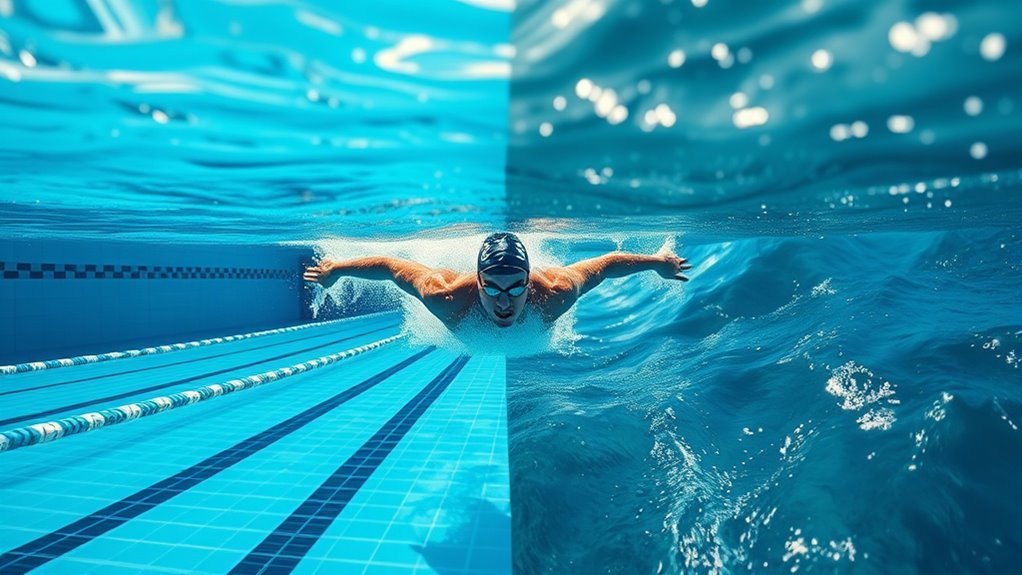
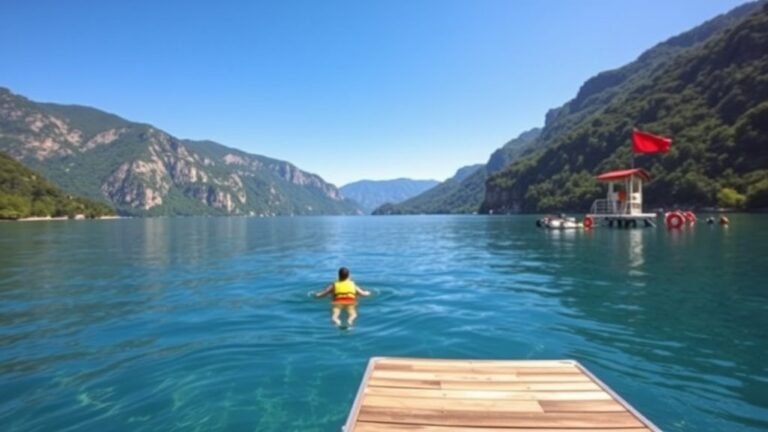
When you swim a mile, the environment plays a big role in your performance. Pool swimming offers controlled conditions: calm water, clear visibility, and marked lanes to help you maintain a steady pace. Open water, however, challenges you with waves, currents, and varying visibility, making it harder to swim straight and maintain speed.
| Pool Conditions | Open Water Conditions |
|---|---|
| Calm, still water | Waves and currents present |
| Clear lane markings | No lane lines; navigation needed |
| Consistent depth | Variable depths and obstacles |
Understanding these differences helps you prepare mentally and physically, adjusting your technique and pacing accordingly to tackle the unique challenges each environment presents.
Water Temperature and Its Impact
Because water temperature directly affects your body’s ability to perform, it plays a crucial role in your mile swim time. When the water is too cold, your muscles tighten, reducing your speed and increasing fatigue. Conversely, warm water might cause overheating and dehydration.
Understanding how temperature impacts you helps maximize your swim.
Here’s how water temperature influences your mile swim:
- Cold water causes muscle stiffness and slower reaction times.
- Moderate temperatures (around 78°F) support ideal muscle function.
- Warm water can elevate your heart rate, making you tire faster.
- Extreme temperatures increase the risk of cramps or hypothermia, forcing you to slow down or stop.
Adjusting your pace and preparation according to water temperature can markedly improve your swim time.
Swim Gear and Equipment
Though your technique and conditioning matter most, the swim gear and equipment you choose can considerably influence your mile swim time.
Wearing a well-fitted swim cap reduces drag by keeping hair tucked away and streamlining your head.
Goggles with a proper seal improve visibility and comfort, helping you maintain a steady pace without distractions.
Selecting a swimsuit made from low-resistance, hydrodynamic materials can shave precious seconds off your swim.
If you use fins or paddles during training, they’ll build strength and speed, but avoid them in timed swims to keep results accurate.
Even your choice of earplugs or nose clips can affect your focus and breathing rhythm.
Choosing gear that supports efficiency and comfort lets you swim faster and more confidently over the full mile.
Pool Length and Turns
How much does pool length impact your mile swim time? Quite a bit, actually. Swimming in a shorter pool means more turns, which can either slow you down or speed you up depending on your technique.
Consider these factors:
- Number of Turns: A 25-yard pool requires more turns than a 50-meter pool, affecting your rhythm.
- Push-off Power: Strong push-offs during turns can give you a speed boost.
- Turn Efficiency: Quick, smooth turns save precious seconds.
- Fatigue Factor: More turns may cause extra muscle fatigue, impacting your overall pace.
Mental Focus and Pacing Strategies
When you maintain sharp mental focus during your mile swim, you’ll swim more efficiently and avoid burnout. Staying present helps you keep your stroke consistent and adjust your breathing rhythm to match your effort. You won’t waste energy worrying about time or distance; instead, you’ll trust your training and body feel.
Pacing strategies are essential for managing your energy throughout the swim. Starting too fast may lead to early fatigue, while going too slow can make your time unnecessarily long. Try breaking the mile into segments, focusing on steady splits that build endurance without overexertion.
Use mental cues like counting strokes or focusing on technique to stay engaged. Together, focus and pacing let you swim smarter, helping you reach your best mile time.
Frequently Asked Questions
How Does Age Influence Swimming Speed Over a Mile?
You’ll likely swim slower as you age because your muscle strength and endurance naturally decline. However, staying active and training consistently can help you maintain a good pace over a mile despite getting older.
Do Diet and Hydration Affect Mile Swim Times?
Yes, your diet and hydration directly impact mile swim times. Eating balanced meals fuels your muscles, and staying hydrated prevents cramps and fatigue.
This helps you maintain speed and endurance throughout the swim.
Can Altitude Training Improve Swimming Mile Performance?
You might think altitude training won’t help swimming, but it actually boosts your red blood cell count, improving oxygen delivery. This means you’ll swim longer and faster during your mile with better endurance and recovery.
How Does Swimming With a Group Impact Mile Times?
Swimming with a group can boost your mile times by pushing you harder and providing motivation. You’ll often swim faster due to friendly competition and pacing, making your workout more effective and enjoyable overall.
What Role Does Sleep Quality Play in Swimming Endurance?
Sleep quality directly impacts your swimming endurance by allowing your body to recover, repair muscles, and maintain energy levels.
If you don’t get enough good sleep, you’ll tire faster and swim less efficiently.
Conclusion
As you glide through the water, imagine each stroke slicing smoothly, your body cutting through cool waves with ease. Your technique, endurance, and mindset shape how quickly you reach that mile’s end. Whether you’re turning at pool walls or battling open water currents, every factor plays its part.
So, focus on your rhythm, gear up smartly, and let the water carry you—because how long it takes is all in your hands and heart. Understanding the 7 factors that affect how long it would take to swim a mile can help you improve your time and enjoy the swim more.