How to Swim Safely After Shocking Your Pool
After shocking your pool, swimming safely is crucial to avoid health risks. You shouldn’t swim immediately after adding shock treatment.
Wait at least 8 to 24 hours before entering the water. During this time, test the chlorine levels using a reliable kit—they should be between 1-3 ppm for safe swimming.
Also, check that your water’s pH, alkalinity, and calcium hardness are balanced for comfort and safety. Keep your pump running to distribute chemicals evenly.
Only jump in once all levels are stable. Following these steps closely will help you enjoy your pool safely.
Understanding the Pool Shocking Process
How often do you really think about the chemicals in your pool? When you shock your pool, you add a high dose of chlorine or other oxidizing agents to kill bacteria, algae, and contaminants.
This process clears cloudy water and restores balance, making your pool safer. You don’t want to swim immediately after shocking, though, because the chemical levels spike.
The shock breaks down organic material and frees up combined chlorine, improving water quality.
It’s essential to follow the product instructions carefully and measure the right amount for your pool size. After adding shock, you should run the filter to circulate the chemicals evenly.
Understanding this process helps you keep your pool clean and know when it’s safe to swim again.
Checking Chlorine Levels Before Swimming
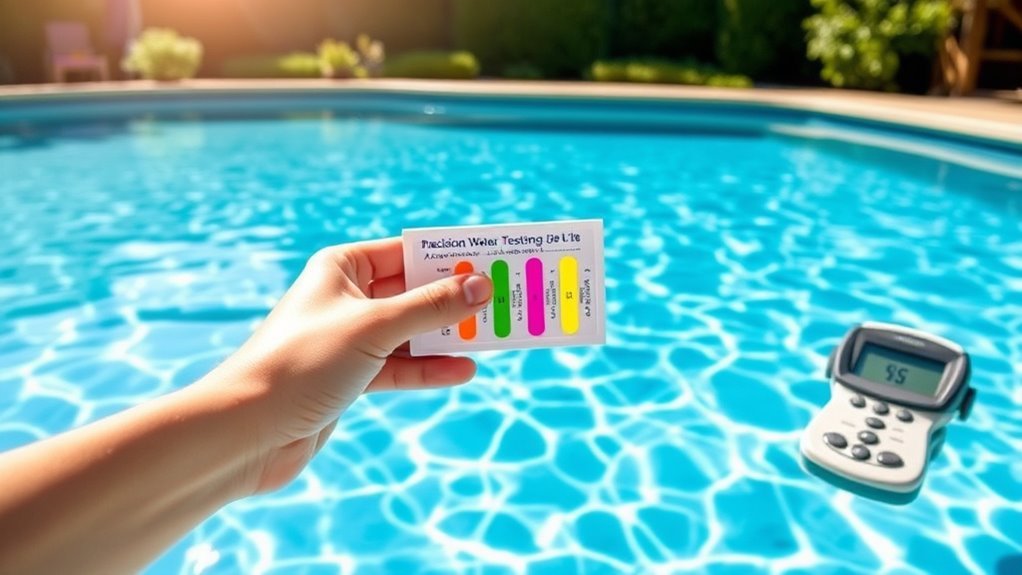
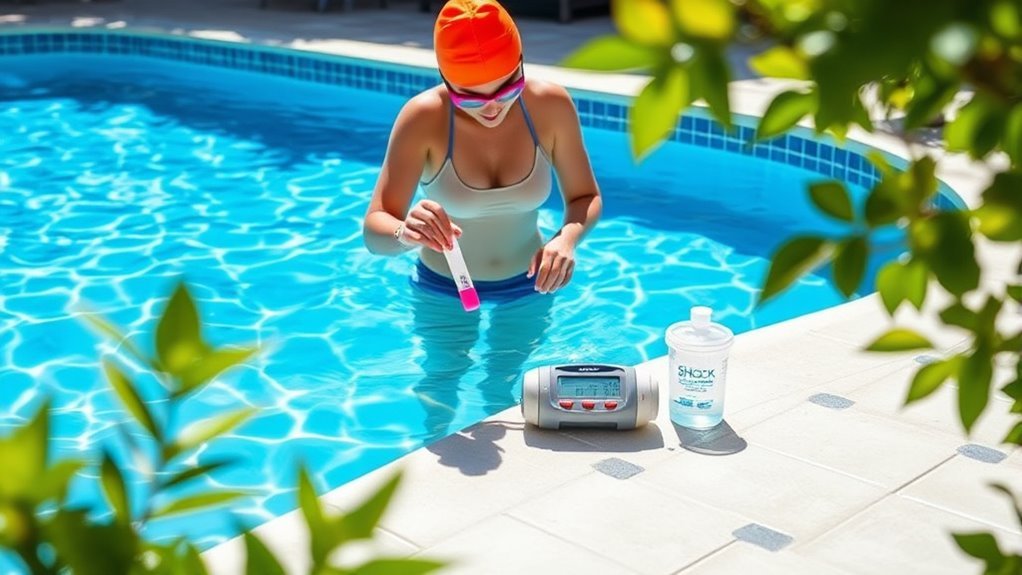
Before you jump back into the pool, you need to check the chlorine levels carefully to make certain they’re safe for swimming. Excess chlorine can irritate your skin and eyes, while too little won’t keep the water clean.
Use a reliable test kit or strips to measure the free chlorine level. Ideally, it should be between 1 and 3 ppm (parts per million).
| Chlorine Level (ppm) | Safety Status | Action Needed |
|---|---|---|
| 0 | Unsafe | Add chlorine |
| 0.5 – 1 | Borderline | Monitor closely |
| 1 – 3 | Safe | You’re good to swim |
| 3 – 5 | Slightly High | Wait or dilute water |
| Above 5 | Unsafe | Do NOT swim, shock again |
Check levels regularly to swim safely.
Ideal Waiting Time After Shocking Your Pool
Once you confirm that the chlorine levels are within the safe range, you’ll need to wait before swimming. The ideal waiting time after shocking your pool typically ranges from 8 to 24 hours.
This pause allows the chlorine to fully disinfect the water and dissipate any strong odors or irritants.
Factors like pool size, water temperature, and the amount of shock used can affect this timing, so always follow the product instructions carefully.
Don’t rush in as high chlorine levels can cause skin and eye irritation or respiratory issues.
To stay safe, use a reliable test kit to check chlorine levels before you jump in.
Waiting ensures a clean, balanced pool that’s safe and comfortable for you and your family to enjoy.
Testing Water Ph and Other Chemical Balances
Although chlorine levels are essential, testing your pool’s pH and other chemical balances is equally important to guarantee safe swimming conditions. After shocking your pool, use a reliable test kit or digital tester to measure the pH, alkalinity, and calcium hardness.
Your goal is a pH level between 7.2 and 7.8, ensuring the water isn’t too acidic or basic, which can irritate your skin and eyes. Check total alkalinity next; it should be between 80 and 120 ppm to help stabilize pH levels.
Maintain a pH of 7.2–7.8 and alkalinity of 80–120 ppm for balanced, comfortable pool water.
Calcium hardness should fall within 200 to 400 ppm to prevent corrosion or scaling. Testing these factors helps you avoid discomfort and protects your pool equipment.
Only swim once all chemical levels are balanced and safe.
Tips for Maintaining Safe Swimming Conditions Post-Shock
To keep your pool safe after shocking it, you should regularly monitor chemical levels and guarantee proper water circulation. Check chlorine and pH levels at least twice a day until they stabilize within the recommended ranges, usually chlorine between 1-3 ppm and pH between 7.2-7.8.
Run your pool pump and filter continuously for 24 hours post-shock to distribute chemicals evenly and clear contaminants. Avoid swimming until chlorine levels drop to safe levels; use a reliable test kit to confirm.
Also, maintain balanced alkalinity and calcium hardness to prevent equipment damage and skin irritation. Regularly clean your pool’s surface and vacuum debris to reduce organic matter buildup.
Following these steps helps ensure your pool remains safe, clear, and comfortable for swimming after shocking.
Frequently Asked Questions
Can Pool Shock Cause Skin Irritation or Allergic Reactions?
Yes, pool shock can cause skin irritation or allergic reactions, especially if you’re sensitive. You should avoid swimming until the chemical levels return to safe ranges to prevent discomfort or potential health issues.
Is It Safe for Pets to Swim After Pool Shocking?
Don’t worry, your pets shouldn’t swim immediately after shocking. Wait at least 24-48 hours to make certain chlorine levels drop. This helps prevent skin irritation or breathing issues, keeping your furry friends safe and happy in the pool.
What Should I Do if I Accidentally Swallow Pool Water Post-Shock?
If you accidentally swallow pool water after shocking, rinse your mouth with fresh water and drink plenty of clean water.
If you feel sick or have symptoms like nausea or vomiting, seek medical attention promptly to stay safe.
Can Pool Shock Affect Pool Equipment or Liners?
Yes, pool shock can harm your equipment and liners if used improperly. You should always follow instructions carefully and avoid over-shocking to prevent damage like corrosion or discoloration.
Regular maintenance helps keep everything safe and lasting.
How Often Should Pool Shocking Be Done Annually?
You should shock your pool about 4 to 6 times a year, depending on usage, weather, and water quality.
Regular shocking keeps your pool clean and safe, preventing algae and bacteria buildup effectively.
Conclusion
After shocking your pool, think of it as giving your water a fresh start, like dawn breaking after a storm. Before you plunge in, check those chlorine levels and balance the pH to guarantee the water feels like a safe, clear lake.
Waiting the right amount of time lets the pool heal, just like rest restores you. By caring for your pool this way, you’ll keep swimming safely and enjoy every splash with peace of mind.
Remember, swimming safely after shocking your pool means always testing chemical levels and ensuring proper balance before entering the water. This careful approach helps maintain a healthy pool environment and protects your well-being.