
How to Fix a Green Swimming Pool Step by Step
To fix a green swimming pool, start by testing and balancing the water chemistry—pH, chlorine, and alkalinity. Proper water chemistry is essential to clear up the green tint caused by algae.
Next, remove debris with a skimmer and brush the pool’s walls and floor thoroughly. This helps to dislodge algae and dirt that cling to surfaces.
Shock the pool with chlorine to kill algae effectively. Then, run your filter nonstop for at least 24-48 hours to clear out dead algae and particles.
Finally, add algaecide to prevent regrowth and maintain regular cleaning and chemical checks. Keep going to discover more detailed steps and tips for lasting clarity.
Test and Balance Pool Water Chemistry

Before you tackle the green algae, you need to test and balance your pool’s water chemistry. Grab a reliable test kit or strips to measure pH, chlorine, alkalinity, and stabilizer levels.
Your pH should sit between 7.2 and 7.6. Too high or low, and chlorine won’t work effectively.
Check alkalinity next; it should be between 80 and 120 ppm to stabilize pH.
Chlorine levels need a boost, typically between 1 and 3 ppm, but for a green pool, you’ll raise it higher during shock treatment.
Finally, test cyanuric acid (stabilizer); keep it around 30 to 50 ppm to protect chlorine from sunlight.
Adjust these levels carefully before moving on. Balancing your water guarantees chemicals work efficiently to clear that green haze.
Remove Debris and Brush Pool Walls
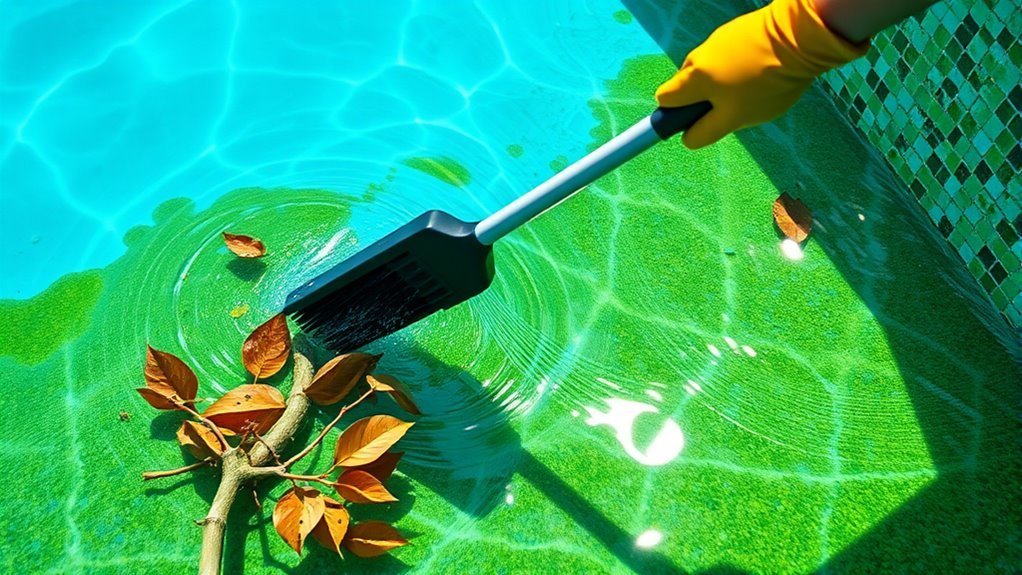
Once you’ve balanced the water chemistry, you’ll want to clear out any leaves, dirt, and debris from the pool surface and bottom. Use a skimmer net to remove floating debris and a pool vacuum or automatic cleaner for the bottom.
Clear leaves and debris with a skimmer and vacuum after balancing your pool’s water chemistry.
Don’t forget to empty the skimmer and pump baskets regularly to maintain good water flow.
Next, grab a stiff pool brush and scrub the pool walls and floor thoroughly. This helps loosen algae and dirt clinging to surfaces, making it easier to remove.
Focus on corners, steps, and other spots where algae tends to accumulate. Brushing also prevents algae from reattaching after treatment.
Shock the Pool With Chlorine

How do you quickly eliminate stubborn algae and bacteria from your pool? Shock your pool with chlorine to destroy these contaminants fast. First, measure your pool’s volume to calculate the right amount of shock treatment.
Use a high-quality, fast-dissolving chlorine shock product. Wearing gloves, dissolve the shock in a bucket of water if recommended, then evenly pour it around the pool’s edges. This raises the chlorine level markedly, killing algae and bacteria effectively.
Avoid swimming for at least 24 hours or until chlorine levels drop to safe limits. Shocking your pool after brushing the walls ensures chlorine reaches all surfaces.
Run the Pool Filter Continuously
After shocking your pool, you’ll need to keep the water moving to help clear out dead algae and contaminants. Running the pool filter continuously for at least 24 to 48 hours is essential. This constant circulation traps debris and prevents algae from settling again. Don’t turn off the filter prematurely; the water needs thorough cleaning.
Here’s a quick guide:
| Time Running Filter | Purpose |
|---|---|
| 24 hours | Remove suspended particles |
| 36 hours | Improve water clarity |
| 48 hours | Maximize algae removal |
Make sure to backwash or clean your filter after this process to maintain efficiency. Keeping your filtration system running nonstop during this phase is key to restoring a clear, healthy pool.
Use an Algaecide to Prevent Regrowth
Although running your filter clears dead algae, you’ll want to use an algaecide to stop new growth from taking hold. After your pool water clears, carefully follow the instructions on the algaecide label for proper dosing.
Typically, you’ll add the algaecide directly to the water, distributing it evenly around the pool’s perimeter. Using an algaecide helps target lingering algae spores that the filter can’t catch, preventing them from multiplying.
Be sure to choose the right type of algaecide. Copper-based or polyquat formulas work well for most pools. Avoid overdosing, as too much can harm your pool equipment or irritate swimmers.
Maintain Proper Pool Care Routine
To keep your pool water clear and prevent algae from returning, you need to maintain a consistent care routine. Regularly test and balance your pool’s chemicals, clean filters, and remove debris.
Skim the surface daily and vacuum the pool weekly to keep it pristine. Here’s a simple routine to follow:
| Task | Frequency | Tools Needed |
|---|---|---|
| Test chemicals | 2-3 times/week | Test kit |
| Skim debris | Daily | Skimmer net |
| Vacuum pool | Weekly | Pool vacuum |
| Clean filter | Every 2 weeks | Filter cleaner |
| Check water level | Weekly | Hose or bucket |
Stick to this schedule, and your pool will stay sparkling and algae-free all season long.
Frequently Asked Questions
Can a Green Pool Damage the Pool Liner or Equipment?
Yes, a green pool can damage your liner and equipment if left untreated. Algae and imbalanced chemicals can cause staining, corrosion, and clog filters. You’ll want to act quickly to protect your pool’s components.
How Long Does It Take for a Pool to Turn Green?
You might not notice until overnight, but yeah, your sparkling blue pool can turn green in just 24 to 72 hours if algae find their way in.
Is It Safe to Swim in a Green Pool?
No, it isn’t safe to swim in a green pool. The algae and bacteria can cause skin irritations or infections.
You should clean and treat the water thoroughly before jumping back in for a swim.
What Causes a Pool to Turn Green in the First Place?
Your pool turns green because algae grow when sanitizer levels drop, sunlight heats the water, and circulation is poor. Without enough chlorine, algae multiply quickly, turning your water green and cloudy.
You need to act fast.
Can Natural Sunlight Help Clear a Green Pool Faster?
Yes, natural sunlight boosts algae growth, so it actually slows clearing your green pool. Studies show sunlight can increase algae reproduction by 50%.
You’ll want to limit sun exposure and use algaecide for faster results.
Conclusion
So, you’ve turned your green swamp back into a sparkling pool—congratulations! Who knew that a little chemistry, some scrubbing, and a shock treatment could save your summer fun? It’s almost ironic that all it took was a bit of effort instead of buying a new pool.
Keep up the routine, or you might just be swimming with the algae again sooner than you think. Regular maintenance is key to preventing your pool from turning green again. Enjoy your clear water—it’s well earned!
By following these steps to fix a green swimming pool, you’ve ensured your water stays clean and inviting. Remember, consistent care and proper treatment will keep your pool sparkling all season long.