
How to Swim Safely After Getting My Ears Pierced
You should wait 6-8 weeks after getting your earlobes pierced before swimming to avoid infections. Swimming safely after getting your ears pierced involves protecting fresh piercings by using waterproof ear plugs or a snug swim cap. Rinse with clean water afterward to remove chlorine or salt that can irritate the area.
Keep the pierced area clean with saline solution and avoid twisting your jewelry to prevent complications. Choose hypoallergenic, water-resistant earrings if you plan to swim regularly. If you want to make certain of safe swimming and faster healing, there are additional steps worth considering.
Understanding the Healing Process of New Ear Piercings
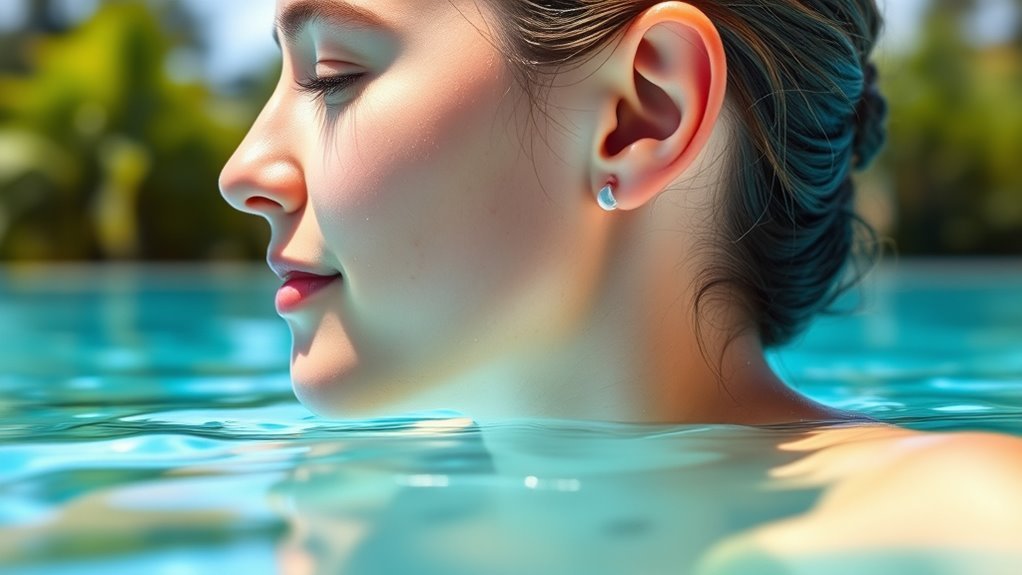
Although it might be tempting to dive right in, you need to understand that new ear piercings take time to heal properly. Typically, earlobes require about 6 to 8 weeks, while cartilage piercings can take several months.
During this time, your body forms a protective barrier around the piercing to prevent infection and promote healing.
You’ll want to keep the area clean by gently washing with saline solution twice a day.
Avoid twisting or removing the jewelry prematurely, as this can disrupt healing.
Pay attention to any redness, swelling, or pain, which could signal irritation or infection.
Risks of Swimming With Fresh Piercings
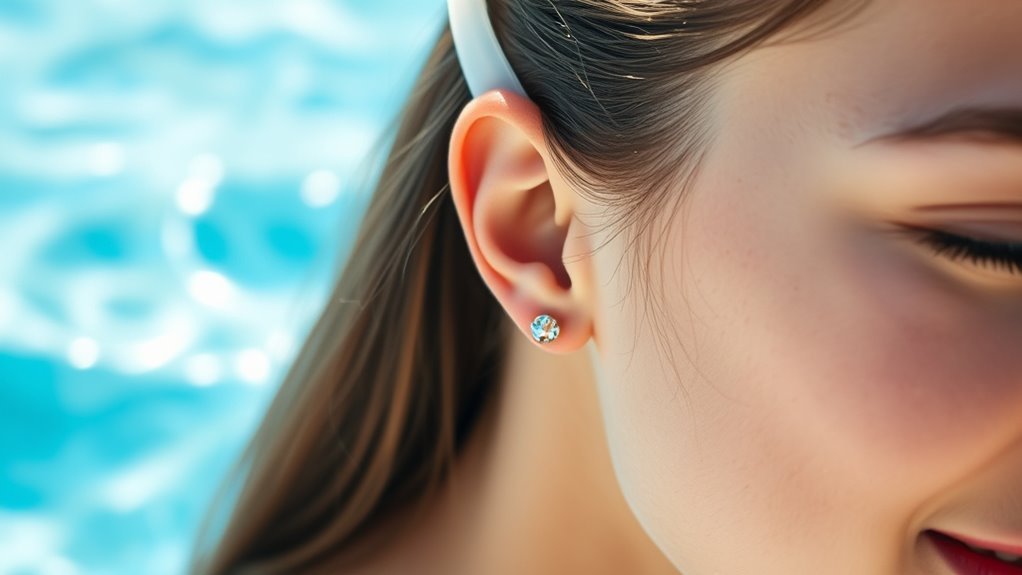
If you swim with fresh piercings, you increase the chance of infection because water often contains bacteria and other irritants. Pools, lakes, and oceans harbor germs that can easily enter your open wounds. This exposure may lead to redness, swelling, pain, or even pus.
Additionally, chemicals like chlorine in pools can irritate your delicate piercing site, slowing healing and causing discomfort. Saltwater, while natural, can also sting and dry out the skin around your piercing.
Physical activity in water might cause your jewelry to move or snag, increasing injury risk.
Overall, swimming too soon can compromise your piercing’s healing, potentially resulting in complications that require medical attention.
Protect your new piercings by avoiding water exposure until they’re sufficiently healed.
Ideal Waiting Period Before Swimming

Before you jump back into the pool or ocean, you should wait until your ear piercings have fully healed to reduce infection risks. Healing times vary, but generally, it takes about 6 to 8 weeks for earlobe piercings and up to 12 weeks or more for cartilage piercings.
During this period, exposing your fresh piercings to water increases the chance of irritation and infection.
Consider these factors when determining your waiting period:
- Type and location of the piercing
- Your body’s healing rate
- Advice from your professional piercer
- Signs of complete healing, like absence of redness and discharge
- Avoidance of swimming in unclean or stagnant water
Waiting patiently guarantees your piercing heals properly and stays healthy.
Protective Measures to Use While Swimming
When you decide to swim with pierced ears that have healed, taking protective measures can help prevent irritation and infection. First, consider wearing a snug-fitting swim cap or silicone ear plugs designed to keep water out. These create a barrier, reducing exposure to bacteria and chlorine.
Before swimming, apply a small amount of waterproof antibiotic ointment or petroleum jelly around the piercing to shield the area. After swimming, gently dry your ears with a clean towel and avoid touching or twisting the earrings.
Rinse your ears with clean, fresh water to wash away any chemical residues.
Choosing Suitable Ear Jewelry for Water Activities
Since water activities expose your piercings to moisture and chemicals, choosing the right ear jewelry is essential to prevent irritation and infection. You’ll want to pick pieces that are durable, hypoallergenic, and secure enough to stay in place while you swim.
Avoid materials that can react with chlorine or saltwater, causing discoloration or damage.
Consider these tips when selecting jewelry for water activities:
- Opt for surgical stainless steel, titanium, or 14k+ gold to reduce allergic reactions.
- Choose simple studs or hoops with secure backs to avoid losing them.
- Avoid costume or plated jewelry that can degrade quickly.
- Select smooth designs without intricate crevices that trap water and bacteria.
- Prioritize jewelry labeled water-resistant or designed for active lifestyles.
This helps keep your piercings safe and comfortable during swimming.
Cleaning Your Piercings After Swimming
Although swimming can be invigorating, exposing your new piercings to pool water or ocean salt can introduce bacteria and irritants that increase infection risk.
After you swim, rinse your ears gently with clean, fresh water to wash away any chemicals or salt.
Avoid using harsh soaps or alcohol, as they can dry out and irritate your piercing.
Next, apply a saline solution or a saltwater soak specifically designed for piercings to help cleanse and soothe the area.
Use a clean cotton swab or pad to apply the solution carefully, avoiding excessive rubbing.
Pat the area dry with a sterile paper towel or let it air dry.
Keeping your piercings clean and dry after swimming supports proper healing and reduces complications.
Signs of Infection to Watch For
Keeping your piercings clean after swimming helps prevent infections, but it’s important to recognize the signs if one does develop. If you notice any unusual symptoms around your pierced ears, act promptly to avoid worsening issues.
Common signs of infection include:
- Redness and swelling extending beyond the piercing site
- Persistent pain or tenderness that doesn’t improve
- Warmth around the area indicating inflammation
- Discharge that’s yellow, green, or has a foul odor
- Development of small bumps or crusting around the piercing
Pay close attention to these symptoms, especially after swimming, as water can introduce bacteria.
Catching an infection early helps you manage it effectively, keeping your healing process on track and preventing complications.
When to Seek Professional Medical Advice
If you notice any signs of infection that worsen or don’t improve within a few days, you should seek professional medical advice promptly. Persistent redness, swelling, or pain around your piercing may indicate an infection that needs treatment.
If you experience fever, pus discharge, or red streaks spreading from the piercing site, contact a healthcare provider immediately. These symptoms suggest a more serious infection requiring medical intervention.
Don’t wait or try to self-treat severe symptoms, as delaying care can lead to complications. Your doctor might prescribe antibiotics or recommend specific care to help your piercing heal safely.
Tips for Maintaining Piercing Hygiene During Summer
Taking prompt action when signs of infection appear helps protect your piercing, but maintaining proper hygiene during summer plays a big role in preventing issues altogether. Warm weather and increased sweating can create a breeding ground for bacteria, so you need to be extra cautious.
Keep your piercing clean and dry, avoid touching it with dirty hands, and steer clear of swimming in pools, lakes, or oceans until fully healed.
Here are essential tips to maintain your piercing hygiene during summer:
- Clean your piercing twice daily with saline solution.
- Pat dry with a clean, disposable paper towel instead of cloth.
- Avoid heavy makeup or hair products near the piercing.
- Change pillowcases regularly to reduce bacterial buildup.
- Wear breathable clothing and avoid tight hats that irritate the area.
Following these steps helps you enjoy summer safely while protecting your new piercing.
Frequently Asked Questions
Can Swimming Speed up the Healing of New Ear Piercings?
No, swimming won’t speed up healing; it can actually cause infections by exposing your new piercing to bacteria.
You should keep your ears dry and clean to promote proper healing and avoid complications.
Are Saltwater Pools Safer Than Chlorinated Pools for Fresh Piercings?
Saltwater pools aren’t necessarily safer than chlorinated ones for fresh piercings. Both can irritate or introduce bacteria.
You should avoid swimming until your piercing heals fully to prevent infection and promote proper healing.
Does Ear Piercing Location Affect Swimming Precautions?
Yes, your piercing location affects swimming precautions. Cartilage piercings take longer to heal and need extra care to avoid infection, so you should avoid swimming longer.
Earlobe piercings heal faster but still require protection in water.
Can Ear Piercing Pain Worsen After Swimming?
Yes, your ear piercing pain can worsen after swimming if water irritates the fresh wound or introduces bacteria.
You should avoid swimming until fully healed or protect your ears with waterproof covers to prevent infection and discomfort.
Are Waterproof Earphones Safe With New Piercings?
Think of waterproof earphones as a double-edged sword; they can trap moisture around new piercings, increasing infection risk.
Conclusion
Swimming too soon after getting your ears pierced can increase infection risk by up to 70%. To keep your piercings safe, wait at least 6-8 weeks before swimming. Using waterproof protectors while in the water adds an extra layer of protection.
Make sure to clean your piercings thoroughly afterward to prevent any bacteria buildup. Staying vigilant about hygiene helps you enjoy water activities without complications.
Remember, taking these precautions not only speeds up healing but also prevents painful infections. By following these tips, you can confidently dive back into summer fun with healthy, happy ears and maintain safe swimming practices after ear piercing.