How Do I Lower the Ph in My Swimming Pool Quickly?
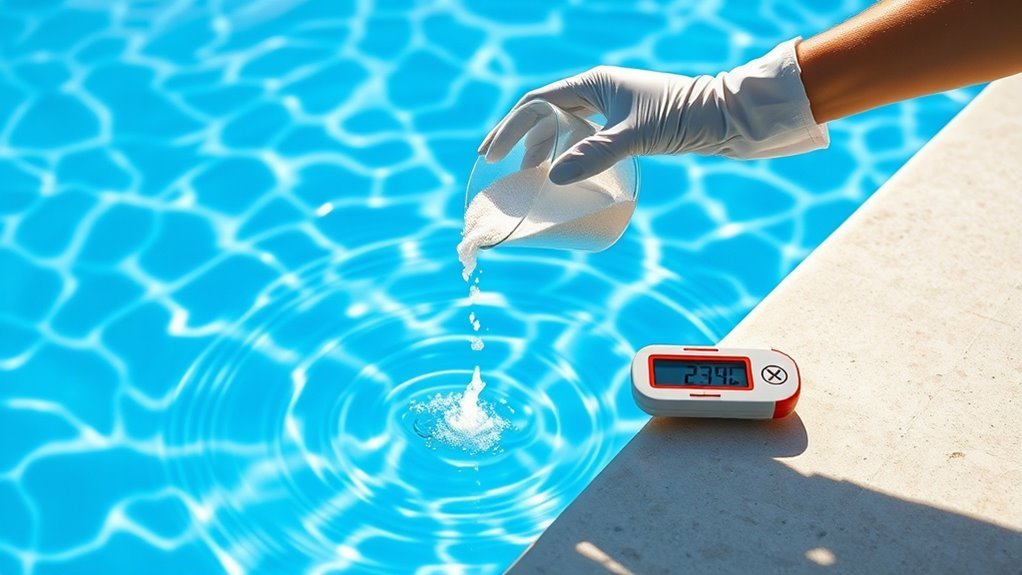
You can quickly lower your swimming pool’s pH by adding muriatic acid while your pump runs to circulate the chemical evenly. This is one of the most effective methods to adjust pH levels quickly and safely. Always wear gloves and goggles for safety when handling pool chemicals.
Measure your current pH to calculate the right acid amount, then pour it slowly into the deep end of the pool. This helps distribute the acid evenly and prevents damage to pool surfaces. Retest the pH after about 30 minutes and adjust if needed.
For ongoing balance and other chemical options, there are practical tips and alternatives to keep your pool water comfortable and clear. Regular monitoring and maintenance will ensure your swimming pool remains safe and enjoyable for everyone.
Understanding the Ideal Ph Range for Pool Water
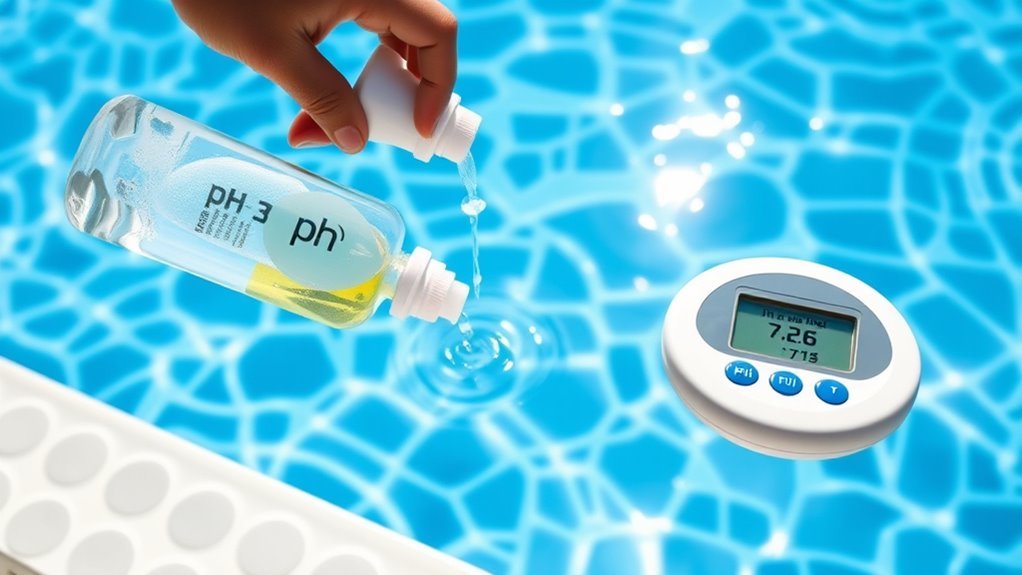
Although maintaining your pool’s pH might seem tricky, understanding the ideal range makes it much easier. You want your pool’s pH to stay between 7.2 and 7.8. This range keeps the water comfortable for swimmers and protects your pool equipment from corrosion or scaling.
If the pH falls below 7.2, the water becomes acidic, which can irritate your skin and eyes.
On the other hand, if it rises above 7.8, the water turns alkaline, causing cloudiness and reducing the effectiveness of chlorine.
Regularly testing your pool’s pH helps you catch any shifts early. That way, you can take quick action to keep the water balanced, safe, and inviting all season long.
Common Causes of High Ph in Swimming Pools
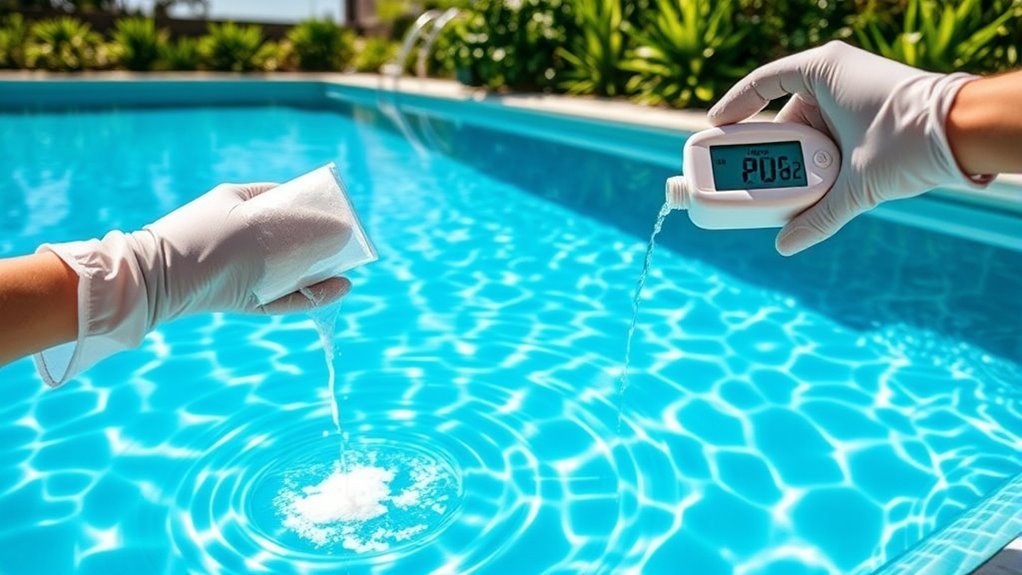
When you notice your pool’s pH creeping above the ideal range, it’s often due to several common factors. Understanding these can help you address the issue quickly. Here are three usual causes:
Noticing your pool’s pH rising? It’s usually caused by common, easily fixable factors.
- Alkaline Fill Water: If your fill water has a high pH or alkalinity, it naturally raises your pool’s pH over time.
- Chemical Imbalance: Using too much alkaline-based sanitizer or stabilizer can push the pH upward.
- Environmental Influences: Debris, leaves, and rainwater can introduce substances that increase pH levels.
Using Muriatic Acid to Quickly Lower Ph
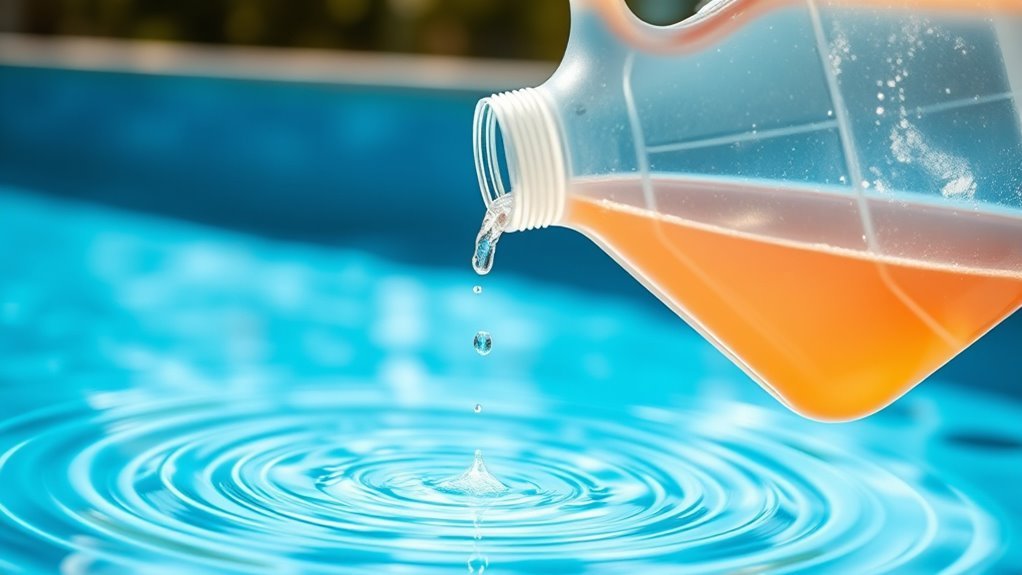
If your pool’s pH rises quickly and needs immediate adjustment, muriatic acid offers an effective solution. It’s a strong acid that lowers pH levels rapidly when added correctly.
Before you start, make sure to wear protective gloves and goggles, and keep the pool pump running to circulate the acid evenly.
Measure your pool’s current pH and calculate the amount of muriatic acid needed, usually found on the product label.
Slowly pour the acid into the deep end, avoiding direct contact with pool surfaces to prevent damage.
After application, wait at least 30 minutes before retesting the water to ensure pH has dropped to the ideal range of 7.2 to 7.6.
Alternative Chemicals for Reducing Pool Ph
Muriatic acid works well to lower your pool’s pH quickly, but it’s not the only option available. You can choose from several alternative chemicals that effectively reduce pH levels without the strong fumes of muriatic acid.
Here are three common alternatives:
- Sodium bisulfate (dry acid) This granular form is easy to handle and dissolves quickly, making it a popular choice for safe, controlled pH reduction.
- CO2 injection Injecting carbon dioxide into your pool water forms carbonic acid, which naturally lowers pH without adding harsh chemicals.
- Vinegar (acetic acid) While not common for large pools, household vinegar can lower pH in small amounts or emergency situations.
Each option has its pros and cons, so pick the one that fits your pool size and comfort level best.
Tips for Maintaining Balanced Ph Levels Consistently
To keep your pool’s pH balanced consistently, you need to monitor it regularly and adjust as needed. Test your pool’s pH at least twice a week using reliable test strips or a digital tester.
Regularly test your pool’s pH twice weekly with reliable strips or a digital tester to maintain balance.
When you spot pH creeping above 7.6, act quickly to add the right amount of pH reducer. Avoid large, infrequent adjustments; small, frequent tweaks help maintain stability.
Also, check alkalinity levels since they influence pH balance. Keep alkalinity between 80-120 ppm.
Keep your pool clean and well-circulated, as debris and stagnant water can impact pH.
Finally, store chemicals properly and add them carefully to prevent sudden changes.
Frequently Asked Questions
Can Low Ph Damage My Pool Equipment?
Yes, low pH can damage your pool equipment by causing corrosion on metal parts and degrading liners or seals.
You’ll want to maintain balanced pH levels to protect your investment and keep everything running smoothly.
How Often Should I Test My Pool’s Ph?
You should test your pool’s pH at least twice a week during swimming season. If you use chemicals frequently or after heavy rain, test more often to keep the water balanced and protect your pool equipment effectively.
Is It Safe to Swim Immediately After Adding Acid?
No, you shouldn’t swim immediately after adding acid. Wait at least 4 to 6 hours and test the pH again to guarantee it’s balanced and safe.
This prevents skin irritation and protects your eyes.
What Ph Level Is Safest for Children?
You should keep the pool pH between 7.2 and 7.6 for children’s safety. This range prevents skin irritation and protects eyes, ensuring a comfortable and healthy swimming experience for kids.
Can Rain Affect My Pool’s Ph Levels?
Yes, rain can affect your pool’s pH levels. Acidic rain lowers pH, making water more acidic, while alkaline rain raises pH.
You’ll need to test and adjust your pool’s pH after heavy rainfall to keep it balanced.
Conclusion
Lowering your pool’s pH quickly is easier than you think, especially when you use muriatic acid or other effective chemicals. These substances work fast to bring your pH back into the ideal range.
Remember, keeping your pH balanced isn’t just about quick fixes—it’s about regular care to avoid turning your pool into a chemistry experiment gone wild. Stay vigilant, test often, and adjust as needed.
With the right steps, your pool will stay crystal clear and inviting, like an invigorating oasis in the desert of summer heat! Consistently maintaining the correct pH is key to enjoying a safe and refreshing swimming experience.