How Long to Wait Before Swimming After Getting a Tattoo
You should wait at least two to four weeks before swimming after getting a tattoo to give your skin time to heal fully. Proper tattoo aftercare is essential to prevent complications and ensure your tattoo remains vibrant.
Swimming too soon can expose your tattoo to bacteria, chlorine, and salt, leading to infection, irritation, or fading. Keeping your tattoo dry helps scabs form and ink settle properly.
Taking good care during this time guarantees your tattoo stays vibrant. If you want to know how to protect your tattoo once you hit the water again, keep exploring these tips.
Why Avoid Swimming Immediately After Getting a Tattoo
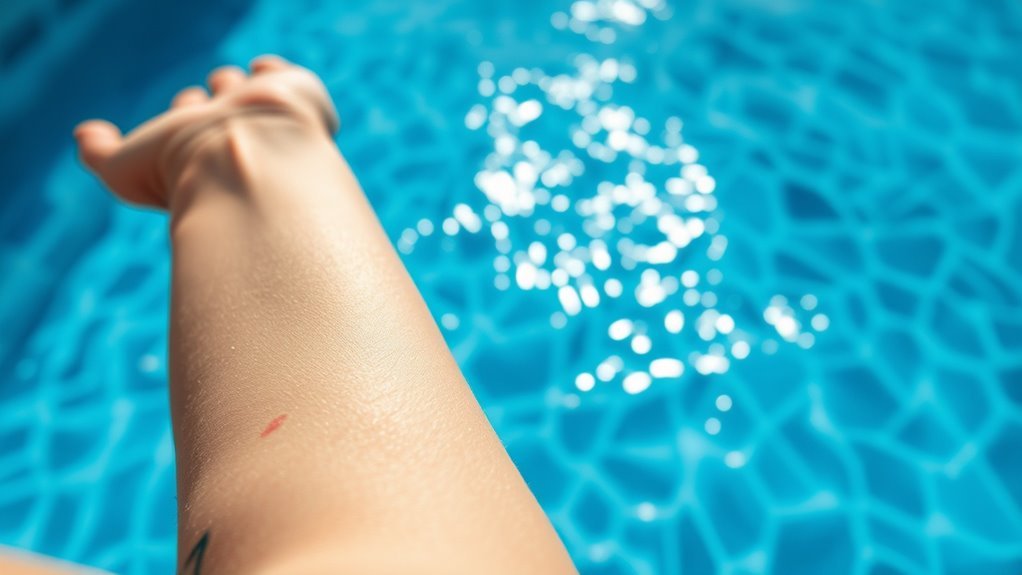
Because your fresh tattoo is fundamentally an open wound, you should avoid swimming right away to prevent infection. When you swim, your tattoo is exposed to bacteria and chemicals found in pools, lakes, or oceans, which can easily enter the open skin.
This exposure can slow down healing and increase the chance of irritation or infection. Additionally, prolonged water contact can cause the tattoo to peel prematurely, leading to uneven fading or loss of ink.
Your body needs time to form a protective scab and start the healing process without interference.
By waiting and keeping your tattoo dry initially, you help ensure vibrant, long-lasting results and reduce discomfort.
Risks of Exposing a New Tattoo to Water
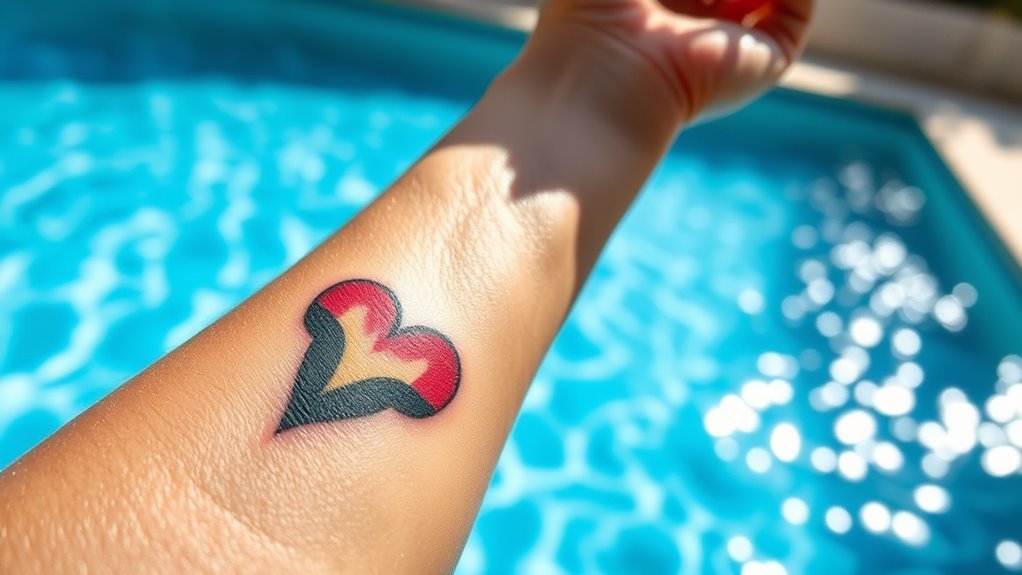
While your tattoo is healing, exposing it to water can introduce harmful bacteria and irritants that compromise the skin’s recovery. When you swim in pools, lakes, or oceans, you’re risking infection because these waters often contain bacteria and chemicals like chlorine or salt, which can inflame your fresh tattoo.
Water also softens the scabs and delicate skin, increasing the chance of peeling or fading ink prematurely. Additionally, soaking your tattoo for extended periods can slow the healing process, cause itching, and lead to scarring.
You might experience redness, swelling, or pus, signaling infection that requires medical attention. To protect your tattoo’s appearance and health, avoid submerging it in water until it’s fully healed, minimizing risks and ensuring the best outcome for your new body art.
Recommended Waiting Period Before Swimming
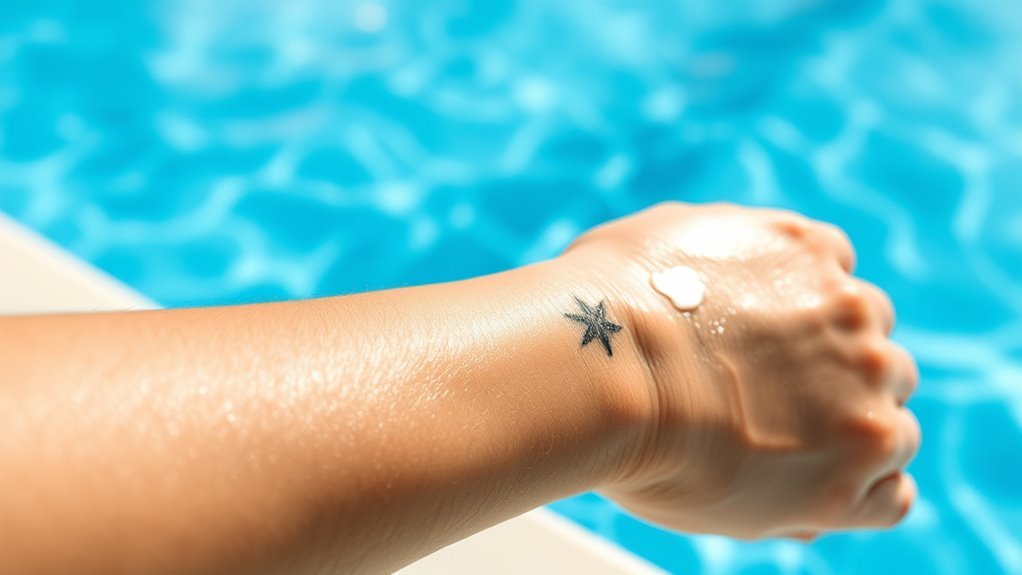
Since your tattoo is fundamentally an open wound during the healing process, you should wait at least two to four weeks before swimming. This waiting period allows your skin to heal properly, reducing the risk of infection and fading. The exact time depends on how quickly your body recovers and how well you care for the tattoo.
Here’s why waiting matters:
- Prevents bacteria from entering the open skin, avoiding infections
- Ensures the ink settles, keeping colors vibrant and sharp
- Allows scabs to fall off naturally, preventing damage
Caring for Your Tattoo During the Healing Process
If you want your tattoo to heal quickly and look its best, you need to follow a proper care routine. Start by gently washing the tattoo with lukewarm water and mild, fragrance-free soap twice a day.
Clean your tattoo gently twice daily with lukewarm water and mild, fragrance-free soap for optimal healing.
Pat it dry with a clean towel, don’t rub.
Apply a thin layer of tattoo-specific ointment or fragrance-free moisturizer to keep the skin hydrated but not smothered.
Avoid picking at scabs or scratching, as this can cause infection or fading.
Wear loose, breathable clothing to prevent irritation, and keep your tattoo out of direct sunlight.
Tips for Protecting Your Tattoo When You Start Swimming Again
Once you decide to swim again, taking extra care to protect your tattoo is essential to avoid damage or infection. Even after healing, your tattoo remains sensitive to harsh elements found in pools or natural water.
To keep it vibrant and healthy, follow these tips:
Apply a waterproof sunscreen: Protect your tattoo from UV rays, which can fade colors and damage skin.
Limit your swim time: Prolonged exposure to water can still irritate your tattooed skin.
Rinse and moisturize immediately: After swimming, clean your tattoo with fresh water and apply a fragrance-free moisturizer to soothe and maintain hydration.
Frequently Asked Questions
Can Sun Exposure Affect My Tattoo Healing Process?
Yes, sun exposure can slow your tattoo’s healing and cause fading or irritation.
You’ll want to keep it covered or use sunscreen once healed, protecting your ink and ensuring vibrant, long-lasting results.
Is It Safe to Use Tattoo-Specific Moisturizers?
You can safely use tattoo-specific moisturizers—they’re designed to keep your skin hydrated and promote healing.
Studies show 85% of people who use specialized aftercare report faster tattoo healing and reduced irritation, so go ahead and moisturize regularly!
How Can I Tell if My Tattoo Is Infected?
You can tell if your tattoo’s infected if it’s overly red, swollen, painful, or oozing pus. Fever or chills are warning signs too.
If you notice these, get medical help right away to avoid complications.
Will Sweating Affect My New Tattoo?
Don’t beat around the bush—sweating can irritate your new tattoo and slow healing. You’ll want to keep it clean and dry, avoiding intense workouts until it’s fully settled to prevent infection or fading.
Can I Shower With My New Tattoo?
Yes, you can shower with your new tattoo, but keep it brief and avoid soaking it. Use lukewarm water, gentle soap, and pat dry; don’t scrub or let water hit it directly to protect the healing skin.
Conclusion
When it comes to swimming after getting a tattoo, patience truly is a virtue. You’ll want to wait at least two to four weeks to let your new ink heal properly and avoid infections or fading.
Taking good care of your tattoo during this time guarantees it looks great for years to come. Remember, “slow and steady wins the race”—so protect your art now, and you’ll enjoy it longer later.
In conclusion, waiting the appropriate amount of time before swimming is essential for tattoo healing. Proper aftercare and avoiding water exposure help prevent infection and fading, ensuring your tattoo stays vibrant and healthy.