How Do You Lower Total Alkalinity in a Swimming Pool Step by Step
To lower total alkalinity in a swimming pool, start by testing the water using a reliable kit to get an accurate reading. Knowing your pool’s total alkalinity level is essential before making any adjustments. Calculate how much muriatic acid or dry acid you need based on your pool size and current alkalinity.
Always wear protective gear such as gloves and goggles when handling acids. Add the acid diluted evenly around the pool perimeter safely to avoid any damage or splashing. After adding acid, wait at least four hours before retesting the water to see the effect.
If necessary, adjust the acid amount gradually, retesting after each addition to avoid overshooting. You’ll also want to balance pH levels afterward to ensure the water is safe and comfortable for swimming. Follow these steps carefully to maintain perfect pool water chemistry.
Testing Your Pool Water for Total Alkalinity
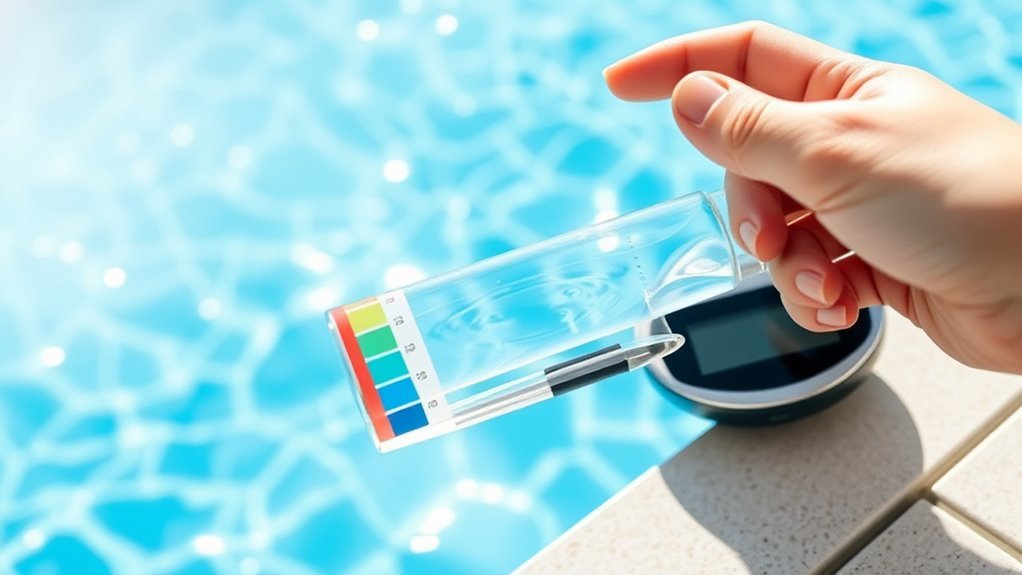
Before you can lower your pool’s total alkalinity, you need to test it accurately. Grab a reliable test kit designed for pool water, which usually includes test strips or liquid reagents.
Dip the test strip into your pool water or add a few drops of reagent to a water sample, then wait for the color change.
Compare the resulting color to the chart provided with your kit to determine the total alkalinity level. It’s best to test water from about 18 inches below the surface to get a representative sample.
You should also test in multiple spots around the pool to ensure consistency.
Knowing your pool’s total alkalinity helps you decide if it’s too high and needs adjustment to prevent scaling or cloudy water.
Keep your testing tools clean and store them properly for accurate results.
Calculating the Amount of Acid Needed
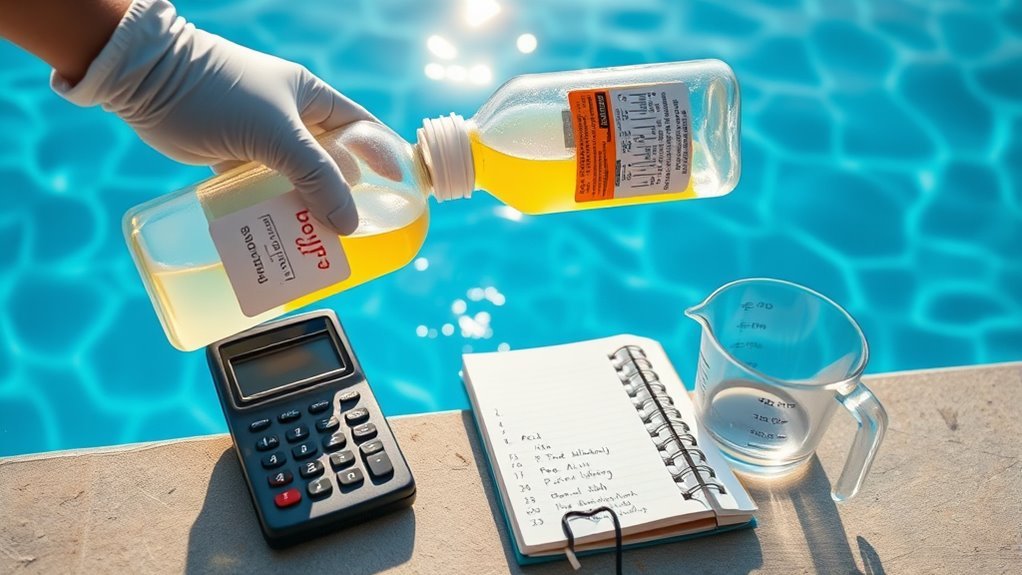
Once you know your pool’s total alkalinity level, you can figure out how much acid to add to bring it down to the ideal range. First, determine your pool’s volume in gallons.
Knowing your pool’s alkalinity and volume is key to adding the right amount of acid.
Then, check the recommended acid dosage per 10,000 gallons for the amount of alkalinity reduction you want.
For example, lowering total alkalinity by 10 ppm typically requires about 1.5 pints of muriatic acid per 10,000 gallons.
Calculate the difference between your current alkalinity and the target level. Multiply that difference by the acid dosage per 10,000 gallons, then adjust based on your pool’s size.
This calculation guarantees you add the correct amount of acid without over-treating. Always add acid gradually and retest to avoid sudden pH swings.
Choosing the Right Acid for Lowering Alkalinity
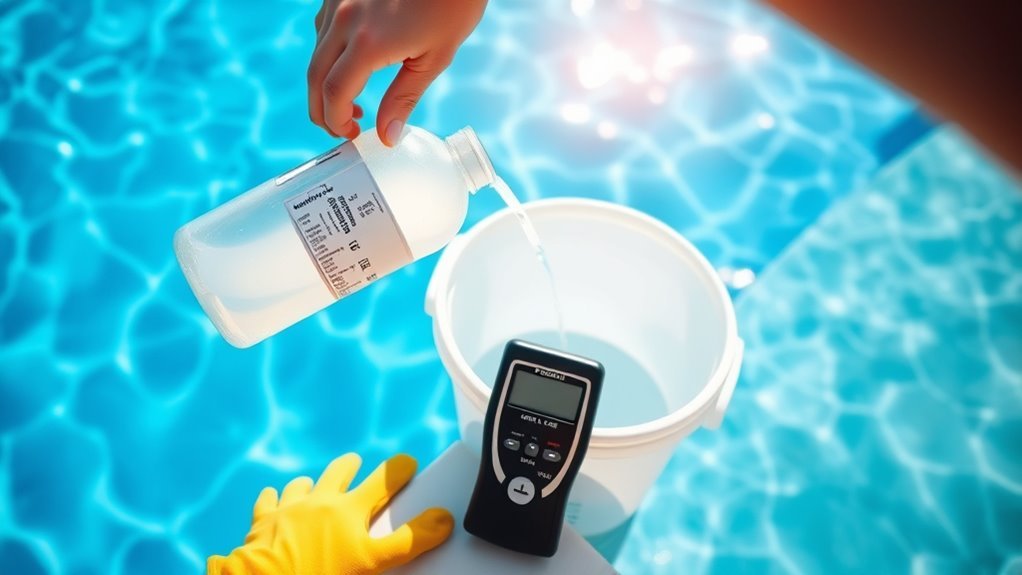
When you need to lower your pool’s total alkalinity, selecting the right acid is essential for effective and safe treatment. The two most common acids used are muriatic acid and sodium bisulfate (dry acid).
Muriatic acid works quickly and is cost-effective, making it ideal if you want fast results. However, it requires careful handling due to its strong fumes and corrosive nature.
Sodium bisulfate is safer to handle and easier to store, but it acts more slowly and often costs more. Your choice depends on how quickly you want to adjust alkalinity, your comfort level handling chemicals, and storage considerations.
Avoid using acids not designed for pools, as they can damage surfaces or disrupt water balance. Always pick a pool-specific acid to protect your equipment and swimmers.
Adding Acid Safely to Your Pool
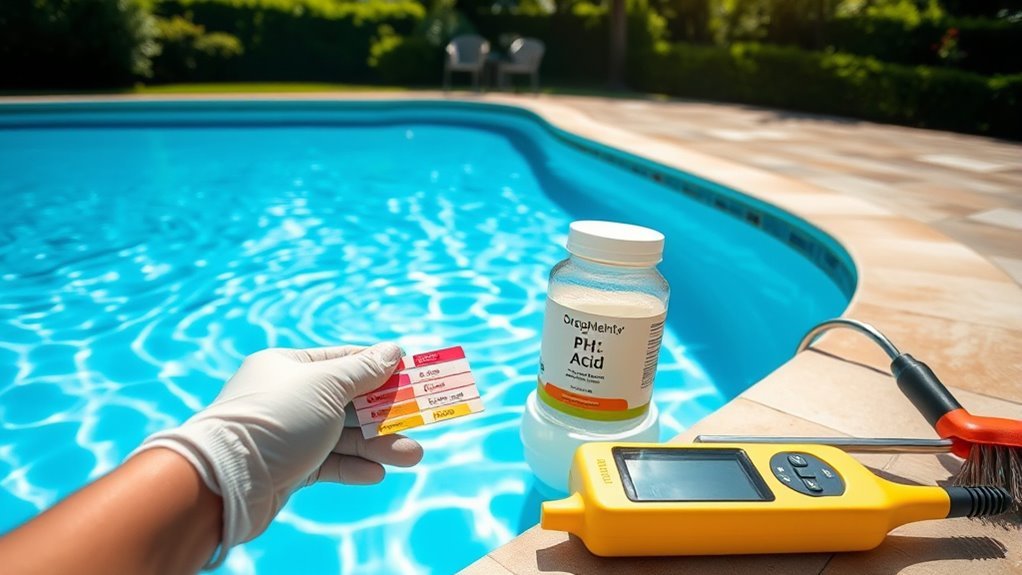
Handling acids like muriatic acid or sodium bisulfate safely guarantees you get the best results without risking harm to yourself or your pool. Always wear protective gear, gloves, goggles, and long sleeves to shield your skin and eyes.
Never add water to acid; instead, slowly pour acid into a bucket of water to dilute it, preventing dangerous splashes.
Pour the diluted acid around the pool’s perimeter, avoiding direct contact with pool surfaces or equipment to prevent damage.
Work in a well-ventilated area and keep children and pets away during treatment.
After adding acid, wait at least an hour before swimming to let it disperse safely.
Following these precautions will help you lower total alkalinity effectively while maintaining a safe environment.
Retesting and Adjusting After Treatment
After adding acid to your pool, you’ll want to wait at least four hours before retesting the total alkalinity and pH levels to make certain the chemicals have fully circulated. Use a reliable test kit or strips to check these levels carefully.
If the total alkalinity remains above the recommended range (80-120 ppm), you may need to add more acid, but do so gradually to avoid overshooting the target.
Also, watch the pH closely; lowering alkalinity can cause pH to drop too low.
If that happens, adjust the pH with soda ash or baking soda as needed. Repeat testing after each adjustment until both alkalinity and pH stabilize within their suitable ranges, ensuring balanced water chemistry and ideal pool conditions.
Frequently Asked Questions
How Does High Total Alkalinity Affect Pool Water Chemistry?
High total alkalinity makes your pool water cloudy and raises pH, causing scaling and reducing sanitizer effectiveness. You’ll find balancing it essential to keep water clear, comfortable, and your chemicals working properly.
Can Total Alkalinity Impact Chlorine Effectiveness?
Yes, total alkalinity can influence chlorine effectiveness. If alkalinity’s too high, chlorine struggles to sanitize properly.
You’ll want to keep alkalinity balanced to ensure chlorine works efficiently and your pool stays clean and safe.
What Causes Total Alkalinity to Rise in Pools?
You’ll find total alkalinity rises in pools mainly because of source water with high bicarbonate levels, using alkaline chemicals, or evaporation concentrating minerals.
Regular testing helps you catch and manage these causes effectively.
How Often Should Total Alkalinity Be Tested?
Think of your pool’s alkalinity as a heartbeat; it needs regular checks. You should test total alkalinity at least once a week to keep it balanced, ensuring your water stays healthy and sparkling for every swim.
Are There Natural Alternatives to Acids for Lowering Alkalinity?
You can try natural alternatives like vinegar or lemon juice to lower alkalinity, but they’re less effective and slower than acids.
Always test your pool water frequently when using these to avoid unbalanced chemistry or damage.
Conclusion
Lowering your pool’s total alkalinity might seem tricky, but it’s straightforward when you follow these steps carefully. You might worry about using acid around your pool, but think of it as giving your water a gentle reset—done safely, it keeps your pool sparkling and balanced.
Just test, add acid slowly, and retest. With a little attention, your pool will stay clear and comfortable all season long, making every swim enjoyable. Remember, managing total alkalinity in a swimming pool is key to maintaining water quality and protecting your pool equipment.