How Fast Can a Manatee Swim at Top Speed?
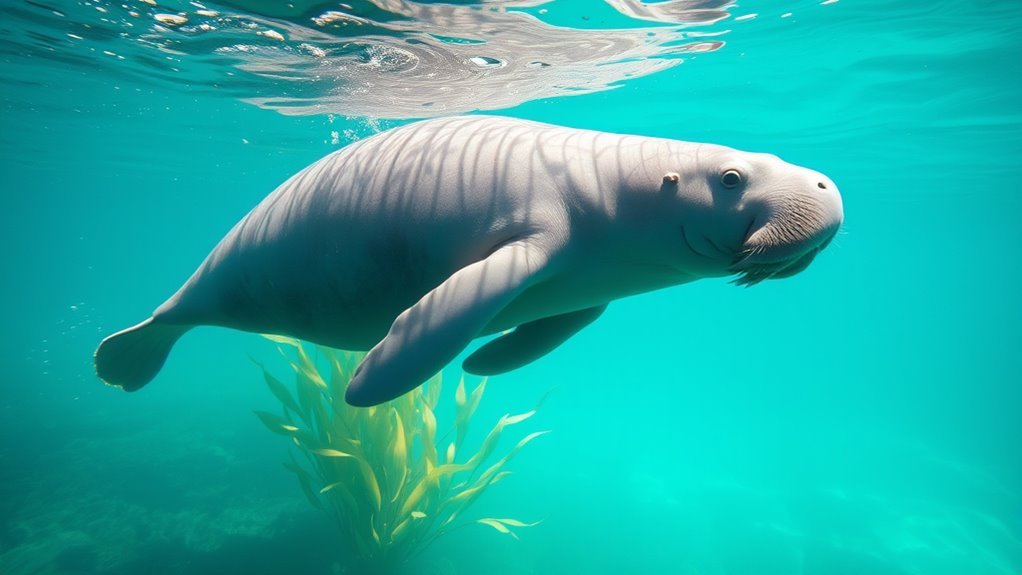
You can expect a manatee to swim at about 3 to 5 mph during regular movement, but it can reach top speeds up to 15 mph when it really needs to speed up, like escaping threats. Their large, paddle-shaped tail powers this burst, while their body shape keeps them streamlined.
Various factors like species, water conditions, and health affect how fast they move. If you want to understand more about what influences their speed and swimming style, keep exploring.
Manatee Species and Their Typical Speeds

Although manatees are often seen gliding slowly through the water, their swimming speeds can vary depending on the species. You should know there are three main types: West Indian, Amazonian, and West African manatees.
The West Indian manatee, common in Florida and the Caribbean, usually cruises around 3 to 5 mph but can sprint up to 15 mph in short bursts.
The Amazonian manatee, found in freshwater rivers, typically swims slower, averaging about 2 to 3 mph.
The West African manatee, inhabiting coastal and riverine areas, swims at speeds similar to the Amazonian species, around 3 mph.
Understanding these differences helps you appreciate how each species adapts its swimming abilities to its environment.
Factors Influencing Manatee Swimming Speed
When you watch a manatee swim, you might wonder what affects its speed beyond species differences. Several factors play a role.
Curious about what influences a manatee’s swimming speed beyond its species? Several factors come into play.
For one, the manatee’s size and weight impact how quickly it moves; larger, heavier individuals tend to swim slower because they need more energy to propel themselves.
Water conditions also matter. Calm, warm water lets manatees glide more easily, while strong currents or colder temperatures can slow them down.
Additionally, their health and energy levels influence speed. A healthy, well-fed manatee swims faster than one that’s tired or sick.
Ultimately, the manatee’s motivation, like escaping threats or reaching a food source, can push it to swim closer to its top speed. These elements combine to determine how fast a manatee travels at any given moment.
How Manatees Accelerate in Water
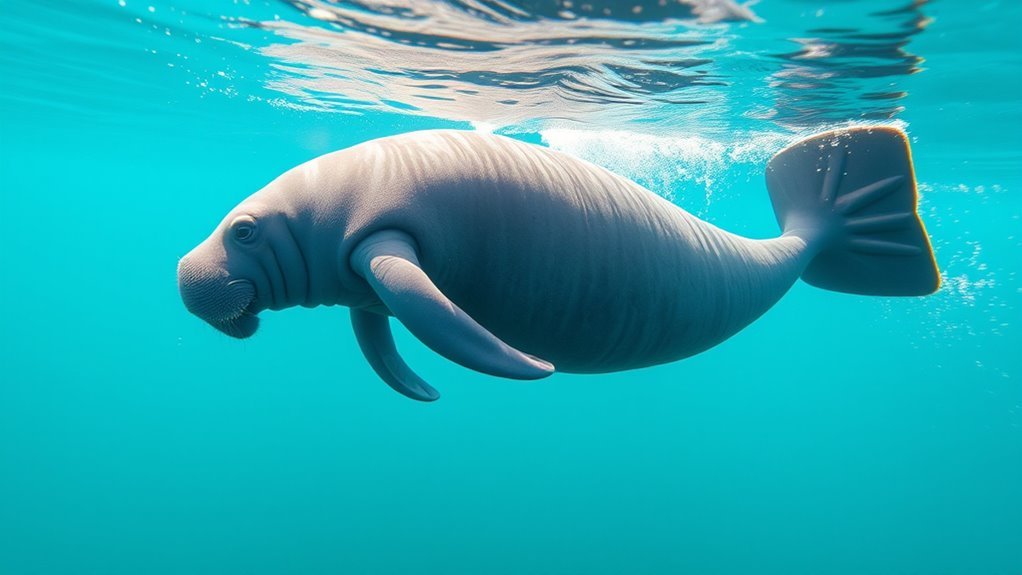
Understanding what affects a manatee’s swimming speed helps explain how they pick up pace in the water. When you watch a manatee accelerate, you’ll notice it starts with powerful, steady movements of its large tail.
The tail’s up-and-down strokes push water backward, propelling the manatee forward. At the same time, the manatee adjusts its body positioning to reduce drag, making its movement more efficient.
You’ll also see the manatee use its flippers for balance and minor steering, allowing smooth navigation as it speeds up. Unlike sudden bursts seen in some marine animals, manatees accelerate gradually, conserving energy while gaining momentum.
This steady acceleration suits their gentle nature and helps them maintain control in various water conditions.
Comparing Manatee Speed to Other Marine Animals
If you’ve ever wondered how fast manatees swim compared to other marine animals, the differences might surprise you. Manatees reach top speeds around 15 mph, which is slow compared to many ocean creatures.
Manatees swim up to 15 mph—slow compared to many ocean creatures but perfectly suited to their gentle nature.
Dolphins, for example, can sprint up to 25 mph, while orcas hit speeds near 34 mph.
Even sea turtles, though generally slower, can move at 20 mph in short bursts.
Manatees’ leisurely pace reflects their gentle nature and herbivorous diet, unlike the predatory lifestyle of faster swimmers.
So, while manatees aren’t built for speed, they glide through water with steady grace, perfectly adapted to their environment.
When you compare them to faster marine animals, you see just how unique their swimming style really is.
The Role of Manatee Anatomy in Movement
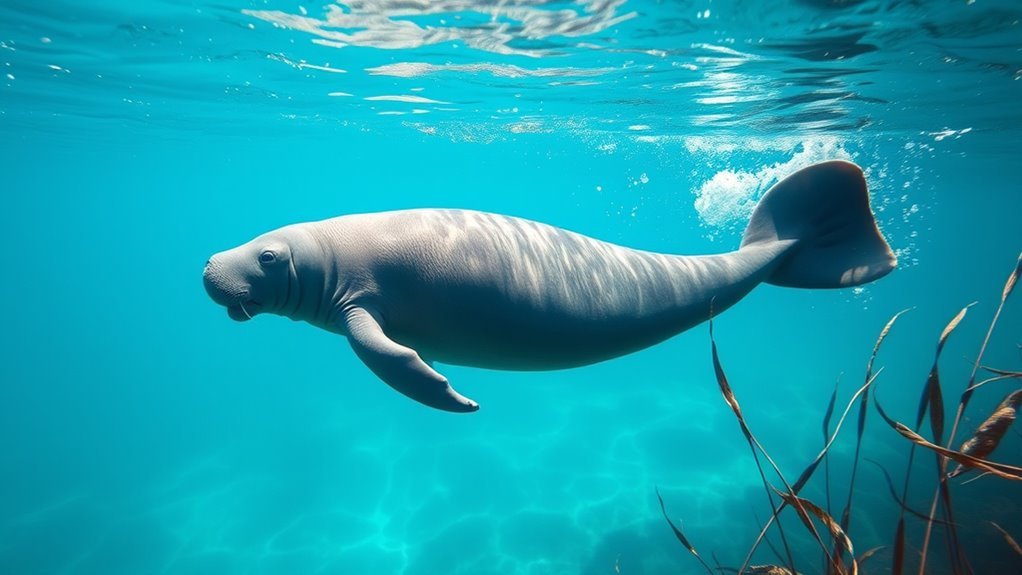
Manatees may not match the speed of dolphins or orcas, but their unique anatomy plays a big role in how they move through water. When you look at a manatee, you’ll notice its large, paddle-shaped tail, which provides powerful propulsion.
Unlike fish that use side-to-side tail movement, manatees move their tails up and down, giving them steady, efficient thrust. Their rounded bodies and thick skin reduce drag, helping you glide smoothly.
You’ll also see their flippers, which assist in steering and balance rather than speed.
Because manatees lack a dorsal fin, they rely on their tail and flippers to navigate. This anatomy suits their slow, deliberate swimming style, optimized for conserving energy rather than rapid bursts of speed.
Manatee Behavior During High-Speed Swimming
Although they usually swim slowly, manatees can accelerate quickly when threatened or excited. When you observe a manatee in high-speed mode, notice these behaviors:
Manatees are usually slow swimmers, but they can speed up quickly when feeling threatened or excited.
- Rapid Tail Movement They whip their paddle-shaped tails powerfully to gain speed.
- Streamlined Body Posture They tuck their flippers close to minimize drag.
- Short Bursts They swim fast in quick bursts rather than sustained sprints.
You’ll see manatees use these tactics to escape predators or navigate obstacles. High-speed swimming is rare, so when they do it, it’s purposeful and intense.
You wouldn’t expect these gentle giants to move so swiftly, but their behavior proves they can when the situation demands it.
Keep an eye out for these signs next time you spot a manatee speeding through the water!
Environmental Conditions Affecting Manatee Speed
How do environmental factors influence a manatee’s swimming speed? You’ll find that water temperature, current strength, and habitat type all play critical roles. Cooler waters can slow them down, while warm, calm waters encourage faster movement.
Strong currents may either hinder or help, depending on direction. Clear, obstacle-free waterways allow manatees to glide smoothly, but murky or debris-filled waters force them to slow down to avoid injury.
| Environmental Factor | Effect on Manatee Speed |
|---|---|
| Water Temperature | Slower in cold, faster in warm |
| Current Strength | Can help or hinder speed |
| Water Clarity | Clear water promotes speed |
| Habitat Type | Open waters enable faster swimming |
| Obstacles Present | Slows down to navigate safely |
Understanding these helps you appreciate how delicate their swimming abilities really are.
Human Impact on Manatee Mobility and Speed
When you navigate waters crowded with boats and human activity, you quickly realize the challenges manatees face in maintaining their natural speed and mobility. Human presence affects manatees in several ways:
- Boat Collisions: Fast-moving boats can injure manatees, limiting their ability to swim quickly or freely.
- Habitat Disruption: Coastal development and pollution reduce the quality of manatee habitats, forcing them to navigate more cautiously.
- Noise Pollution: Constant noise from engines interferes with their communication and stress levels, impacting their swimming behavior.
You can help protect manatees by following speed limits in manatee zones, reducing water pollution, and supporting conservation efforts. These actions guarantee manatees maintain their natural speed and mobility without unnecessary human interference.
Frequently Asked Questions
How Long Do Manatees Live in the Wild?
Manatees live about 40 years in the wild, though some can reach up to 60. If you observe them closely, you’ll notice their slow, gentle nature helps them survive and thrive in their aquatic habitats.
What Do Manatees Eat to Maintain Their Energy?
You feast on underwater gardens, munching seagrass, algae, and aquatic plants to fuel your gentle strength. This green buffet fuels your slow dance through the water, keeping your energy flowing like a calm river current.
How Do Manatees Communicate Underwater?
You’ll find manatees communicate underwater using vocalizations like squeaks and chirps. They also use body language, such as touching or posturing, to express emotions and coordinate with each other in their aquatic environment.
Are Manatees Endangered or at Risk?
Manatees are walking a tightrope—they’re vulnerable but not officially endangered. You’ve got to protect their habitats since pollution and boat strikes put them at risk. Your efforts can help keep these gentle giants safe and thriving.
Can Manatees Hold Their Breath Longer Than Dolphins?
No, you can’t say manatees hold their breath longer than dolphins. Manatees typically hold breath for about 15 minutes, but dolphins can hold theirs for up to 20 minutes, depending on species and activity level.
Conclusion
Just like a gentle river flowing with unexpected bursts of energy, a manatee glides through the water with surprising speed when it needs to. You might see it as a symbol of calm strength, reminding you that even the gentlest creatures can move swiftly against the current.
Understanding their speed and spirit helps you appreciate these peaceful giants, urging you to protect their watery home. By doing so, we ensure that these manatees can continue to swim freely and gracefully for generations to come. Protecting their habitat is essential for the survival of these incredible animals and maintaining the balance of their aquatic ecosystem.