How Long After Pool Shock Can You Swim Safely
After shocking your pool, understanding how long after pool shock you can swim safely is crucial for your health. You should wait until chlorine levels drop below 3 ppm before entering the water. This ensures the chemicals have dissipated to safe levels.
With chlorine-based shocks, this usually takes 8 to 24 hours. Non-chlorine shocks can allow swimming in as little as 15 minutes to a few hours. Keep your pump running continuously and test your water regularly to guarantee safety.
Warmer water and sunlight help speed up this process by breaking down chlorine faster. If you want to know what affects timing and how to accelerate recovery, keep exploring these tips for a safe swimming experience.
What Is Pool Shock and How Does It Work?
Pool shock is a concentrated chemical treatment designed to quickly raise the chlorine level in your pool, killing bacteria, algae, and other contaminants.
Pool shock rapidly boosts chlorine to eliminate bacteria, algae, and other pool contaminants effectively.
When you add pool shock, it works by releasing a high dose of chlorine or other oxidizers that break down organic material, such as sweat, oils, and leaves, which regular chlorination might miss.
This rapid oxidation helps restore water clarity and safety, preventing problems like cloudy water and unpleasant odors.
You’ll find that shocking your pool is especially important after heavy use, rainstorms, or if algae start showing up.
By keeping your pool’s sanitizer levels high temporarily, pool shock ensures a cleaner, safer swimming environment.
Just remember to follow instructions carefully for the best results and to keep the water balanced.
Types of Chemicals Used in Pool Shock Treatments
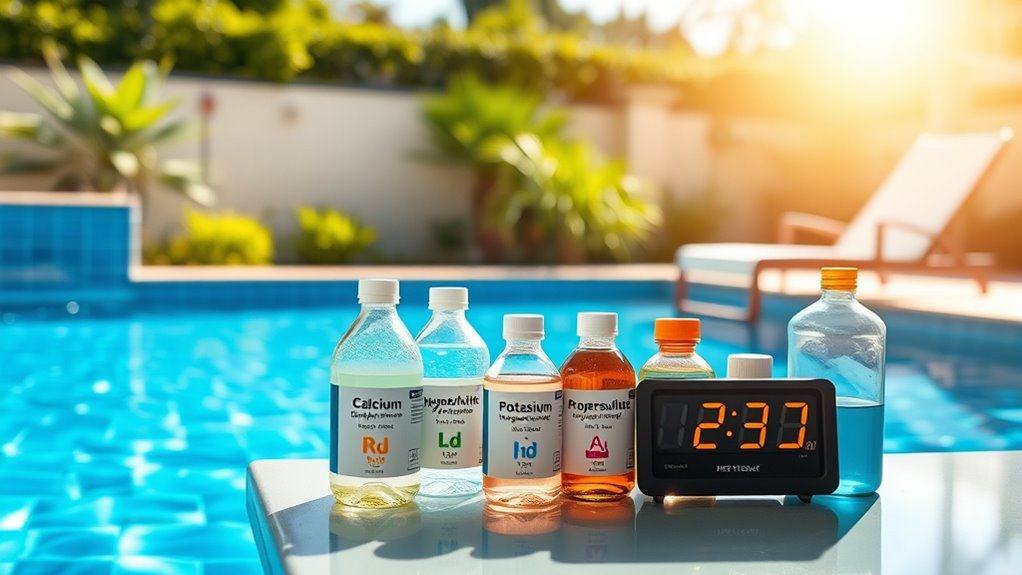
Although many products serve the same purpose, the chemicals used in shock treatments vary in composition and strength. You’ll most commonly find chlorine-based shocks like calcium hypochlorite, which is powerful and fast-acting, or sodium dichlor, which dissolves quickly and is gentler on pool surfaces.
Non-chlorine shock treatments, like potassium monopersulfate, offer an alternative that oxidizes contaminants without adding chlorine. This makes them ideal if you want to avoid strong chlorine odors.
Each chemical reacts differently with your pool water, so understanding their properties helps you choose the right one for your needs.
Always check the label to know how it affects your pool’s pH and chlorine levels, so you can maintain a safe and balanced swimming environment after application.
Recommended Waiting Time Before Swimming After Shock
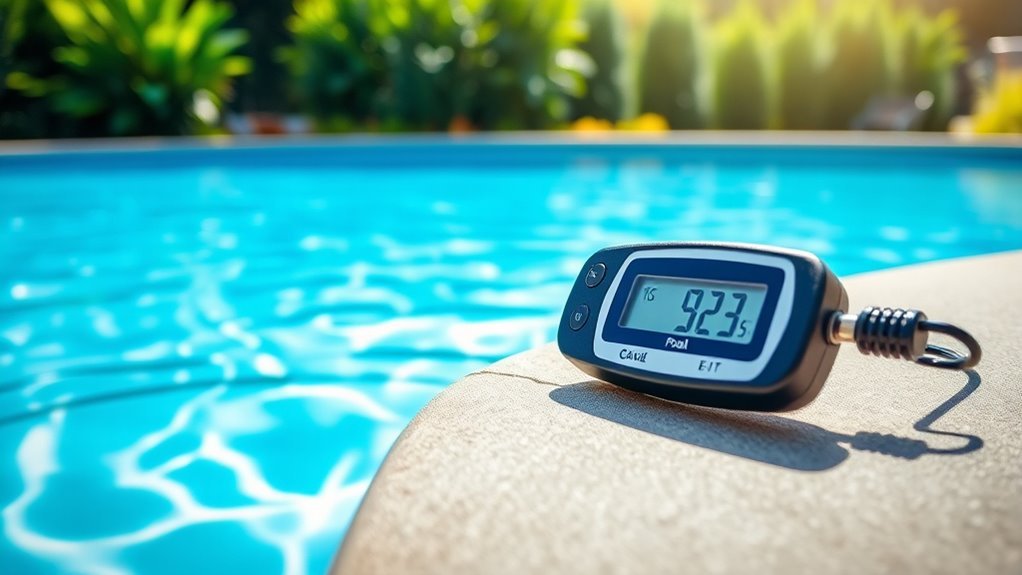
Understanding the type of shock treatment you use helps determine how long you should wait before swimming again. Different chemicals break down at varying rates, influencing the safe re-entry time.
| Shock Type | Recommended Wait Time |
|---|---|
| Chlorine-based | 8 to 24 hours |
| Non-chlorine | 15 minutes to 4 hours |
| Potassium peroxymonosulfate | 15 minutes to 1 hour |
Always check your pool’s chlorine level before jumping in; it should be below 3 ppm. For non-chlorine shocks, you can usually swim sooner, but some caution is still wise. If you’re unsure, waiting a full day is safest.
This guarantees the chemicals have properly dissipated, protecting your skin and eyes from irritation.
Factors Influencing Safe Swimming Time Post-Shock
Since different factors affect how quickly your pool chemicals break down, you’ll want to contemplate them before deciding when to swim again. Temperature plays a big role. Warmer water accelerates chemical dissipation, so you can usually swim sooner.
Temperature greatly influences how fast pool chemicals break down, letting you swim sooner in warmer water.
Sunlight exposure also helps break down chlorine faster, reducing wait times.
On the other hand, if you recently added a large amount of shock or used a slow-dissolving product, it’ll take longer for levels to drop.
Pool size matters too; smaller pools tend to reach safe levels quicker than larger ones.
Water circulation impacts how evenly chemicals disperse, so running your pump after shocking helps speed up the process.
Keep these factors in mind to judge when your pool is safe without relying solely on a fixed waiting time.
Testing Your Pool Water for Safe Chlorine Levels
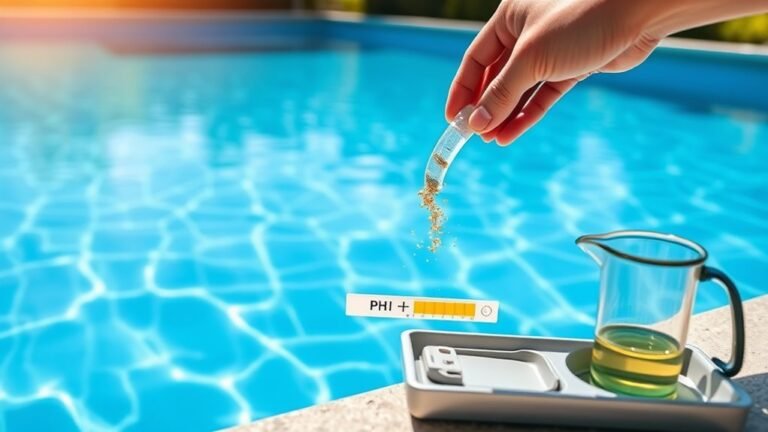
After considering factors like temperature and pool size, the most reliable way to know when you can swim is by testing your pool water for chlorine levels. Grab a reliable pool test kit or test strips designed to measure free chlorine.
Dip the strip into your pool, wait a few seconds, and compare the color to the chart provided. You’re aiming for a free chlorine level between 1 and 3 parts per million (ppm) for safe swimming.
If your chlorine is above this range, wait and retest every hour or so. Avoid guessing; chlorine that’s too high can irritate your skin and eyes.
Testing guarantees your pool is both clean and safe, letting you jump in confidently once the levels drop to a safe range.
Tips to Speed Up the Recovery of Your Pool Water
While waiting for your pool’s chlorine levels to drop, you can take several steps to speed up the recovery process. These actions help balance your water chemistry faster, making your pool safe to swim in sooner.
Here are some tips to get started:
- Run your pool pump and filter continuously to circulate and filter out excess chlorine.
- Expose the water surface to sunlight; UV rays naturally break down chlorine.
- Avoid adding more chlorine or shock treatments during this time.
- Maintain proper pH levels (7.2–7.6) to optimize chlorine breakdown.
- Use a pool aerator or fountain to increase oxygen exchange, accelerating chlorine dissipation.
Signs Your Pool Is Ready for Swimming Again
You can tell your pool is ready for swimming when the chlorine levels return to a safe range and the water looks clear and inviting. First, test the chlorine with a reliable pool test kit; it should read between 1 and 3 ppm.
Next, check the pH level, which should be balanced between 7.2 and 7.8. Also, inspect the water clarity. There shouldn’t be any cloudiness, debris, or strong chemical odors.
If your pool passes these checks, it’s safe to jump in. Remember, swimming too soon after shocking can irritate your skin and eyes or cause respiratory issues. Always wait for the chemicals to stabilize and the water to clear to ensure a safe and enjoyable swim.
Frequently Asked Questions
Can Pool Shock Affect Pool Equipment or Surfaces?
Yes, pool shock can affect your pool equipment and surfaces if used excessively or improperly. You should always follow guidelines to avoid corrosion or damage.
Rinse surfaces if needed to keep everything in good shape.
Is It Safe to Use Pool Shock in Saltwater Pools?
Yes, you can use pool shock in saltwater pools, but you’ll want to choose a shock that’s compatible with saltwater systems. Always follow manufacturer guidelines to protect your equipment and keep your pool safe and balanced.
How Often Should I Shock My Pool During Swimming Season?
Think of shocking your pool like tuning a guitar; it needs regular adjustments. You should shock your pool every 1-2 weeks during swimming season to keep water clear and safe, just like tuning keeps music perfect.
Can Pets Swim in the Pool After Shock Treatment?
You shouldn’t let pets swim right after pool shock treatment. Wait at least 24-48 hours, ensuring chlorine levels return to safe ranges.
This protects their sensitive skin and eyes from irritation or harm caused by strong chemicals.
What Should I Do if Pool Shock Causes Skin Irritation?
If pool shock causes skin irritation, you should rinse off immediately with fresh water, avoid scratching, and apply a soothing lotion or aloe vera.
If irritation persists or worsens, consult a healthcare professional promptly.
Conclusion
After you shock your pool, it’s best to wait at least 8 to 24 hours before jumping back in—think of it like waiting for your favorite vinyl record to warm up before playing. Testing your water to guarantee chlorine levels have dropped to safe limits is key.
Follow the tips to speed up recovery, and watch for clear signs your pool is ready. That way, you can plunge in safely and enjoy every splash without worry.
Remember, knowing how long after pool shock you can swim safely ensures a healthy swimming environment. Always check your pool’s chemical balance before taking the plunge.