When Do Babies Start Swimming Lessons and How to Begin
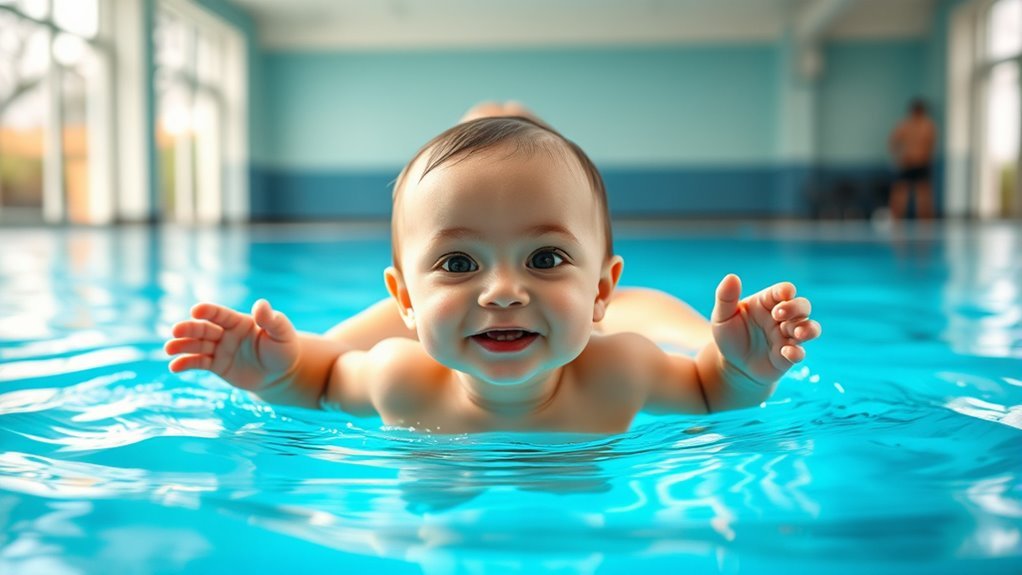
You can start your baby’s swimming lessons around six months old when they have better head and neck control. Swimming with babies helps build confidence and promotes early water safety. Begin with gentle water familiarization rather than formal skills, holding and supporting your baby in the water to build comfort.
Choose certified instructors and small classes that fit your baby’s temperament. Prepare with proper swimwear and a calm attitude to make the experience enjoyable for both of you. Staying close and ensuring safety is key to successful sessions.
Keep going to discover tips on choosing classes and prepping for that first splash. With the right approach, your baby’s swimming lessons can be a fun and rewarding experience.
Ideal Age to Start Swimming Lessons for Babies
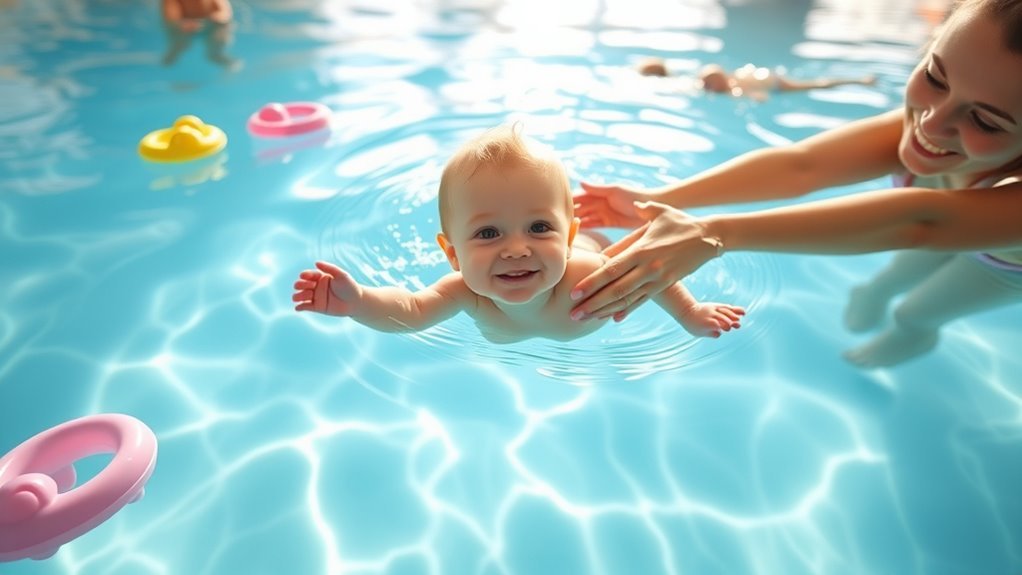
Although every baby develops at their own pace, experts generally recommend starting swimming lessons around six months old. At this age, your baby has better head and neck control, which is essential for safety in the water.
You don’t want to rush into it before they’re physically ready, but starting early helps them get comfortable with water. Keep in mind, lessons for infants focus on water familiarization rather than formal swimming skills.
You’ll participate actively, holding and supporting your baby throughout the session.
If your baby seems anxious or unready, it’s okay to wait a bit longer.
Always choose a program designed specifically for infants, with trained instructors who understand their unique needs. Starting at the right time sets a positive foundation for your baby’s water experiences.
Benefits of Early Swimming Lessons
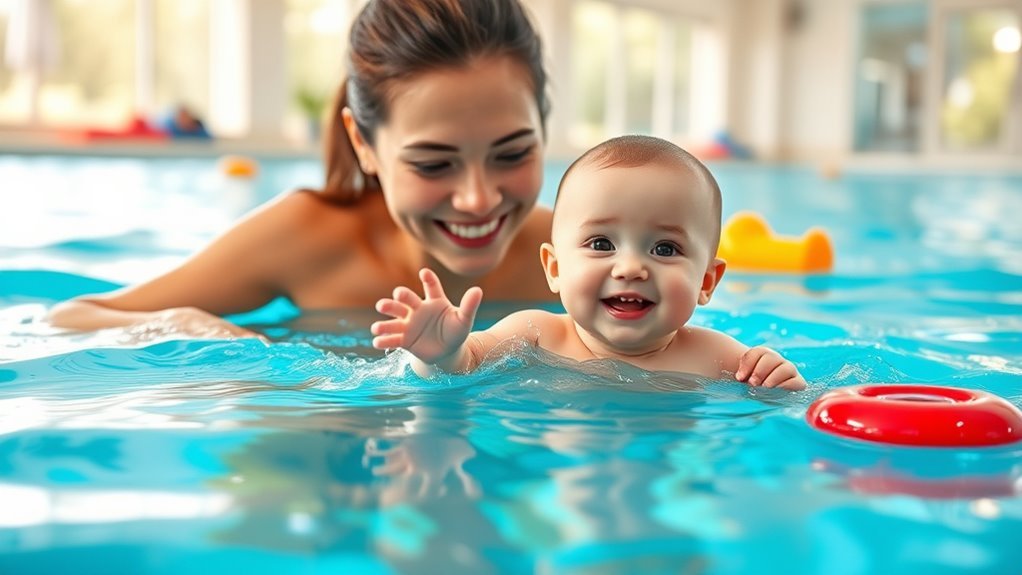
When you start swimming lessons early, your baby gains confidence and becomes comfortable in the water from a young age. This early exposure helps reduce fear and builds a positive association with water, which is essential for safety.
You’ll notice improved motor skills as your baby learns to kick, float, and move through the water. These lessons also promote physical development by strengthening muscles and enhancing coordination.
Beyond physical benefits, early swimming boosts cognitive growth and social interaction, as babies engage with instructors and peers.
Plus, it encourages a healthy lifestyle habit that can last a lifetime.
Starting early gives your baby a head start in water safety, making swimming a fun, natural activity instead of an intimidating challenge later on.
Choosing the Right Swimming Class for Your Baby

Since every baby develops at their own pace, you’ll want to find a swimming class that matches your child’s age, skill level, and temperament. Look for instructors certified in infant swim safety who create a nurturing environment.
Consider class size. Smaller groups allow more individual attention. Also, check if the schedule fits your routine to keep lessons consistent.
| Factor | What to Look For |
|---|---|
| Instructor Skills | Certified, patient, experienced |
| Class Size | Small groups for personalized care |
| Schedule | Convenient timing for your family |
Choosing wisely ensures your baby enjoys learning to swim safely and confidently. Don’t hesitate to visit classes beforehand to see which feels right for you both.
Preparing Your Baby for Their First Swim Lesson
After choosing the right swimming class, you’ll want to prepare your baby for their first lesson to guarantee a positive experience. Start by familiarizing your baby with water at home. Gentle baths with splashes can help them feel comfortable.
Dress your baby in appropriate swimwear and bring essentials like a towel, swim diapers, and a change of clothes. Arrive early to let your baby adjust to the new environment without rushing.
Keep a calm and cheerful attitude; your baby will pick up on your emotions. Talk to your baby softly and use soothing touches to build trust.
Finally, be patient—every baby adapts at their own pace. Your preparation will set the stage for enjoyable and successful swim lessons.
Safety Tips for Baby Swimming Sessions
Although baby swimming lessons are a fun way to introduce your little one to water, you need to prioritize safety at all times. Always stay within arm’s reach of your baby, keeping constant eye contact.
Make sure the pool temperature is warm enough, ideally between 85°F and 87°F, to prevent your baby from getting cold. Use swim diapers designed to contain accidents and change them promptly.
Check that the swimming area is free from hazards, and avoid busy pools to reduce distractions. Never leave your baby unattended, even for a moment.
Before each session, ensure your baby is well-rested and fed. However, avoid swimming right after meals.
Finally, listen to your baby’s cues; if they seem uncomfortable or tired, it’s okay to cut the session short.
Prioritizing these tips keeps swim time safe and enjoyable.
Frequently Asked Questions
How Often Should Baby Swimming Lessons Be Scheduled Each Week?
You should schedule baby swimming lessons once or twice a week to keep sessions fun and effective.
Too frequent lessons might tire your baby, while consistent practice helps build comfort and skills in the water.
What Swim Gear Is Essential for Baby Swimming Lessons?
You’ll need a snug-fitting swim diaper, a comfortable swimsuit, and a swim cap if indoors. Goggles aren’t essential for babies but can help older toddlers.
Don’t forget a towel and waterproof bag to keep things organized.
Can Babies With Ear Infections Attend Swimming Lessons?
You shouldn’t take babies with ear infections to swimming lessons because water can worsen the infection.
Wait until their ears heal fully and get a doctor’s approval before resuming swimming activities to keep your baby safe and comfortable.
How to Handle a Baby’s Fear of Water During Lessons?
When Mia’s baby cried at first, she stayed calm and let him splash gently.
You can ease your baby’s fear by taking it slow, offering comfort, and celebrating small water successes to build their confidence.
Should Parents Stay in the Pool During Baby’s Swim Sessions?
Yes, you should stay in the pool during your baby’s swim sessions. Your presence provides comfort and security, helping them feel safe, build trust, and gradually enjoy the water while learning essential swimming skills.
Conclusion
Starting swimming lessons with your little one opens a gentle doorway to a world of water wonders. By choosing the right time and setting, you’re planting seeds of confidence and joy that will ripple through their childhood.
As you prepare for those first splashes, remember to keep safety close, like a warm embrace. Embrace this watery adventure together, and watch your baby’s smile bloom with every splash and kick.
When do babies start swimming lessons? Beginning early can foster comfort and skill in the water. With patience and care, your baby will thrive and enjoy the many benefits of swimming lessons.