When Can You Take Baby Swimming?
You can take your baby swimming once they’re around six months old and can hold their head up steadily. Baby swimming is a wonderful way to introduce your little one to water and promote their physical development. Before you start, make sure your baby is healthy and comfortable, and check with your pediatrician if you have any concerns.
Choose a warm, clean pool with safety features and start with short, fun sessions. Paying attention to your baby’s readiness and comfort helps create a positive experience. Keep exploring to discover how to prepare and keep your little one safe in the water.
Ideal Age to Start Baby Swimming
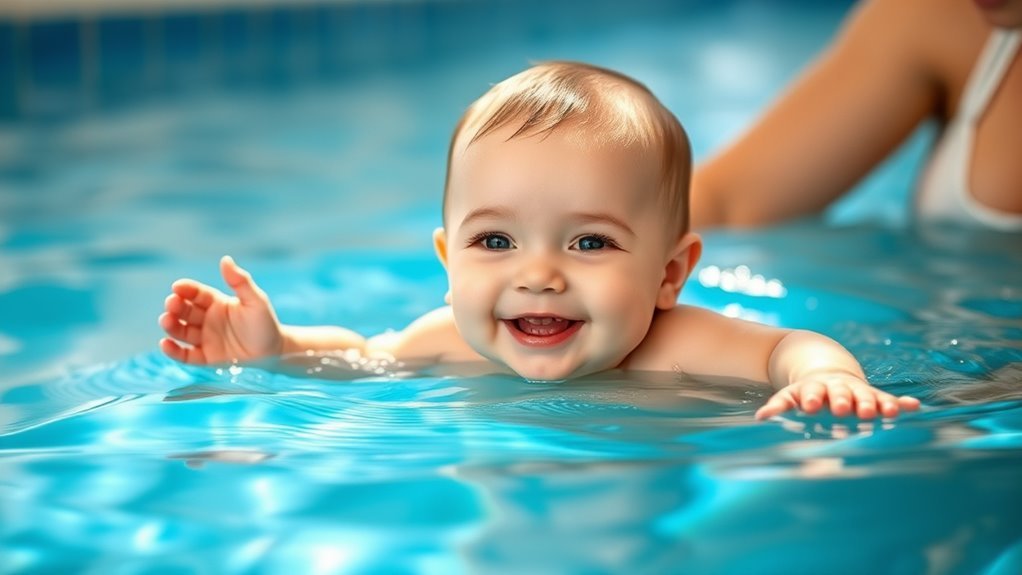
Although every baby develops at their own pace, you can usually start introducing your little one to swimming around six months old. At this age, your baby’s neck muscles are strong enough to support their head, and they can begin to enjoy water safely with your close supervision.
Starting swimming early helps build comfort in the water and encourages motor skills development. You don’t need to rush; some babies may be ready a bit earlier or later, depending on their physical readiness and temperament.
When you introduce swimming, keep sessions short and fun to avoid overwhelming your baby. Remember, the goal is to foster positive water experiences, so trust your instincts and follow your baby’s cues as you explore swimming together.
Health Considerations Before Swimming
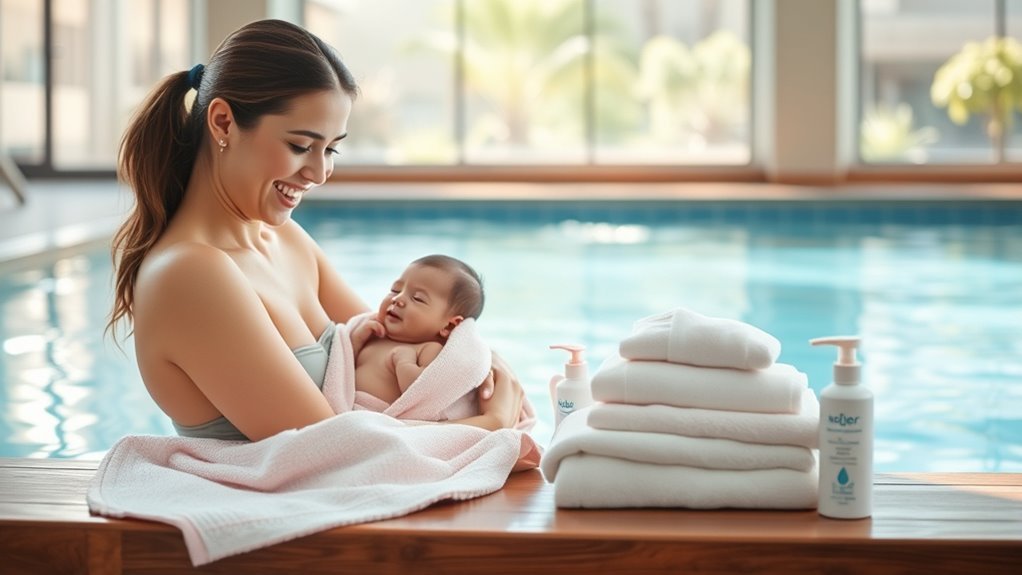
Before you take your baby swimming, it’s important to take into account their health to guarantee a safe and enjoyable experience. Make sure your baby is free from any colds, ear infections, or skin irritations, as water exposure can worsen these conditions.
Ensure your baby is healthy and free from illnesses before swimming to keep the experience safe and enjoyable.
Also, check with your pediatrician before starting swimming, especially if your baby was born prematurely or has any chronic health issues.
Keep an eye on your baby’s reactions; if they seem uncomfortable or unusually fussy, it might be best to pause and try another time.
Finally, confirm your baby is up to date on vaccinations to reduce the risk of infections.
Prioritizing these health considerations helps protect your baby and makes swimming a positive activity for both of you.
Choosing the Right Swimming Environment
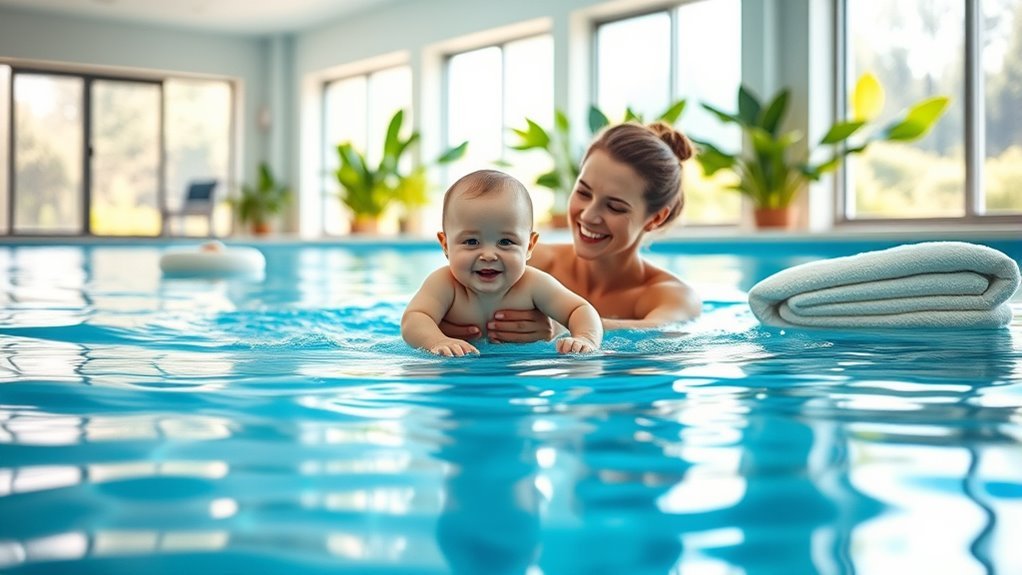
Since your baby’s safety and comfort depend heavily on the surroundings, choosing the right swimming environment is essential. You’ll want a place that supports both fun and security to make this new experience positive for your little one.
When selecting the spot, consider these key factors:
- Cleanliness: Ensure the water is clear and well-maintained to avoid infections.
- Temperature: Look for warm water, ideally between 85-87°F (29-31°C), to keep your baby cozy.
- Safety: Check for lifeguards, non-slip surfaces, and shallow areas appropriate for infants.
- Noise level: Choose a calm, quiet location to prevent overwhelming your baby.
- Accessibility: Pick a place with easy entry and exit points for you and your baby.
Preparing Your Baby for Their First Swim
When you’re getting your baby ready for their first swim, easing them into the experience gently helps build comfort and confidence. Start by familiarizing your baby with water at home. Use a warm bath to let them feel the sensation.
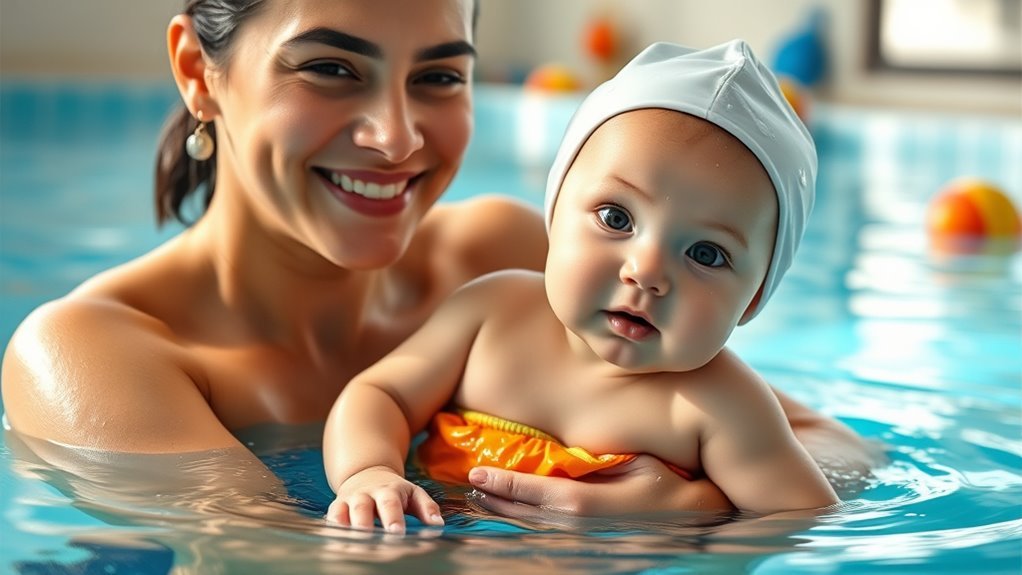
Dress your baby in a well-fitting swim diaper and bring a warm towel for after the swim. Plan your visit during a quiet time at the pool to avoid overwhelming your baby.
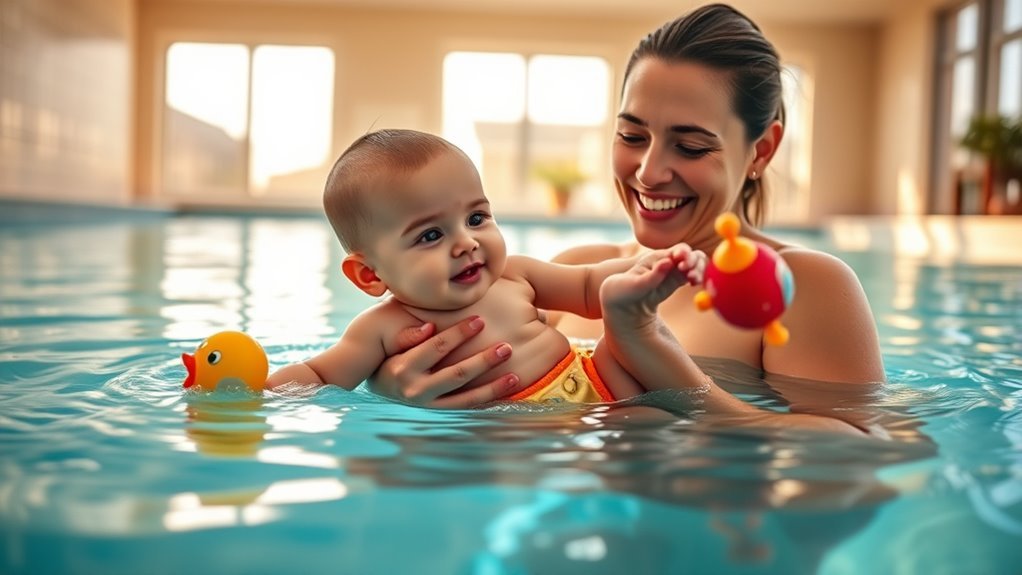
Hold your baby securely and support their head and neck as you enter the water slowly. Speak softly and maintain eye contact to reassure them.
Keep the initial session brief, around 10 to 15 minutes, and watch for signs of discomfort. Gradually, your baby will feel more at ease and enjoy the water safely.
Benefits of Swimming for Babies
Although it might seem early, introducing your baby to swimming can boost their physical development and strengthen your bond. When you take your little one to the water, you’re not just having fun; you’re helping them grow in many ways.
Swimming supports muscle strength and coordination, encourages better sleep patterns, and promotes cardiovascular health. Plus, it enhances water confidence early on.
Here are key benefits you’ll notice:
- Improves motor skills through gentle resistance
- Builds lung capacity and breathing control
- Encourages sensory development with new textures and sounds
- Strengthens your emotional connection through shared activity
- Supports social skills when interacting with other babies
Swimming creates a joyful and healthy start for your baby’s development.
Safety Tips for Baby Swimming
To keep your baby safe in the water, you’ll need to follow some essential guidelines from the start. Always stay within arm’s reach of your baby. Never leave them unattended, even for a moment.
Use a well-maintained pool with clean, warm water to prevent discomfort and infections. Make sure the water temperature is comfortable, ideally between 85-87°F (29-31°C).
Avoid deep water and keep sessions short, around 10-15 minutes, to prevent your baby from getting cold or tired.
Use swim diapers to maintain hygiene and consider infant flotation devices only as additional support, not replacements for supervision.
Finally, stay calm and positive, so your baby feels secure and enjoys the experience safely.
Signs Your Baby Is Ready to Swim
Before you introduce your baby to the water, you’ll want to watch for clear signs that they’re ready. Jumping in too soon isn’t a good idea, so look for these indicators:
- Your baby can hold their head up steadily.
- They show curiosity and interest in water.
- They’ve good muscle control and can kick or move their arms.
- Your baby responds well to new experiences and isn’t overly fussy.
- They’ve passed the newborn stage (usually around 6 months).
These signs help guarantee your baby’s safety and comfort during swimming sessions.
When your little one meets these milestones, you can confidently start planning water time that’s fun and safe.
Pay attention, and you’ll both enjoy the experience much more.
Frequently Asked Questions
How Often Should I Schedule Baby Swimming Sessions?
You should schedule baby swimming sessions about once or twice a week to help build comfort and skills without overwhelming them. Consistency matters, but always watch your baby’s reactions and adjust frequency accordingly for a positive experience.
What Swimwear Is Best for Babies?
Imagine your baby splashing in soft, colorful swim diapers paired with snug, UV-protective swim shirts.
You’ll want lightweight, quick-dry fabrics that keep them comfy and shielded, ensuring every splash is safe and stylish.
Can Baby Swimming Help With Sleep Routines?
Yes, baby swimming can help with sleep routines. It uses up your baby’s energy, promotes relaxation, and establishes a calming bedtime ritual.
This makes it easier for your little one to fall asleep and stay asleep longer.
Should I Use Swim Diapers or Regular Diapers?
You should use swim diapers instead of regular diapers. Swim diapers are designed to contain accidents without swelling up in water, keeping your baby comfortable and the pool clean.
Regular diapers aren’t suitable for swimming.
How Can I Handle My Baby’s Fear of Water?
You might wonder how to ease your baby’s water fear—start slow, stay calm, and make it fun with gentle splashes.
Your patience builds trust, and soon, those hesitant moments will turn into joyful swims.
Conclusion
You’re about to plunge into one of the most amazing experiences with your baby—swimming! Remember, starting at the right age and choosing a safe environment can make all the difference.
With a little preparation and attention to your baby’s cues, you’ll open a world of fun and health benefits. Just keep safety your top priority, because nothing’s more important than your little one’s well-being as you both make a splash that’ll echo through a lifetime!
When can you take baby swimming? Ensuring your baby is ready and the environment is safe will help you enjoy this wonderful bonding activity while promoting your baby’s development and health.