
When Can You Take Baby Swimming Safely
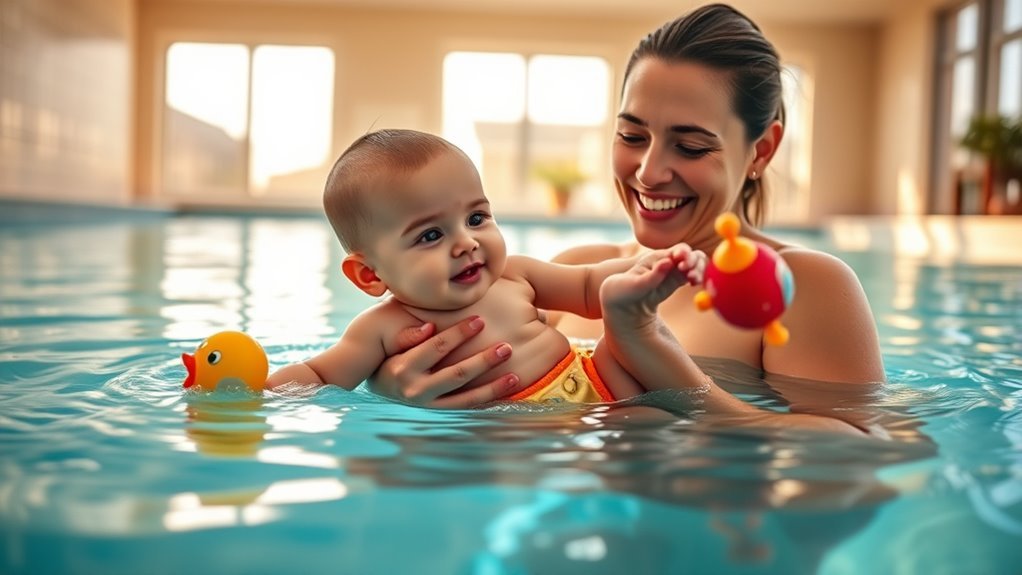
You can take your baby swimming safely around six months old, once they have good head and neck control. At this age, your baby is better prepared physically and emotionally to enjoy water. Choosing the right time and place for baby swimming is essential for their safety and comfort.
Opt for a warm, clean indoor pool and always stay close to guarantee safety. Avoid swimming if your baby is sick or has open wounds. These precautions help prevent infections and ensure a positive experience.
If you want to know more about preparing for this fun milestone and keeping your little one safe, there’s plenty to explore. Understanding the best practices for baby swimming can make a big difference in your child’s comfort and enjoyment in the water.
Recommended Age to Start Baby Swimming
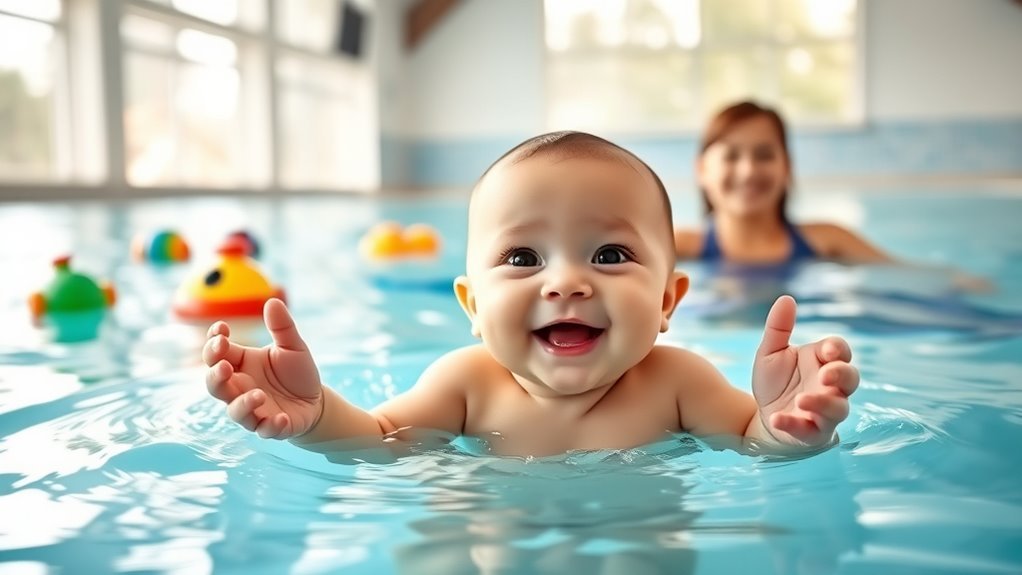
Although every baby develops at their own pace, experts generally recommend starting swimming lessons when your little one is around six months old. At this age, babies have better head and neck control, which helps them stay safe and comfortable in the water.
You don’t need to wait for perfect skills, but this timing balances safety with readiness. Starting early also helps your baby get used to water, building confidence and a positive association.
Keep in mind that sessions should be short and fun, focusing on gentle water introduction rather than formal skills.
Health and Developmental Factors to Consider
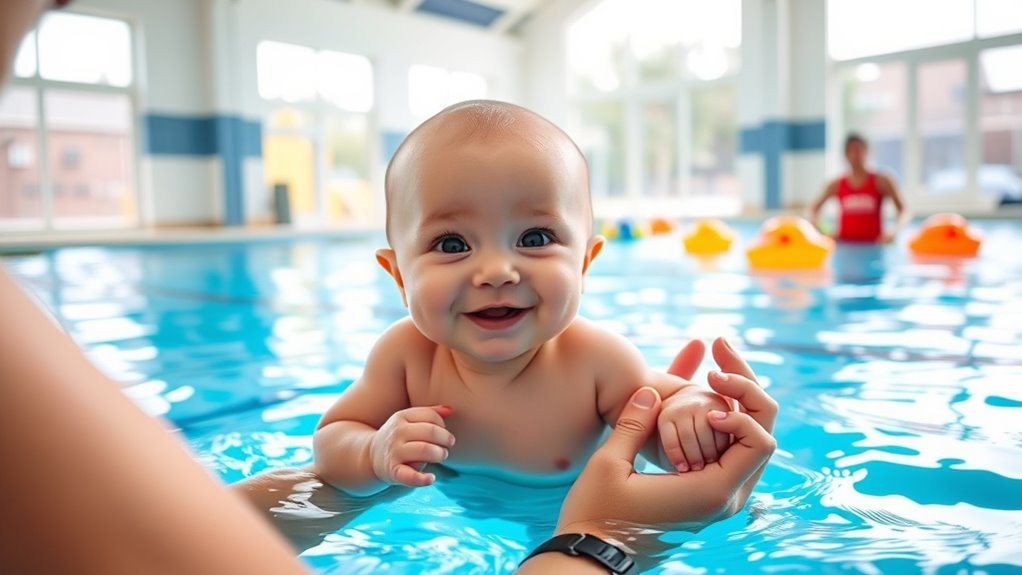
While starting swimming lessons around six months is common, you should also consider your baby’s health and developmental milestones before getting in the water. Make sure your baby has good head and neck control, as this is essential for safety and comfort during swimming.
If your baby was born prematurely or has any respiratory issues, consult your pediatrician before introducing water activities. Also, verify your baby’s immune system is strong enough to handle potential germs in pools.
Watch for signs of readiness, like alertness and interest in water, which can make swimming a positive experience. Avoid swimming if your baby has a cold, fever, or skin irritations.
Taking these factors into account helps ensure your baby’s first swim is both safe and enjoyable.
Choosing the Right Swimming Environment
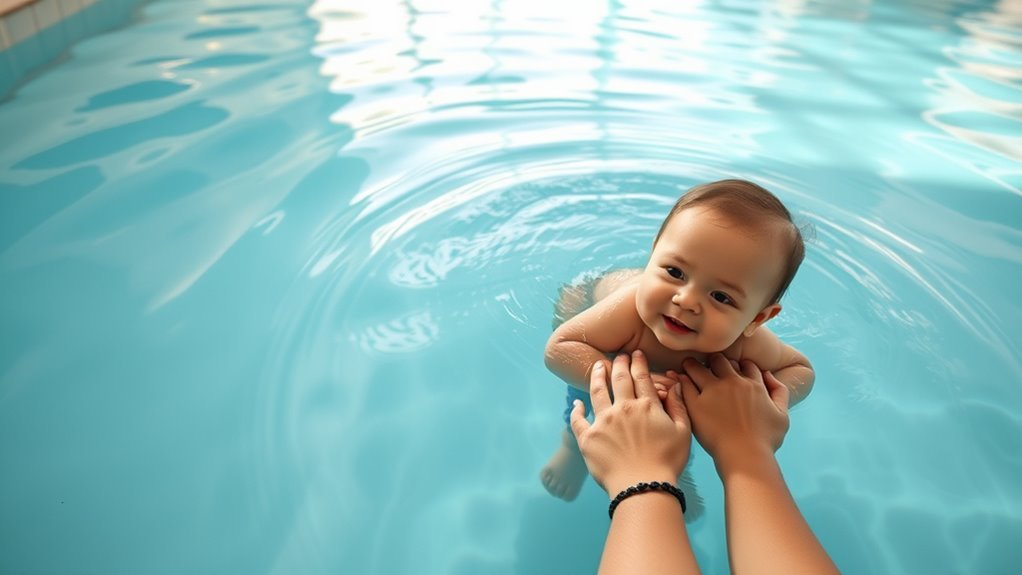
Since your baby’s safety and comfort depend heavily on their surroundings, choosing the right swimming environment is essential. Look for clean, warm water with a temperature between 32°C and 34°C (90°F to 93°F) to keep your baby comfortable.
Opt for calm, shallow pools designed for infants rather than deep, crowded areas. Indoor pools often offer controlled temperatures and fewer contaminants, making them a great choice. Natural bodies of water can be unpredictable and aren’t usually recommended for babies.
| Environment Type | Water Temperature | Suitability for Babies |
|---|---|---|
| Indoor Pool | 32-34°C (90-93°F) | Ideal: controlled and clean |
| Outdoor Pool | Varies | OK if warm and clean |
| Lake/River | Varies | Risky: temperature and safety |
| Ocean | Varies | Not recommended for babies |
Essential Safety Precautions for Baby Swimming
To keep your baby safe during swimming sessions, you must follow essential safety precautions carefully. Always stay within arm’s reach and never leave your baby unattended in or near water.
Use appropriate flotation devices designed for infants, but remember these aren’t substitutes for supervision. Check the water temperature; it should be warm enough, ideally between 85-87°F (29-31°C), to prevent your baby from getting cold.
Avoid swimming if your baby has any signs of illness or open wounds. Ensure the pool area is secure, with barriers to prevent unsupervised access.
Finally, rinse your baby off after swimming to remove chlorine or salt that can irritate delicate skin. Taking these steps helps create a safe, enjoyable experience for both of you.
Benefits of Early Swimming for Babies
Introducing your baby to swimming early can boost their physical development and confidence in the water. When you start swimming with your baby, you help strengthen their muscles and improve coordination.
The gentle resistance of the water encourages movement, which supports motor skills growth. Swimming also promotes cardiovascular health and lung capacity, giving your baby a solid foundation for overall fitness.
Beyond physical benefits, early swimming nurtures emotional bonding between you and your baby, creating a sense of security.
It helps your little one become comfortable in water, reducing fear as they grow older.
Plus, the sensory experience of water stimulates cognitive development. By introducing swimming early, you’re setting your baby up for a lifetime of healthy activity and water confidence.
Tips for a Positive First Swimming Experience
Helping your baby feel at ease in the water sets the stage for a positive swimming experience. You want your little one to associate swimming with fun and safety. Start slow and focus on comfort.
- Gently introduce the water: Hold your baby close and let them splash their hands and feet while you talk softly, building trust.
- Keep the session short: Limit first swims to 10-15 minutes to avoid overwhelming your baby.
- Bring favorite toys: Floating toys or colorful bath books can engage your baby and make the water inviting.
Frequently Asked Questions
Can Baby Swimming Help With Sleep Patterns?
Yes, baby swimming can help improve sleep patterns by tiring them out and promoting relaxation.
You’ll notice your baby often sleeps better and longer after swimming sessions, making bedtime smoother and more restful for both of you.
What Swimwear Is Best for Babies?
Choose snug, waterproof swim diapers, soft, quick-drying swimsuits, and sun-protective rash guards.
You’ll keep your baby comfortable, clean, and safe, making every splash joyful, every moment fun, and every swim worry-free.
How Often Should Babies Swim Each Week?
You should aim for two to three swim sessions per week for your baby. This frequency helps build comfort and skills without overwhelming them.
Always watch for signs of tiredness or discomfort during swims.
Can Baby Swimming Prevent Ear Infections?
Swimming won’t directly prevent ear infections, but you can reduce risk by drying your baby’s ears thoroughly after swimming.
Keep water out of their ears and monitor for any signs of irritation or discomfort.
Are There Specific Swimming Strokes Suitable for Babies?
Think of gentle strokes as a soft lullaby for your baby—baby backstroke and gentle kicking suit their tiny muscles best.
You’ll want to keep movements slow and smooth, ensuring safety while fostering comfort in the water.
Conclusion
You can start baby swimming when your little one is ready—usually around six months—but always consider their health and development first.
Picking a safe, clean pool and following essential safety steps will make the experience smooth and enjoyable.
Early swimming benefits your baby’s growth like sunshine nurturing a young plant. With the right approach, you’ll create joyful memories and build your baby’s confidence in the water from the very start.
When can you take baby swimming safely? By choosing the right time and environment, you ensure a positive experience that promotes your baby’s development and water safety awareness.