How to Use Swimming for Good Muscle Recovery
You can use swimming for muscle recovery by moving gently in warm water to relax muscles and boost circulation. Swimming for good muscle recovery involves focusing on easy strokes like backstroke or breaststroke to reduce strain while flushing out soreness. Keep sessions around 20 to 30 minutes at a comfortable pace, avoiding fatigue and sharp pain.
Combining swimming with stretching and proper hydration enhances muscle repair. If you want to optimize healing and prevent injury, there’s more to explore about timing, temperature, and technique.
Benefits of Swimming for Muscle Recovery
Although you mightn’t realize it, swimming offers unique benefits for muscle recovery that other exercises can’t match. When you swim, the water supports your body weight, reducing stress on your joints and muscles.
Swimming supports your body, easing joint and muscle stress for superior muscle recovery.
This buoyancy allows you to move freely without the impact that running or weightlifting might cause. Plus, the resistance of water provides a gentle workout that helps flush out lactic acid and promotes blood flow, speeding up healing.
Swimming also helps lower inflammation and muscle soreness by keeping your body cool and relaxed.
By engaging multiple muscle groups simultaneously, you maintain overall strength and flexibility.
If you want a low-impact, effective way to recover faster and feel refreshed, swimming is a smart choice.
Best Swimming Strokes for Relaxing Muscles
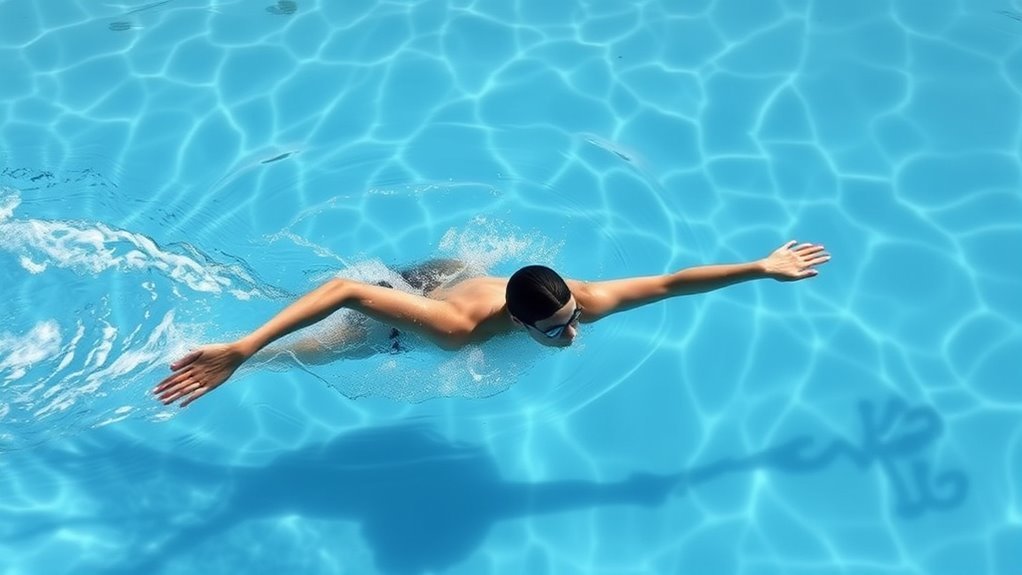
Swimming’s low-impact nature and full-body engagement make certain strokes particularly effective for relaxing tight muscles. When you want to ease muscle tension, the backstroke is a great choice. It gently stretches your chest and shoulders while promoting spinal alignment.
The breaststroke also works well; its slower, rhythmic movements help increase blood flow to your legs and hips without overexerting them.
If you prefer a more full-body approach, try the freestyle at a relaxed pace. It encourages smooth breathing and fluid arm and leg motions that soothe muscle stiffness.
Avoid strokes requiring intense power or speed since they can strain your muscles. By selecting these gentle strokes, you’ll enhance muscle relaxation and recovery while enjoying your time in the water.
Ideal Duration and Intensity for Recovery Swimming
When you focus on recovery swimming, keeping your sessions moderate in both duration and intensity is key to promoting muscle healing without causing additional strain. Aim for 20 to 40 minutes of gentle swimming, maintaining a pace where you can breathe comfortably and keep your muscles moving without fatigue. Avoid sprinting or pushing to exhaustion, as this can hinder recovery.
Here’s a quick guide to help you plan your session:
| Duration | Intensity Level | Purpose |
|---|---|---|
| 20 minutes | Low (easy pace) | Light muscle activation |
| 30 minutes | Moderate | Enhanced blood flow |
| 40 minutes | Moderate-low | Extended gentle recovery |
Stick within these limits to maximize healing while staying refreshed.
How Water Temperature Affects Muscle Healing
Since water temperature directly influences blood circulation and inflammation, choosing the right temperature can substantially impact your muscle recovery.
Warm water, typically between 90°F and 95°F (32°C to 35°C), helps relax muscles, increase blood flow, and reduce stiffness. This promotes nutrient delivery and speeds up healing.
On the other hand, cooler water, around 50°F to 59°F (10°C to 15°C), can reduce swelling and numb pain by constricting blood vessels, which is especially helpful immediately after intense exercise or injury.
You can alternate between warm and cold water to balance inflammation control and muscle relaxation.
However, avoid extreme temperatures, as they might cause discomfort or hinder recovery.
Combining Swimming With Other Recovery Techniques
Although swimming alone offers significant benefits for muscle recovery, combining it with other techniques can enhance your results and speed up healing.
Swimming boosts muscle recovery, but pairing it with other methods can further improve and accelerate healing.
You can create a more exhaustive recovery plan by integrating swimming with these methods:
Stretching: Gentle stretches before and after swimming improve flexibility and reduce muscle tightness.
Foam Rolling: Using a foam roller helps release muscle knots and increases blood flow to fatigued areas.
Proper Nutrition and Hydration: Fueling your body with balanced meals and staying hydrated supports muscle repair and energy restoration.
Tips for Preventing Injury During Recovery Swims
To prevent injury during recovery swims, you should focus on proper technique and listen closely to your body’s signals. Avoid pushing too hard, and maintain smooth, controlled movements to protect your joints and muscles.
Warm up gently and cool down to prepare your body and reduce stiffness. Hydrate well and wear appropriate gear to enhance comfort.
| Feeling | Action to Take |
|---|---|
| Mild fatigue | Slow your pace |
| Sharp pain | Stop immediately |
| Stiffness | Stretch gently before swimming |
| Soreness that fades | Continue with light strokes |
When to Avoid Swimming for Muscle Recovery
If you feel sharp pain or extreme fatigue, you should avoid swimming to give your muscles time to heal properly. Swimming when your body signals distress can worsen injuries or delay recovery.
Additionally, steer clear of swimming if you have an open wound or skin infection, as the pool environment may cause irritation or infection.
Avoid swimming if you’re experiencing severe muscle soreness that limits your range of motion, indicating your muscles need more rest.
Also, skip swimming if you have a fever or illness, which can weaken your immune system and impair healing.
Listening to your body helps you decide when to swim for recovery and when to rest.
Prioritize healing first, then gradually return to swimming to support muscle recovery safely and effectively.
Frequently Asked Questions
Can Swimming Help With Mental Recovery After Intense Workouts?
Yes, swimming can boost your mental recovery after intense workouts by reducing stress, improving mood, and promoting relaxation.
You’ll enjoy the calming water environment, which helps clear your mind and recharge your focus effectively.
What Swimming Gear Is Best for Muscle Recovery Sessions?
Like the saying goes, “Don’t put all your eggs in one basket.”
You’ll want swim fins, a pull buoy, and a kickboard—they target different muscles, aid recovery, and keep your sessions balanced and effective.
How Soon After a Workout Should I Start Recovery Swimming?
You should start recovery swimming about 30 to 60 minutes after your workout to help flush out lactic acid and reduce muscle soreness.
Keep it light and gentle to promote circulation without overexerting yourself.
Does Swimming Aid Recovery Differently for Various Muscle Groups?
Yes, swimming targets different muscle groups uniquely. You’ll find it eases tension in your upper body while promoting circulation in your legs.
Adjust strokes to focus on specific muscles for more tailored recovery benefits.
Can Swimming Replace Traditional Rest Days Completely?
You can’t swim every day and skip rest completely; while swimming aids recovery by boosting circulation and easing soreness, your body still needs full rest days to rebuild and prevent overtraining.
Balance is key.
Conclusion
So, if you’re tired of actually resting like a normal person, just jump into a pool and swim your muscles back to life—because who needs couch time when you’ve got water to splash around in?
Remember, gentle swimming beats heroic laps, and freezing yourself won’t turn you into a superhero. Use swimming wisely, or you might end up sore, soaked, and wondering why you didn’t just take a nap instead.
Recovery, not punishment! Incorporating swimming into your routine can significantly aid in good muscle recovery by promoting blood flow and reducing soreness. Use swimming for good muscle recovery to feel refreshed and ready for your next workout.