How Many Litres Are in the Average Swimming Pool?
You’re looking to know how many litres are in the average swimming pool. Most residential pools hold between 30,000 and 70,000 litres, depending on size and depth. Typical pools measure around 8 to 12 meters long and 4 to 6 meters wide.
Depth plays a big role—more depth means more water. Pool shape also affects total volume, with rectangular pools being easier to calculate. Keep going, and you’ll discover how these factors influence water needs and maintenance tips.
Typical Dimensions of Residential Swimming Pools
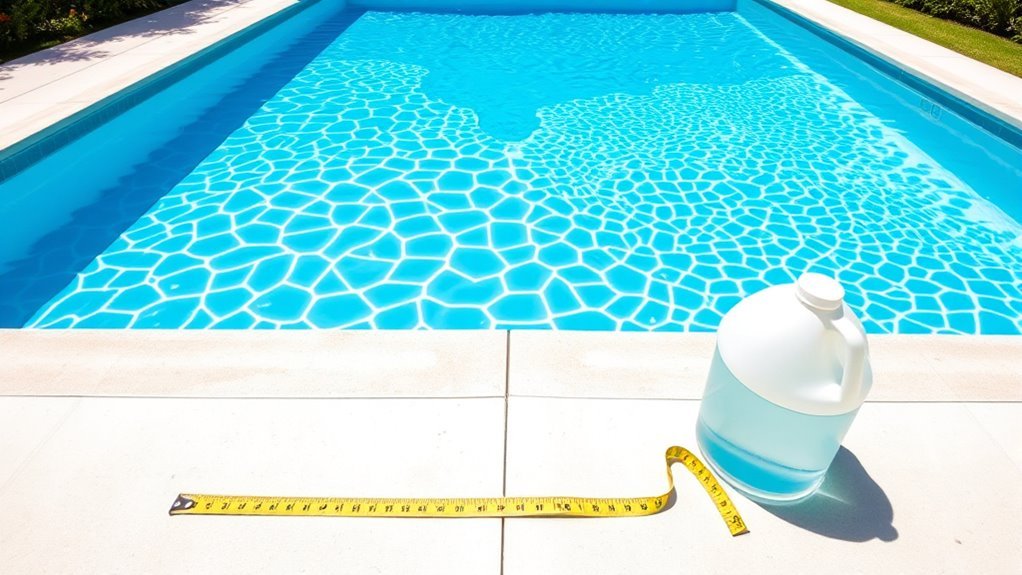
How big is a typical residential swimming pool? Most pools range between 8 to 12 meters long and 4 to 6 meters wide.
Depths usually vary from 1 to 2 meters, depending on whether you want a shallow lounging area or a deeper section for diving.
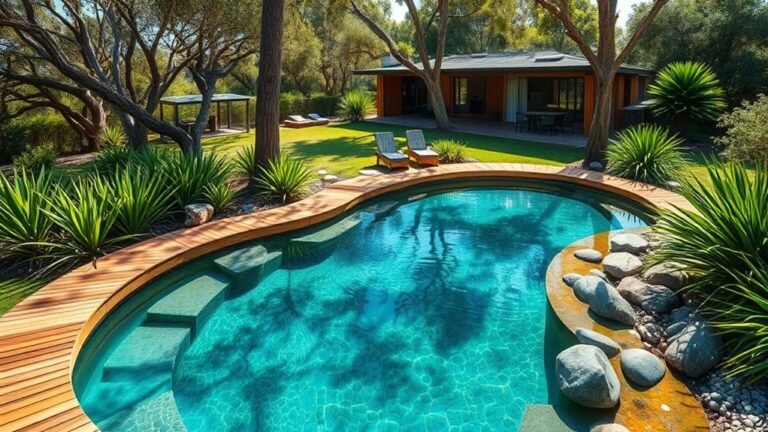
These dimensions give you a comfortable size for swimming, relaxing, and playing. You’ll often find rectangular pools, but some prefer kidney-shaped or freeform designs to fit their yard’s layout.
Keep in mind, the exact size impacts your pool’s capacity, maintenance, and how you’ll use it. Understanding these typical dimensions helps you estimate water volume and plan your pool setup effectively without getting overwhelmed by technical details.
Calculating Pool Volume in Cubic Metres
Once you know your pool’s dimensions, you can calculate its volume in cubic metres to determine how much water it holds.
Knowing your pool’s dimensions lets you calculate its volume and understand how much water it contains.
For a rectangular or square pool, multiply the length by the width, then by the average depth.
For example, a pool 8 metres long, 4 metres wide, and 1.5 metres deep holds 8 x 4 x 1.5 = 48 cubic metres.
If your pool has varying depths, use the average depth by adding the shallow and deep ends, then dividing by two.
For circular pools, calculate the area using π times the radius squared, then multiply by the average depth.
This approach gives you the total cubic metres, providing a solid basis for further calculations related to water volume.
Converting Cubic Metres to Litres
Since pool volume is typically measured in cubic metres, you’ll need to convert that figure into litres to understand how much water your pool holds.
One cubic metre equals 1,000 litres, making the conversion straightforward.
Here’s how you can do it:
- Find the pool volume in cubic metres (m³).
- Multiply the volume by 1,000 to get litres.
- For example, a 10 m³ pool holds 10,000 litres.
- Use this method for any pool size to know its water capacity.
Water Capacity of Small, Medium, and Large Pools
Although pool sizes vary widely, understanding the water capacity of small, medium, and large pools helps you plan maintenance and water usage effectively. Knowing the typical litre ranges lets you estimate how much water you’ll need for filling, cleaning, or chemical treatment.
| Pool Size | Approximate Water Capacity (Litres) |
|---|---|
| Small | 10,000 – 30,000 |
| Medium | 30,000 – 70,000 |
| Large | 70,000 – 150,000 |
| Extra Large | 150,000+ |
With this info, you can budget water usage and schedule pool care efficiently, ensuring your pool stays clean and safe without surprises.
How Pool Shape Affects Water Volume
Understanding the water capacity of different pool sizes gives you a general idea of how much water your pool holds, but the shape of your pool can considerably impact this volume.
When you consider the shape, you get a more accurate sense of water volume, which helps with maintenance and filling.
- Rectangular pools are straightforward; calculating volume is simple due to uniform shape.
- Oval and kidney-shaped pools hold less water than rectangular ones of similar length because of curved edges.
- Irregular shapes may require professional measurement or software for precise volume estimation.
- Pools with built-in features like spas or benches reduce overall water capacity.
Impact of Pool Depth on Total Litres
When you increase the depth of your pool, you boost its total water capacity substantially. Even a small change in depth can add thousands of litres to your pool’s volume because depth directly multiplies the surface area.
For example, if your pool has a 10-square-metre surface area, increasing the depth by just 0.5 metres adds 5 cubic metres, or 5,000 litres, of water.
Keep in mind that pools with varying depths require you to calculate an average depth to estimate total litres accurately.
Deeper pools not only hold more water but may also impact heating costs and maintenance. Understanding how depth affects volume helps you plan for water usage, chemical needs, and overall pool management more effectively.
Estimating Water Usage for Pool Maintenance
Since maintaining your pool requires regular water top-ups, estimating how much water you’ll need helps you manage resources and costs efficiently. You’ll want to track water loss from evaporation, leaks, backwashing, and splash-out.
To estimate your pool’s water usage for maintenance, consider these factors:
- Evaporation Rate: Depends on climate, pool size, and exposure to wind and sun.
- Leak Checks: Regularly inspect your pool’s structure and plumbing to prevent water loss.
- Backwashing Frequency: Each backwash cycle drains a significant amount of water.
- Splash-Out & Cleaning: Water lost from swimming activities and cleaning routines.
Tips for Efficient Water Management in Pools
Although maintaining your pool demands regular water replenishment, you can substantially reduce waste by adopting smart water management practices. First, check for leaks regularly. Small leaks can lead to significant water loss over time.
Use a pool cover when the pool isn’t in use to minimize evaporation, especially during hot or windy days. Adjust your water level carefully; overfilling causes overflow, while too low affects pump efficiency.
Cover your pool when unused to reduce evaporation, and maintain proper water levels for optimal pump performance.
Consider installing a water-efficient filtration system to reduce backwashing frequency. Also, schedule pool cleaning and maintenance during cooler parts of the day to lessen evaporation.
Finally, reuse backwash water for landscaping or other non-potable purposes. By following these tips, you’ll save water, reduce costs, and keep your pool functioning efficiently.
Frequently Asked Questions
How Often Should I Change the Water in My Swimming Pool?
You should change your pool water every 3 to 5 years, depending on usage and maintenance. Regularly test and treat the water to keep it clean, and top up as needed to maintain proper levels.
What Chemicals Are Needed to Keep Pool Water Safe?
Keeping pool water safe is like tuning a guitar—you’ll need chlorine to sanitize, pH balancers to keep acidity steady, algaecides to prevent algae, and stabilizers to protect chlorine from sunlight.
You’ll keep swimming smoothly!
How Does Temperature Affect Pool Water Volume?
You’ll notice pool water volume changes slightly with temperature because water expands when warm and contracts when cold.
Can Pool Water Be Recycled or Reused?
You can recycle and reuse pool water, turning it into a symbol of sustainability. By filtering and treating it, you conserve resources, save money, and reduce waste,
letting your pool become a guardian of the environment.
What Is the Average Cost of Filling a Pool With Water?
You’ll usually spend between $100 and $300 to fill a pool, depending on size and local water rates.
Keep in mind, costs vary widely, so checking your water supplier’s pricing helps you budget accurately.
Conclusion
Just like the ocean hides countless secrets beneath its surface, your swimming pool holds more water than you might guess. Understanding its volume—from shape to depth—lets you manage it smarter, saving water and money.
Whether you’re splashing in a small backyard pool or maintaining a large one, knowing how many litres you’re working with makes all the difference.
Plunge into efficient water management, and you’ll keep your pool—and your planet—happy and healthy. Knowing the average swimming pool volume in litres is key to effective pool care and conservation efforts.