7 Tips to Cover Ear Piercing for Swimming
To protect your ear piercing while swimming, use waterproof bandages that seal tightly and change them if wet. Apply a snug silicone ear cover to prevent water entry. Wearing a swim cap or ear wrap adds extra protection by fully covering your ears.
Before swimming, apply a thin layer of antibacterial ointment and avoid submerging your ears deeply. After swimming, dry your ears thoroughly to prevent irritation. If you want to keep your piercing safe, there’s more helpful advice you can follow.
Use Waterproof Bandages or Plasters
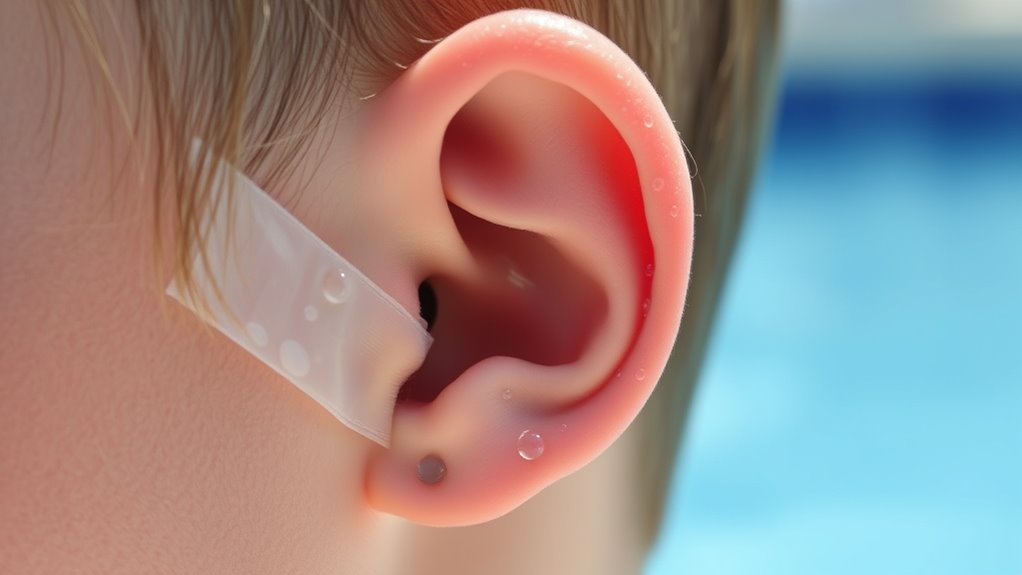
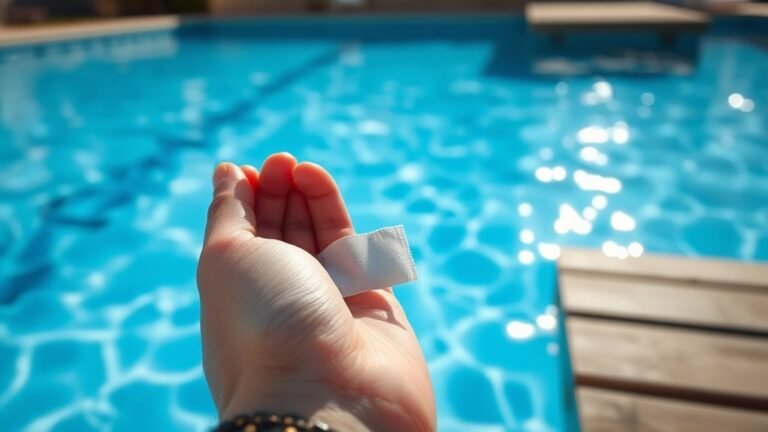
Although swimming puts your new ear piercing at risk of infection, you can protect it by using waterproof bandages or plasters. Before you hit the pool, make sure the area around your piercing is clean and dry.
Carefully cover the piercing with a waterproof bandage that seals tightly around the skin to prevent water from seeping in. Avoid using regular bandages since they won’t keep moisture out.
Change the bandage immediately if it becomes loose or wet.
When you’re done swimming, remove the bandage gently and clean your piercing with saline solution to reduce the chance of irritation or infection.
This simple step lets you enjoy swimming while keeping your piercing safe and clean without compromising healing.
Apply a Silicone Ear Cover
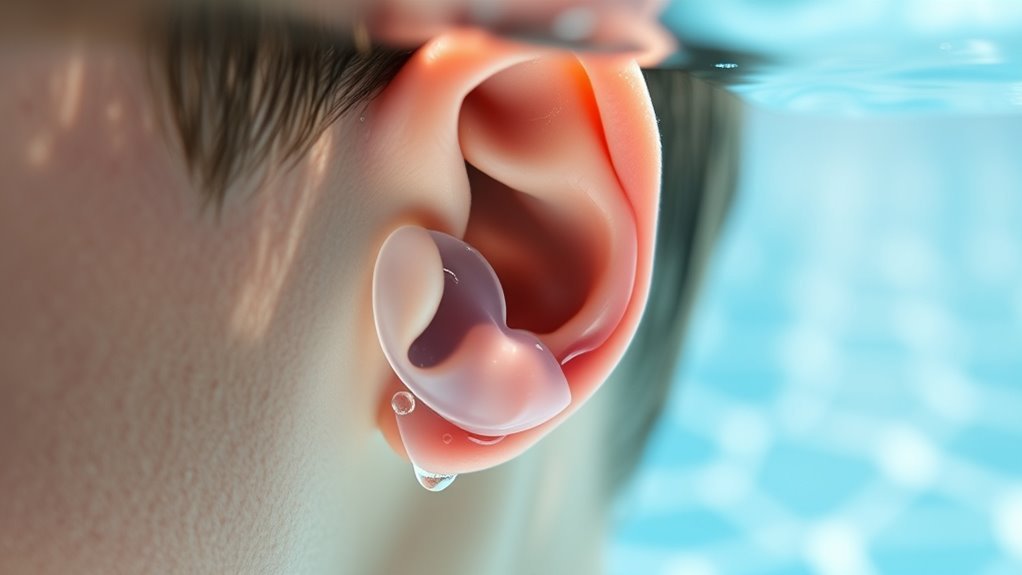
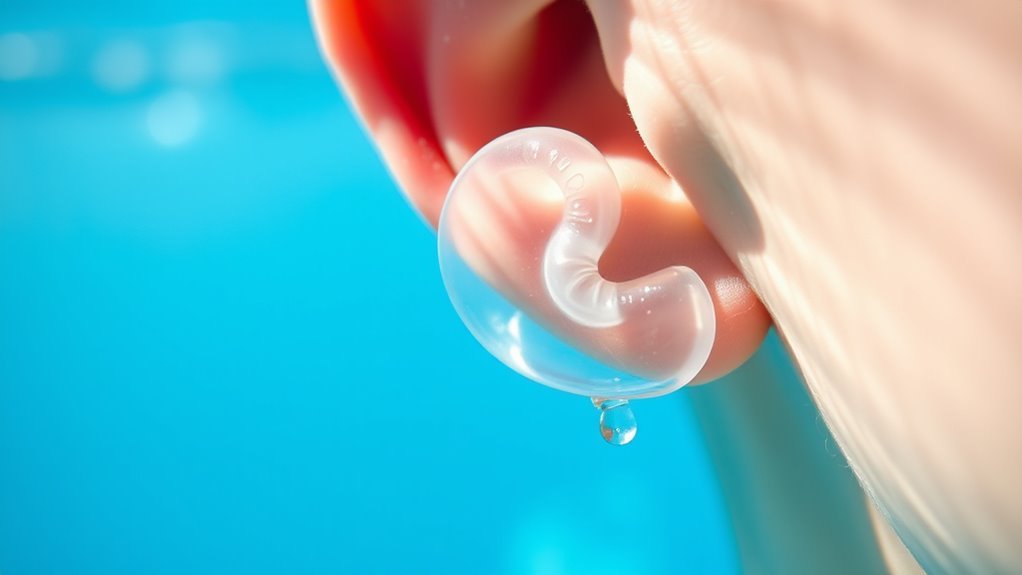
If waterproof bandages aren’t providing the protection you need, consider applying a silicone ear cover. These covers create a snug, watertight seal around your pierced ear, considerably reducing water exposure.
Simply choose a silicone cover that fits comfortably over your ear, then press it firmly to ensure it adheres well without gaps. Silicone is flexible and durable, making it an excellent barrier against pool water, saltwater, or chlorine.
Select a snug silicone cover and press firmly to create a flexible, durable water barrier for your ear.
Plus, it’s reusable and easy to clean, so you can rely on it for multiple swims. Just make sure your piercing is dry before applying the cover to maintain a good seal.
Using a silicone ear cover helps protect your healing piercing from irritation or infection caused by water exposure during swimming.
Wear a Swim Cap or Ear Wrap
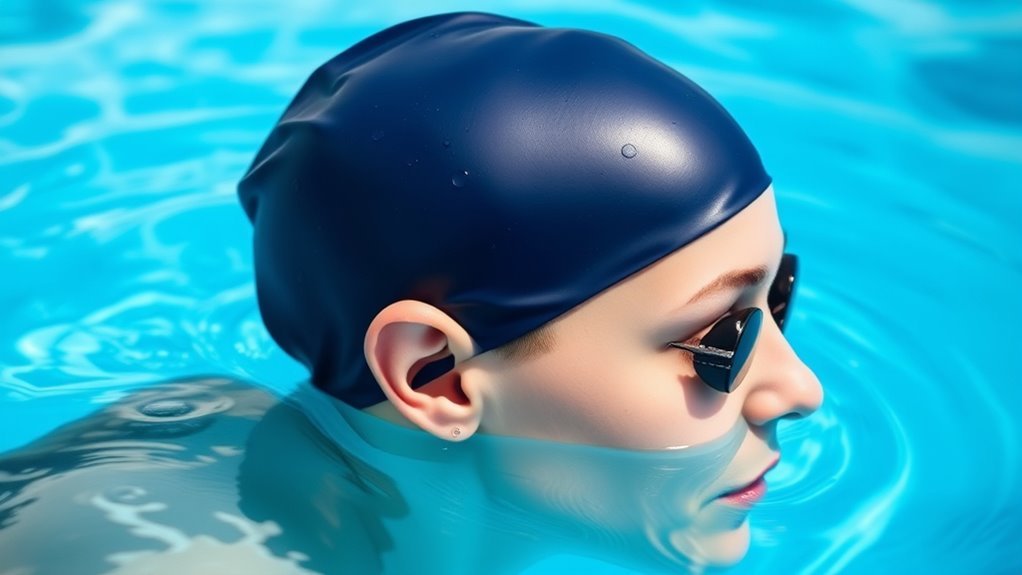
When you want extra protection for your pierced ears, wearing a swim cap or ear wrap can make a big difference. These accessories create a physical barrier that keeps water away from your fresh piercings, reducing the risk of irritation and infection.
Choose options that fit snugly but comfortably to avoid slipping during your swim.
Here’s how to maximize their effectiveness:
- Pick a swim cap made from silicone or latex for waterproof coverage.
- Use an ear wrap designed specifically to cover and protect ear piercings.
- Ensure the cap or wrap fully covers your ears without causing discomfort.
- Rinse and dry your swim cap or ear wrap after each use to keep them clean.
This simple step offers reliable protection so you can enjoy swimming safely.
Use Antibacterial Ointment Before Swimming
Why risk infection when a simple step can protect your new piercings? Applying antibacterial ointment before swimming creates a protective barrier against bacteria and contaminants in the water. This reduces the chance of irritation and infection, which can delay healing.
Before you swim, gently clean the piercing, then apply a thin layer of ointment. Remember to avoid over-applying, as too much can trap moisture.
| Benefit | How to Apply | Precautions |
|---|---|---|
| Prevents infection | Clean piercing first | Use a small amount |
| Reduces irritation | Apply gently with a cotton swab | Avoid allergic ointments |
| Speeds healing | Cover all pierced areas | Don’t share ointment tubes |
| Keeps moisture out | Reapply after swimming if needed | Use recommended products |
| Easy protection | Carry a travel-size tube | Consult piercer if unsure |
Avoid Submerging Ears Deeply in Water
Applying antibacterial ointment helps protect your piercings, but you should also be careful about how deep you place your ears underwater. Submerging your ears too deeply can expose fresh piercings to bacteria and irritants, increasing the risk of infection.
To minimize this risk, try to keep your ears above water or at the surface as much as possible.
Here are some tips to avoid submerging your ears deeply:
- Use a swim cap or ear covers to shield your ears.
- Limit underwater activities that involve submerging your head completely.
- Stay in shallow areas where you can keep your head above water.
- Avoid diving or jumping into the pool, as sudden water pressure can force water into piercings.
Dry Ears Thoroughly After Swimming
Since moisture can linger in your ears after swimming, you’ll want to dry them thoroughly to prevent irritation and infection. Start by gently patting the area around your piercing with a clean, soft towel. Avoid rubbing, which can aggravate the skin or the piercing itself.
You can also tilt your head to each side to help water drain out naturally.
Using a hairdryer on the lowest, coolest setting held at a safe distance helps evaporate any remaining moisture. Be cautious not to use heat directly on your piercing.
Keeping your ears dry reduces the risk of bacterial growth and promotes faster healing, especially if your piercing is new. Make drying your ears part of your post-swim routine to keep your piercings healthy and comfortable.
Consult a Professional for Specialized Protection
While drying your ears carefully helps minimize irritation, sometimes you need extra protection to keep your piercing safe during swimming.
Consulting a professional, like a piercer or dermatologist, can provide you with specialized advice tailored to your piercing type and skin sensitivity.
A piercer or dermatologist can offer personalized care advice suited to your piercing and skin type.
They might recommend custom-fit ear guards or waterproof coverings designed specifically for piercings.
Seeking expert guidance ensures you avoid infections and maintain your piercing’s healing process.
Here’s what a professional might suggest:
- Custom silicone ear covers that mold to your ear shape
- Hypoallergenic waterproof sealants safe for piercings
- Specific aftercare products to protect the piercing area
- Advice on when it’s safe to swim without protection
Don’t hesitate to reach out for expert help to keep your piercing healthy while enjoying the water.
Frequently Asked Questions
How Long Should I Wait After Piercing Before Swimming?
You should wait at least 6 to 8 weeks after getting your ear pierced before swimming. This helps prevent infection and allows proper healing.
Always protect your piercing with waterproof covers if you must swim sooner.
Can I Use Ear Plugs Instead of Bandages for Swimming?
You can certainly try ear plugs as a gentle guardian for your new piercing during swims. Just make sure they fit snugly and keep water at bay, so your healing ear stays happy and healthy underwater.
What Materials Are Best for Ear Covers to Avoid Irritation?
You should use hypoallergenic materials like medical-grade silicone or soft latex for ear covers to avoid irritation. These materials are gentle on your skin, waterproof, and flexible, ensuring comfort and protection while swimming.
They provide a soft barrier that minimizes the risk of allergic reactions and skin sensitivity. Choosing the right material helps maintain ear health and prevents discomfort during extended use.
How Can I Tell if My Piercing Is Infected After Swimming?
Wondering if your piercing’s infected after swimming? If you notice redness, swelling, pain, or pus, it’s a red flag. Don’t ignore warmth or fever—these signs mean you should see a doctor right away.
Are There Specific Swimming Styles Safer for New Piercings?
Yes, you’ll find backstroke and breaststroke safer since your ears stay mostly above water, reducing exposure. Avoid freestyle and butterfly as they submerge your ears more, increasing infection risk and irritation around new piercings.
Conclusion
Think of your new piercing like a tiny garden—delicate and needing care to flourish. Just as a gardener shields plants from harsh weather, you can protect your ear with waterproof bandages or a silicone cover before swimming.
Remember, even a small splash can be like a sudden storm, so drying thoroughly and avoiding deep water helps your piercing heal strong.
Follow these tips, and soon your ear will be ready to dive back into the water without worry. Using proper ear piercing covers for swimming is essential to keep your new piercing safe and promote healing.