How You Can Swim Safely With a New Tattoo
You should wait at least 2-4 weeks to let your new tattoo fully heal before swimming. Swimming too soon can cause infection, fading, or scarring because water contains bacteria and chemicals that irritate fresh skin. Avoid lakes, hot tubs, and chlorinated pools during healing to protect your tattoo.
If you swim, cover your tattoo with a waterproof bandage and rinse gently afterward. Watching for signs of infection is key. Keep these tips in mind to protect your tattoo’s look and health longer.
Understanding the Healing Process of a New Tattoo

Although getting a new tattoo is exciting, you need to understand that your skin requires time to heal properly. Your tattoo is fundamentally an open wound, and the healing process typically takes about two to four weeks.
During this time, your body is working hard to repair the skin. This means you’ll notice scabbing, peeling, and some itching. It’s vital to keep the area clean and moisturized to prevent infection and guarantee vibrant results.
Avoid picking at scabs or scratching, as this can cause scarring or color loss. You’ll also want to protect your tattoo from direct sunlight and harsh chemicals.
Why Swimming Too Soon Can Harm Your Tattoo
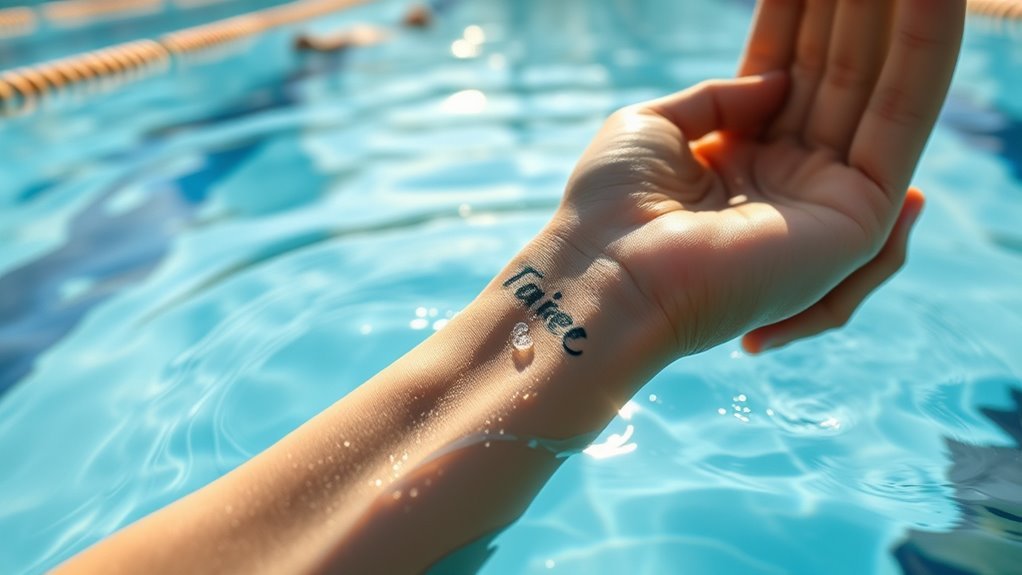
Since your new tattoo is fundamentally an open wound, swimming too soon can expose it to bacteria and irritants in the water. This increases the risk of infection and delayed healing. Chlorine and saltwater can irritate the skin, causing redness and fading.
Plus, constant moisture weakens the tattoo’s protective scabs, leading to scarring or ink loss.
| Risk Factor | Cause | Effect on Tattoo |
|---|---|---|
| Bacteria | Pool, lake, or ocean water | Infection, redness |
| Chlorine | Pool chemicals | Skin irritation, fading |
| Saltwater | Ocean exposure | Dryness, delayed healing |
| Moisture | Prolonged water contact | Scab weakening, scarring |
| Friction | Water movement, towels | Ink loss, skin damage |
Avoid swimming early to keep your tattoo vibrant and healthy.
Recommended Waiting Period Before Swimming
Before you jump back into the water, it’s important to wait at least two to four weeks after getting your tattoo. This waiting period allows your skin to heal properly and reduces the risk of infection or fading.
During these weeks, your tattoo forms a protective layer that shields the ink and skin. Jumping in too soon can disrupt this process, leading to scabbing, color loss, or irritation.
Keep an eye on your tattoo’s condition. If it’s still scabbing, peeling, or feels tender, give it more time to heal.
Once the skin is fully healed and no signs of damage remain, you can safely enjoy swimming again.
Patience during this phase guarantees your tattoo stays vibrant and healthy for years to come.
Types of Water to Avoid With a New Tattoo
When you have a new tattoo, you should steer clear of certain types of water that can expose your skin to bacteria and chemicals, increasing the risk of infection or damage. Avoid swimming in lakes, rivers, and ponds because they often contain harmful bacteria, dirt, and parasites.
These natural bodies of water can irritate your tattoo and slow healing.
Also, steer clear of hot tubs and spas, as warm water promotes bacterial growth, which might infect your fresh tattoo.
Public pools can be risky too, due to chlorine and other chemicals that may irritate sensitive skin. Even though chlorinated water kills some bacteria, it can still dry out and damage your tattoo.
Sticking to clean, safe water sources after your healing period is essential for protecting your new ink.
How to Protect Your Tattoo While Swimming
Although you might be keen to swim, protecting your new tattoo is essential to avoid infection and fading. First, always keep your tattoo covered with a waterproof bandage when entering pools, lakes, or oceans. This barrier helps prevent bacteria and chemicals from reaching your skin.
Before swimming, apply a thin layer of fragrance-free, waterproof ointment to lock in moisture and shield the tattoo.
After swimming, gently rinse your tattoo with clean, fresh water and pat it dry with a soft towel. Never rub.
Avoid prolonged soaking and direct sun exposure while swimming, as both can damage your tattoo.
Finally, listen to your body; if your tattoo feels irritated or overly sensitive, skip swimming until it’s fully healed. These steps will help preserve your tattoo’s appearance and health.
Signs of Infection to Watch for After Swimming
If your new tattoo starts to feel unusually warm, painful, or swollen after swimming, these could be early signs of infection. It’s important to watch closely and act quickly to prevent complications.
Here are four key signs to look for:
- Increased redness or red streaks spreading from the tattoo.
- Pus or unusual discharge oozing from the area.
- Persistent itching or burning sensations.
- Fever or chills accompanying local symptoms.
If you notice any of these symptoms, avoid further exposure to water and seek medical advice promptly.
Early recognition helps ensure your tattoo heals beautifully and stays healthy. Don’t ignore discomfort; your body is signaling when something’s wrong.
Aftercare Tips for Tattoos Exposed to Water
Noticing signs of infection means you should adjust how you care for your tattoo, especially after it’s been exposed to water. First, gently pat your tattoo dry with a clean towel. Don’t rub, as this can irritate the skin.
Avoid using harsh soaps or scrubbing the area. Apply a thin layer of a recommended tattoo aftercare ointment or fragrance-free moisturizer to keep the skin hydrated and promote healing.
Make sure your hands are clean before touching your tattoo to prevent introducing bacteria. If you’ve been swimming, rinse the tattoo with fresh water to remove any chlorine, salt, or bacteria.
Keep the tattoo out of direct sunlight and wear loose clothing to avoid friction. Following these steps helps maintain your tattoo’s health and appearance during healing.
Alternatives to Swimming During Tattoo Healing
While your new tattoo heals, you’ll want to steer clear of swimming to prevent infection and fading. But that doesn’t mean you have to skip all water fun or exercise. Here are some alternatives to keep you active and refreshed without risking your tattoo’s health:
- Take showers instead of baths to keep your tattoo clean without soaking it.
- Try gentle stretching or yoga to stay flexible without exposing your tattoo to water.
- Use a damp cloth to cool off on hot days without swimming.
- Opt for indoor workouts like stationary biking or weight training to maintain fitness.
These options help you avoid water exposure while your tattoo fully heals, preserving its color and detail.
Frequently Asked Questions
Can Sunscreen Damage a New Tattoo When Swimming Outdoors?
No, sunscreen won’t damage your new tattoo when swimming outdoors.
In fact, applying a tattoo-safe, broad-spectrum SPF protects your skin and ink from harmful UV rays, helping your tattoo heal properly while you enjoy the water safely.
Is It Safe to Use a Waterproof Bandage on a Fresh Tattoo?
Sure, slap on that waterproof bandage like it’s a magical force field! But remember, it can trap moisture and irritate your tattoo. Use it sparingly, keep it clean, and let your skin breathe to heal properly.
How Does Chlorine Concentration in Pools Affect Tattoo Healing?
High chlorine concentration can irritate your new tattoo, slowing healing and causing dryness or fading.
You should avoid swimming in heavily chlorinated pools until your tattoo fully heals to protect the ink and your skin’s recovery.
Can Swimming in Saltwater Speed up Tattoo Fading?
About 70% of tattoo ink particles reside near your skin’s surface, so yes, swimming in saltwater can accelerate fading by breaking down ink.
To protect your tattoo, avoid prolonged exposure until it’s fully healed.
Should I Avoid Hot Tubs or Jacuzzis With a New Tattoo?
Yes, you should avoid hot tubs or jacuzzis with a new tattoo. The warm water and chemicals can irritate your skin, increase infection risk, and slow healing.
Wait until your tattoo fully heals before soaking.
Conclusion
Remember, waiting at least two to four weeks before swimming can reduce your tattoo infection risk. About 20% of new tattoo wearers who plunge in too soon experience infections. Protect your healing skin by avoiding pools, lakes, and oceans during this crucial period.
Keep your tattoo clean and moisturized to support proper healing. If you notice redness or swelling after swimming, act quickly to prevent further complications. Taking these steps guarantees your tattoo heals beautifully.
By following these safety tips, you can enjoy swimming safely with a new tattoo. Proper care and patience are key to preserving your tattoo’s appearance and health.