How You Can Swim Safely With a Sanitary Pad
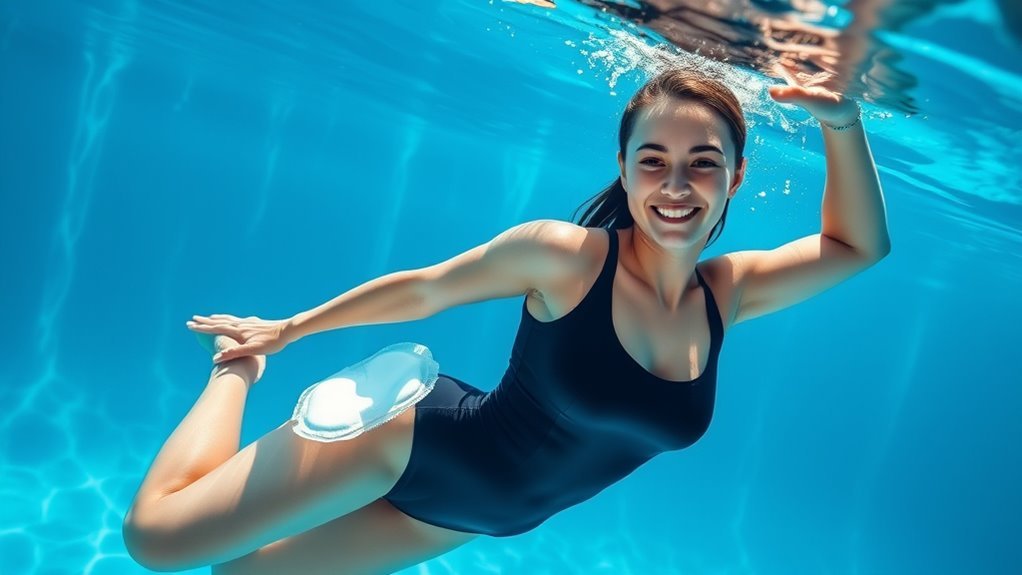
Swimming safely with a sanitary pad involves choosing a thin, waterproof or water-resistant pad that fits well and adheres firmly to your underwear. Proper selection is key to ensuring comfort and preventing leaks while you swim.
Remove the backing carefully and press the pad securely in place. You might also consider trimming the edges for added comfort and a better fit.
Keep in mind that pads aren’t ideal for water since they can soak up pool water, which might cause shifting or leaking. Change your pad promptly after swimming, and always carry extras in a waterproof pouch.
If you want safer, more reliable options, you’ll find some effective alternatives to explore that are better suited for swimming.
Understanding the Limitations of Sanitary Pads in Water
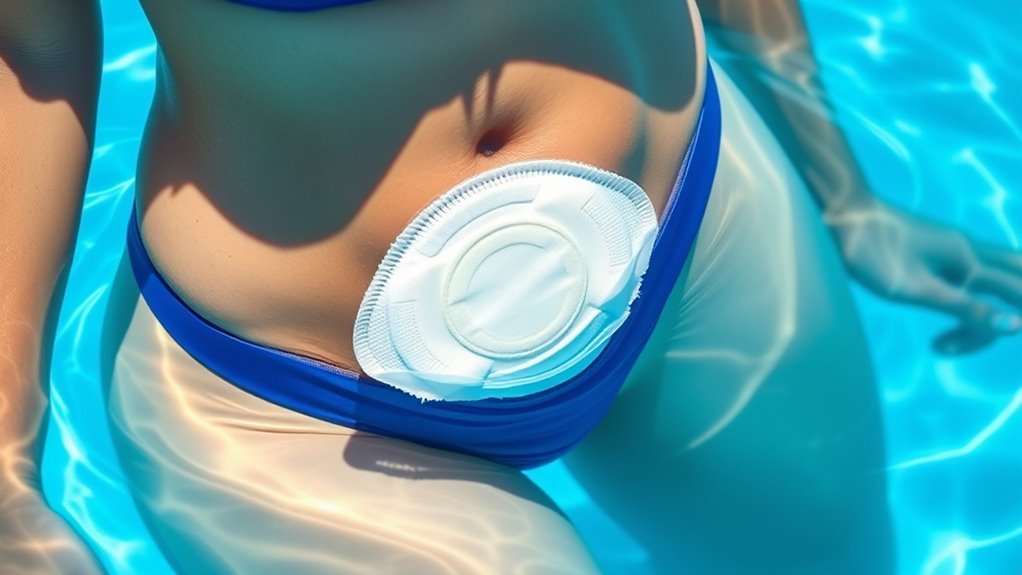
Although sanitary pads are designed to absorb menstrual flow effectively, they aren’t made for use in water and can quickly lose their effectiveness when you swim. Water can cause the pad to become saturated from the outside, which compromises its ability to absorb menstrual fluid. This leads to leakage and discomfort.
Pads also tend to shift or peel away when wet, making it hard to stay secure during swimming. Additionally, the adhesive used on pads isn’t waterproof, so it won’t hold well once submerged.
You might notice increased bulkiness and restriction because pads aren’t streamlined for aquatic activities.
Understanding these limitations helps you realize why pads aren’t the best option for swimming, so you can plan accordingly and avoid unexpected issues in the water.
Choosing the Right Type of Sanitary Pad for Swimming
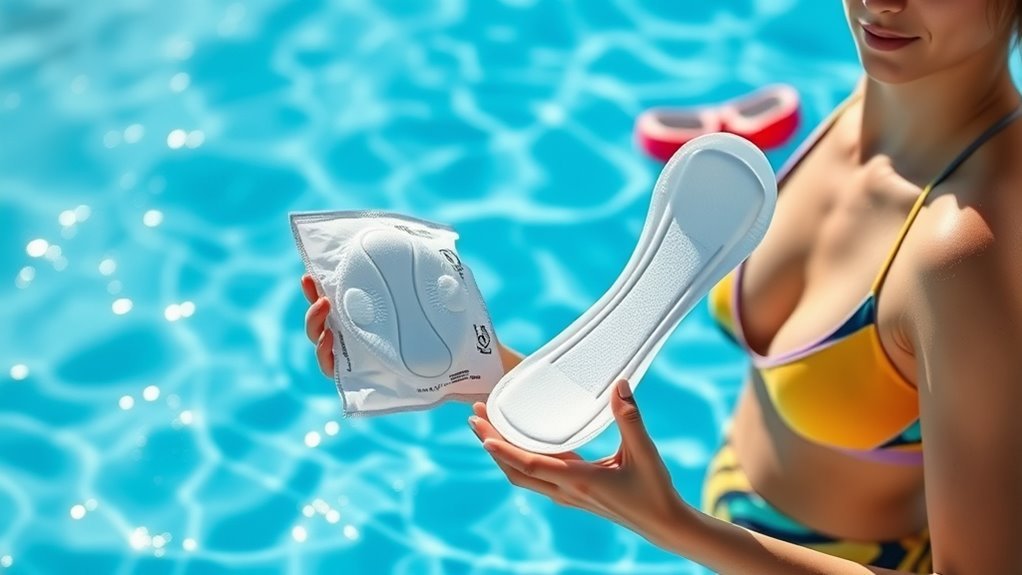
When you plan to swim while wearing a sanitary pad, picking one designed for water exposure can make a big difference in comfort and protection. Look for pads labeled as “waterproof” or “water-resistant” since they’re crafted to hold up better when wet.
Thin, adhesive pads with a secure fit tend to stay in place during movement, reducing the risk of shifting or leakage. Avoid bulky or heavily absorbent pads; they can absorb pool water, becoming heavy and uncomfortable.
Some pads include a moisture barrier layer that prevents water from soaking through, which is ideal for swimming.
Ultimately, choose a pad that fits snugly and matches your flow to maintain confidence and comfort while enjoying the water.
Preparing Your Sanitary Pad Before Entering the Water
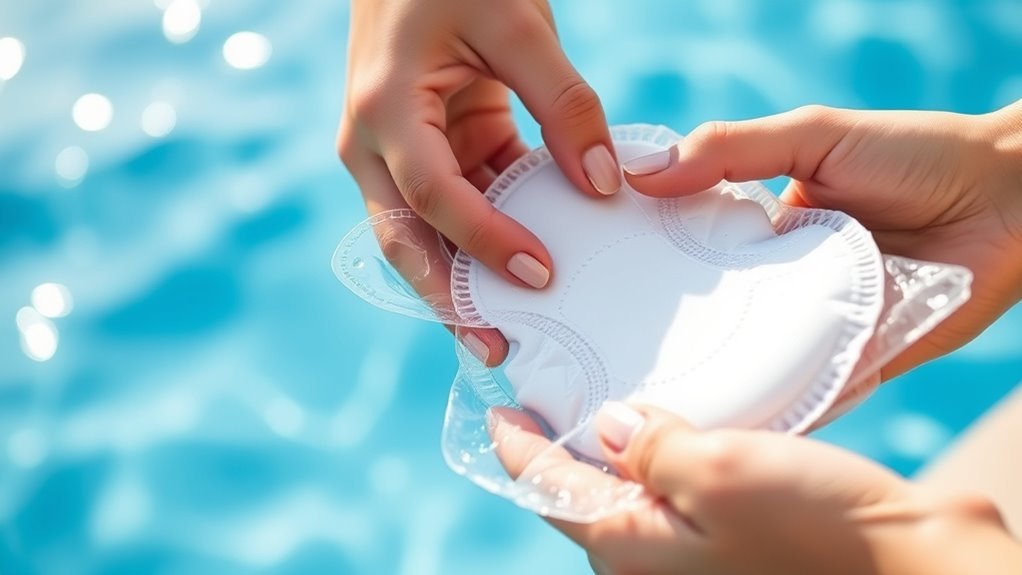
Before you step into the pool, take a moment to guarantee your sanitary pad is properly prepared for water use. Begin by selecting a pad designed for light to moderate flow, as these tend to be thinner and less bulky.
Choose a thin, light-flow pad to ensure comfort and reliability before entering the pool.
Remove the adhesive backing carefully and firmly press the pad onto your underwear, ensuring it sticks well to avoid shifting in the water.
You might want to trim the pad’s edges slightly for a better fit, but don’t compromise its absorbency.
Some prefer to wet the pad slightly beforehand to reduce initial swelling when exposed to water.
Finally, double-check the pad’s placement by moving around to confirm it stays secure. Proper preparation helps you swim confidently without worrying about leaks or discomfort.
Tips for Maintaining Hygiene While Swimming With a Pad
To keep yourself fresh and comfortable while swimming with a sanitary pad, you should change it promptly after leaving the water. Wet pads can harbor bacteria, increasing the risk of irritation or infection.
Always carry extra pads in a waterproof pouch to stay prepared. Before changing, wash your hands thoroughly to maintain cleanliness.
Dispose of used pads responsibly in a sealed bag or bin to avoid contamination. If you have access to a clean restroom, use it to change pads rather than doing so in public areas.
Also, wear breathable cotton underwear to help moisture escape and reduce discomfort.
Alternative Menstrual Products Better Suited for Swimming
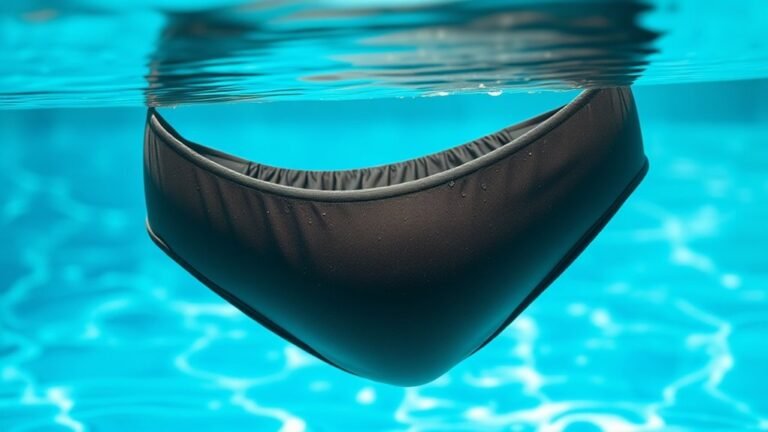
Why settle for sanitary pads when swimming when there are better options designed for water activities? You can choose products made to stay secure and dry in the water. Tampons, menstrual cups, and swim-specific period underwear offer greater comfort and leak protection.
They’re discreet, reusable, and won’t absorb water like pads do, so you won’t feel soggy or bulky.
| Product Type | Water Compatibility | Key Benefits |
|---|---|---|
| Tampons | Excellent | Compact, secure, discreet |
| Menstrual Cups | Excellent | Reusable, eco-friendly |
| Swim Period Underwear | Designed for swimming | Comfortable, leak-resistant |
| Pads | Poor | Absorbs water, bulky |
| Sea Sponges | Good | Natural, biodegradable |
Consider these alternatives for a safer, more comfortable swim during your period.
Frequently Asked Questions
Can Swimming With a Sanitary Pad Cause Infections?
Yes, swimming with a sanitary pad can increase infection risk if it gets wet and stays damp, creating a breeding ground for bacteria.
You should change it immediately after swimming to stay safe and avoid irritation.
How Long Can I Swim Safely With a Pad On?
You can safely swim with a pad on for about 30 minutes, but don’t trust it to stay dry longer. Pads aren’t designed for water, so change it right after swimming to avoid discomfort or infections.
Are There Specific Brands Recommended for Swimming With Pads?
You’ll want to choose thin, ultra-absorbent pads designed for active use, like Always Infinity or Kotex Fitness. They stay secure and dry longer, but remember, pads aren’t ideal for swimming. Consider tampons or menstrual cups instead.
Can Sanitary Pads Be Reused After Swimming?
Pads post-pool? Please, no! You shouldn’t reuse sanitary pads after swimming because water weakens their absorbency and hygiene.
Change promptly to prevent germs and discomfort, keeping you clean, comfortable, and confident every time.
How Do Water Temperature and Chlorine Affect Pad Performance?
You’ll find that cold water can make pads less absorbent, while chlorine may degrade the adhesive and materials.
Conclusion
Swimming with a sanitary pad might feel like sailing a fragile boat on a vast ocean—possible but tricky. While you can take steps to stay safe and fresh, remember that pads aren’t built for water’s embrace.
For true freedom and confidence, consider alternatives designed to flow with you. Embrace your swim with products that let you plunge in fully, leaving worries ashore and your spirit buoyant like the waves you conquer.
To swim safely with a sanitary pad, ensure it is securely placed and change it before and after swimming. However, for a better experience, explore swimwear and menstrual products made specifically for water activities. This way, you can enjoy your swim without compromise, staying protected and comfortable throughout.