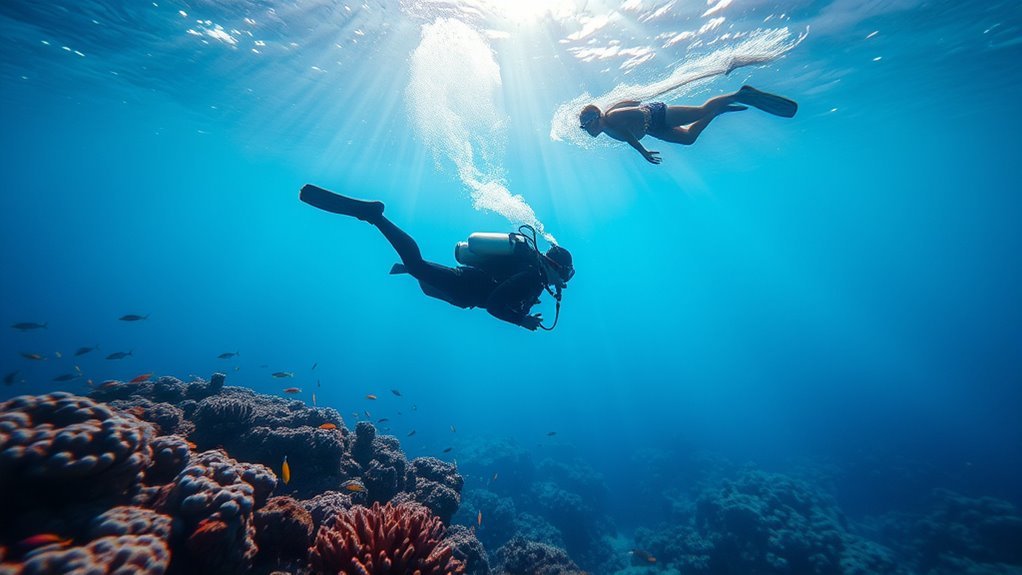
Do You Need to Know Swimming for Scuba Diving?
You don’t have to be an expert swimmer to scuba dive, but basic swimming skills and water comfort are essential. Knowing how to float, tread water, and breathe calmly underwater helps keep you safe and relaxed during your dive. These fundamental swimming abilities form the foundation for a successful scuba experience.
Good swimming skills also enhance your energy efficiency and buoyancy control, making each dive more enjoyable and less tiring. With better control, you can focus more on exploring and less on managing your movements underwater.
For those who aren’t strong swimmers, there is specialized training and equipment designed to provide extra support. Keep exploring to discover how you can build confidence and master the essential scuba diving skills needed for a safe and fun underwater adventure.
Importance of Swimming Skills in Scuba Diving
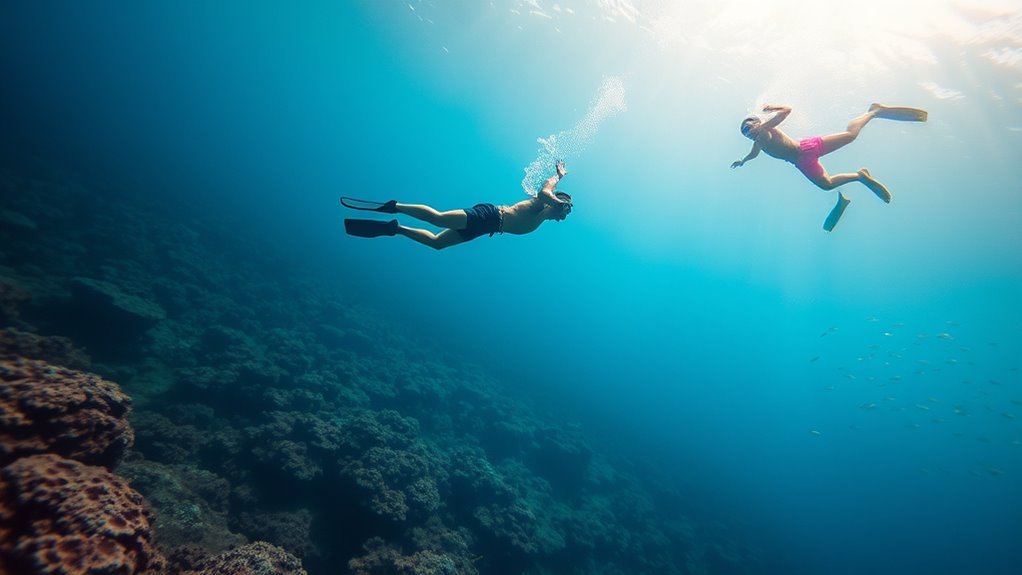
Although scuba diving relies heavily on equipment, your swimming skills play a crucial role in ensuring safety and enjoyment underwater. You’ll find that being a confident swimmer helps you move efficiently, conserve energy, and respond quickly to unexpected situations.
If you can swim well, you’ll control your buoyancy better and handle currents with ease, reducing stress during your dive. Even simple skills like floating and treading water make surface intervals more comfortable.
Plus, strong swimming abilities boost your overall stamina, allowing you to focus on exploring rather than struggling. Remember, equipment can fail, but your swimming proficiency keeps you safe and calm.
Basic Water Safety and Comfort Requirements

Since you’ll spend extended time in the water while scuba diving, feeling safe and comfortable is vital. You don’t need to be an expert swimmer, but you should be confident in basic water safety. That means being able to float, tread water, and manage your breathing calmly.
Staying relaxed helps prevent panic, which is essential underwater. You also need to be comfortable with your gear on, practicing breathing through your regulator and clearing your mask.
Being able to handle mild currents and waves will boost your confidence and safety.
Essential Scuba Skills Beyond Swimming

Mastering swimming is just the start; scuba diving demands a range of additional skills that guarantee your safety and enjoyment underwater. You’ll need to learn how to control your buoyancy, which helps you hover effortlessly and protects fragile marine life.
Swimming is foundational, but scuba diving requires mastering buoyancy control for safety and marine protection.
Equalizing your ears to manage pressure changes is vital to avoid discomfort or injury. You must also practice proper breathing techniques through your regulator to conserve air and stay calm.
Steering underwater using a compass or natural landmarks guarantees you don’t get lost. Emergency skills, like sharing air and performing controlled ascents, prepare you for unexpected situations.
These essential abilities go beyond swimming, forming the foundation for confident and responsible diving adventures.
Training Programs for Non-Swimmers
Swimming skills form the foundation for all scuba activities, but not everyone starts in the water with confidence. If you’re a non-swimmer enthusiastic to dive, specialized training programs can guide you safely.
These courses focus first on building your comfort in water, teaching basic flotation, breath control, and gentle movements. You’ll practice in shallow pools under expert supervision, gradually progressing at your own pace.
Many programs integrate snorkeling and beginner scuba theory to familiarize you with gear and underwater breathing techniques.
With consistent practice, you’ll develop essential skills like buoyancy control and underwater navigation.
Equipment and Techniques That Aid Non-Swimmers
Although diving without strong swimming skills can seem intimidating, the right equipment and techniques can make the experience safe and enjoyable. Devices like buoyancy control devices (BCDs) help you maintain neutral buoyancy, minimizing the effort you need to swim.
Fins designed for beginners increase propulsion without requiring strong kicks, while snorkels allow surface breathing without exhaustion. Techniques such as controlled breathing and slow, deliberate movements conserve energy and reduce panic.
| Equipment | Purpose | Benefit for Non-Swimmers |
|---|---|---|
| Buoyancy Control Device (BCD) | Controls buoyancy underwater | Helps maintain stability |
| Beginner Fins | Enhances propulsion | Requires less leg strength |
| Snorkel | Allows surface breathing | Reduces energy use |
| Dive Computer | Monitors depth and time | Helps avoid stress from overexertion |
Tips for Building Confidence in the Water Before Diving
Getting comfortable in the water sets the foundation for a successful scuba experience. To build your confidence before diving, start with small, manageable steps.
Here are four tips to help you ease into the water:
- Practice breathing exercises while your face is submerged to get used to water around your nose and mouth.
- Spend time floating and treading water to improve your comfort and control.
- Take swimming lessons focused on basic strokes and water safety, even if you’re not aiming to become an expert swimmer.
- Gradually increase your time in the water to reduce anxiety and build stamina.
Frequently Asked Questions
What Is the Minimum Age Requirement for Scuba Diving Certification?
You need to be at least 10 years old to start scuba diving certification with junior programs.
For full certification, you usually have to be 15 or older, depending on the agency’s specific guidelines.
How Does Scuba Diving Affect People With Asthma or Other Medical Conditions?
Asthma and ailments affect your aquatic adventure; always ask your doctor. Diving demands disciplined breathing, and certain conditions can complicate comfort or cause complications.
Stay safe, stay smart—consult specialists before submerging beneath the surface.
Can You Scuba Dive if You Have a Fear of Enclosed Spaces?
You can scuba dive if you fear enclosed spaces, but it might be challenging. Start with open water dives, take it slow, and consider professional guidance to manage anxiety.
Your comfort and safety come first.
What Are the Environmental Impacts of Recreational Scuba Diving?
You can harm coral reefs and disturb marine life if you’re not careful while scuba diving. Always practice responsible diving, avoid touching creatures, and follow guidelines to protect underwater ecosystems and minimize your environmental impact.
Be mindful of your buoyancy to prevent accidental contact with delicate corals. Avoid stirring up sediment, which can smother marine life. Respect marine habitats by not collecting souvenirs or feeding wildlife.
How Often Should Scuba Diving Equipment Be Serviced or Replaced?
You’re gearing up for a dive just as your regulator’s annual service is due—servicing gear yearly and replacing tanks every 5-10 years keeps you safe underwater.
Regular checks catch issues before they become dangerous surprises.
Conclusion
So, you’re not Michael Phelps, and that’s okay—you don’t need to swim laps like a fish to snorkel dive. Just imagine flailing gracefully like a starfish while your gear does the heavy lifting.
With basic water comfort, some training, and the right equipment, you’ll float, breathe, and explore underwater wonders without turning into a human cannonball.
So, ditch the swim team tryouts and plunge into adventure—you’ve got this, starfish style! Remember, knowing how to swim isn’t mandatory for scuba diving, but being comfortable in the water is essential for a safe and enjoyable experience.