How Deep Is a Swimming Pool and How to Measure It
Swimming pools can vary widely in depth, typically ranging from 1 to 2 feet in shallow areas designed for kids, to as deep as 8 to 12 feet in zones intended for diving. Understanding how deep a swimming pool is can help ensure safety and appropriate usage.
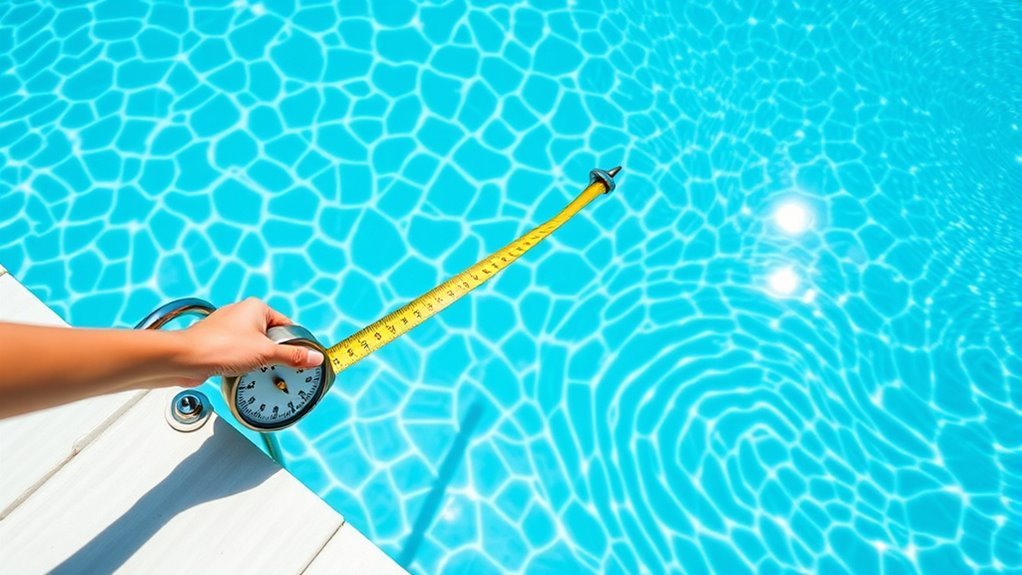
To measure your pool’s depth, use a weighted measuring tape or a marked rope. Lower it straight down until it touches the bottom, then record the measurement. It’s important to take measurements at various spots to get a complete depth profile.
These steps help guarantee safety and proper pool use. Keep reading to discover tips on the best tools, safety precautions, and design factors related to pool depth.
Typical Depths of Different Types of Swimming Pools
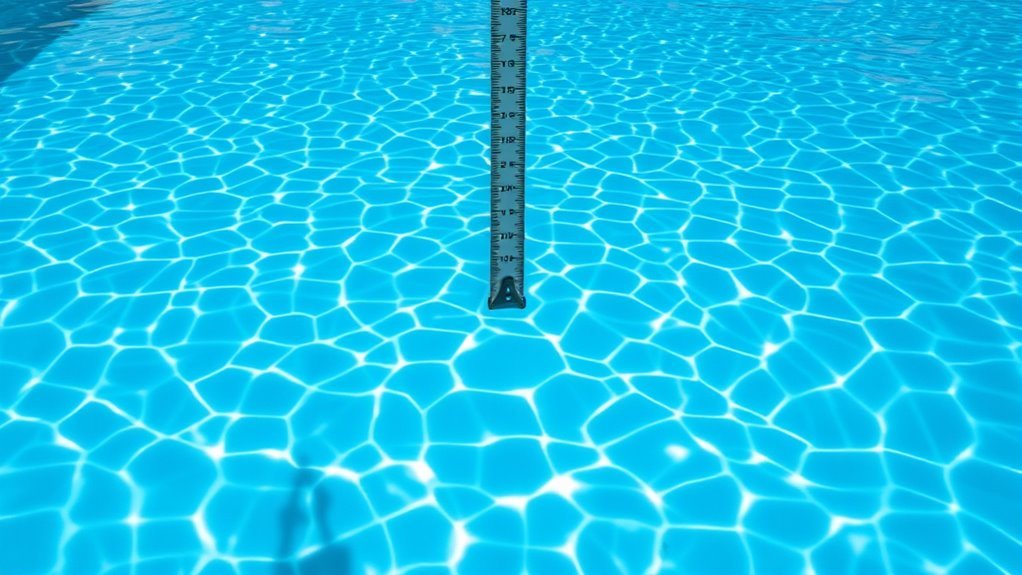
Although swimming pools come in various shapes and sizes, their depths generally fall within certain ranges based on their intended use.
If you’re looking at a residential pool, expect depths from 3 to 5 feet, perfect for casual swimming and lounging.
Lap pools usually maintain a consistent depth of around 4 to 5 feet to facilitate smooth swimming without interruptions.
For diving pools, depths skyrocket to at least 8 to 12 feet, ensuring safety when diving from boards or platforms.
Children’s pools tend to be shallow, often between 1 and 2 feet, to keep things safe and fun.
As you consider pool types, keep these typical depth ranges in mind to match your swimming needs and preferences effectively.
Factors Influencing Pool Depth Design
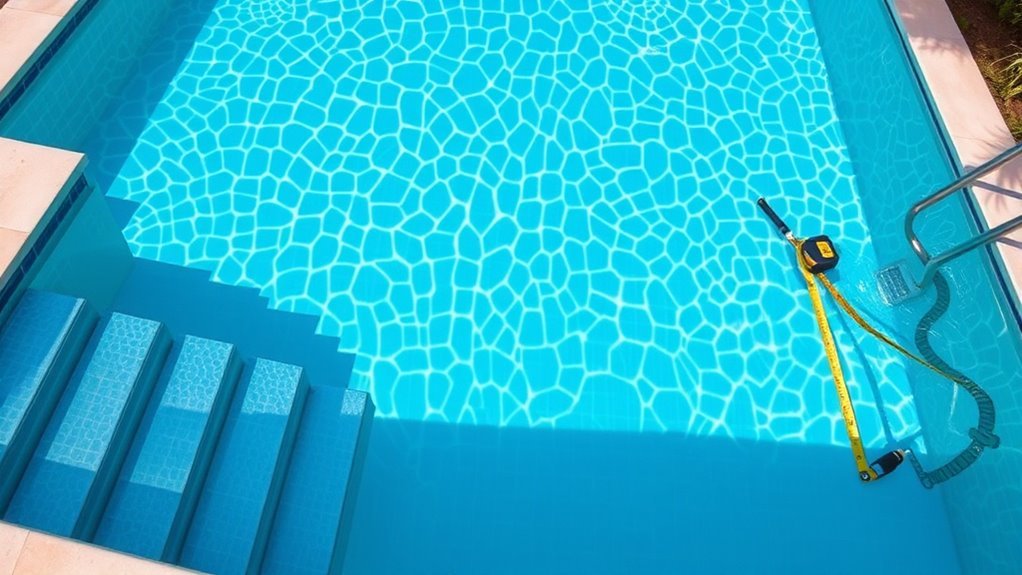
When designing a swimming pool, several factors influence how deep it should be to meet your needs. First, consider the pool’s primary use, whether for lap swimming, diving, or family recreation, as each activity demands different depths.
Safety is another key factor; shallower areas reduce drowning risks, especially for children. You’ll also want to think about the pool’s size and shape, as deeper water requires stronger structural support and more water volume.
Local building codes and regulations often set minimum depth requirements for certain pool features.
Finally, your budget plays a role since deeper pools cost more to build and maintain.
Tools Needed to Measure Pool Depth
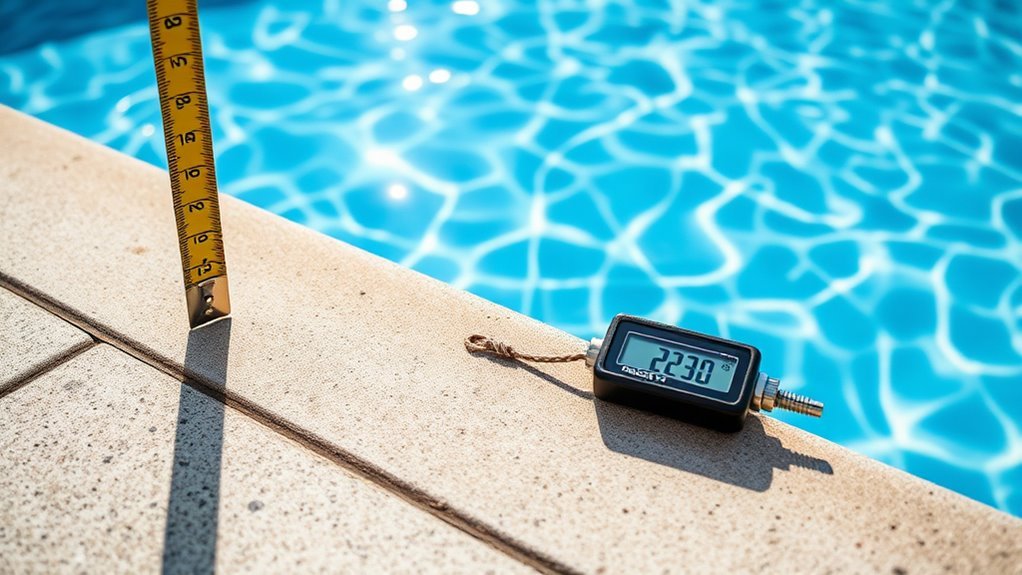
Before you measure your pool’s depth, you’ll need the right tools to get accurate results. Start with a measuring tape, preferably one that’s long, waterproof, and marked clearly in feet and inches or centimeters.
A weighted line or a marked rope can help if you can’t use a tape measure directly, especially for deeper pools.
You might also want a pool depth gauge, which is designed specifically for this purpose.
A snorkel or goggles can assist if you plan to visually confirm the measurement underwater.
Additionally, having a notepad and pen handy lets you record measurements immediately.
With these tools ready, you’ll be well-prepared to determine your pool’s depth precisely and efficiently.
Step-by-Step Guide to Measuring Pool Depth
Once you have your tools ready, start by selecting the spot in the pool where you want to measure the depth, usually the deepest or shallowest point.
Begin by choosing the exact spot in the pool to measure, typically the deepest or shallowest area.
Attach your weighted measuring tape or marked stick securely and lower it slowly into the water until it touches the bottom.
Keep the tape straight and avoid letting it float or bend.
Once the weight rests on the pool floor, note the water level on the tape or stick at the surface.
Pull it up carefully and read the measurement.
Repeat this process at different points if you want to find the pool’s varying depths.
Record each measurement accurately, then compare to understand the pool’s depth profile.
This simple method ensures you get reliable depth readings quickly and effectively.
Safety Considerations Based on Pool Depth
Although knowing your pool’s depth is crucial, understanding the safety measures tied to those depths is even more important. If your pool has a deep end, you should clearly mark it and ensure non-swimmers stay in the shallow area.
Always supervise children closely, especially near deeper sections. Avoid diving in shallow areas to prevent injuries like spinal damage.
Installing depth markers around the pool helps everyone stay aware of where it’s safe to jump or swim.
Additionally, having safety equipment like life rings and a reaching pole nearby can be a lifesaver.
Frequently Asked Questions
How Often Should I Check My Pool’s Water Depth?
You should check your pool’s water depth at least once a month to guarantee safety and proper maintenance.
If you notice evaporation or leaks, measure it more frequently to keep everything in balance and functioning well.
Can Pool Depth Affect Water Temperature?
Yes, pool depth can affect water temperature. Deeper pools tend to stay cooler, as the sun’s warmth penetrates less.
You’ll notice shallow pools heat up faster, especially in sunny weather, impacting your swimming comfort.
Do Deeper Pools Require More Maintenance?
Yes, deeper pools often need more maintenance since they hold more water, which can affect chemical balance and filtration.
You’ll want to check equipment regularly and monitor water quality closely to keep everything clean and safe.
How Does Pool Depth Impact Swimming Competitions?
You’re diving into a liquid runway—deeper pools reduce turbulence, letting you glide faster and smoother.
This gives you a competitive edge by enhancing speed and minimizing resistance during swimming competitions.
Are There Regulations for Minimum Pool Depth?
Yes, you’ll find regulations for minimum pool depth, especially in competitions. Governing bodies like FINA require at least 1.35 meters for racing pools to guarantee safety and fair performance during dives and turns.
Conclusion
Now that you know how to measure your pool’s depth and what factors influence it, you might be wondering—how deep does it really need to be for your plans? Whether it’s for diving, playing, or just relaxing, the right depth makes all the difference.
Grab your tools, follow the steps carefully, and uncover the true depth beneath the surface. You’ll be surprised how this simple measurement can change your whole swimming experience!
Understanding the depth of your swimming pool is essential for safety and enjoyment. Accurate measurement helps you make informed decisions about pool use, maintenance, and upgrades. With the right knowledge, you can ensure your pool suits all your activities perfectly.