How to Do Vacuum My Swimming Pool in 7 Easy Steps
To vacuum your swimming pool in seven easy steps, first gather your vacuum head, telescopic pole, hose, and make certain your pump is ready. Proper pool maintenance starts with having all your equipment on hand. Clear any large debris from the pool surface and turn off the pump.
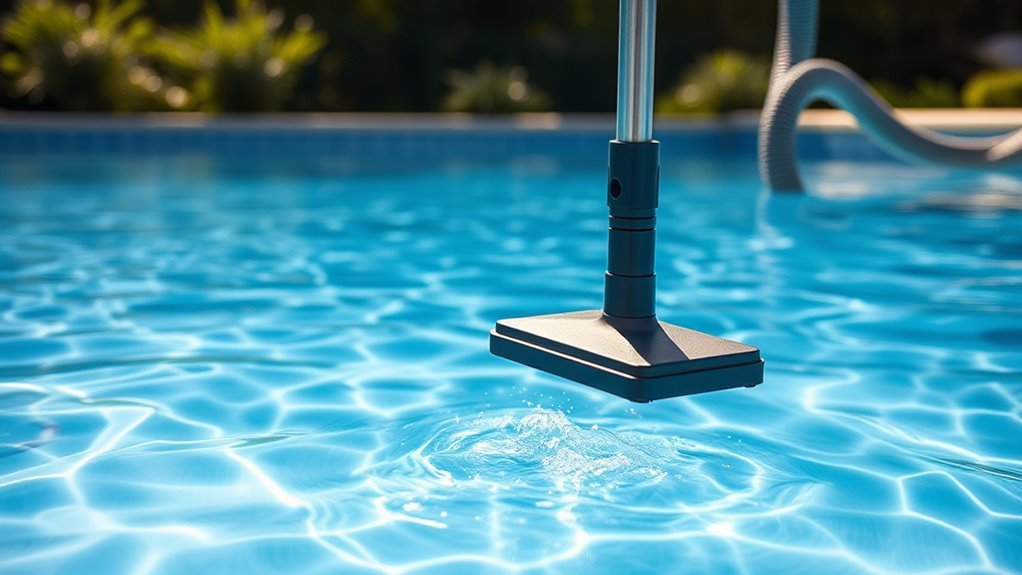
Assemble the vacuum head and attach it securely to the telescopic pole. Connect the hose to the vacuum and submerge it fully to remove any trapped air. This step is crucial for effective suction.
Attach the other end of the hose to the skimmer, then vacuum the pool floor slowly and methodically to ensure thorough cleaning. Finally, rinse your equipment and store it properly to keep everything in good condition. Keep following for tips to perfect your pool cleaning routine.
Gather the Necessary Pool Vacuum Equipment
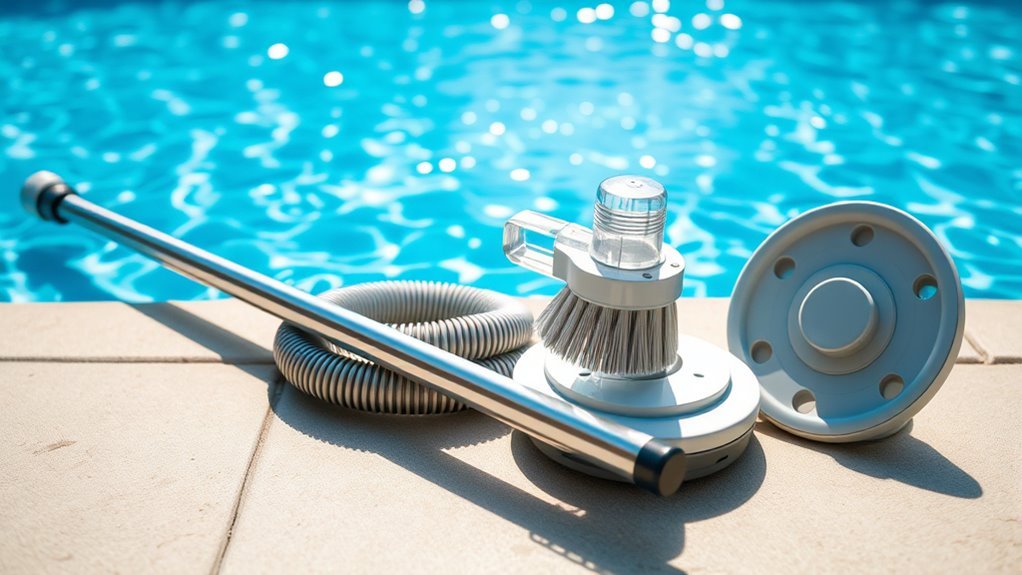
Before you begin vacuuming your swimming pool, you’ll need to gather the right equipment. Start with a pool vacuum head designed to fit your pool’s surface, whether it’s vinyl, concrete, or fiberglass.
Next, attach a telescopic pole that lets you reach every corner without straining. You’ll also need a vacuum hose long enough to connect the vacuum head to the pool’s skimmer or dedicated suction port.
Don’t forget to have your pool pump and filter system ready, as they create the suction necessary for cleaning.
Optional but helpful items include a leaf rake or brush for loosening debris and a hose adapter if your vacuum hose doesn’t fit the skimmer.
Having these essentials on hand lets you clean efficiently and thoroughly.
Prepare the Pool for Vacuuming
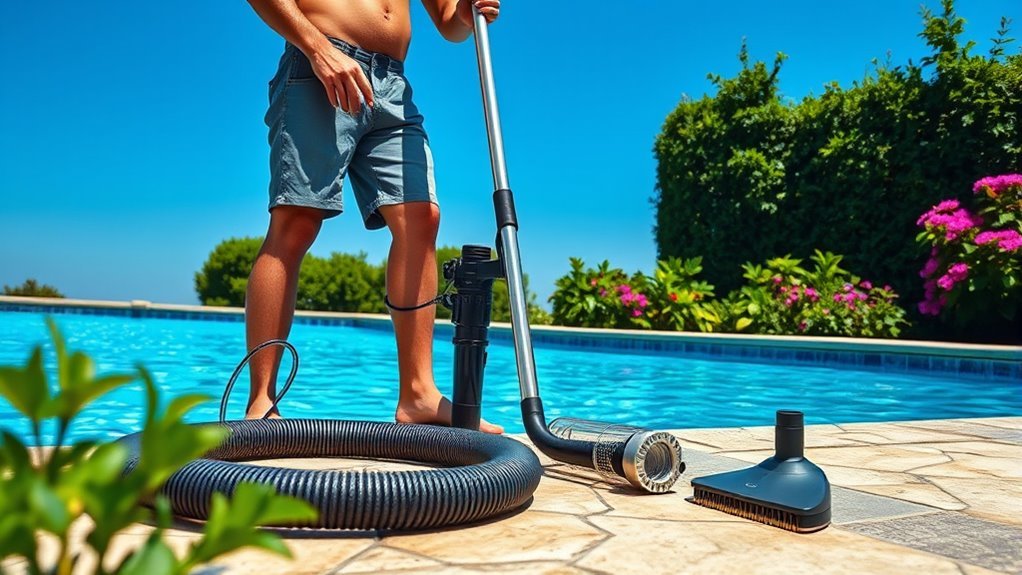
Although it might seem straightforward, preparing your pool properly guarantees the vacuuming process goes smoothly and effectively.
Before you start, remove any large debris like leaves and toys from the surface to prevent clogging your vacuum.
Next, check your pool’s chemical levels to ensure they’re balanced; this keeps your water safe and clear throughout cleaning.
Finally, turn off your pool’s pump and filter system to avoid suction issues when connecting the vacuum.
Feel confident knowing your pool’s clean and well-maintained before vacuuming.
Avoid frustration by eliminating obstacles that could interrupt your work.
Enjoy the satisfaction of a sparkling pool ready for a relaxing swim once you finish.
Assemble the Vacuum Head and Pole
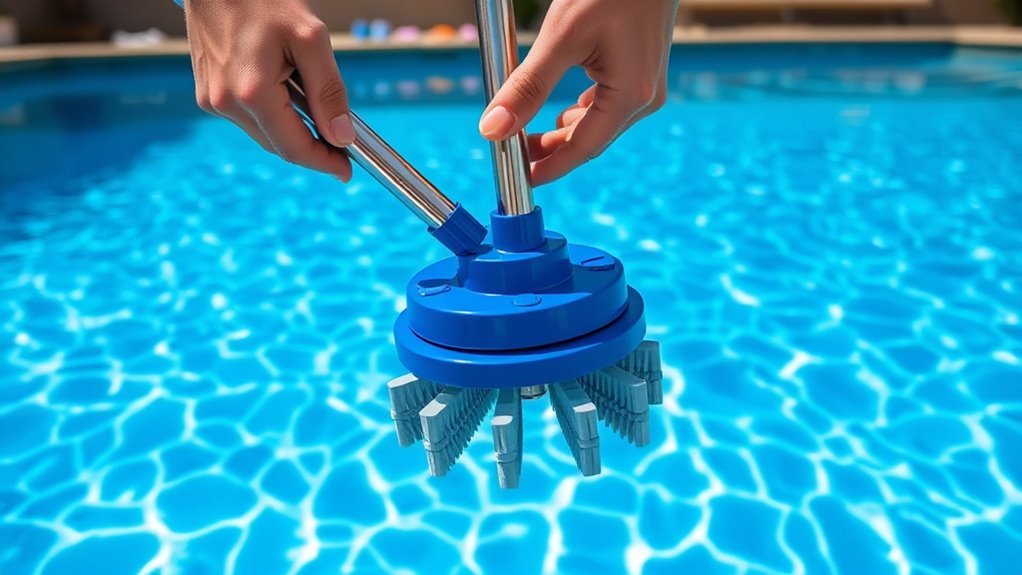
Once you’ve prepared your pool for vacuuming, it’s time to put together the vacuum head and pole. First, attach the vacuum head to the telescoping pole by sliding the handle of the vacuum head into the open end of the pole. Make sure it clicks or fits tightly to avoid wobbling during use.
Next, check the vacuum head’s brushes or rollers to ensure they’re secure and clean, as these help loosen debris effectively. If your vacuum head has adjustable settings, set it according to your pool type.
Confirm the pole locks firmly in place, so it won’t detach while you’re vacuuming.
With the vacuum head and pole assembled properly, you’re ready to move on to connecting the vacuum hose.
Connect the Vacuum Hose to the Skimmer
To start connecting the vacuum hose to the skimmer, first guarantee your vacuum head and pole are securely assembled.
Next, take one end of the vacuum hose and firmly attach it to the vacuum head’s hose barb.
Attach one end of the vacuum hose securely to the vacuum head’s hose barb for a tight fit.
Then, locate the skimmer basket in your pool’s skimmer. Remove the skimmer basket’s lid and set it aside carefully.
Insert the free end of the hose into the skimmer’s suction port, ensuring a tight fit to avoid air leaks.
Remember, connecting the hose properly is essential because:
- It ensures strong suction for effective cleaning.
- Prevents air from entering the system, which can disrupt vacuuming.
- Helps you feel confident your pool will be spotless in no time.
A secure connection is your first step to a sparkling pool!
Submerge the Vacuum Hose to Remove Air
How do you get all the air out of the vacuum hose before you start cleaning? To guarantee the vacuum works properly, you need to submerge the hose fully underwater to expel trapped air.
Begin by holding one end of the hose near the pool surface while slowly feeding the other end down into the water. As you push the hose down, water will fill it and push the air out.
Keep going until bubbles stop rising from the submerged end. Once the hose is completely filled with water, quickly attach it to the vacuum head while keeping it underwater to prevent air from re-entering.
Removing all air ensures the vacuum creates the suction needed to clean your pool efficiently.
Vacuum the Pool Floor Methodically
After filling the vacuum hose with water and attaching it properly, you can start cleaning the pool floor. Move the vacuum head slowly and steadily across the bottom, overlapping your strokes to guarantee no spots are missed. Avoid rushing, or you might stir up debris, making the water cloudy.
Work methodically from one end to the other, maintaining a consistent pace.
Remember to:
- Feel the satisfaction of restoring your pool’s sparkle.
- Enjoy the calming rhythm of your movements.
- Appreciate the effort that keeps your pool inviting and fresh.
Clean Up and Store Your Equipment
Once you’ve finished vacuuming, you’ll want to rinse off your equipment to prevent buildup and guarantee it’s ready for next time. Use a hose to wash off any debris or chemicals, then let everything dry thoroughly to avoid mold or corrosion.
Coil hoses neatly and store your vacuum head, poles, and brushes in a dry, shaded area. Proper care extends their lifespan and keeps your pool maintenance hassle-free.
| Equipment | Cleaning Tip |
|---|---|
| Vacuum Head | Rinse with fresh water |
| Hoses | Drain and coil to avoid kinks |
| Poles & Brushes | Dry completely before storing |
Frequently Asked Questions
How Often Should I Vacuum My Swimming Pool?
You should vacuum your pool at least once a week to keep it clean and clear.
If you use it frequently or have lots of debris, you might need to vacuum more often to maintain water quality.
Can I Vacuum My Pool During Pool Parties?
Imagine trying to eat during a loud concert—vacuuming during parties disrupts fun and can be hazardous.
It’s best to wait until after guests leave, so you can clean effectively without interruptions or safety risks.
What Type of Filter Is Best for Vacuuming?
You’ll want a cartridge filter for vacuuming since it traps dirt effectively and requires less maintenance. Sand filters work too but might not catch fine debris as well, while DE filters offer the best cleaning but cost more.
Is It Safe to Vacuum a Saltwater Pool?
Yes, you can safely vacuum a saltwater pool! Just switch your filter to waste mode to avoid salt damage, and use a vacuum compatible with salt systems.
Stay vigilant, and your sparkling saltwater sanctuary will stay spotless!
Can Vacuuming Replace Regular Pool Chemical Treatments?
No, vacuuming can’t replace regular chemical treatments. You’ll still need chemicals to balance your pool’s pH and sanitize the water.
Vacuuming helps remove debris, but chemicals keep your pool safe and clean.
Conclusion
Now that you’ve mastered vacuuming your pool in just seven easy steps, you’re basically a pool-cleaning superhero! With the right equipment and a bit of methodical effort, your pool will sparkle like a thousand diamonds under the sun.
Keep up with regular vacuuming, and you’ll never have to dread a dirty pool day again. So grab your gear, plunge in, and enjoy crystal-clear water all season long!
By following these simple pool vacuuming steps, you ensure your swimming pool stays clean, inviting, and safe for everyone to enjoy.