How You Can Go Swimming Safely After Getting Your Ears Pierced
You can swim safely after getting your ears pierced by protecting the fresh wounds from water exposure that may cause infection. Swimming with newly pierced ears requires extra care to prevent complications and promote healing. Before swimming, use waterproof ear covers or apply a thin layer of ointment to create a barrier.
Always rinse your ears gently with clean water afterward and follow a strict cleaning routine to promote healing. Avoid pools, oceans, and hot tubs until fully healed, as these environments can introduce bacteria.
Keep these steps in mind, and you’ll find helpful tips to care for your piercing properly and ensure a smooth recovery.
Understanding the Healing Process of New Ear Piercings
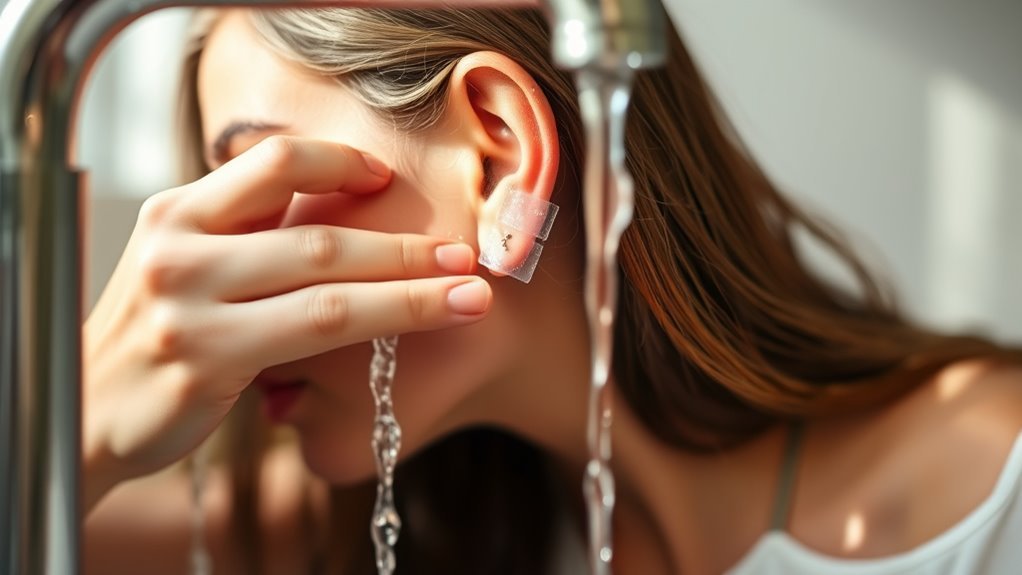
Although your new ear piercing may look healed on the surface, the underlying tissue still needs time to recover fully. You might feel tempted to jump into the pool, but keep in mind that the healing process involves more than just skin closure.
New piercings may appear healed, but deep tissue recovery takes time—resist swimming too soon.
Your body is busy forming new tissue and strengthening the piercing channel, which can take several weeks to months. During this time, the area remains vulnerable to irritation, infection, and slow healing if exposed to harsh elements.
You should clean your piercing regularly and avoid touching it with dirty hands.
Understanding that healing is gradual helps you make safer choices, like waiting before swimming, to prevent complications and ensure your piercing stays healthy and looks great in the long run.
Risks of Swimming With Fresh Piercings
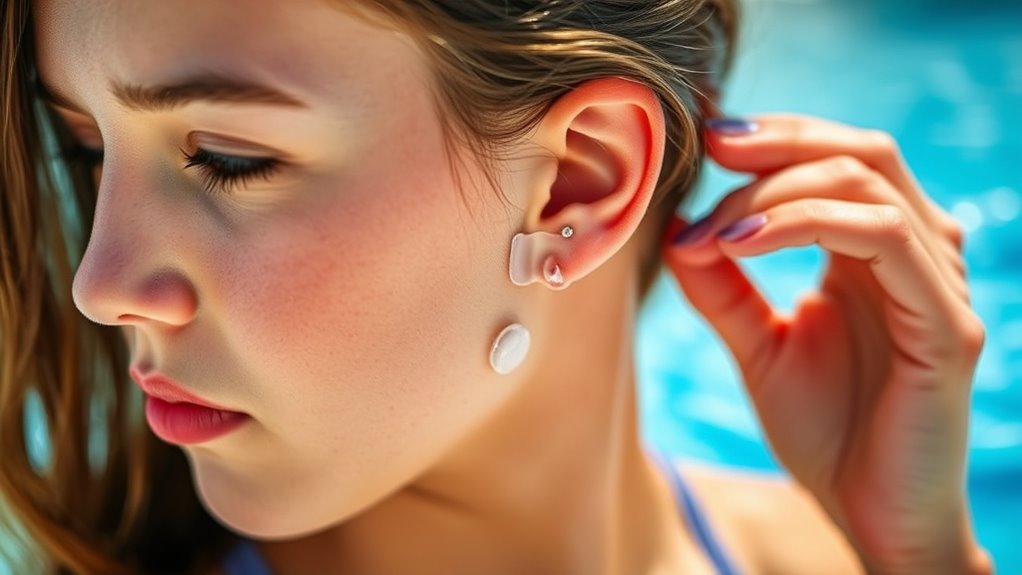
If you swim too soon after getting a new piercing, you increase your risk of infection and irritation. Fresh piercings create an open wound, making it easier for bacteria and other harmful microorganisms in pools, lakes, or oceans to enter.
This can lead to redness, swelling, pain, and even pus-filled infections.
Chlorinated water, while meant to kill germs, can actually irritate the sensitive skin around your piercing and slow down the healing process. Saltwater might sting and cause discomfort, while dirty or stagnant water poses an even greater infection risk.
Additionally, swimming movements can cause the jewelry to shift or snag, increasing irritation or even tearing the delicate tissue. To avoid complications, it’s best to keep your new piercing dry and protected until it’s fully healed.
Best Protective Measures Before Swimming
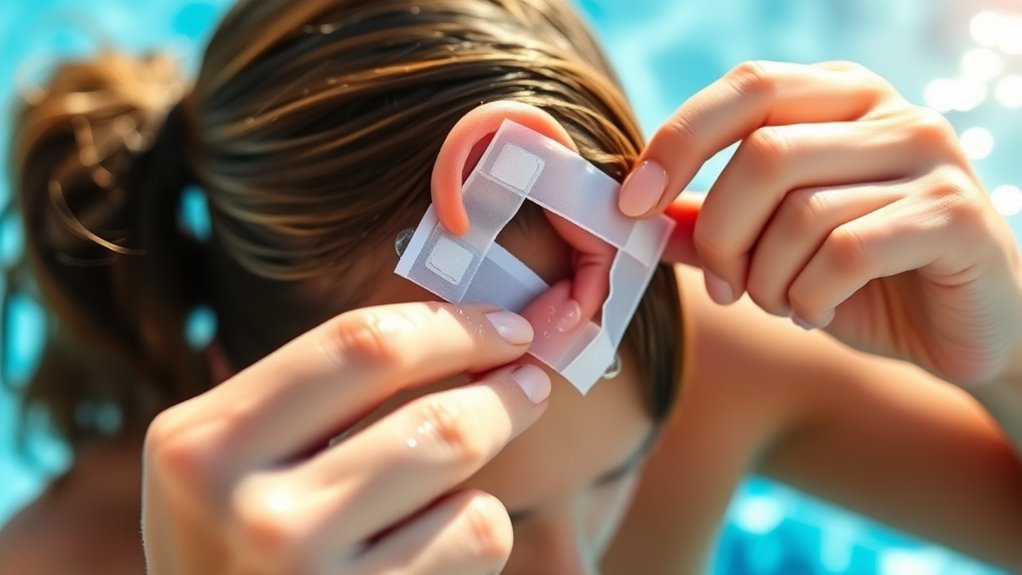
Before you jump into the water, taking the right protective measures can greatly reduce the risk of infection and irritation around your fresh ear piercing. Protecting your piercing guarantees a smoother healing process and keeps you comfortable while swimming.
Here are three key steps to follow before swimming:
- Use Waterproof Ear Covers: Apply silicone ear protectors or waterproof bandages specifically designed to shield piercings from water exposure.
- Apply a Barrier Sealant: Coat the piercing area with a thin layer of waterproof antibiotic ointment or petroleum jelly to prevent water from seeping in.
- Wear a Swim Cap: A snug swim cap helps keep water out and adds an extra layer of protection against bacteria in pools or natural bodies of water.
Taking these precautions minimizes risks and keeps your piercing safe while you enjoy swimming.
Recommended Aftercare Routine Post-Swimming
After protecting your piercing while swimming, you’ll want to focus on proper care once you’re out of the water. Rinse your ear gently with clean, fresh water to remove any chlorine or salt. Pat dry with a clean towel. Avoid rubbing, which can irritate the piercing.
Apply a saline solution to keep the area clean and promote healing. Remember to wash your hands before touching your piercing to prevent infection.
| Step | Action |
|---|---|
| Rinse | Use fresh water immediately |
| Dry | Pat gently with a clean towel |
| Clean | Apply saline solution twice daily |
| Hands | Wash thoroughly before touching |
Following these steps helps you maintain your piercing’s health and avoid complications after swimming.
Types of Water to Avoid When Pierced
Because your new piercing is vulnerable to bacteria and irritation, you should steer clear of certain types of water that can slow healing or cause infection. Not all water is safe for fresh piercings, so being cautious helps you avoid complications.
Fresh piercings are sensitive—avoid certain waters to prevent infection and promote healing.
Here are three types of water you should avoid:
1. Chlorinated Pool Water
Chemicals can irritate your piercing and delay healing.
2. Saltwater (Oceans and Seas)
Though natural, it contains bacteria and debris that might infect your ear.
3. Hot Tubs and Jacuzzis
Warm, moist environments encourage bacterial growth, increasing infection risk.
Avoiding these waters ensures your piercing heals smoothly and stays healthy while you enjoy swimming safely.
Signs of Infection and When to Seek Help
If you notice redness, swelling, or persistent pain around your piercing, these could be early signs of infection. You might also see discharge that’s yellow or green, or experience warmth and tenderness in the area. Don’t overlook these symptoms; infections can worsen quickly.
If you develop a fever or notice red streaks spreading from the piercing, seek medical help immediately.
To prevent infection, keep your piercing clean and avoid swimming in risky waters.
Clean the area gently with saline solution twice daily and avoid touching the piercing with dirty hands.
If you suspect an infection, contact a healthcare professional promptly to get appropriate treatment. Early intervention helps avoid complications and ensures your piercing heals safely.
Frequently Asked Questions
Can I Swim Immediately After Getting My Ears Pierced?
You shouldn’t swim immediately after getting your ears pierced. Water can introduce bacteria, increasing infection risk.
Wait at least 2-3 weeks, keep your piercings clean, and avoid pools or natural bodies of water during healing.
What Materials Are Best for Earrings When Swimming?
Imagine Sarah, who always wears surgical steel earrings when swimming; this material resists rust and irritation.
You should choose hypoallergenic metals like surgical steel or titanium to keep your ears safe and comfortable in the water.
How Long Should I Wait Between Swimming Sessions?
You should wait at least 48 hours between swimming sessions to let your piercings heal properly. This helps prevent infections and irritation.
Always dry your ears thoroughly and avoid swimming in dirty or chlorinated water during early healing.
Can Swimming Affect the Shape of My New Piercing?
About 30% of new piercings can swell or change shape if exposed to bacteria. Swimming can cause irritation, so you should avoid it or protect your piercing to keep its shape intact while it heals properly.
Is It Safe to Use Earplugs With New Piercings?
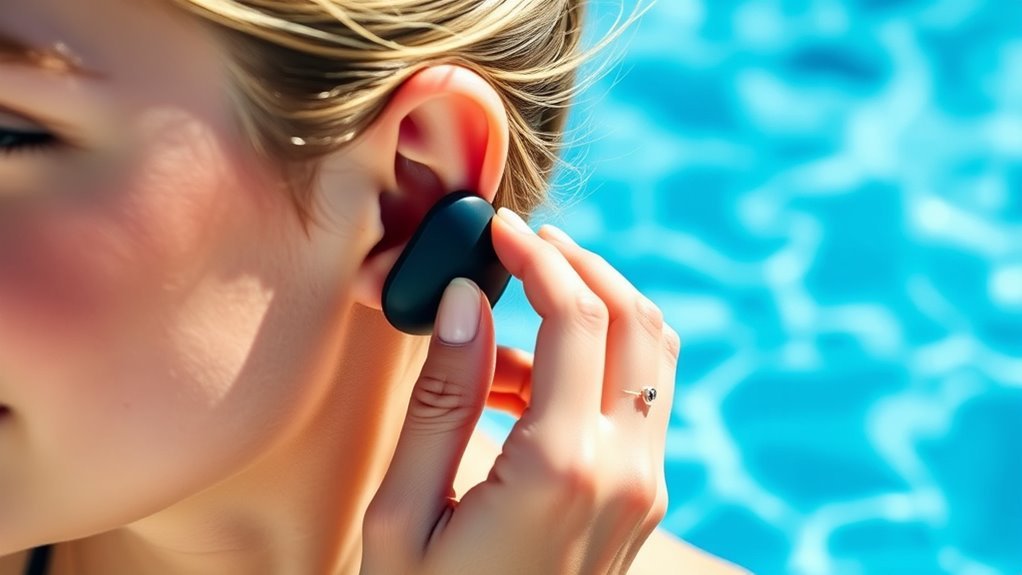
Yes, you can use earplugs with new piercings, but make sure they’re clean and soft to avoid irritation. Avoid inserting them too deeply, and always clean your piercings afterward to prevent infections and promote healing.
Keeping the area clean is crucial for proper healing. If you notice any discomfort or signs of infection, remove the earplugs and consult a professional. Using earplugs carefully can help protect your ears without compromising your new piercings.
Conclusion
Swimming with new ear piercings doesn’t have to feel like steering a minefield. If you follow proper care, avoid risky waters, and protect your ears, you’ll swim safely without turning your healing process into a disaster.
Remember, a little extra caution now saves you from endless pain later. So suit up, guard those piercings, and enjoy the water like a pro—your ears will thank you with every splash!
By taking these steps, you can go swimming safely after getting your ears pierced and ensure a smooth healing journey. Protect your piercings, practice good hygiene, and avoid contaminated water to keep infections at bay. Swimming safely with new ear piercings is all about smart care and prevention.