
How Do You Lower Cyanuric Acid in Your Swimming Pool?
To lower cyanuric acid in your swimming pool, start by partially draining and refilling it with fresh water to dilute the high levels. This is one of the most common and effective methods to reduce cyanuric acid buildup.
Alternatively, consider a reverse osmosis treatment, which effectively removes excess stabilizer without the need for draining large amounts of water.
Be sure to test your pool’s cyanuric acid concentration regularly and avoid overusing stabilized chlorine products to prevent further buildup. Following proper maintenance helps keep your pool balanced and clean.
Keep exploring to find more tips on managing cyanuric acid and maintaining ideal water quality.
Understanding Cyanuric Acid and Its Role in Pools

Although you mightn’t hear much about it, cyanuric acid plays an essential role in maintaining your pool’s water quality. It acts as a stabilizer, protecting chlorine from breaking down too quickly under sunlight.
Without cyanuric acid, the sun’s UV rays would rapidly degrade chlorine, forcing you to add more frequently.
However, it’s important to keep cyanuric acid at the right level. Too little, and chlorine fades fast; too much, and chlorine becomes less effective at sanitizing.
You’ll find cyanuric acid naturally builds up over time through stabilized chlorine products or water additions.
Understanding this balance helps you manage your pool’s chemical health effectively, ensuring clear, safe water for swimming without wasting chemicals or risking contamination.
Signs of High Cyanuric Acid Levels

How can you tell if your pool’s cyanuric acid levels have climbed too high? You’ll notice chlorine becomes less effective, leading to cloudy water, algae growth, and a strong chlorine smell.
These signs indicate the stabilizer is blocking chlorine’s sanitizing power.
| Sign | Cause | Effect |
|---|---|---|
| Cloudy Water | Reduced chlorine efficiency | Poor water clarity |
| Algae Growth | Chlorine can’t kill bacteria | Green or slimy pool surfaces |
| Strong Chlorine Odor | Chlorine overcompensates | Unpleasant smell around pool |
Watch for these warning signs to keep your pool safe and sparkling. Addressing high cyanuric acid quickly prevents costly water treatment problems.
Testing Cyanuric Acid Concentration in Your Pool

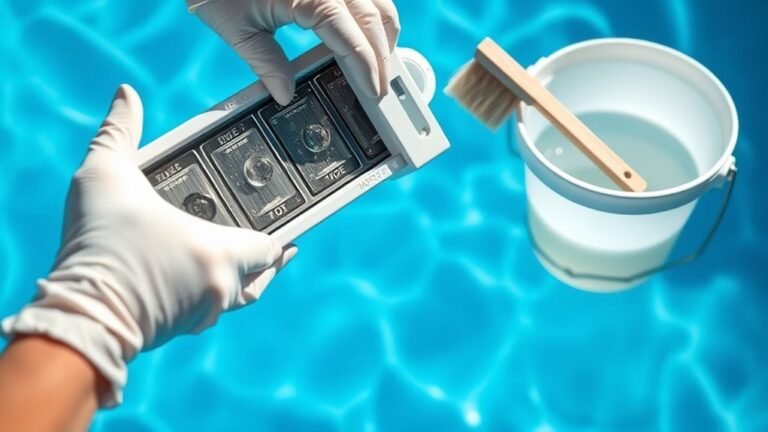
Noticing signs of high cyanuric acid means it’s time to check your pool’s stabilizer levels. You can test cyanuric acid concentration using a reliable pool test kit designed specifically for this purpose.
Start by collecting a water sample from your pool, ideally from elbow depth for accuracy. Follow the test kit instructions carefully. Usually, you’ll add reagents to the sample, then compare the resulting color to a chart indicating cyanuric acid levels in parts per million (ppm).
Digital test meters are also available for more precise readings. Regular testing helps you maintain ideal cyanuric acid levels between 30 and 50 ppm, ensuring your chlorine works effectively without being wasted or overwhelmed.
Keep your test results logged for ongoing pool care.
Partial Drain and Refill Method
When your pool’s cyanuric acid levels climb too high, you can lower them effectively through a partial drain and refill. This method reduces the concentration by removing a portion of the water and replacing it with fresh water that has no cyanuric acid.
Here’s how to do it:
- Test your pool’s current cyanuric acid level to determine how much water to drain.
- Drain a calculated percentage of your pool’s water, usually 20-50% depending on the level.
- Refill the pool with fresh water free of cyanuric acid.
- Retest the cyanuric acid level after refilling to ensure it’s within the recommended range.
This approach is straightforward and helps maintain balanced pool chemistry without needing specialized equipment.
Using Reverse Osmosis Treatment
Although partial drain and refill is a common way to lower cyanuric acid, using reverse osmosis treatment offers a more efficient alternative. With reverse osmosis, you filter your pool water through a specialized membrane that removes impurities, including cyanuric acid, without wasting large amounts of water.
This process allows you to maintain your pool’s water level while effectively reducing CYA concentration.
You can hire professional services that bring portable reverse osmosis systems to your pool or invest in a unit if you have multiple pools.
This method saves you time, water, and money in the long run. Keep in mind, reverse osmosis also removes beneficial minerals, so you may need to rebalance your water chemistry afterward for ideal swimming conditions.
Avoiding Overuse of Stabilized Chlorine Products
Since stabilized chlorine products contain cyanuric acid, using them excessively can cause your pool’s CYA levels to rise quickly. To keep your cyanuric acid in check, be mindful about how often and how much stabilized chlorine you add.
Here are four tips to avoid overuse:
- Use unstabilized chlorine alternatives, like liquid chlorine or calcium hypochlorite, when possible.
- Test your pool water regularly to monitor CYA levels before adding more chlorine.
- Follow manufacturer guidelines carefully, avoiding guesswork on dosing amounts.
- Rotate between stabilized and unstabilized chlorine products to reduce cumulative CYA buildup.
Pool Maintenance Tips to Prevent High CYA Buildup
Keeping your pool’s cyanuric acid levels balanced goes beyond just choosing the right chlorine products. You need to regularly test your water for CYA levels, aiming to keep them between 30-50 ppm.
Regularly test and maintain your pool’s cyanuric acid between 30-50 ppm for optimal water balance.
Avoid topping off your pool with water that already contains high CYA.
When diluting water to lower CYA, use fresh water without stabilizers.
Make sure to clean and backwash your filter as needed to maintain proper circulation and prevent chemical buildup.
Limit the use of stabilized chlorine products and switch to non-stabilized chlorine when possible.
Also, drain a portion of your pool water periodically to control CYA accumulation.
When to Consult a Pool Professional
If you notice persistent issues with your pool’s cyanuric acid levels despite regular maintenance, it’s time to call a pool professional. They’ve the expertise to diagnose complex problems that may be affecting your pool’s chemistry and recommend effective solutions.
You should consult a professional when:
- Cyanurric acid levels remain high after multiple dilution attempts.
- You’re unsure how to safely lower CYA without damaging other chemicals.
- Your pool tests show inconsistent or unusual chemical readings.
- You want advice on long-term CYA management and prevention strategies.
Getting expert help guarantees your pool stays balanced and safe for swimming. Don’t hesitate to reach out if your efforts don’t resolve the issue or if you want peace of mind about your pool’s condition.
Frequently Asked Questions
Can Cyanuric Acid Affect Pool Water Clarity?
Yes, cyanuric acid can affect your pool water clarity. When its levels get too high, it can cause cloudy water and reduce chlorine’s effectiveness, making it harder for you to keep your pool clear and clean.
Is Cyanuric Acid Harmful to Pool Equipment?
Think of cyanuric acid as a slow rust creeping on your pool’s machinery. Yes, it can harm equipment by causing buildup and corrosion.
You’ll want to monitor levels closely to keep everything running smoothly.
How Does Rain Impact Cyanuric Acid Levels?
Rain dilutes cyanuric acid levels in your pool by adding fresh water, which lowers its concentration.
However, heavy rain might also introduce debris and affect pH, so you’ll need to test and adjust your pool chemistry afterward.
Can Algae Growth Be Linked to Cyanuric Acid?
Yes, you can link algae growth to cyanuric acid. When cyanuric acid levels get too high, it reduces chlorine’s effectiveness, letting algae thrive.
Keep cyanuric acid balanced to keep algae under control in your pool.
Are There Alternative Chemicals to Cyanuric Acid for Stabilization?
Sure, you could try unicorn tears or mermaid scales instead of cyanuric acid, but since those aren’t real, you’ll stick with it.
No true chemical alternative matches cyanuric acid’s stabilization for pools yet.
Conclusion
Lowering cyanuric acid in your pool might feel like an uphill battle, but with the right steps, you can get it under control. Regular testing and partial drain-and-refill are your best bets, while reverse osmosis offers a high-tech solution. Avoid overusing stabilized chlorine to keep levels in check.
Stick to solid maintenance habits, and don’t hesitate to call in a pro if things get out of hand. Keep your pool sparkling without letting CYA throw a wrench in the works! By following these tips on how to lower cyanuric acid in your swimming pool, you can maintain clear, safe water all season long.