
How Do You Lower Ph in a Swimming Pool Step by Step
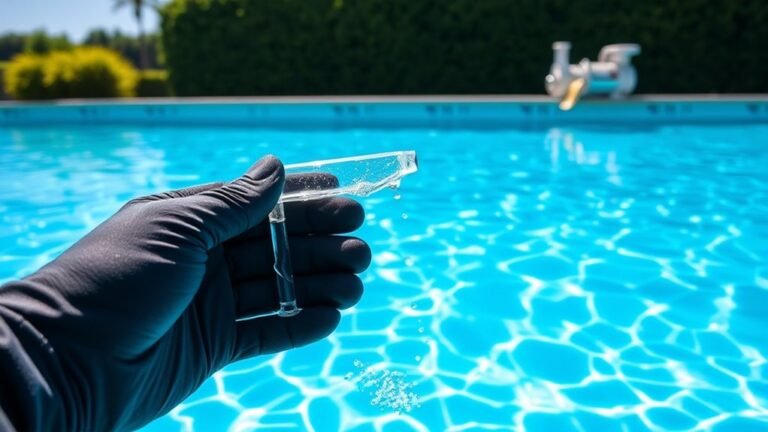
To lower your pool’s pH effectively, start by testing the water using a reliable pH test kit to determine the current level. Knowing your pool’s pH is crucial before making any adjustments.
Next, calculate the correct dosage of acid needed based on your pool size and how much you want to reduce the pH. This ensures you add the right amount without overcorrecting.
Choose a safe acid such as sodium bisulfate or muriatic acid. Add it slowly to the deep end of the pool with the pump running to help distribute it evenly. Make sure to wear protective gear like gloves and goggles during this process.
After waiting several hours, retest the water to verify the pH balance has reached the desired level. If needed, repeat the process carefully.
Once your pH is lowered, you can explore additional tips on how to keep your pool water perfectly balanced and safe for swimming.
Understanding Ideal Ph Levels for Swimming Pools

Although it might seem technical, understanding the ideal pH levels for your swimming pool is essential to keep the water safe and comfortable. You want your pool’s pH to stay between 7.2 and 7.8.
If the pH drifts below 7.2, the water becomes acidic, which can irritate your skin and eyes and corrode pool equipment.
On the other hand, a pH above 7.8 makes the water alkaline, causing cloudy water, scaling, and reducing the effectiveness of chlorine.
Maintaining this balance guarantees your pool water stays clear, safe, and pleasant for swimming.
Knowing the ideal range helps you take quick action if the pH gets off track, so you’ll enjoy a healthy swimming environment all season long.
Testing Your Pool’s Current Ph Level

Before you adjust your pool’s pH, you need to know its current level accurately. Grab a reliable pool water test kit or test strips designed specifically for pH measurement. Collect water from about elbow-deep in your pool to get a representative sample.
Dip the test strip or apply the test solution to the sample following the instructions carefully. Compare the color change to the provided chart to determine the pH level.
Alternatively, use a digital pH meter for a more precise reading, ensuring it’s calibrated properly before use.
Testing your pool’s pH regularly, ideally once or twice a week, helps you maintain balanced water and protects your pool equipment and swimmers. This step guarantees you only adjust the pH when necessary and with confidence.
Choosing the Right Chemicals to Lower Ph

When you need to lower your pool’s pH, selecting the right chemicals is essential for safe and effective adjustment. The most common options are muriatic acid and sodium bisulfate (dry acid).
Muriatic acid works quickly and is ideal for larger pools, but handle it carefully since it’s highly corrosive.
Sodium bisulfate is safer to store and easier to handle, making it a good choice for smaller pools or those new to pool maintenance.
Avoid using vinegar or other household acids, as they aren’t strong enough and won’t provide lasting results.
Always choose pool-grade chemicals specifically designed for pH adjustment to protect your pool equipment and surfaces while maintaining water balance.
Store these chemicals in a cool, dry place away from children and pets.
Calculating the Correct Dosage for Ph Adjustment
Since accurate pH adjustment depends on the right chemical dosage, you’ll need to calculate how much acid to add based on your pool’s size and current pH level. Start by measuring your pool’s volume in gallons or liters.
Next, test the current pH using reliable test strips or a digital tester. Knowing the ideal pH range (7.2 to 7.6), determine how much you need to lower it.
Pool chemical packaging often provides dosage guidelines per 10,000 gallons for specific pH drops. Use these instructions as a baseline, then adjust proportionally for your pool’s volume.
Keep in mind that small pH changes require less acid, so always calculate carefully to avoid overcorrection. This precise approach ensures effective pH balancing without risking damage or discomfort.
Adding Acid to Your Pool Safely and Effectively
Although adding acid to your pool might seem straightforward, you’ll want to handle it carefully to guarantee safety and effectiveness. Always wear protective gear, such as gloves and goggles, to shield yourself from splashes.
Never pour acid directly into the skimmer; instead, slowly add it to the deep end while the pump runs to ensure even distribution. Pour acid gradually to avoid shocking the water or damaging pool surfaces.
| Emotion | Reason |
|---|---|
| Confidence | Proper technique prevents accidents |
| Relief | Safe handling protects your health |
| Control | Correct pouring keeps pH balanced and stable |
| Satisfaction | Your pool stays clean, inviting, and comfortable |
Retesting and Maintaining Balanced Ph Levels
How often should you retest your pool’s pH after adjusting it? Ideally, check it 4 to 6 hours post-treatment to ensure the acid has fully circulated. If the pH is still off, make small adjustments and retest again after several hours.
Once you hit the ideal range of 7.2 to 7.6, test your pool’s pH at least twice a week to maintain balance. Factors like weather, swimmer load, and chemical use can shift pH levels quickly.
Regular testing helps you catch imbalances early, preventing issues like cloudy water or equipment damage. Keep a reliable test kit handy, and log your results for reference.
Consistent monitoring and timely adjustments keep your pool safe and comfortable for everyone.
Frequently Asked Questions
Can Pool Ph Affect Chlorine Effectiveness?
Yes, pool pH can influence chlorine’s effectiveness. When pH is too high, chlorine becomes less effective at killing bacteria and algae.
You should keep pH balanced between 7.2 and 7.8 to ensure chlorine works properly.
How Often Should I Test Pool Ph?
You should test your pool’s pH at least twice a week, but after heavy rain or lots of swimmers, test more often.
Balancing it regularly keeps your water clean and your chlorine working effectively.
What Causes Ph Levels to Rise Quickly?
High alkalinity, heavy use, and chemicals like chlorine can cause pH levels to rise quickly. Also, evaporation and adding alkaline substances without balancing can spike pH, so you’ll want to monitor and adjust regularly to keep it steady.
Is Muriatic Acid Safer Than Dry Acid?
Isn’t safety your top priority? Muriatic acid is more potent and corrosive, so it’s riskier to handle than dry acid.
You’ll find dry acid easier and safer to use, especially if you’re new to pool care.
Can Low Ph Damage Pool Equipment?
Yes, low pH can damage your pool equipment by causing corrosion on metal parts and degrading liners or seals.
You should regularly test and balance your pool water to protect your investment and keep everything running smoothly.
Conclusion
Keeping your pool’s pH between 7.2 and 7.8 is key to sparkling water and comfortable swims. Did you know that just a 0.2 shift outside this range can cause cloudy water or skin irritation?
By regularly testing and carefully adding acid as needed, you’ll maintain that perfect balance. Remember, a little attention goes a long way in keeping your pool safe and inviting all season long.
Lowering pH in a swimming pool step by step ensures you avoid common issues like scaling and algae growth. Following these steps will help you enjoy clear, balanced water every time.