How Long After Shocking a Pool Can I Swim?
After shocking your pool, you should wait at least eight hours before swimming to ensure safety. This waiting period allows chlorine levels to drop below the safe threshold of 5 ppm. It also gives the water time to clear and balance out properly.
Factors such as pool size, weather conditions, and the type of shock used can influence how quickly it becomes safe to swim. Because of these variables, testing your water beforehand is essential to confirm it’s safe.
Want to know how to speed up the process and check your pool’s safety? Keep exploring for helpful tips and advice.
What Is Pool Shocking and Why Is It Necessary?
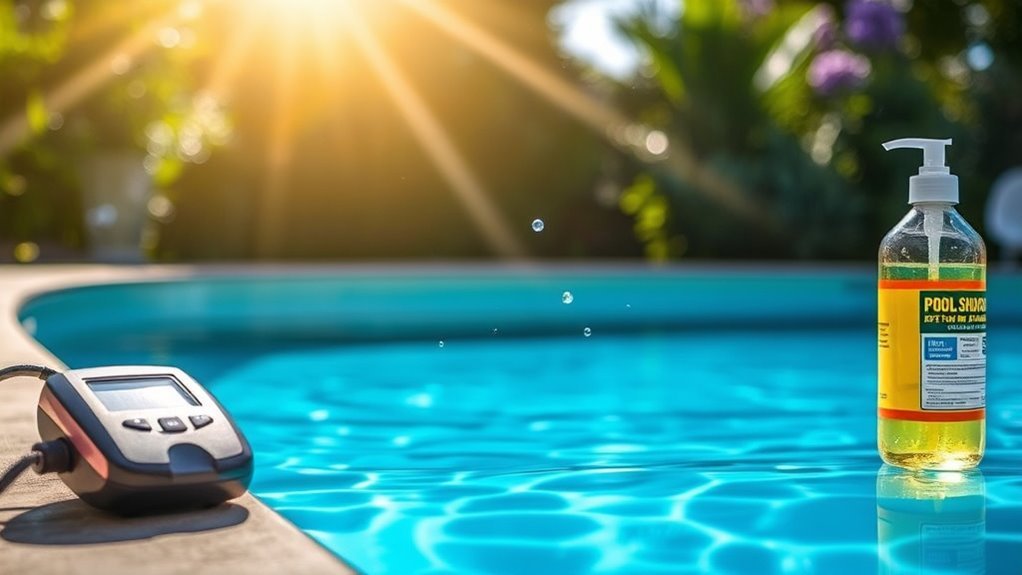
Why should you shock your pool regularly? Shocking your pool means adding a high dose of chlorine or other chemicals to kill bacteria, algae, and organic contaminants. It’s essential because normal chlorination can sometimes fall short, especially after heavy use, rain, or when the water looks cloudy or smells off.
By shocking, you quickly raise the chlorine level to eliminate harmful microorganisms and break down chloramines, the compounds that cause that strong chlorine smell and eye irritation. This process keeps your pool water clean, clear, and safe for swimming.
Without regular shocking, contaminants can build up, leading to algae blooms, cloudy water, and potential health risks. So, shocking is a crucial maintenance step to preserve water quality and ensure a safe swimming environment.
Types of Pool Shock Treatments

Now that you understand the importance of shocking your pool, it’s helpful to know the different types of shock treatments available. Each type serves a specific purpose and works best under certain conditions.
Understanding different pool shock treatments ensures effective cleaning tailored to your pool’s unique needs.
Here are the main options you can choose from:
- Chlorine-based shock: Quick and effective, great for regular maintenance.
- Non-chlorine shock: Uses potassium monopersulfate, ideal for routine oxidizing without raising chlorine levels.
- Calcium hypochlorite: Highly concentrated, perfect for heavy algae or high bather loads.
- Lithium hypochlorite: Fast dissolving and less corrosive, suitable for frequent shocking.
- Sodium dichlor: Stabilized chlorine, good for outdoor pools exposed to sunlight.
Knowing these types helps you pick the right shock for your pool’s needs and guarantees safe swimming afterward.
How Pool Shock Affects Water Chemistry
When you add shock to your pool, it rapidly changes the water’s chemical balance by increasing the chlorine or oxidizer levels. This sudden spike breaks down contaminants, kills bacteria, and clears cloudy water, but it also temporarily alters pH and alkalinity.
You’ll notice the water becoming more reactive as these chemicals work to sanitize.
Here’s how shock impacts key water parameters:
| Parameter | Effect After Shocking | Importance |
|---|---|---|
| Chlorine Level | Spikes markedly | Disinfects water |
| pH | Can rise or drop slightly | Affects chlorine efficacy |
| Alkalinity | May fluctuate temporarily | Stabilizes pH |
| Oxidation | Increases rapidly | Eliminates organics |
Understanding these changes helps you maintain balanced, safe water post-shock.
Recommended Waiting Times Before Swimming
Although pool shock works quickly to sanitize your water, you shouldn’t jump in immediately afterward. Waiting guarantees the chemical levels return to safe ranges, protecting your skin and eyes.
Typically, you should wait:
- At least 8 hours after shocking your pool
- Until the chlorine level drops below 5 ppm (parts per million)
- After the water clears and looks normal again
- When the pool’s pH levels stabilize between 7.2 and 7.8
- Once you’ve tested and confirmed the chemical balance is safe
Following these guidelines helps you avoid irritation and ensures a healthy swimming environment.
Always test your pool water before getting in to confirm it’s safe, even if the recommended wait time has passed.
Factors Influencing Safe Swimming Time After Shocking
Waiting the recommended time after shocking your pool is only part of the process to guarantee safe swimming. Several factors influence how soon the water is safe.
Waiting the recommended time after shocking your pool is just one step to ensure safe swimming.
The type and amount of shock you use affect how quickly chlorine levels drop to safe limits.
Weather conditions like heat and sunlight speed up chlorine breakdown, so you might wait less on a cloudy day. Your pool’s size and circulation system also play a role; better circulation disperses chemicals faster.
Additionally, how dirty the pool was before shocking impacts chlorine demand. More contaminants mean longer wait times.
Keep these factors in mind and avoid jumping in prematurely to prevent skin irritation or respiratory discomfort. Being patient ensures your pool is both clean and safe for everyone.
How to Test Pool Water Before Swimming
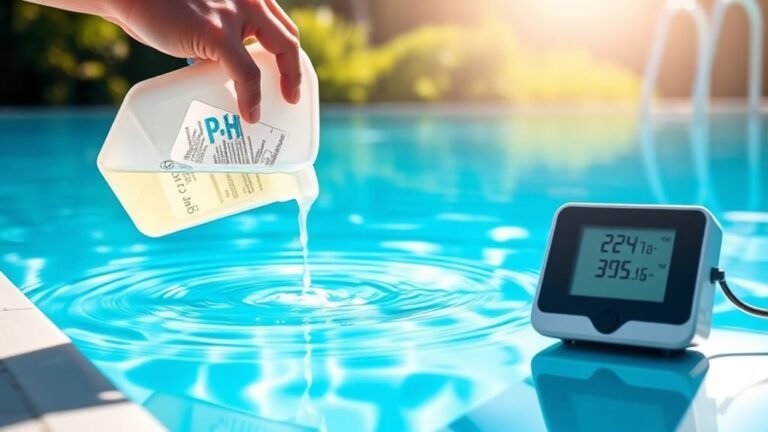
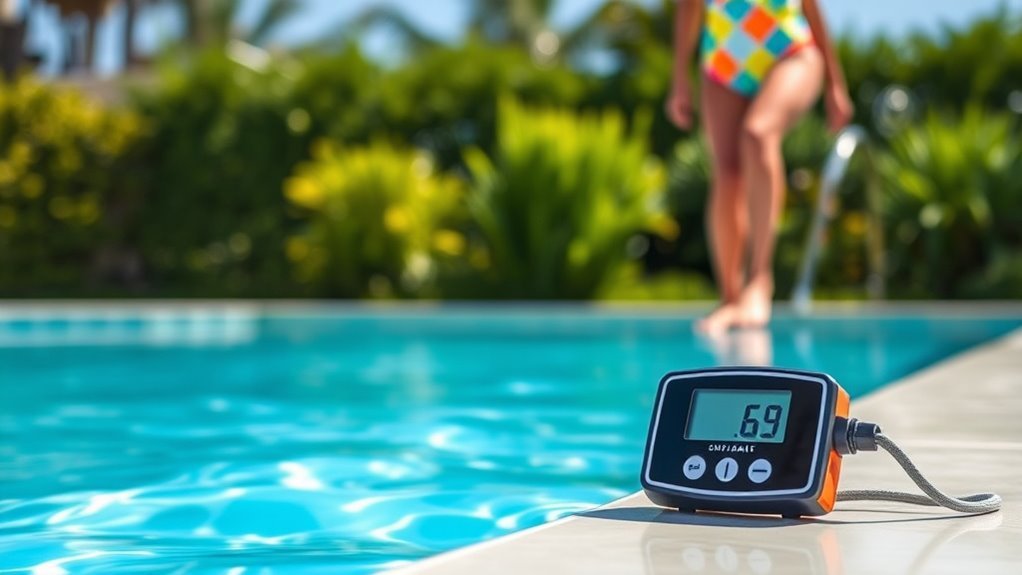
How do you guarantee your pool water is safe before taking a dip? Testing your pool water is vital to ensure it’s balanced and free of harmful bacteria. Here’s how you can quickly check your pool’s safety:
Use a reliable pool test kit or test strips. Measure chlorine levels; ideal free chlorine is 1-3 ppm.
Check pH levels; keep it between 7.2 and 7.8 for comfort and effectiveness. Test alkalinity to ensure it’s between 80-120 ppm for stability.
Verify calcium hardness; aim for 200-400 ppm to prevent corrosion or scaling.
Tips to Speed Up the Recovery Process
To speed up the recovery process after shocking your pool, you can take several proactive steps that help restore balance quickly and safely. First, run your pool pump continuously to improve circulation and filtration. Next, brush pool walls and vacuum debris to clear contaminants.
Also, maintain proper pH levels (7.2–7.6) so chlorine works effectively. Avoid adding more shock until levels stabilize. Finally, keep the pool covered to prevent debris and reduce chemical loss from sunlight.
| Step | Action | Benefit |
|---|---|---|
| Circulate Water | Run pump 24/7 | Distributes chemicals evenly |
| Clean Pool | Brush and vacuum debris | Removes contaminants |
| Monitor pH | Adjust to 7.2–7.6 | Enhances chlorine efficiency |
| Avoid Extra Shock | Wait for stabilization | Prevents chemical imbalance |
| Cover Pool | Use pool cover | Protects chemicals, reduces loss |
Signs Your Pool Is Safe for Swimming Again
Although it can be tempting to jump back in right after shocking your pool, you should only swim once the chemical levels have returned to safe ranges.
To know when it’s safe, watch for these signs:
Chlorine levels have dropped to 1-3 ppm (parts per million).
pH is balanced between 7.2 and 7.8.
The water is clear, with no cloudiness or debris.
No strong chemical smell lingers around the pool area.
Test strips or a pool kit confirm all other chemicals meet recommended levels.
Frequently Asked Questions
Can I Shock My Pool if It’s Already Cloudy?
Yes, you can shock your pool if it’s cloudy. Shocking helps kill bacteria and clear up the water.
Just make sure to follow instructions and wait the recommended time before swimming for safety.
Does Pool Shocking Affect Pool Equipment or Liners?
Yes, shocking can affect your pool equipment and liners if done improperly. You should avoid using too strong chemicals or shocking under direct sunlight to prevent damage.
Always follow instructions to keep your pool safe and equipment lasting longer.
How Often Should I Shock My Pool During Summer?
You should shock your pool at least once a week during summer, especially after heavy use or rain. This keeps the water clear and prevents algae growth, ensuring a safe and enjoyable swimming experience for you.
Can Pets Swim in the Pool After Shocking?
You shouldn’t let pets swim right after shocking the pool. Wait until chlorine levels drop to safe limits, usually 24-48 hours.
Test the water to make certain it’s safe before letting your pets jump in.
What Should I Do if Pool Shock Causes Skin Irritation?
About 15% of swimmers experience skin irritation from pool chemicals. If pool shock causes irritation, rinse your skin with fresh water immediately. Apply a soothing lotion to help calm the skin.
Avoid swimming until your skin feels normal again. This will help prevent further irritation and allow your skin to heal properly.
Conclusion
After shocking your pool, you’ll usually need to wait at least 8 hours before swimming to ensure chlorine levels drop to a safe range.
Remarkably, studies show that chlorine can spike up to 10 times the normal level right after shocking, which can irritate your skin and eyes.
By testing your water and following recommended wait times, you’ll keep your swim safe and enjoyable.
Remember, patience now means a healthier pool later. How long after shocking a pool can I swim? Waiting the proper time is key to maintaining a safe and pleasant swimming experience.