How Long to Wait to Swim After Shocking Your Pool
After shocking your pool, it is important to know how long to wait to swim to ensure safety. The waiting time varies from 8 to 24 hours depending on the type of shock used and the water temperature.
Calcium hypochlorite and lithium hypochlorite shocks typically require closer to 24 hours before it’s safe to swim. On the other hand, non-chlorine shock allows you to swim much sooner, sometimes within just an hour.
Always test the chlorine and pH levels before swimming to confirm they are within safe limits. Following these guidelines helps protect your skin and overall health. There is also much to learn about how different shock types affect timing and safety.
Understanding Pool Shock and Its Purpose
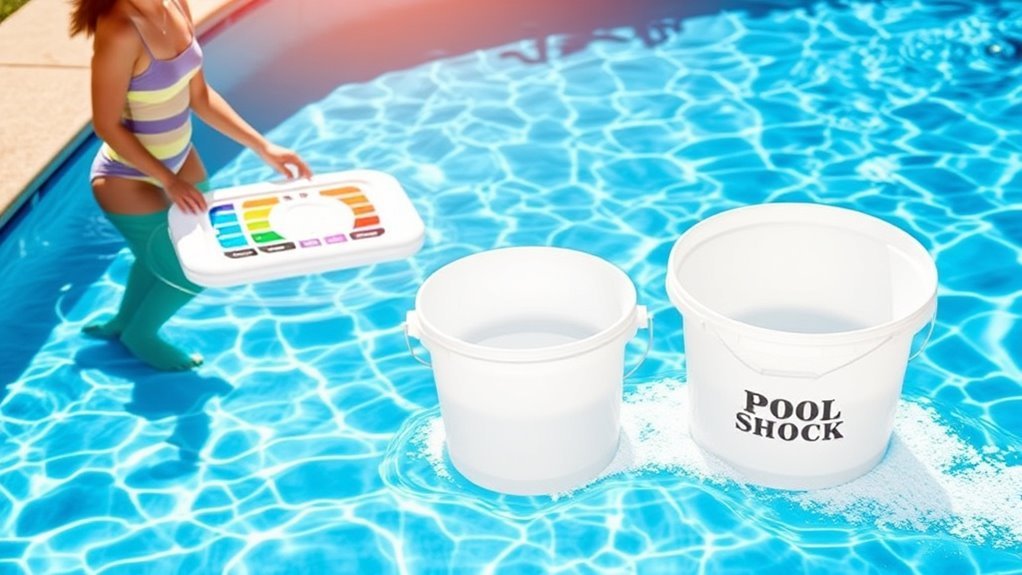
Although you mightn’t see it, pool shock plays a crucial role in keeping your water clean and safe. When you add shock to your pool, you’re introducing a powerful dose of chemicals designed to eliminate contaminants like bacteria, algae, and organic matter that regular chlorine might miss.
This process restores your pool’s clarity and prevents unpleasant odors. By breaking down these impurities, shock helps maintain a healthy swimming environment and reduces the risk of waterborne illnesses.
You’ll typically use pool shock after heavy pool use, rainstorms, or if the water looks cloudy. Understanding this purpose ensures you treat your pool correctly and keep it inviting.
Factors That Influence Safe Swimming Time
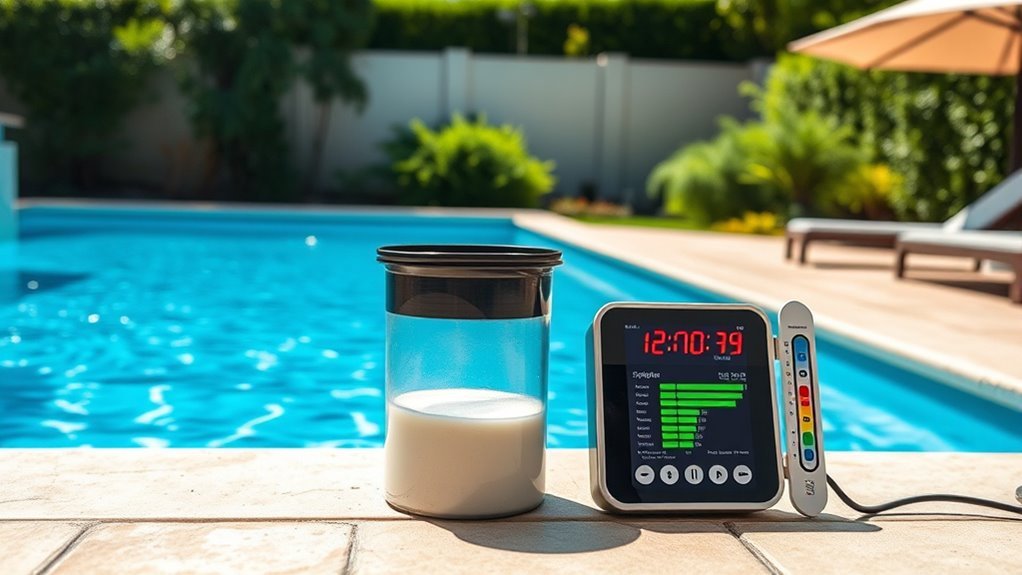
Because pool shock involves strong chemicals, the time you should wait before swimming depends on several factors. First, the type and amount of shock you use impact how long the chemicals need to dissipate. The higher the concentration, the longer you’ll wait.
Waiting times after shocking your pool vary with shock type and concentration levels.
Second, water temperature plays a role; warmer water speeds up chemical reactions, reducing wait time, while colder water slows it down.
Third, your pool’s circulation and filtration system affect how quickly the chemicals distribute and break down. Running your pump after shocking helps clear the water faster.
Lastly, the pool’s pH level influences chemical effectiveness and safety. Keeping pH balanced ensures quicker stabilization.
Types of Pool Shock and Their Impact on Waiting Period
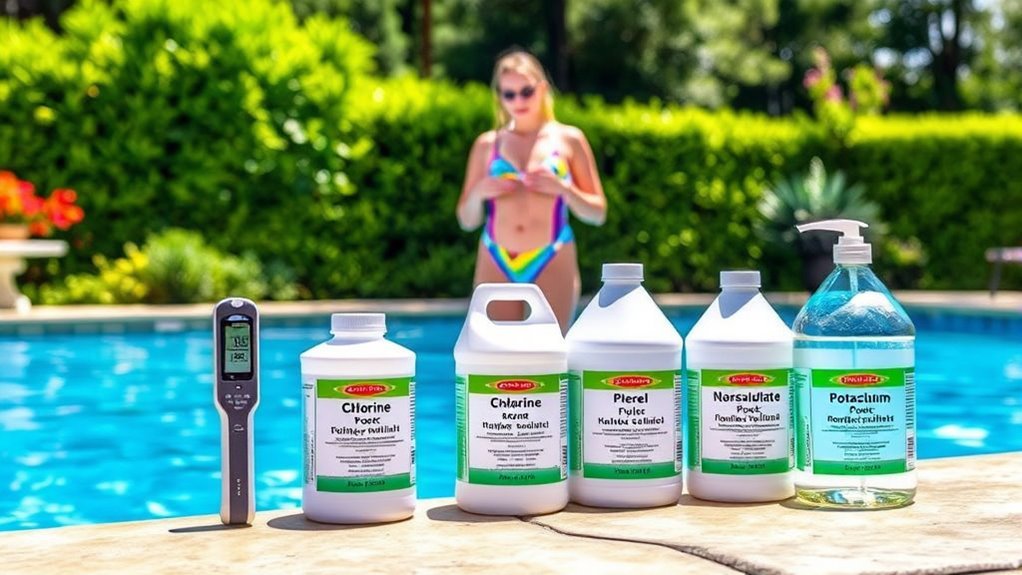
When you choose a type of pool shock, you directly affect how long you’ll need to wait before swimming again. Different shock products vary in chemical composition and strength, which changes the safe waiting period. Here’s a quick guide:
| Type of Pool Shock | Typical Waiting Time |
|---|---|
| Calcium Hypochlorite | 8-24 hours |
| Sodium Dichlor | 4-6 hours |
| Potassium Monopersulfate | 1-2 hours |
| Lithium Hypochlorite | 8-24 hours |
| Chlorine-Free Shock | 0-1 hour |
Choose carefully to match your schedule. For example, non-chlorine shock lets you swim sooner but may need more frequent application. Regular chlorine-based shocks require longer waits but provide lasting sanitation. Always follow the product’s instructions for best results.
How to Test Pool Water Before Swimming
After shocking your pool, you’ll want to make sure the water is safe before jumping back in. Testing your pool water helps you confirm that the chlorine levels have dropped to a safe range and the pH balance is right.
Always test your pool water after shocking to ensure chlorine and pH levels are safe before swimming.
Here’s how to do it:
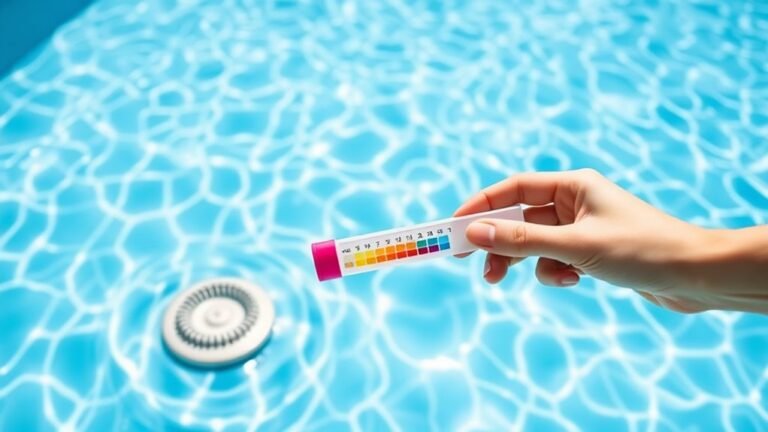
- Use a reliable pool test kit or test strips to measure chlorine and pH levels.
- Dip the test strip or collect a water sample, then compare the color changes to the kit’s chart.
- Ensure free chlorine is between 1-3 ppm and pH is between 7.2-7.8 before swimming.
Regular testing prevents irritation and guarantees your pool is clean and safe.
Don’t swim until these levels are within the recommended range.
Recommended Waiting Times Based on Shock Type
Although waiting times can vary, knowing the type of shock you used helps you determine how long you should stay out of the pool.
If you used chlorine shock, it’s best to wait at least 8 hours before swimming, giving chlorine levels time to drop to safe limits.
Non-chlorine shock, typically potassium monopersulfate, requires a shorter wait, usually just 15 to 30 minutes, because it doesn’t raise chlorine levels noticeably.
For liquid chlorine shocks, waiting around 4 to 6 hours is recommended, depending on dosage and pool size.
Always check your pool’s chlorine and pH levels before jumping back in.
Tips for Maintaining Pool Safety After Shocking
Since proper pool maintenance directly affects your safety, you should take specific steps to guarantee the water remains clean and balanced following a shock treatment.
Proper pool care is essential to ensure safety and water balance after shock treatments.
First, test the water’s chlorine and pH levels regularly to ensure they’re within safe ranges before swimming.
Second, wait until the chlorine concentration drops below 3 ppm, which typically means the shock has dissipated enough to prevent skin and eye irritation.
Third, keep the pool covered or restrict access during the waiting period to avoid accidental exposure.
By following these steps, you minimize risks from high chemical levels and maintain a safe swimming environment.
Frequently Asked Questions
Can Pets Swim Immediately After the Pool Is Shocked?
You shouldn’t let pets swim immediately after shocking your pool. Wait until chlorine levels drop to safe limits, usually below 3 ppm, to protect their skin and health. Test the water before letting them in.
Does Pool Shock Affect Pool Equipment or Liners?
Pool shock can be a double-edged sword; it might stress your equipment or liners if overused.
But if you follow instructions carefully, you won’t harm your pool’s delicate heart or its protective skin.
How Often Should You Shock Your Pool During Summer?
You should shock your pool about once a week during summer, especially after heavy use or rain. This keeps chlorine levels balanced and prevents algae growth.
Just test your water regularly to adjust as needed.
Can You Shower in the Pool After Shocking It?
You can’t shower in the pool right after shocking it because the chemicals are still strong. Waiting until chlorine levels drop is essential, so you avoid skin irritation or respiratory issues. Your comfort depends on timing it right.
Is It Safe to Swim at Night After Shocking the Pool?
You shouldn’t swim at night right after shocking your pool. Wait until chlorine levels drop to safe limits, usually 8 hours or more.
Check with a test kit before jumping in to avoid irritation or health risks.
Conclusion
After shocking your pool, you might worry about waiting too long to swim, but it’s vital for your safety. Depending on the shock type, waiting times can range from a few hours to overnight.
Always test your pool’s chlorine levels before jumping in to avoid irritation or health risks. This step ensures that the water is safe and comfortable for swimming.
By following these guidelines, you’ll guarantee your pool is clean and safe. Knowing how long to wait to swim after shocking your pool lets you enjoy swimming without any worries or delays.