
How Many Calories Do You Burn Swimming
You burn calories swimming based on your weight, stroke, intensity, and duration. Swimming is an excellent full-body workout that can help you burn a significant number of calories. Heavier people burn more calories because moving their body requires more energy.
Intense strokes like butterfly burn more calories per minute than breaststroke. Swimming faster or longer also boosts calorie burn considerably. For example, a 155-pound person can burn about 410 calories in 30 minutes at moderate effort.
Keep swimming smart, and you’ll find ways to maximize your calorie burn and fitness results. Adjusting your swimming routine can help you achieve your fitness goals efficiently.
Factors Affecting Calorie Burn in Swimming

While swimming is an excellent way to burn calories, how many you burn depends on several factors. Your weight plays a big role. Heavier swimmers tend to burn more calories because it takes more energy to move a larger body through water.
The intensity of your swim also matters. The harder you push yourself, the more calories you’ll burn. Duration counts too. Longer sessions naturally burn more calories.
Your swimming skill level affects efficiency. If you swim smoothly and with good technique, you might burn fewer calories than someone who’s less skilled and expends more effort.
Finally, water temperature and pool conditions can influence calorie burn, as your body works to regulate its temperature.
Keep these factors in mind to better estimate your calorie expenditure while swimming.
Calorie Burn Differences Among Swimming Strokes

Because each swimming stroke engages your muscles differently, the number of calories you burn varies with the style you choose. Some strokes demand more energy and muscle coordination, impacting how much you burn during your swim.
Different swimming strokes use muscles uniquely, so calorie burn varies with the style you pick.
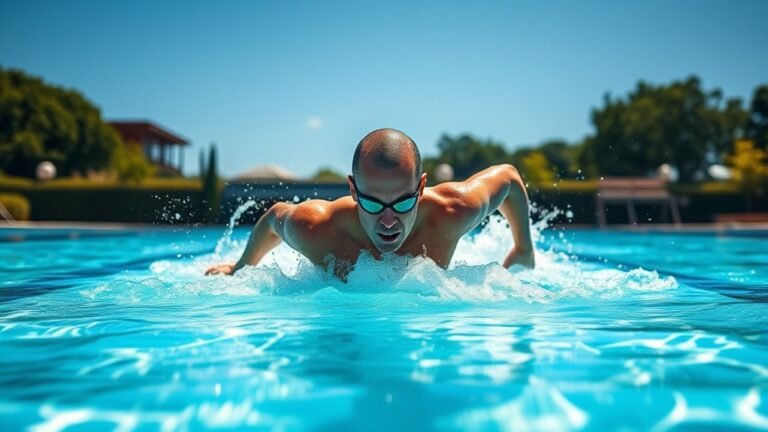
Butterfly: This stroke is intense and works your entire body, helping you burn the most calories per minute.
Freestyle (Front Crawl): Efficient and fast, it burns a high number of calories while allowing you to maintain speed.
Breaststroke: Less intense but still effective, it burns fewer calories due to its slower pace and less continuous motion.
Backstroke: This stroke burns calories moderately and offers a good full-body workout without as much strain as butterfly.
Choosing your stroke wisely can tailor your calorie burn to fit your fitness goals.
How Intensity and Duration Impact Calories Burned

Although your choice of stroke plays a big role, the intensity and duration of your swim have an even greater impact on the calories you burn. When you swim harder or longer, your body works more, increasing calorie burn.
For example, sprinting burns more than a casual swim, and swimming 60 minutes beats 30 minutes in total calories burned.
| Intensity Level | Approximate Calories Burned (30 min) |
|---|---|
| Low | 180-250 |
| Moderate | 300-400 |
| High | 450-600 |
| Very High | 600-750 |
| Sprinting | 700+ |
Estimating Calories Burned Based on Body Weight
Since your body weight influences how many calories you burn during swimming, estimating calorie expenditure becomes more accurate when you factor it in.
Heavier swimmers tend to burn more calories because their bodies require more energy to move through the water. Conversely, lighter swimmers burn fewer calories for the same activity and duration.
Here’s how your weight can impact calorie burn:
- A 125-pound person burns roughly 330 calories swimming laps for 30 minutes.
- A 155-pound person might burn about 410 calories in the same timeframe.
- A 185-pound swimmer could burn close to 490 calories per 30 minutes.
These numbers vary with stroke intensity and swimming speed.
Tips to Maximize Calorie Burn While Swimming
To maximize your calorie burn while swimming, you should focus on increasing both the intensity and duration of your workouts. Start by incorporating interval training, alternating between fast, vigorous laps and slower recovery swims. This boosts your heart rate and burns more calories.
Also, vary your strokes; freestyle, butterfly, and breaststroke engage different muscle groups, increasing overall effort. Don’t forget to maintain good technique to swim efficiently without wasting energy.
Extend your swim sessions gradually to build endurance and burn additional calories. Using swim aids like fins or paddles can intensify resistance, challenging your muscles further.
Finally, stay consistent with your routine, and combine swimming with strength training outside the pool to enhance muscle mass, which helps burn more calories even at rest.
Frequently Asked Questions
Does Swimming Help Build Muscle Tone?
Yes, swimming helps build muscle tone by engaging multiple muscle groups simultaneously. You’ll strengthen and sculpt your body as you swim, especially your core, arms, and legs, while enjoying a low-impact, full-body workout.
Can Swimming Improve Cardiovascular Health?
Yes, swimming can improve your cardiovascular health by strengthening your heart and lungs. It boosts endurance, lowers blood pressure, and enhances circulation.
You’ll feel more energetic and reduce risks of heart disease with regular swimming sessions.
What Are the Best Swimming Strokes for Beginners?
You’ll find the freestyle and breaststroke strokes best for beginners. They’re easier to learn, help you build confidence, and improve your breathing technique.
Start slow, practice regularly, and you’ll swim better in no time!
How Often Should I Swim for Fitness?
You should swim at least three to five times a week for fitness. Consistency helps build endurance and strength, and mixing stroke types keeps workouts engaging and effective.
Don’t forget to rest and listen to your body.
Is Swimming a Good Workout for Weight Loss?
Yes, swimming’s a great workout for weight loss because it burns calories efficiently and engages your whole body. You’ll build muscle, boost metabolism, and improve cardiovascular health while enjoying a low-impact exercise.
Conclusion
Swimming is like lighting a fire within your body—each stroke fuels your energy and melts away calories. By adjusting your intensity and choosing different strokes, you can keep that fire burning brighter and longer.
Remember, your weight and effort shape how fiercely you burn. So plunge in with purpose, and let the water be your forge, sculpting a healthier, stronger you with every powerful movement.
Incorporating swimming into your routine is a fantastic way to burn calories effectively. The number of calories you burn swimming depends on your weight, stroke intensity, and duration. Keep swimming, and watch how many calories you burn swimming help you achieve your fitness goals.