5 Tips to Get Better at Swimming Fast
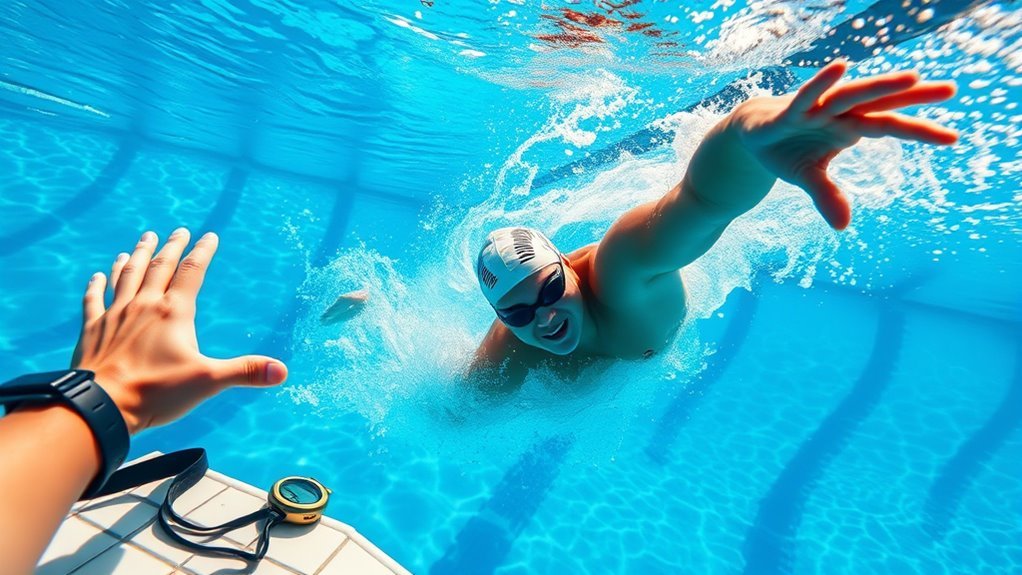
To swim faster and improve your swimming speed, focus on perfecting your stroke by keeping a streamlined body and controlled, powerful movements. Improve your breathing rhythm by alternating sides and exhaling underwater to stay relaxed. Build strength and endurance with targeted workouts and regular swim intervals.
Practice sharp, fast turns and explosive starts to gain speed. Incorporate interval training, mixing bursts of intense swimming with rest to boost power. Keep these tips in mind, and you’ll uncover even more ways to accelerate your swim times.
Perfect Your Stroke Technique
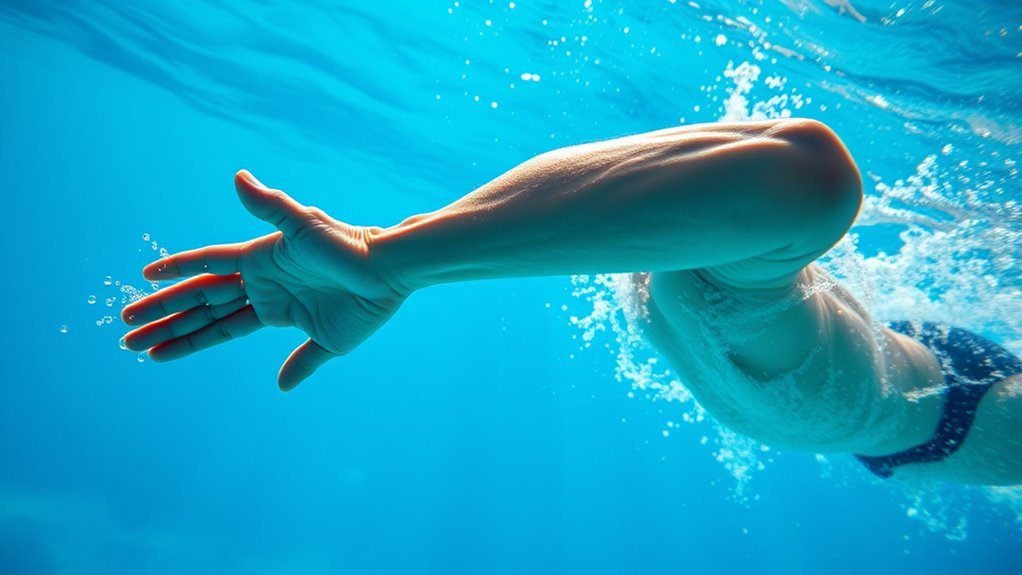
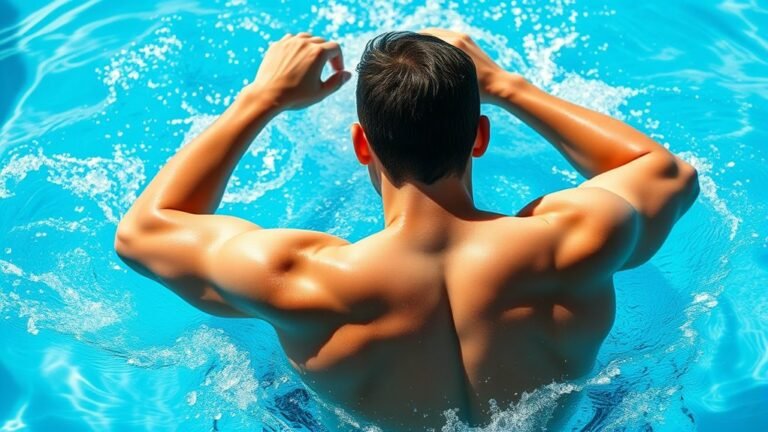
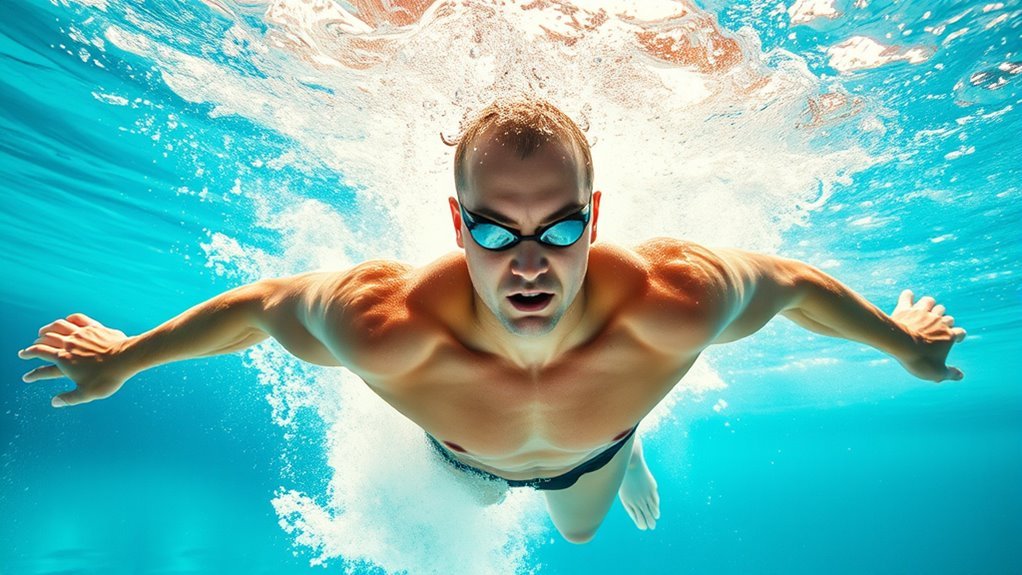
Although improving your swimming speed takes practice, perfecting your stroke technique is the most effective way to swim faster. Focus on maintaining a streamlined body position to reduce drag. Keep your head aligned with your spine and your body flat on the water’s surface.
Master your stroke technique and maintain a streamlined position to swim faster and reduce water resistance.
Use smooth, controlled arm movements, entering the water fingertips first and pulling straight back to maximize propulsion. Don’t forget to engage your core and use your hips to drive your stroke powerfully.
Kicking should be consistent but not excessive. Small, steady kicks help maintain momentum without wasting energy.
Pay attention to your hand placement and avoid crossing the centerline during each stroke.
Improve Your Breathing Rhythm
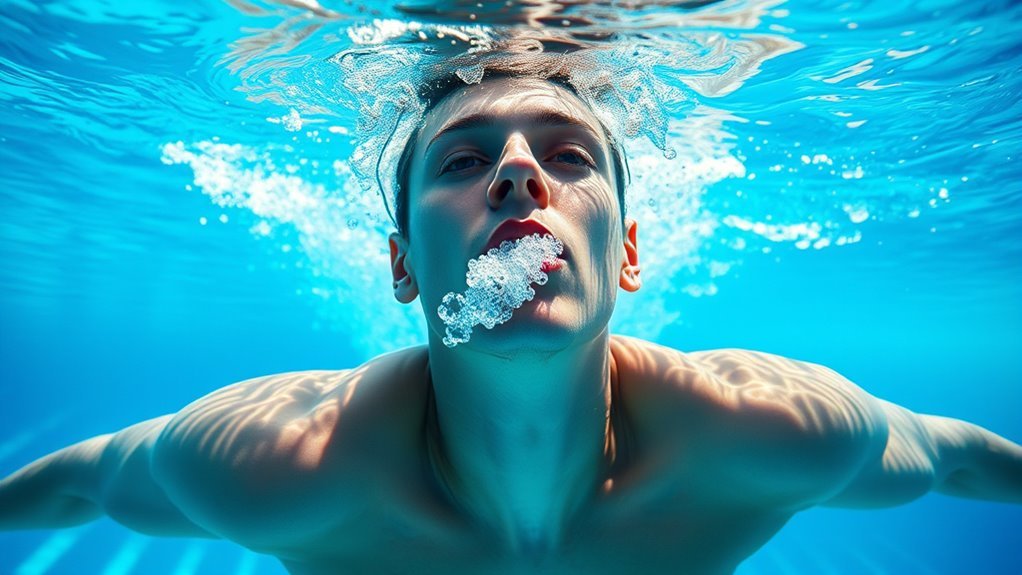
When you sync your breathing with your stroke, you’ll maintain better rhythm and conserve energy. Focus on developing a consistent breathing pattern that complements your movements.
Here’s how you can improve your breathing rhythm:
- Bilateral Breathing: Alternate breathing sides every three strokes. This balances your stroke and helps maintain a steady rhythm.
- Exhale Underwater: Blow bubbles steadily while your face is submerged. This prevents holding your breath and reduces tension.
- Timing Your Breath: Turn your head smoothly to inhale quickly during the arm recovery phase. Avoid lifting your head too high, which disrupts body position.
Practice these tips regularly to create a natural, efficient breathing rhythm that supports faster swimming without wasting energy.
Build Strength and Endurance
Because increasing your swimming speed relies heavily on muscle power and stamina, building strength and endurance is essential. Focus on targeted dryland exercises like push-ups, pull-ups, and core workouts to develop the muscles you use most in swimming.
Incorporate resistance training to boost muscle power, but don’t neglect cardiovascular activities like running or cycling to enhance your overall endurance.
In the pool, gradually increase your swim distance and intensity to condition your body for longer, faster swims.
Use interval training to challenge your limits and improve recovery. Remember, consistency is key. Regular workouts will make your muscles stronger and your lungs more efficient.
With better strength and endurance, you’ll propel through the water faster and maintain speed over longer distances.
Practice Efficient Turns and Starts
Building strength and endurance sets a solid foundation, but sharpening your turns and starts can shave valuable seconds off your time. Efficient turns and explosive starts are essential for maintaining momentum and gaining an edge over competitors.
Focus on these key steps:
- Perfect your flip turn: Approach the wall with control, tuck tightly, and push off with maximum force to gain speed.
- Streamline your body: After pushing off, keep your body straight and tight to reduce drag and glide farther.
- Explode off the blocks: Use your legs to generate power, and time your dive perfectly for a smooth entry and quick shift into your stroke.
Practicing these consistently will boost your overall swim speed and race performance.
Use Interval Training to Boost Speed
To boost your swimming speed effectively, you’ll want to incorporate interval training into your routine. This method alternates short bursts of intense swimming with recovery periods, helping you build endurance and power.
You’ll find it improves your anaerobic capacity, allowing you to swim faster without tiring quickly. Start with manageable intervals, then gradually increase intensity and reduce rest time.
Here’s a simple interval training plan to get you going:
| Set Number | Swim Distance | Rest Time |
|---|---|---|
| 1 | 50 meters | 30 seconds |
| 2 | 100 meters | 45 seconds |
| 3 | 50 meters | 30 seconds |
| 4 | 200 meters | 1 minute |
Stick to this pattern, and watch your speed soar.
Frequently Asked Questions
What Type of Swimwear Is Best for Competitive Swimming?
You should choose a tight-fitting, low-drag swimsuit made from lightweight, water-repellent materials like polyester or Lycra. Tech suits with compression panels can boost performance by reducing muscle vibration and enhancing your hydrodynamics.
These suits help streamline your body in the water, minimizing resistance. The compression also supports muscle endurance during races.
How Important Is Mental Preparation Before a Race?
Mental preparation is vital before a race. It sharpens your focus, reduces anxiety, and boosts confidence. When you visualize success and stay calm, you perform better under pressure and swim faster.
Don’t skip it!
Can Diet Affect Swimming Speed and Performance?
Yes, your diet directly affects swimming speed and performance. Eating balanced meals fuels your muscles, boosts energy, and aids recovery.
Skipping proper nutrition can leave you tired and slow, so don’t neglect what you eat.
How Do Water Temperature and Pool Conditions Impact Swimming?
Water temperature and pool conditions massively impact your swimming—too cold or hot, and your muscles won’t cooperate.
Clear, well-maintained pools let you glide effortlessly, while dirty or rough surfaces slow you down like a brick wall.
What Are Common Injuries Swimmers Should Watch Out For?
You should watch out for swimmer’s shoulder, knee pain, and lower back strain. Overuse injuries happen often, so warm up properly, stretch, and avoid overtraining to keep yourself healthy and swimming strong.
Conclusion
Think of your swimming journey like mastering a dance with the water—each stroke, breath, and turn is a step closer to grace and power. By perfecting your technique, syncing your breathing, building strength, and training smartly, you’re not just swimming faster—you’re becoming one with the flow.
Keep pushing, and soon you’ll glide through the water like a river carving its path, unstoppable and free. Your best swim is just beyond the horizon.
Remember, these 5 tips to get better at swimming fast will elevate your skills and help you achieve your goals more efficiently. Stay consistent, focused, and enjoy the journey to becoming a stronger, faster swimmer.