
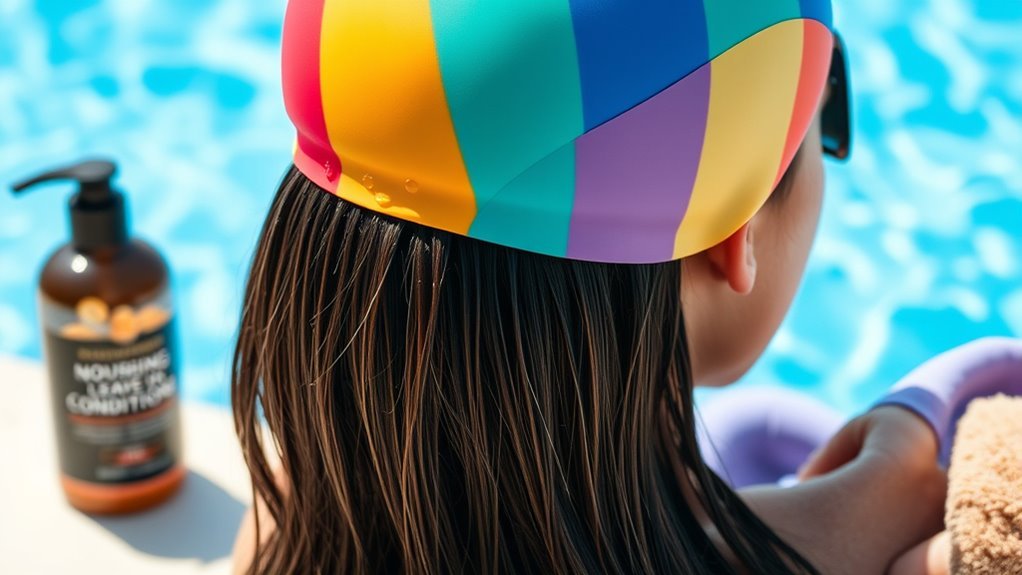
3 Essential Tips to Protect Hair When Swimming Everyday
To protect your hair when swimming every day, start by wetting it thoroughly and applying a leave-in conditioner or protective oil before you plunge in to reduce chlorine absorption. Swimming hair care is essential to maintain strength and health despite frequent exposure to pool chemicals. This simple step creates a barrier that helps shield your strands.
Right after swimming, rinse your hair immediately with fresh water to wash away chemicals and prevent damage. This quick rinse helps stop the buildup of chlorine and salt that can cause dryness and breakage. Consistent care after each swim is key to keeping hair vibrant.
Finally, use a swim cap and secure your hair in braids or buns to minimize exposure and tangling. These protective styles reduce friction and keep hair contained during your swim. Keep these tips in mind, and you’ll find more ways to keep your hair healthy and strong.
Pre-Swim Hair Care Routine
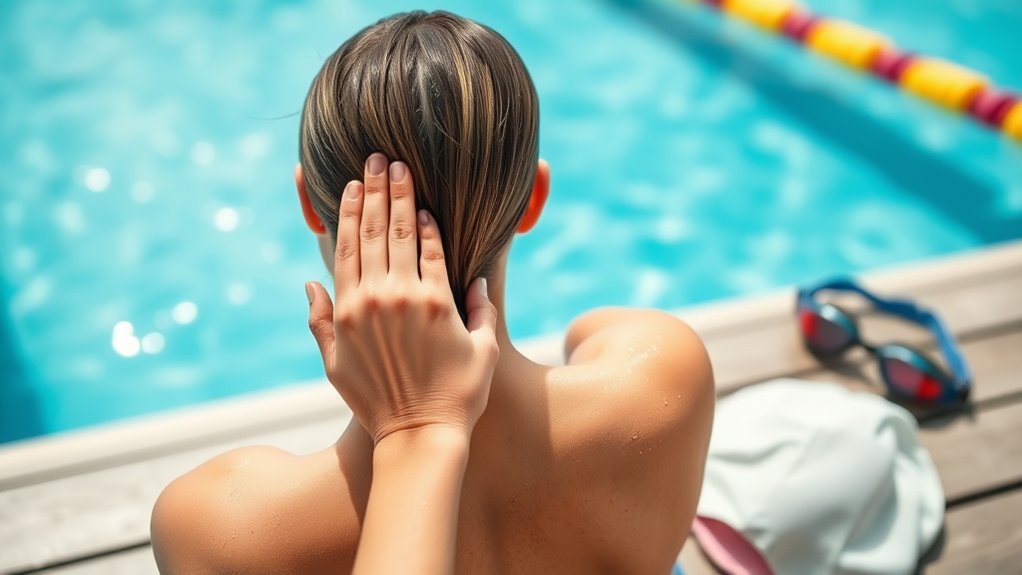
Before you plunge in, prepare your hair by thoroughly wetting it with clean water. This step helps reduce chlorine absorption, as your hair won’t soak up as much pool water.
Next, apply a leave-in conditioner or a protective oil like coconut or argan oil to create a barrier against harsh chemicals. Make sure to distribute it evenly from roots to ends.
If you have long hair, braid it or tie it in a bun to minimize exposure and tangling. Wearing a swim cap is a smart move; it keeps your hair contained and offers extra protection.
Post-Swim Hair Treatment

Although you’ve taken steps to protect your hair before swimming, it’s crucial to treat it properly afterward to prevent damage. Start by rinsing your hair immediately with fresh, cool water to wash away chlorine, salt, or other chemicals.
Rinse your hair with fresh, cool water immediately after swimming to remove chlorine and other chemicals.
Use a gentle, sulfate-free shampoo designed to remove buildup without stripping natural oils. Follow up with a deep conditioner or hair mask to restore moisture and strengthen strands weakened by swimming.
Avoid harsh towel drying; instead, gently squeeze out excess water with a microfiber towel or an old T-shirt to minimize breakage.
In the end, let your hair air dry whenever possible, as heat styling can further dry out and damage your locks.
Regular post-swim care keeps your hair healthy, shiny, and resilient.
Protective Hairstyles and Accessories
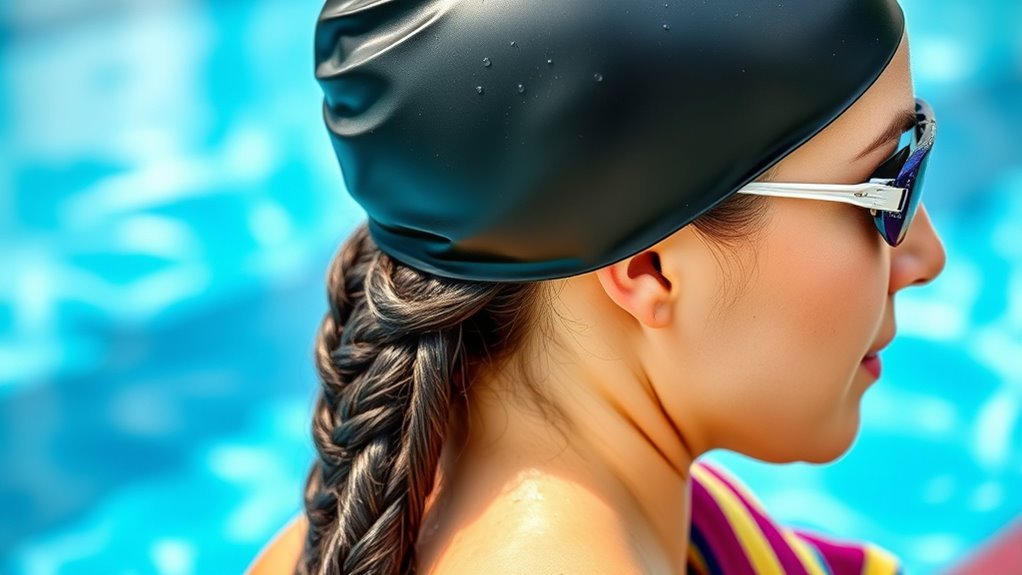
When you swim, choosing the right protective hairstyles and accessories can considerably reduce hair damage and tangling. Start by securing your hair tightly to limit its exposure to chlorine and saltwater.
Protective styles not only shield your strands but also save you time on maintenance afterward. Consider these options to keep your hair safe and manageable:
Braids or twists: They keep hair compact and minimize breakage.
Swim caps: A silicone or latex cap forms a barrier, preventing water from soaking through.
Scrunchies or hair ties: Use gentle, snag-free ties to avoid stress on your hair when securing styles.
Frequently Asked Questions
How Does Chlorine Damage Hair on a Molecular Level?
Chlorine breaks down your hair’s protein structure by stripping natural oils and causing oxidative damage. This weakens your strands, making them brittle, dry, and prone to breakage.
Are Saltwater Pools Less Harmful to Hair Than Chlorinated Pools?
Yes, saltwater pools are generally less harsh on your hair than chlorinated ones because they use lower chlorine levels. However, salt can still dry out your hair, so rinse and moisturize it regularly to keep it healthy.
Can Swimming Daily Cause Hair Color to Fade Faster?
Yes, swimming daily can cause your hair color to fade faster because chlorine, salt, and sun exposure strip away color molecules.
To protect your color, you should rinse, condition, and use swim-specific hair products consistently.
What Vitamins Support Hair Health for Frequent Swimmers?
While your hair battles chlorine’s harsh bite, vitamins like biotin, vitamin E, and omega-3s step in as heroes. They’ll nourish your strands, keeping them vibrant and strong, even if you’re swimming daily without fail.
These nutrients help repair damage and maintain moisture, essential for hair exposed to pool chemicals regularly. Incorporating them into your diet or supplements can make a significant difference in hair health.
How Often Should Swimmers Trim Their Hair to Prevent Damage?
You should trim your hair every 6 to 8 weeks to prevent damage from frequent swimming. Regular trims help remove split ends and keep your hair healthy, making it easier to manage and less prone to breakage.
Keeping up with this routine ensures your hair remains strong despite exposure to chlorine and other pool chemicals. It also promotes better overall hair health and appearance.
Conclusion
If you don’t protect your hair before and after swimming every day, you might as well say goodbye to your luscious locks forever! Chlorine and saltwater can turn your hair into a dry, brittle mess overnight.
But by following these simple tips—pre-swim care, post-swim treatment, and protective hairstyles—you’ll keep your hair looking so healthy and vibrant. People will think you’ve just stepped out of a salon every single day!
Don’t let swimming wreck your hair! Protect your hair when swimming everyday with proper care and styling to maintain its strength and shine.


