
7 Tips to Soften Hair After Swimming
To soften your hair after swimming, start by rinsing it immediately with fresh water to remove chlorine and salt. Using a clarifying shampoo helps deep clean buildup caused by pool chemicals and seawater. Follow this with a hydrating deep conditioner to restore moisture and nourishment to your strands.
Next, apply a leave-in conditioner or hair oil to lock in softness and reduce frizz. Avoid heat styling right after swimming, as it can cause further dryness and damage. Protect your hair before swimming by wearing a swim cap or applying a protective leave-in treatment.
Lastly, trim split ends regularly to maintain healthy strands and prevent breakage. These simple steps will help you achieve silky, smooth hair even after frequent swims. Keep going to uncover more helpful tips for softening your hair post-swim.
Rinse Hair Immediately After Swimming
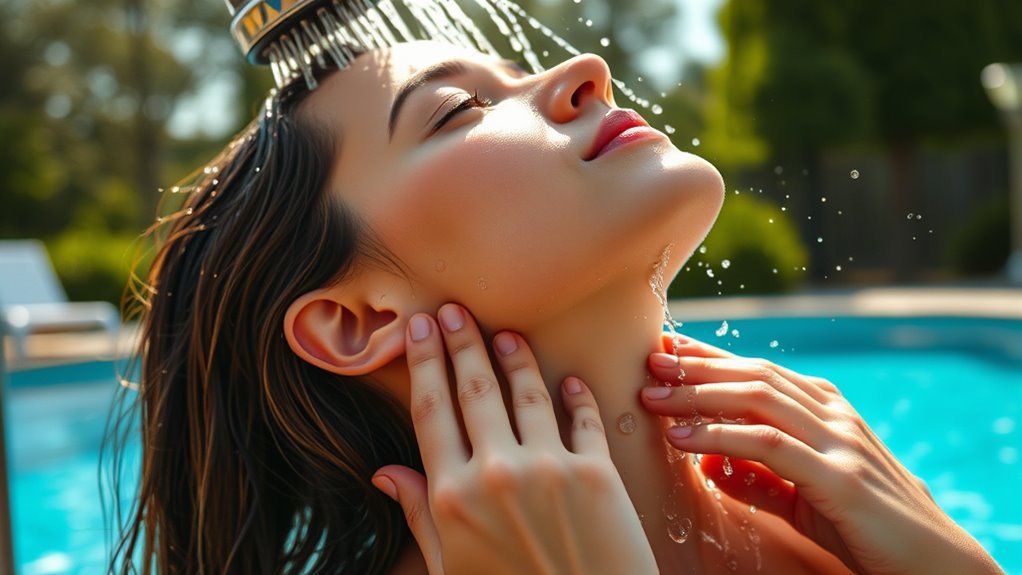
Because chlorine and saltwater can dry out your hair quickly, you should rinse your hair immediately after swimming. Waiting allows these harsh substances to cling to your strands, leading to dryness and brittleness.
Use fresh, cool water to flush out the chemicals and salt, which helps restore your hair’s natural moisture balance. If you can, rinse your hair before you even leave the pool or beach. This simple step minimizes damage and makes your hair easier to manage later.
Don’t forget to gently detangle your hair while rinsing to prevent breakage. By rinsing promptly, you protect your hair from becoming rough and tangled, setting the stage for smoother, softer locks in the long run.
Use a Clarifying Shampoo
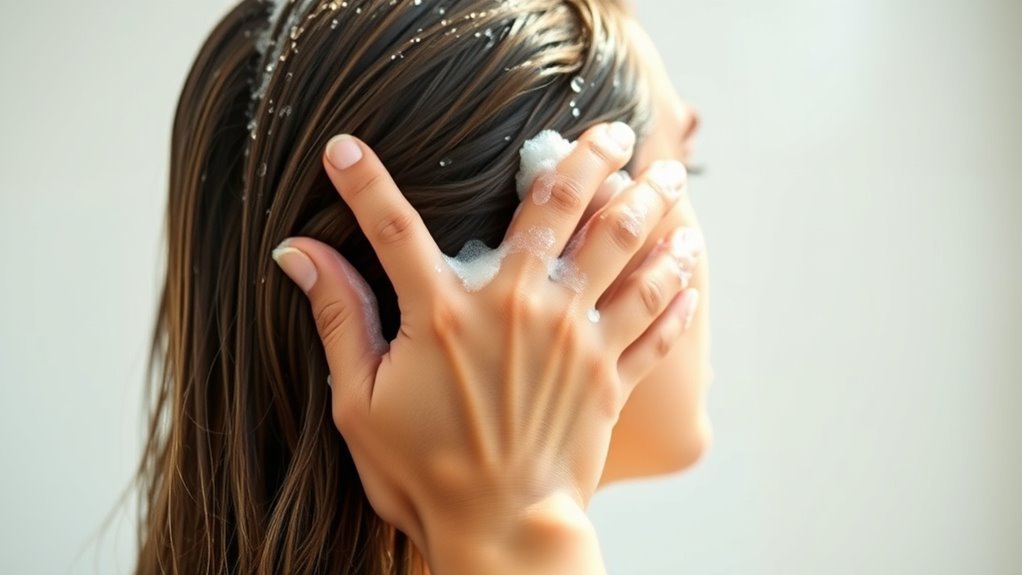
When you want to remove stubborn chlorine and salt buildup, using a clarifying shampoo is essential. These shampoos are designed to deeply cleanse your hair, stripping away residues that regular shampoos can’t fully remove.
After swimming, apply the clarifying shampoo to wet hair, lather well, and focus on your scalp and strands where buildup tends to accumulate. Rinse thoroughly to ensure all impurities wash out.
Apply clarifying shampoo after swimming, lather thoroughly on scalp and hair, then rinse well to remove buildup.
Keep in mind that clarifying shampoos can be drying if used too often, so limit use to once a week or after heavy swimming sessions. This step helps restore your hair’s natural texture and softness, making it easier to manage and style.
Using a clarifying shampoo regularly will keep your hair healthy and free from damaging chemicals.
Apply a Deep Conditioning Treatment

After rinsing out the clarifying shampoo, your hair may feel clean but also dry or rough. That’s when applying a deep conditioning treatment becomes essential.
Choose a rich, hydrating mask designed to restore moisture and repair damage caused by chlorine and saltwater.
Apply it generously from mid-lengths to ends, where hair tends to be driest. Leave the treatment on for at least 10-15 minutes, or follow the product’s instructions for best results.
To boost absorption, wrap your hair in a warm towel or use a shower cap.
Rinse thoroughly with cool water to seal the hair cuticles, locking in moisture and leaving your strands softer and more manageable.
Regular deep conditioning can greatly improve your hair’s texture after swimming sessions.
Use Leave-In Conditioner or Hair Oil
To keep your hair soft and protected throughout the day, apply a leave-in conditioner or hair oil right after rinsing out your deep treatment. These products lock in moisture, reduce frizz, and shield your hair from chlorine’s drying effects.
Use a small amount, focusing on the mid-lengths and ends to avoid weighing your hair down. Hair oils can also add shine and smoothness, making your strands look healthier and feel silkier.
| Leave-In Conditioner | Hair Oil | Benefits |
|---|---|---|
| Lightweight, non-greasy | Nourishing, rich texture | Locks in moisture |
| Easy to apply on damp hair | Best for dry or coarse hair | Reduces frizz |
| Provides heat protection | Adds shine and smoothness | Protects from chlorine damage |
Avoid Heat Styling Tools
Applying leave-in conditioner or hair oil helps protect your hair from chlorine damage, but using heat styling tools can undo that effort. After swimming, your hair is already stressed and more vulnerable to breakage.
Heat styling tools like flat irons, curling wands, and blow dryers strip moisture and increase dryness, making your hair feel rough and brittle. Instead, let your hair air dry whenever possible to retain natural moisture.
Heat tools strip moisture, causing dryness and brittleness; air drying helps keep hair soft and hydrated.
If you must use heat, choose the lowest temperature setting and apply a heat protectant spray first. Giving your hair a break from heat styling allows it to recover and regain softness faster.
Avoiding heat tools helps maintain your hair’s natural strength and shine, ensuring it stays soft and healthy after swimming.
Protect Hair Before Swimming
Before you plunge into the pool, take steps to shield your hair from chlorine and saltwater damage. Start by thoroughly wetting your hair with clean water. Wet hair absorbs less chlorine.
Next, apply a leave-in conditioner or a protective oil like coconut or argan oil to create a barrier. Consider wearing a swim cap to minimize direct contact with water and harmful chemicals.
If you have long hair, tie it up in a bun or braid to reduce tangling and exposure. These simple precautions help maintain your hair’s moisture and prevent it from becoming dry and brittle.
Taking these proactive measures before swimming ensures your hair stays softer and healthier, making post-swim care much easier.
Trim Split Ends Regularly
Even with the best protection before swimming, your hair can still suffer from damage like split ends. These tiny cracks weaken your strands, making your hair look dry and rough. To keep your hair soft and healthy, trimming split ends regularly is essential.
Protect your hair from split ends after swimming by trimming regularly to maintain softness and strength.
Here’s why you should make it a habit:
- Prevent further damage from traveling up the hair shaft
- Maintain a smooth, polished look
- Encourage healthier hair growth
- Reduce tangling and breakage after swimming
Aim to trim your hair every 6-8 weeks or as soon as you notice split ends. This small step helps restore softness and keeps your hair manageable, especially after exposure to chlorine or saltwater.
Don’t let split ends undo your efforts to protect and soften your hair post-swim.
Frequently Asked Questions
Can Swimming in Saltwater Soften Hair More Than Chlorinated Pools?
Yes, swimming in saltwater can soften your hair more than chlorinated pools because saltwater naturally exfoliates and adds minerals.
However, it might also dry your hair, so you’ll want to rinse and condition it well afterward.
How Often Should I Wash My Hair if I Swim Daily?
If you swim daily, you should wash your hair every time to remove chlorine or salt. Use a gentle, moisturizing shampoo and conditioner to prevent dryness and keep your hair soft and healthy after swimming.
This routine helps protect your hair from damage caused by pool chemicals or saltwater. Additionally, rinsing your hair with fresh water before and after swimming can further reduce buildup and irritation.
Does Wearing a Swim Cap Damage Hair Over Time?
Wearing a swim cap won’t damage your hair if you choose a soft, well-fitting one and avoid pulling it on roughly.
It actually protects your hair from chlorine and salt water, keeping it healthier over time.
Are There Specific Vitamins That Improve Hair Softness After Swimming?
Think of vitamins as sunshine for your hair’s garden—yes, vitamins A, C, E, and biotin boost softness and repair damage after swimming.
They’ll nourish your strands, helping them feel smooth and vibrant again.
Can Diet Impact How My Hair Responds to Swimming?
Yes, your diet definitely impacts how your hair reacts to swimming. Eating nutrient-rich foods, especially those with vitamins A, C, E, and omega-3s, helps keep hair strong and hydrated, making it less prone to damage from chlorine.
A balanced diet supports overall hair health, ensuring your strands are resilient. Staying hydrated by drinking plenty of water also plays a crucial role in maintaining hair moisture. Together, these habits can improve how your hair responds to frequent swimming.
Conclusion
Swimming can leave your hair dry and brittle, but you don’t have to settle for that. By rinsing immediately, using clarifying shampoo, and applying deep conditioning treatments, you’re giving your hair the care it deserves.
Ever felt how soft, smooth hair can transform your whole day? Protecting your strands before swimming and trimming split ends regularly keeps your hair healthy and vibrant.
With these simple steps, you’ll enjoy every swim without sacrificing softness. Follow these tips to soften hair after swimming and keep your locks looking their best.