
At What Age Can Babies Go Swimming Safely?
You can safely start taking your baby swimming around 6 months old when their immune system is stronger and they can better regulate body temperature. Introducing babies to swimming at this age helps build confidence and promotes physical development. Begin in warm water (about 32°C/89°F) and keep sessions short, around 10-15 minutes.
Always supervise closely and use swim diapers to maintain hygiene. Ensuring the right environment and watching for readiness signs helps your baby enjoy this early activity safely. Keep going to discover the best tips and precautions for your little swimmer.
Recommended Age to Start Baby Swimming

Although every baby develops at their own pace, most experts recommend starting swimming lessons around six months old.
At this age, your baby’s immune system is stronger, and they’re better able to regulate their body temperature in water.
You can begin with gentle water introductions, focusing on comfort rather than skills.
It’s important to choose a warm pool, ideally around 32°C (89.6°F), to keep your baby cozy.
Before you start, check with your pediatrician to ensure your baby is healthy enough for swimming.
Avoid rushing; if your baby seems uncomfortable, give them more time.
Starting too early or in cold water can increase risks, so wait until your baby is physically ready and your pool conditions are safe for a positive experience.
Health Benefits of Early Swimming

When you introduce your baby to swimming early, you help boost their physical development and strengthen their cardiovascular system. Swimming encourages muscle growth, improves coordination, and enhances lung capacity.
Besides physical perks, it also promotes bonding and eases anxiety, making your baby feel secure. Plus, early exposure can sharpen motor skills and support cognitive development.
| Benefit | How It Helps Your Baby |
|---|---|
| Muscle Development | Builds strength and flexibility |
| Cardiovascular Health | Increases heart and lung efficiency |
| Motor Skills | Enhances coordination and balance |
| Emotional Bonding | Boosts parent-child connection |
| Cognitive Growth | Stimulates brain development |
Getting your baby in the water early sets a strong foundation for lifelong health and confidence.
Important Safety Precautions for Baby Swimming

Since babies are more vulnerable in water, you need to take extra precautions to keep them safe during swimming sessions. Always stay within arm’s reach and never leave your baby unattended.
Make sure the water temperature is comfortable, ideally between 85°F and 87°F, to prevent chilling.
Use swim diapers to maintain hygiene and avoid infections.
Keep swimming sessions short, around 10 to 15 minutes, to avoid fatigue and overstimulation.
Here are key safety tips to remember:
- Constantly supervise your baby without distractions
- Check and maintain comfortable water temperature
- Use appropriate swim diapers
- Limit session length to prevent tiredness
Choosing the Right Swimming Environment
Taking the right precautions is only part of keeping your baby safe in the water. You also need to choose the right swimming environment.
Look for a clean, well-maintained pool with warm water, ideally between 85°F and 87°F, to keep your baby comfortable.
Choose a clean, well-kept pool heated between 85°F and 87°F for your baby’s comfort.
Avoid pools with strong currents, deep areas, or overcrowding.
If you’re considering natural bodies of water, like lakes or oceans, be extra cautious. These can have unpredictable conditions and hidden hazards.
Make sure the environment has clear visibility and lifeguards on duty.
Also, check that the facility follows strict hygiene and safety standards to reduce infection risks.
How to Prepare Your Baby for Their First Swim
Before your baby’s first swim, you’ll want to gently introduce them to the water and create a calm, positive experience. Start by familiarizing your baby with water during bath time, letting them splash and feel comfortable.
On swim day, dress them in a swim diaper and bring warm towels.
Keep the environment soothing with soft voices and slow movements.
To prepare effectively:
Choose a warm pool (around 32°C or 89°F) to keep your baby comfortable. Limit initial swim sessions to 10-15 minutes to avoid overstimulation.
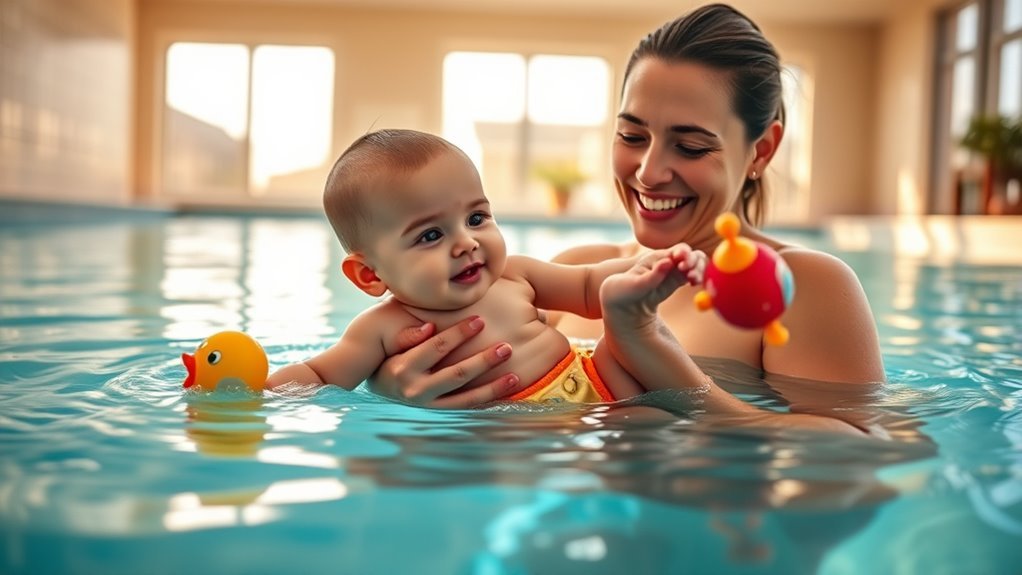
Bring familiar toys to make the experience enjoyable. Ensure you hold your baby securely, supporting their head and neck at all times.
These steps help build your baby’s confidence and enjoyment in the water safely.
Signs Your Baby Is Ready for Swimming
Although every baby develops differently, you can look for specific signs that show your little one is ready to start swimming. Look for good head control, as this helps your baby stay safe in the water. If your baby can lift and turn their head, they’re likely ready.
Also, notice if they enjoy water during bath time and respond positively to splashes. Being able to hold their breath briefly is another key sign. Lastly, your baby should have basic motor skills like kicking and waving arms.
| Sign | Why It Matters |
|---|---|
| Good head control | Keeps airway clear underwater |
| Enjoys water | Shows comfort and confidence |
| Holds breath | Prevents water inhalation |
| Motor skills | Enables swimming movements |
| Positive response | Indicates emotional readiness |
Common Concerns and How to Address Them
When you introduce your baby to swimming, it’s natural to have concerns about their safety and comfort in the water. You might worry about water temperature, potential infections, or the risk of choking. Address these concerns by focusing on the following:
Water temperature: Ensure the pool is warm enough (around 32°C/90°F) to keep your baby comfortable.
Hygiene: Choose well-maintained pools and avoid swimming if your baby has open wounds or illnesses.
Water ingestion: Keep your baby’s head above water and avoid submerging them fully until they’re ready.
Supervision: Always stay within arm’s reach and never leave your baby unattended near water.
Tips for Making Swimming Enjoyable for Babies
To make swimming enjoyable for your baby, focus on creating a positive and relaxed environment that encourages fun and comfort. Start with short sessions to help your little one adjust gradually.
Create a calm, fun atmosphere with brief sessions to help your baby enjoy swimming comfortably.
Use gentle, soothing tones and smile often to build trust and reassurance. Bring favorite waterproof toys to engage your baby and make the experience playful.
Always support your baby securely in the water, ensuring they feel safe. Dress them in comfortable swimwear suited for the water temperature.
Keep the pool warm, around 32°C (89.6°F), to prevent chills. Avoid forcing your baby if they seem uncomfortable; instead, try again another day.
Ultimately, celebrate small milestones with praise to build your baby’s confidence and love for swimming.
Frequently Asked Questions
Can Swimming Help Improve My Baby’s Sleep Patterns?
Yes, swimming can help improve your baby’s sleep patterns by promoting physical activity and relaxation.
You’ll notice they might fall asleep faster and enjoy deeper rest after swimming sessions, making bedtime smoother for both of you.
What Swimwear Is Best for Babies in Cold Water?
You might worry about bulkiness, but neoprene wetsuits work best in cold water—they keep your baby warm without restricting movement.
Pair them with a swim diaper and a snug swim cap to keep your little one cozy and safe.
How Often Should Babies Swim Each Week for Best Results?
You should aim to swim with your baby 1-2 times a week to build comfort and confidence in the water.
Keep sessions short, around 20 minutes, to prevent tiring them out and ensure a positive experience.
Are There Specific Swimming Strokes Recommended for Infants?
You won’t use specific strokes for infants; instead, focus on gentle movements like kicking and floating. Let them explore water safely while you support them, building comfort before introducing formal strokes as they grow older.
Can Swimming Reduce the Risk of Ear Infections in Babies?
Swimming won’t necessarily reduce your baby’s risk of ear infections; in fact, water exposure can sometimes increase it.
You should keep their ears dry and consult your pediatrician for advice on preventing infections effectively.
Conclusion
You might wonder when the perfect moment is to take your baby swimming. While starting around six months is often recommended, the real secret lies in watching your little one’s cues and comfort.
Get ready to plunge into a world of fun, bonding, and health benefits—but don’t rush. Keep safety first, choose the right spot, and soon enough, you’ll both be splashing with joy.
Are you ready to make that first splash? Remember, knowing the right age to start swimming helps ensure your baby’s safety and enjoyment in the water.