How Long to Wait to Swim After Shocking Your Pool
After shocking your pool, it’s important to know how long to wait to swim to ensure safety. You should wait at least 8 to 24 hours before entering the water to allow chlorine levels to drop below 3 ppm. The exact waiting time depends on factors like the type of shock used, water temperature, and pool size.
Non-chlorine shocks usually require only about 15-30 minutes before swimming is safe. However, calcium hypochlorite shocks need a longer wait time. Always test your pool water to confirm that chlorine levels are safe and comfortable for swimming.
Keep reading to discover helpful tips that can help you swim sooner while staying safe in your pool.
Understanding Pool Shocking and Its Purpose
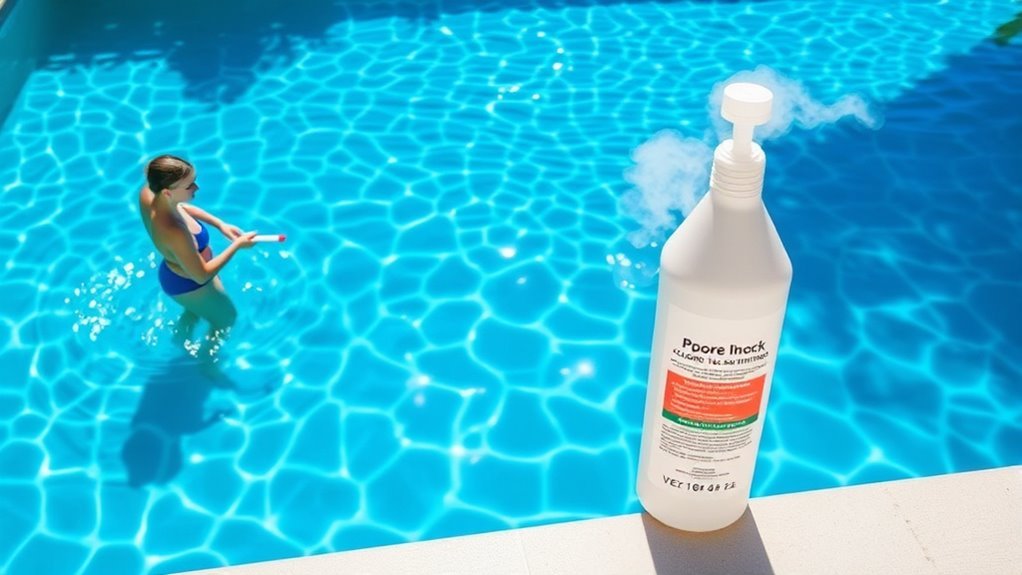
Although it may seem complicated, pool shocking is simply the process of adding a high dose of chlorine to your pool to quickly eliminate bacteria, algae, and other contaminants. When you shock your pool, you’re essentially resetting its chemical balance, ensuring the water stays clean and safe.
You want to do this when chlorine levels drop or after heavy use, rain, or visible algae growth. Shocking helps prevent cloudy water and unpleasant odors, keeping your pool inviting.
It’s not just about chlorine levels; it’s about breaking down chloramines, those combined chlorine compounds that cause irritation. When you understand this purpose, you’ll appreciate why shocking is a vital maintenance step to protect both your pool equipment and your skin.
Different Types of Pool Shock Treatments
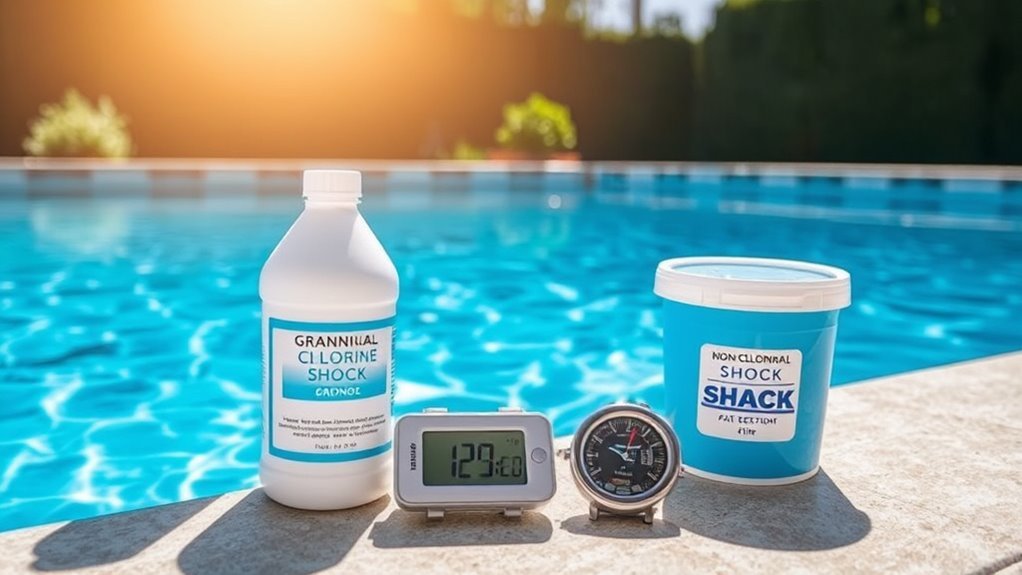
When you shock your pool, choosing the right type of shock treatment is crucial for effective results. Different shocks work best depending on your pool’s needs, water conditions, and your schedule. Here’s a quick guide to common shock types:
| Shock Type | Key Features |
|---|---|
| Calcium Hypochlorite | Fast-acting, powerful chlorine boost |
| Sodium Dichlor | Stabilized, gentle on pool equipment |
| Potassium Monopersulfate | Non-chlorine, breaks down organics |
| Lithium Hypochlorite | High purity, less calcium buildup |
| Chlorine-Free Shock | Eco-friendly, safe for sensitive skin |
Choosing the right shock helps you maintain crystal-clear water and ensures your pool stays safe and inviting.
Factors Influencing Safe Swimming Time After Shocking
Selecting the right type of shock treatment directly affects how soon you can safely swim after shocking your pool. Several factors influence the waiting time before you can dive back in.
First, the chlorine concentration post-shock plays a critical role; higher levels require longer waiting. Second, water temperature speeds up or slows down chemical reactions, impacting chlorine dissipation.
Higher chlorine levels mean longer wait times, while warmer water speeds up chlorine breakdown.
Third, pool size and volume determine how diluted the shock treatment becomes, influencing safety timing. Finally, sunlight exposure breaks down chlorine faster, potentially shortening the wait.
- Chlorine concentration after shocking
- Water temperature in your pool
- Pool size and volume
- Amount of sunlight hitting the water
Understanding these factors helps you plan your swim time safely and enjoy your pool without risks.
How to Test Your Pool Water Before Swimming
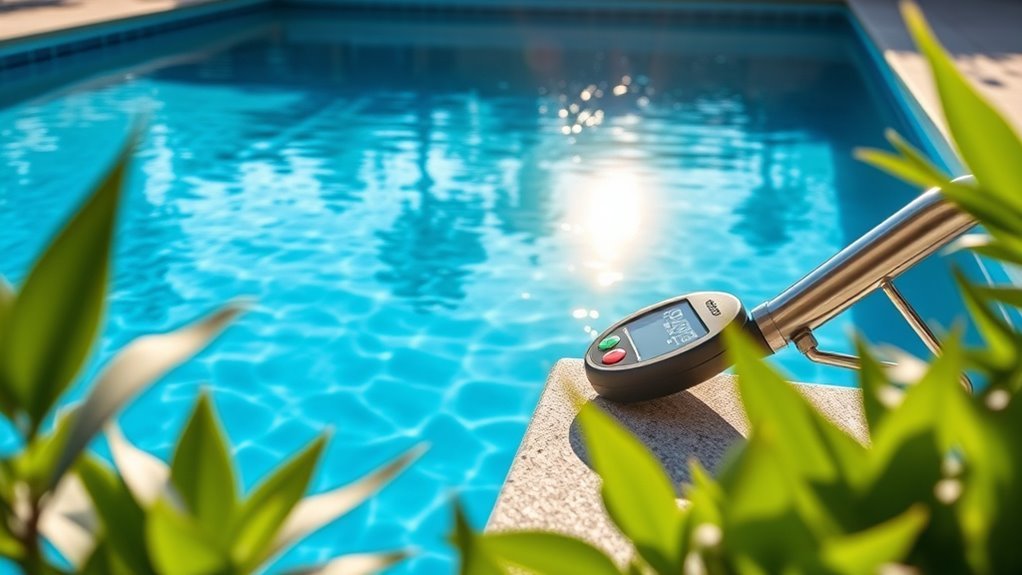
Before you jump back into your pool, you’ll want to test the water to guarantee it’s safe. Grab a reliable pool testing kit to check key chemical levels, especially chlorine and pH.
Chlorine should be between 1 and 3 ppm to kill germs effectively, while pH should sit between 7.2 and 7.8 to keep the water comfortable for your skin and eyes. Make sure to test the water in several spots to get an accurate reading since chemicals can vary throughout the pool.
| What to Test | Ideal Range |
|---|---|
| Chlorine | 1.0 – 3.0 ppm |
| pH Level | 7.2 – 7.8 |
| Clarity | Crystal Clear Water |
Testing helps you swim safely and enjoy your refreshed pool worry-free.
Recommended Waiting Times for Various Shock Types
Testing your pool water guarantees it’s safe, but knowing how long to wait after shocking is just as important. Different shock types need varying wait times before you can dive back in safely.
Here’s a quick guide to help you:
- Chlorine shock: Wait at least 8 hours or until the chlorine level drops below 3 ppm.
- Non-chlorine shock: You can usually swim after 15 to 30 minutes once the product dissolves completely.
- Potassium monopersulfate shock: Wait about 30 minutes to 1 hour before swimming.
- Calcium hypochlorite shock: Requires a longer wait time, typically 12 to 24 hours, due to higher chlorine concentration.
Always test your pool water before swimming to ensure safe chemical levels.
Tips for Reducing Waiting Time After Shocking
Although waiting after shocking your pool is essential for safety, you can take steps to shorten this time without compromising water quality. Start by shocking your pool in the evening or late afternoon. This timing helps chlorine work efficiently overnight while sunlight won’t degrade it.
Next, run your pool’s pump and filter continuously after shocking to circulate the chemicals evenly, speeding up the dissipation of chlorine levels. You can also test and adjust your pH before shocking; keeping it between 7.2 and 7.6 maximizes shock effectiveness and reduces waiting time.
Finally, consider using a non-chlorine shock if you want a shorter wait time, but remember it works differently and may not be suitable for all situations. Following these tips helps you enjoy your pool sooner.
Signs Your Pool Is Ready for Swimming Again
Once the chlorine levels have dropped to a safe range, you can tell your pool is ready for swimming by checking a few key signs. These indicators ensure the water is clean, balanced, and safe for you and your family.
Before jumping in, make sure:
- The water is clear and free of cloudiness or debris.
- The pH level is between 7.2 and 7.8.
- The chlorine concentration reads between 1 and 3 ppm (parts per million).
- The pool surface and walls feel smooth, indicating no algae growth.
Frequently Asked Questions
Can Pool Shocking Affect Pool Equipment Lifespan?
Yes, shocking your pool can affect equipment lifespan if you don’t do it properly. You should follow guidelines carefully to avoid corrosion or damage to filters, pumps, and liners, helping your gear last longer.
Is It Safe to Swim Immediately After Adding Algaecide?
You might think you can jump right in after adding algaecide, but it’s safer to wait. Usually, you should wait at least 24 hours to avoid skin irritation or eye discomfort.
How Often Should I Shock My Pool During Summer?
You should shock your pool once a week during summer to keep it clear and bacteria-free.
If heavy use or storms occur, consider shocking more often to maintain water quality and prevent algae growth effectively.
Can Pets Swim in the Pool After Shocking?
You shouldn’t let pets swim right after shocking the pool. Wait until chlorine levels drop to safe limits, usually 24-48 hours, to protect their sensitive skin and eyes from irritation or harm caused by chemicals.
Does Pool Shock Impact Pool Water Temperature?
No, pool shock doesn’t impact water temperature; it primarily alters chemical levels to disinfect. You won’t feel any warmth or chill changes caused by shocking.
Temperature stays steady while the water clears up and becomes safe.
Conclusion
You might feel like jumping in right after shocking your pool, but resist the urge—diving in too soon is like swimming through a chemical storm! Waiting the right amount of time keeps you safe and your skin happy.
Test those levels, watch for clarity, and don’t rush it. Trust me, a little patience now means you’ll enjoy crystal-clear, perfectly balanced water without turning into a walking chemistry experiment.
Your future self will thank you! Remember, knowing how long to wait to swim after shocking your pool is key to enjoying safe, clean, and refreshing water every time.