What Is Free Chlorine in Swimming Pools?
Free chlorine in swimming pools is the active chlorine that kills bacteria, viruses, and algae, ensuring your pool water stays clean and safe. This essential component remains available after adding chlorine, targeting contaminants without producing harmful byproducts.
Maintaining free chlorine levels between 1 and 3 ppm helps prevent irritation and keeps your water crystal clear. When levels drop or combined chlorine builds up, sanitation effectiveness decreases, leading to potential water quality issues.
Stick around to discover what affects free chlorine levels and learn how to keep your pool perfectly balanced for a refreshing and safe swimming experience.
Definition and Role of Free Chlorine

Although you mightn’t see it, free chlorine plays a crucial role in keeping your swimming pool safe and clean. Free chlorine refers to the amount of chlorine available in your pool water that actively kills bacteria, algae, and other harmful microorganisms.
When you add chlorine to your pool, it dissolves and forms several compounds. But free chlorine is the portion that remains effective for sanitizing. It works by breaking down contaminants and preventing the growth of pathogens, ensuring your water stays clear and safe to swim in.
Maintaining the right level of free chlorine is essential; too little won’t protect you, and too much can cause irritation. By regularly testing and adjusting free chlorine, you keep your pool healthy and inviting.
Difference Between Free Chlorine and Combined Chlorine

Understanding free chlorine helps you appreciate why it’s important to distinguish it from combined chlorine. Free chlorine is the active, available chlorine in your pool that sanitizes and kills harmful microorganisms.
Combined chlorine, on the other hand, forms when free chlorine reacts with contaminants like sweat, urine, or body oils. This reaction creates chloramines, which are less effective at disinfecting and often cause that strong chlorine smell and eye irritation.
You want to keep free chlorine levels high and combined chlorine levels low for safe, clean water. Testing your pool regularly helps you monitor both types.
Maintain high free chlorine and low combined chlorine for a safe, clean swimming pool environment.
If combined chlorine rises, you’ll need to shock your pool to break down chloramines and restore effective sanitation.
Knowing this difference helps you maintain a healthy swimming environment.
How Free Chlorine Sanitizes Pool Water

When you add free chlorine to your pool, it actively attacks and destroys harmful bacteria, viruses, and algae by breaking down their cell walls. This process prevents these microorganisms from reproducing and spreading, keeping your pool water safe and clean.
Free chlorine works quickly and efficiently, targeting contaminants to maintain clear, healthy water.
Here’s how free chlorine sanitizes your pool water:
- Penetrates microorganisms’ cell walls, causing irreversible damage
- Oxidizes organic matter, removing debris and impurities
- Prevents algae growth by disrupting its cellular functions
Ideal Free Chlorine Levels for Swimming Pools
To keep your pool water safe and comfortable, you need to maintain free chlorine levels within a specific range. Ideally, free chlorine should stay between 1 and 3 parts per million (ppm). This range effectively kills harmful bacteria and algae without causing irritation to your skin and eyes.
If levels drop below 1 ppm, you risk unsafe water, while going above 3 ppm can lead to strong chlorine odors and discomfort. Regularly maintaining this balance ensures your pool stays clean and pleasant for swimmers.
Remember, factors like sunlight, temperature, and pool usage can affect chlorine levels, so stay proactive in adjusting them.
Keeping free chlorine within this ideal range safeguards both your health and your pool’s water quality.
Methods to Test Free Chlorine Concentration
Although maintaining proper chlorine levels is essential, you can’t manage what you don’t measure. Testing your pool’s free chlorine concentration regularly guarantees the water stays safe and clean.
You have several reliable methods to choose from, each with its own benefits:
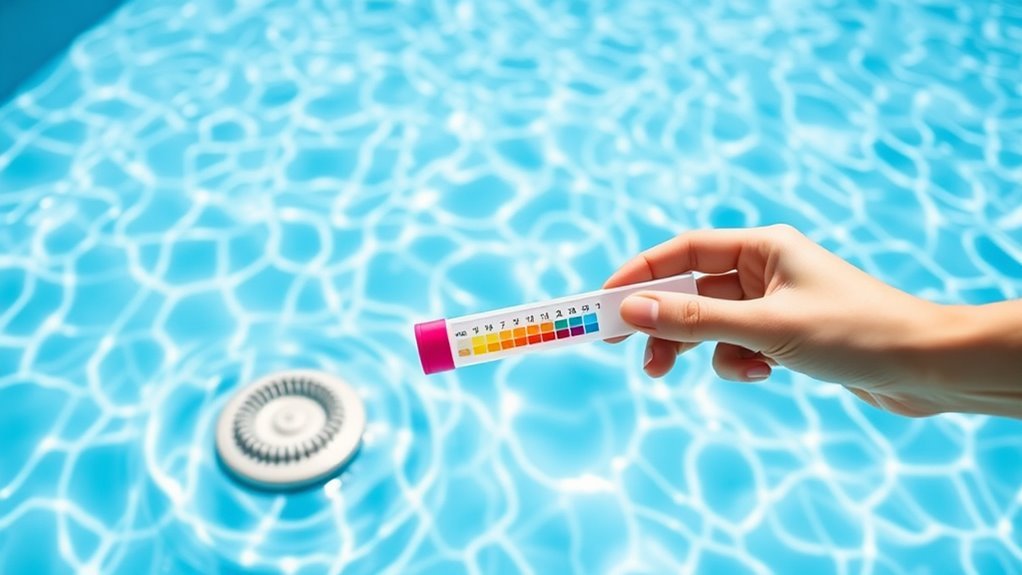
Test Strips: Quick and easy, these strips change color based on chlorine levels. Just dip, wait, and compare to the chart.
Liquid Test Kits: More accurate than strips, these kits use reagents that cause a color change when added to a water sample.
Digital Chlorine Meters: For precise readings, these electronic devices measure free chlorine instantly and display results digitally.
Factors Affecting Free Chlorine Levels
Several factors influence how free chlorine levels fluctuate in your pool, affecting its effectiveness in keeping the water safe. Understanding these helps you maintain proper sanitizer levels.
Sunlight breaks down chlorine quickly, while temperature impacts its activity. The presence of contaminants like sweat and leaves consumes chlorine as it works to disinfect.
| Factor | Effect on Free Chlorine | Why It Matters |
|---|---|---|
| Sunlight (UV) | Decreases | Chlorine degrades faster |
| Temperature | Varies | Higher temps speed reactions |
| Contaminants | Depletes | Chlorine used up disinfecting |
Tips for Maintaining Optimal Free Chlorine in Your Pool
Maintaining ideal free chlorine levels requires regular testing and timely adjustments. You should check your pool’s chlorine levels at least twice a week, especially during hot weather or heavy use. Use a reliable test kit to measure free chlorine accurately.
Regularly test your pool’s free chlorine twice a week for safe, clear water.
When levels dip below the recommended range, add chlorine promptly to avoid algae growth and bacteria buildup.
Here are some quick tips to keep your free chlorine optimal:
- Store chlorine properly to prevent it from degrading.
- Shock your pool weekly to eliminate contaminants.
- Balance your pool’s pH, as improper pH can reduce chlorine effectiveness.
Frequently Asked Questions
Can Free Chlorine Cause Skin or Eye Irritation?
Yes, free chlorine can cause skin or eye irritation if levels are too high. You should regularly test and adjust chlorine to keep it balanced, preventing discomfort and protecting your skin and eyes while swimming.
How Does Sunlight Affect Free Chlorine Levels?
Sunlight breaks down free chlorine quickly, so you’ll notice levels drop faster on sunny days. To keep your pool safe, you’ll need to add chlorine more often or use stabilizers that protect it from UV rays.
What Is the Difference Between Free Chlorine and Bleach?
Free chlorine is the active sanitizer in pools, while bleach is a liquid containing sodium hypochlorite used to create free chlorine.
You’ll use bleach to generate free chlorine, which kills germs and keeps water safe.
How Long Does Free Chlorine Remain Effective After Adding?
Free chlorine stays effective for about 24 to 48 hours after adding, depending on sunlight, temperature, and pool usage.
You’ll want to test levels regularly and reapply chlorine to keep your pool safe and sanitized.
Can Free Chlorine Remove Algae From Pools?
Yes, free chlorine can remove algae from your pool by killing the algae cells. You’ll need to maintain proper chlorine levels and shock the pool if algae growth is severe to fully eliminate it and keep your water clear.
Conclusion
Now that you know free chlorine is the key to keeping your pool sparkling clean and safe, won’t you want to keep those levels just right? By regularly testing and adjusting free chlorine, you ensure harmful bacteria don’t stand a chance.
Remember, maintaining the perfect balance means clearer water and a healthier swim. So, grab your test kit and take control—your pool’s cleanliness relies on it!
Keeping the free chlorine levels in check is essential for effective pool sanitation. This not only protects swimmers but also prolongs the life of your pool equipment. Free chlorine remains the most reliable way to maintain a safe swimming environment.