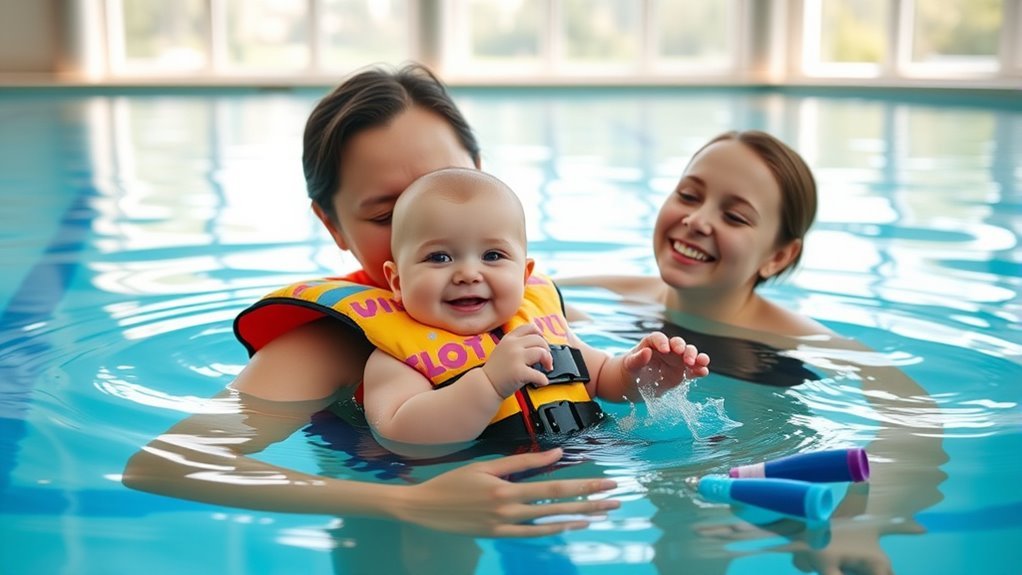
When Can a Baby Start Swimming Lessons?
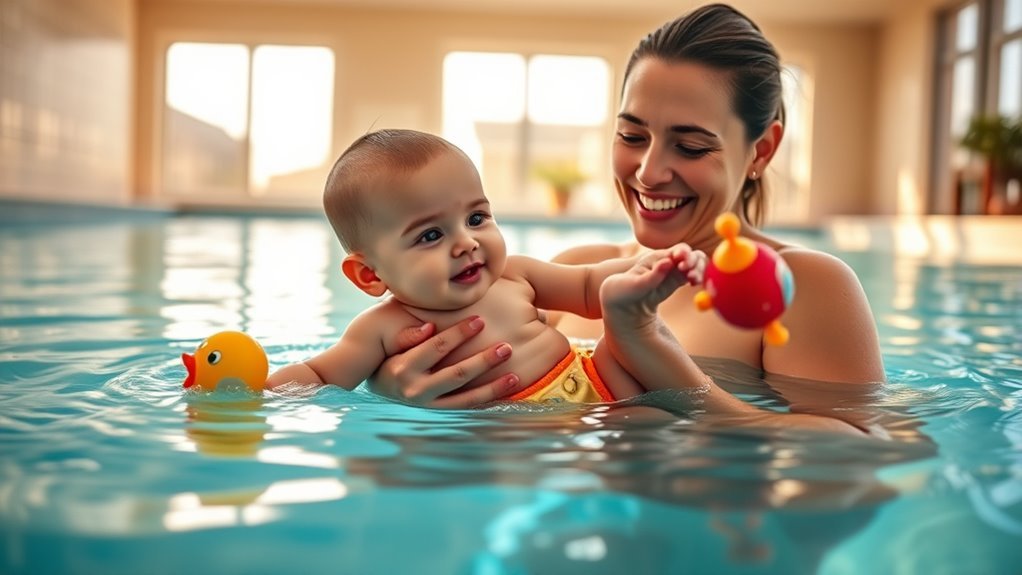
You can start your baby’s swimming lessons around six months old when they can hold their head up steadily and show curiosity about water. Early exposure to swimming lessons for babies builds confidence, helps physical development, and promotes safety skills.
Before six months, focus on gentle water acclimation instead of formal lessons. Make sure to choose certified instructors and prepare your baby with warm, clean water environments.
There’s more to explore on how to pick the right class and keep your little one safe in the water.
Benefits of Early Water Exposure
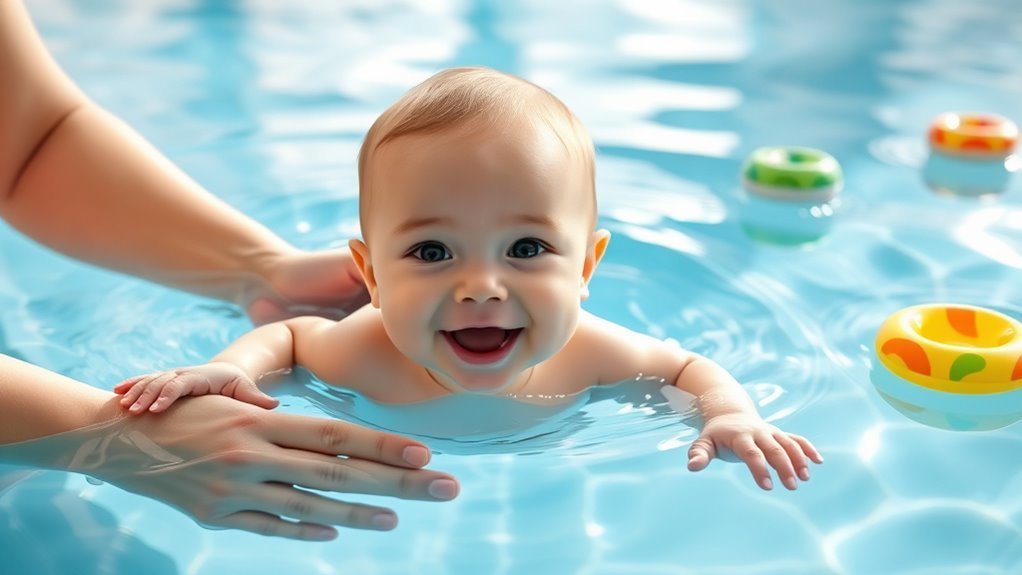
Although every baby develops at their own pace, introducing your little one to water early on can offer numerous benefits. You’ll help them build confidence and comfort in an aquatic environment, which lays the foundation for future swimming skills.
Early water exposure also promotes physical development by encouraging movement and coordination.
Introducing babies to water early supports their physical growth through enhanced movement and coordination.
Plus, it supports sensory growth as your baby experiences new textures, temperatures, and sensations.
Being in water can even soothe and relax your baby, reducing fussiness.
You’ll also strengthen your bond through close, positive interaction during water time.
Finally, early familiarity with water can enhance safety awareness as your baby becomes more accustomed to this environment, helping reduce fear and anxiety later on.
Starting early creates a positive and enjoyable experience for both of you.
Recommended Age to Begin Swimming Lessons

Getting your baby comfortable in water is a great start, but knowing the right time to begin formal swimming lessons can make all the difference. Experts generally recommend starting lessons around 6 months old.
By this age, babies have better head control and muscle strength, which helps them participate more effectively. Before 6 months, you can focus on water acclimation and safety skills during bath time or gentle pool play.
Around 6 months, structured lessons introduce basic water skills, build confidence, and promote safety. Always choose lessons led by certified instructors experienced with infants.
Signs Your Baby Is Ready for Swimming

Before you enroll your baby in swimming lessons, watch for clear signs that they’re ready to handle the water environment. Your baby’s comfort and safety come first, so it’s important to observe their behavior around water.
Look for these indicators:
- They show curiosity about water, reaching out or smiling when near a pool.
- They can hold their head up steadily and have good neck control.
- They respond positively to gentle water exposure, like splashing or being held in water without distress.
If your baby meets these signs, they’re more likely to enjoy and benefit from swimming lessons. Remember, every baby develops at their own pace, so trust your instincts and your child’s cues before starting.
Types of Swimming Classes for Infants
Once you recognize your baby is comfortable in the water, you can explore different types of swimming classes designed specifically for infants. These classes vary in focus, duration, and method, helping you choose what fits your baby’s needs best.
Here’s a quick overview:
| Class Type | Description |
|---|---|
| Parent-and-Baby | You stay in the water, guiding your baby. |
| Infant Swim Basics | Focuses on water adjustment and basic skills. |
| Water Play Sessions | Emphasizes fun and sensory water experience. |
| Baby Swim Therapy | Aimed at babies with special needs. |
Choosing the right class depends on your goals and your baby’s temperament.
Safety Precautions for Baby Swimming
Although swimming can be a fun and beneficial activity for your baby, you need to prioritize safety at every step. You should never leave your baby unattended near water, even for a moment. Always verify the swimming environment is clean and warm enough to prevent your baby from getting cold.
Familiarize yourself with infant CPR in case of emergencies.
Here are some key safety precautions to keep in mind:
- Use a certified instructor experienced in infant swimming lessons.
- Maintain constant physical contact with your baby during water activities.
- Avoid swimming if your baby shows signs of illness or skin irritation.
What to Expect During Baby Swim Lessons
Keeping safety in mind sets the stage for a positive experience during baby swim lessons. When you attend the class, expect gentle introduction to the water through songs, games, and parent-led exercises.
Your baby will gradually get comfortable with water splashing and face submersion, always at a pace suited to their comfort.
Lessons usually last 20 to 30 minutes, balancing fun and your little one’s limited attention span.
You’ll learn how to support your baby’s movements and encourage floating and kicking.
Don’t be surprised if the instructor emphasizes routines that build water confidence, like blowing bubbles or reaching for toys.
Choosing the Right Swim Instructor
Finding the right swim instructor can make all the difference in your baby’s comfort and progress during lessons. You want someone experienced with infants who understands their unique needs and can create a safe, encouraging environment.
Look for instructors who are certified in infant swim instruction and CPR. You should also feel comfortable communicating openly with them about your baby’s reactions and progress.
When choosing an instructor, consider these key points:
- Experience with babies and knowledge of age-appropriate techniques
- Positive, patient demeanor that builds trust with both you and your baby
- Flexibility to adapt lessons based on your baby’s mood and developmental stage
Picking someone who meets these criteria helps ensure your baby enjoys swimming and gains confidence in the water.
Preparing Your Baby for the Pool
Before you take your baby to the pool, you’ll want to prepare both them and yourself to guarantee a smooth, enjoyable experience. Start by familiarizing your baby with water through gentle baths and splashes.
Dress them in comfortable swimwear and bring essential items like towels and diapers. Stay calm and confident to help your baby feel secure.
| Preparation Step | Purpose |
|---|---|
| Gentle Water Exposure | Builds comfort and familiarity |
| Proper Swimwear | Ensures safety and mobility |
| Parent Readiness | Provides reassurance and calm |
Common Concerns About Baby Swimming
Once you’ve prepared your baby for the pool, you might have questions or worries about their safety and comfort during swimming lessons. It’s normal to be concerned about water temperature, hygiene, and your baby’s reaction to being submerged.
Many parents wonder if their baby will be scared or if the water could irritate their skin. You should also consider how to keep your baby calm and secure during lessons.
Parents often worry about water fear and skin irritation, so keeping babies calm and secure is essential during lessons.
Here are some common concerns to keep in mind:
- Will my baby tolerate the water temperature comfortably?
- How do instructors handle babies who resist or become upset?
- Are public pools clean enough to prevent infections or skin irritation?
Addressing these worries helps you feel confident about starting swimming lessons with your little one.
Tips for Maintaining Water Safety at Home
Although swimming lessons help build water confidence, you must maintain water safety at home to keep your baby protected. Constant supervision is essential. Never leave your baby unattended near any water source.
Secure pools with fences and locked gates to prevent accidental access. Empty buckets, bathtubs, and other containers immediately after use to remove drowning hazards.
Teaching older siblings about water safety helps create a safer environment for everyone.
| Safety Tip | Action to Take |
|---|---|
| Supervision | Always watch your baby near water |
| Pool Security | Install fences and locked gates |
| Remove Hazards | Empty containers holding water |
| Family Education | Teach siblings about water safety |
Frequently Asked Questions
Can Swimming Help With a Baby’s Motor Skill Development?
Yes, swimming can help your baby develop motor skills by improving coordination, balance, and muscle strength.
You’ll notice they gain better control over their movements while enjoying the water, which boosts their overall physical development.
How Do Pool Chemicals Affect a Baby’s Sensitive Skin?
Pool chemicals like chlorine can irritate your baby’s sensitive skin, causing dryness or redness.
You should rinse them thoroughly after swimming and consider using swim diapers or gentle moisturizers to protect and soothe their delicate skin.
Are There Specific Swimwear Brands Recommended for Infants?
Yes, you’ll find brands like Speedo, i play., and Splash About offer infant swimwear designed for comfort, UV protection, and easy diaper changes.
Choose options with soft fabrics and secure fits to keep your baby happy and safe.
How Often Should Babies Swim to See Benefits?
To make waves in your baby’s swimming skills, aim for two to three sessions weekly.
Consistent dips build confidence and strength, turning each splash into a stepping stone toward water safety and fun.
What Should I Do if My Baby Swallows Pool Water?
If your baby swallows pool water, stay calm and watch for coughing or choking. Offer water to drink, monitor for vomiting or unusual behavior, and call your pediatrician if symptoms worsen or last longer than a few hours.
Conclusion
Starting swimming lessons with your baby opens a world of confidence and safety, like planting seeds that grow into lifelong skills. You might wonder when the right time is, but remember, every child’s readiness is unique. By watching for signs and choosing the right class, you’re not just teaching swimming—you’re nurturing trust and joy in the water.
So plunge in thoughtfully, knowing these early moments ripple far beyond the pool. When can a baby start swimming lessons? The answer varies, but starting early under expert guidance can make a significant difference. Embracing these lessons helps build comfort and safety in the water, setting the stage for a healthy relationship with swimming throughout life.