
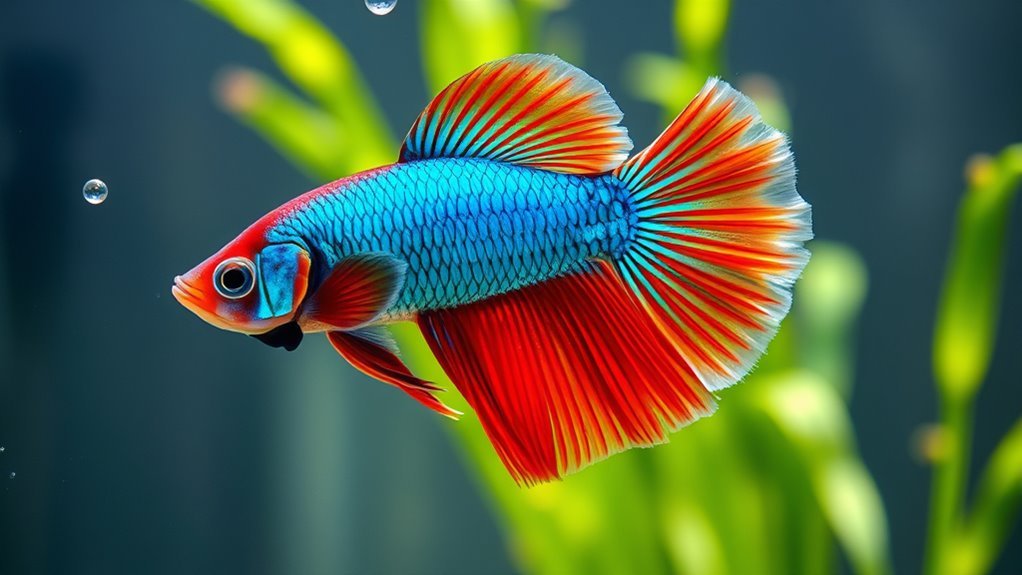
Why Is My Betta Fish Swimming Sideways?
If your betta fish is swimming sideways, it’s likely dealing with swim bladder issues that affect their balance and buoyancy. Swim bladder problems are a common reason for this unusual swimming behavior. Poor water quality, overfeeding, or internal infections can cause this behavior, along with stress from overcrowding or sudden changes.
Sometimes physical injuries or parasites disrupt their movement, too. Keeping the tank clean, feeding properly, and watching for signs of illness can help prevent it. There’s more to explore about why this happens and how to fix it.
Understanding Betta Fish Swim Bladder Disorder
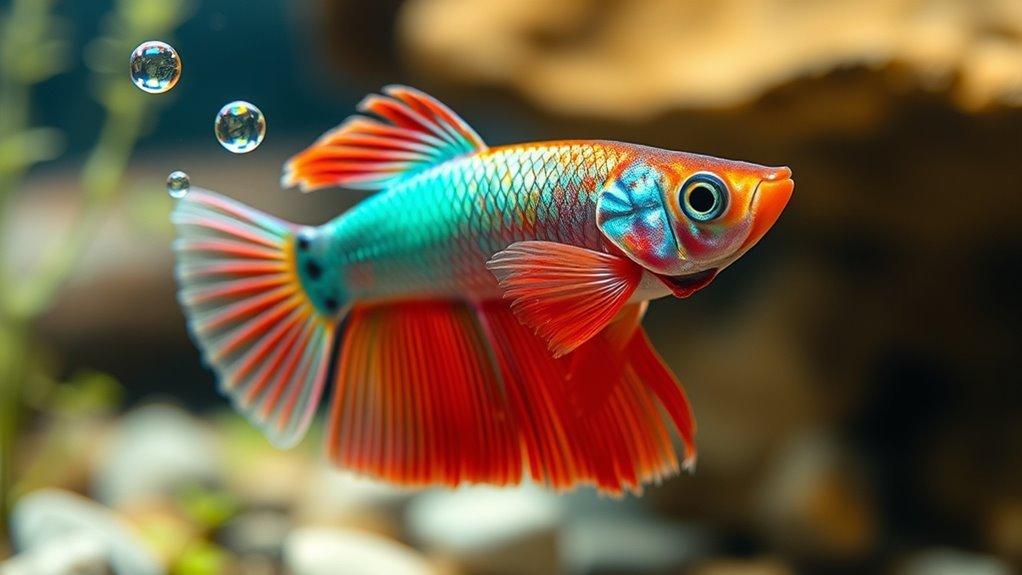
Although it might seem alarming when your betta fish starts swimming sideways, this behavior often points to swim bladder disorder. This condition affects the fish’s swim bladder, an internal organ that helps maintain buoyancy and balance.
When the swim bladder malfunctions, your betta can lose control over its orientation and struggle to swim normally. You might notice your fish floating on one side, tilting, or even sinking to the tank bottom.
Causes can include overfeeding, constipation, or bacterial infections. To help your betta, you’ll want to adjust its diet by offering smaller meals or feeding peas to relieve constipation.
Keeping a close eye on your fish’s behavior guarantees you catch swim bladder issues early and take quick action to restore its health.
Impact of Poor Water Quality on Betta Behavior
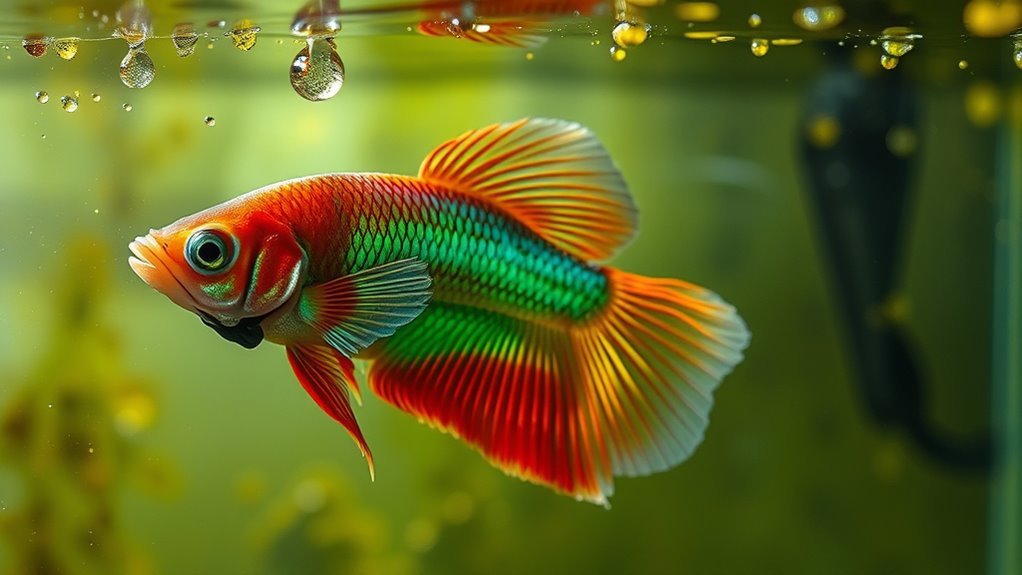
When you neglect regular tank maintenance, poor water quality can quickly disrupt your betta’s behavior. High levels of ammonia, nitrites, and nitrates stress your fish, leading to erratic swimming patterns like swimming sideways.
Dirty water reduces oxygen levels, making it hard for your betta to breathe properly, which affects balance and coordination.
Additionally, toxins build up and can irritate your betta’s sensitive fins and gills, causing discomfort and lethargy.
You might notice your betta struggling to maintain normal posture or swimming awkwardly due to these environmental stresses.
To prevent this, you need to test water parameters regularly and perform timely water changes, ensuring a clean, stable habitat that supports your betta’s health and natural behavior.
Effects of Overfeeding on Betta Fish Health
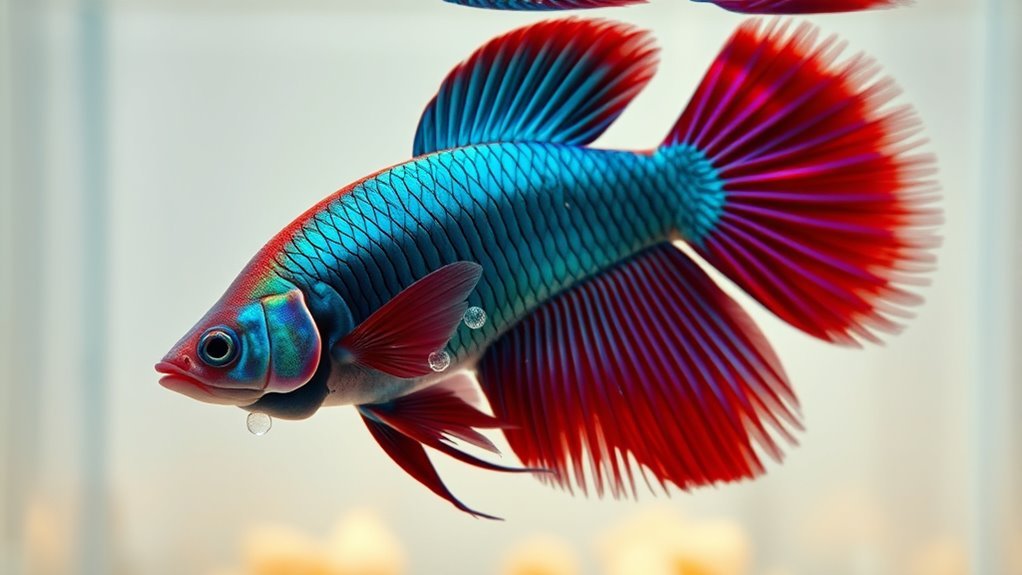
Because overfeeding disrupts your betta’s digestive system, it can quickly lead to health problems. When you feed your betta too much, uneaten food decays, polluting the water and stressing your fish.
Overfeeding can cause swim bladder issues, making your betta swim sideways or struggle to maintain balance. Excess food also leads to obesity, reducing your betta’s lifespan and overall health.
Watch for these effects of overfeeding:
- Bloated belly and difficulty swimming
- Cloudy water from decomposing food
- Increased waste production stressing filtration
- Lethargy or loss of appetite
To keep your betta healthy, feed small portions once or twice daily and remove uneaten food promptly. This helps maintain good water quality and prevents swim bladder problems linked to overfeeding.
Recognizing Signs of Internal Infections
If your betta starts showing unusual behavior or physical changes, you might be dealing with an internal infection. Watch for signs like loss of appetite, lethargy, or bloating, which often indicate that something’s off inside.
You may also notice your fish struggling to swim properly, sometimes tilting or floating oddly due to discomfort or internal swelling. Pale or discolored gills and a dull appearance can hint at infection as well.
Since internal infections aren’t always visible externally, pay close attention to shifts in behavior and physical condition. Early detection is vital for effective treatment, so if you spot these signs, consider consulting a vet or experienced aquarist to address the issue before it worsens.
How Stress Influences Betta Fish Swimming Patterns
Noticing changes in your betta’s swimming can signal more than just health issues like infections; it often reflects their stress levels. When stressed, bettas may swim erratically or sideways as a response to discomfort or anxiety.
Stress can disrupt their balance and coordination, making normal swimming difficult. Common stressors include poor water quality causing irritation and overcrowded tanks leading to territorial disputes.
Sudden changes in environment or lighting and inconsistent feeding schedules affecting their routine are also frequent causes of stress.
Role of Water Temperature in Betta Mobility
How does water temperature affect your betta’s swimming behavior? Betta fish are tropical creatures, thriving best in water between 76°F and 82°F.
When the water is too cold, their metabolism slows down, making them sluggish and causing unsteady swimming, which might look like sideways movement.
Conversely, water that’s too warm can overstimulate your betta, leading to hyperactivity or erratic swimming patterns. Maintaining the right temperature helps your betta swim smoothly and stay healthy.
You can use a reliable aquarium heater and thermometer to keep the water stable. Sudden temperature changes also stress your fish, which can affect mobility.
Identifying Physical Injuries in Betta Fish
Water temperature plays a significant role in your betta’s swimming behavior, but physical injuries can also cause unusual movements like swimming sideways.
If your betta has a physical injury, it might struggle to swim normally or balance itself.
To spot these injuries, keep an eye out for:
To spot these injuries, watch for torn fins, wounds, swelling, and unusual lumps on your betta.
- Torn or ragged fins indicating fin rot or bites
- Visible wounds or red, inflamed patches on the body
- Swollen or bloated areas suggesting internal injury or infection
- Unusual lumps or bumps that could be parasites or cysts
If you notice any of these signs, it’s essential to isolate your betta and begin treatment immediately.
Addressing injuries early can help your betta regain proper swimming control and avoid worsening symptoms.
Importance of Proper Tank Size and Setup
Although bettas are small fish, they need adequate space to swim and thrive, so choosing the right tank size is essential. A tank of at least 5 gallons gives your betta room to move freely, reducing stress and preventing swimming issues like drifting sideways.
You should also maintain stable water conditions with a heater and filter designed for bettas, as sudden changes can affect their balance.
Decorations and plants provide hiding spots and mental stimulation, but avoid overcrowding the tank, which can limit swimming space and cause injury.
Regularly clean the tank to prevent harmful buildup that impacts water quality.
Common Parasites That Affect Betta Fish Balance
When parasites invade your betta fish, they can disrupt its balance and cause it to swim sideways or erratically. These tiny invaders often attack the fish’s internal organs or nervous system, impairing its ability to swim properly.
Here are some common parasites that might be affecting your betta’s equilibrium:
- Ichthyophthirius multifiliis (Ich): Causes white spots and discomfort, leading to erratic swimming.
- Lernaea (Anchor Worm): Attaches to the fish’s body, causing irritation and imbalance.
- Gyrodactylus (Skin Flukes): Infests skin and fins, resulting in stress and swimming issues.
- Camallanus Worms: Internal parasites that can affect digestion and overall health, impacting movement.
Recognizing these parasites early can help you understand why your betta is swimming sideways.
Steps to Treat and Prevent Sideways Swimming in Bettas
If your betta is swimming sideways, you’ll want to act quickly to restore its health and balance.
First, check water quality by performing a partial water change and testing for ammonia, nitrites, and nitrates. Keep the tank clean and maintain a stable temperature between 76-82°F.
Next, observe your fish for signs of infection or parasites. If you spot any, treat with appropriate medications like antiparasitic or antibacterial treatments.
Avoid overfeeding and provide a balanced diet to support its immune system.
Quarantine new fish to prevent introducing diseases.
Finally, monitor your betta daily to catch early symptoms and ensure it’s swimming normally.
Frequently Asked Questions
Can Betta Fish Swim Sideways as a Normal Behavior?
No, betta fish don’t normally swim sideways. If you notice this behavior, it’s likely a sign of a health issue like swim bladder disorder.
You should check water quality and consider consulting a vet.
Do Male and Female Bettas Swim Sideways Differently?
Imagine two dancers, one male, one female, each with unique moves. Male and female bettas don’t swim sideways differently; if you see sideways swimming, it usually signals health issues, not gender-based behavior. Check water conditions promptly.
Is Sideways Swimming More Common in Young Bettas?
Sideways swimming isn’t more common in young bettas specifically. If your betta swims sideways, it could signal swim bladder issues or stress.
You should monitor their behavior and water conditions closely to keep them healthy.
Can Tank Decorations Cause Bettas to Swim Sideways?
Yes, tank decorations can cause your betta to swim sideways if they create strong currents or sharp edges that confuse or injure your fish.
Make sure decorations are smooth and positioned to avoid stress or imbalance in the water flow.
Does Lighting Affect How Bettas Swim in Their Tank?
Like a spotlight on a stage, lighting guides your betta’s movements. Yes, too bright or flickering lights can stress your fish, causing erratic swimming.
Adjust the lighting softly to keep your betta calm and graceful.
Conclusion
If your betta fish is swimming sideways, it’s basically throwing a wild underwater dance party you never signed up for! Don’t panic—this quirky behavior usually signals something’s off, like swim bladder issues, stress, or tank troubles.
You’ve got the power to fix it by tweaking water quality, feeding habits, and tank setup. Act fast, or your betta might start swimming like a drunken pirate forever—no one wants that chaos underwater!
In conclusion, understanding why your betta fish is swimming sideways is key to addressing swim bladder problems and improving its overall health. Proper care, including maintaining good water quality and a balanced diet, can help your betta return to normal swimming behavior quickly.