How to Lower Ph in Your Swimming Pool €“ Step by Step Guide
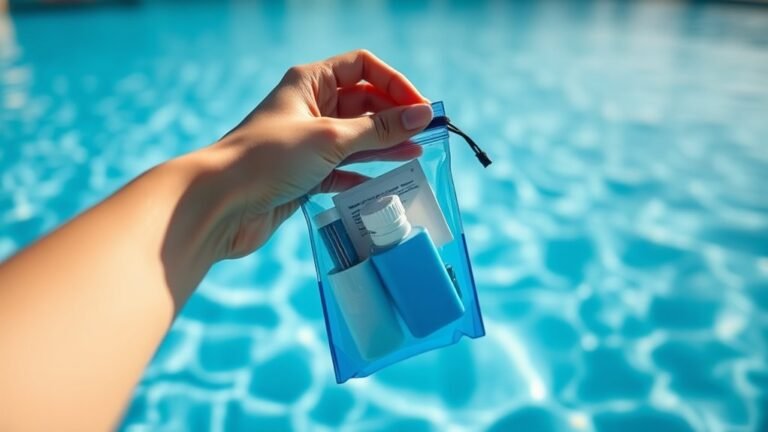
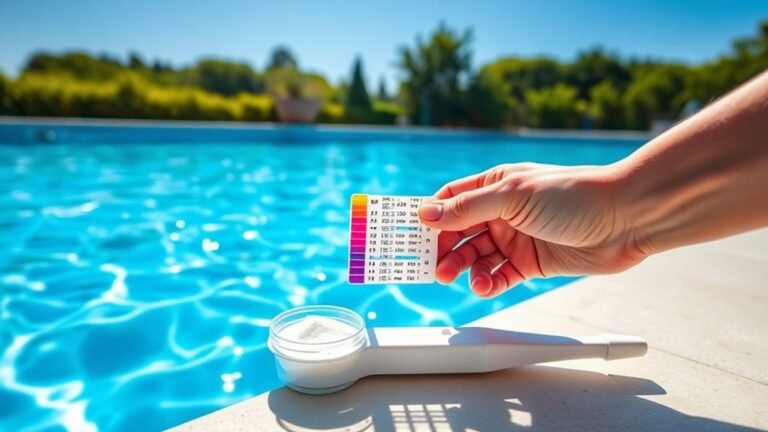
To lower the pH in your swimming pool effectively, start by testing the current pH level using a reliable testing kit. This step is crucial to understand how much adjustment is needed to maintain balanced water chemistry.
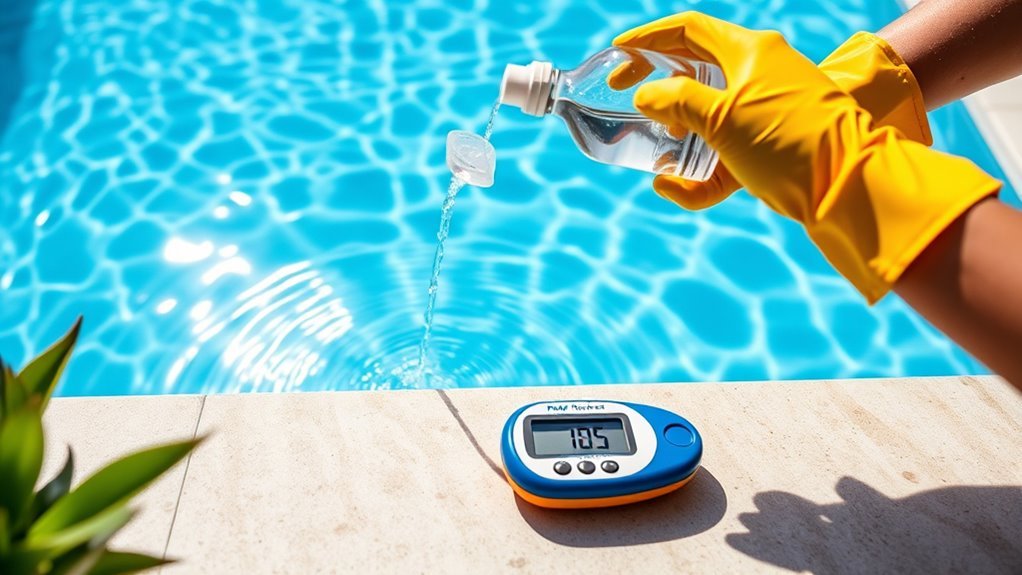
Choose between muriatic acid or sodium bisulfate, as both chemicals safely reduce pH levels. Be sure to wear gloves for protection during this process.
Add the acid slowly to the deep end of the pool while the pump is running. This ensures even distribution of the chemical throughout the water.
Wait about four hours before retesting the pH. Repeat the acid addition if necessary until the pH falls within the ideal range of 7.2 to 7.6.
Maintaining proper pH levels helps prevent skin and eye irritation and protects your pool equipment. Keeping your pool’s pH balanced is key to enjoying clean, safe swimming water.
Understanding Pool Ph and Its Importance
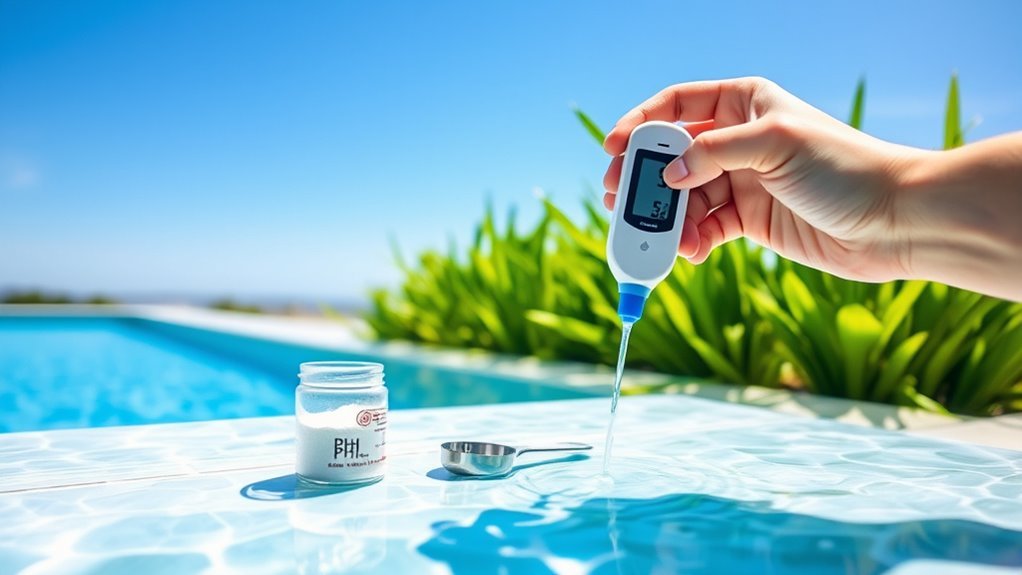
Why does pool pH matter so much? It directly affects your water’s balance, comfort, and safety. When the pH level is off, you might notice irritated eyes, itchy skin, or cloudy water.
Maintaining the right pH helps chlorine work efficiently, keeping your pool clean and free from harmful bacteria.
If the pH is too high, scale can build up on surfaces and equipment, causing damage over time.
On the other hand, low pH can corrode metal parts and damage pool liners.
Understanding pH means knowing it’s about balancing acidity and alkalinity, with a healthy range between 7.2 and 7.8.
Keeping your pool within this range ensures a safe, enjoyable swimming experience and protects your investment.
Testing Your Pool’s Ph Level
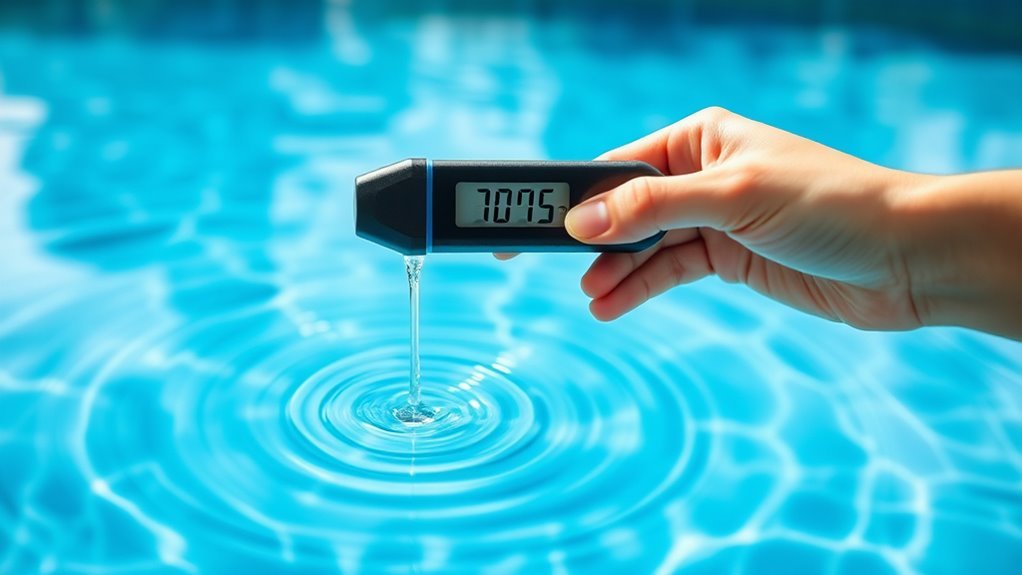
How often should you check your pool’s pH? Ideally, test it at least twice a week during the swimming season, or more frequently after heavy rain or heavy use. Consistent testing helps you catch pH imbalances early, preventing damage to your pool and discomfort for swimmers.
To test the pH, use a reliable test kit or digital pH meter. Collect a water sample from about elbow depth, away from jets or skimmers. Follow the instructions carefully to get an accurate reading.
Your pool’s pH should ideally be between 7.2 and 7.6.
If the reading falls outside this range, you’ll know it’s time to take action. Regular testing keeps your pool safe and comfortable all season long.
Choosing the Right Chemicals to Lower Ph
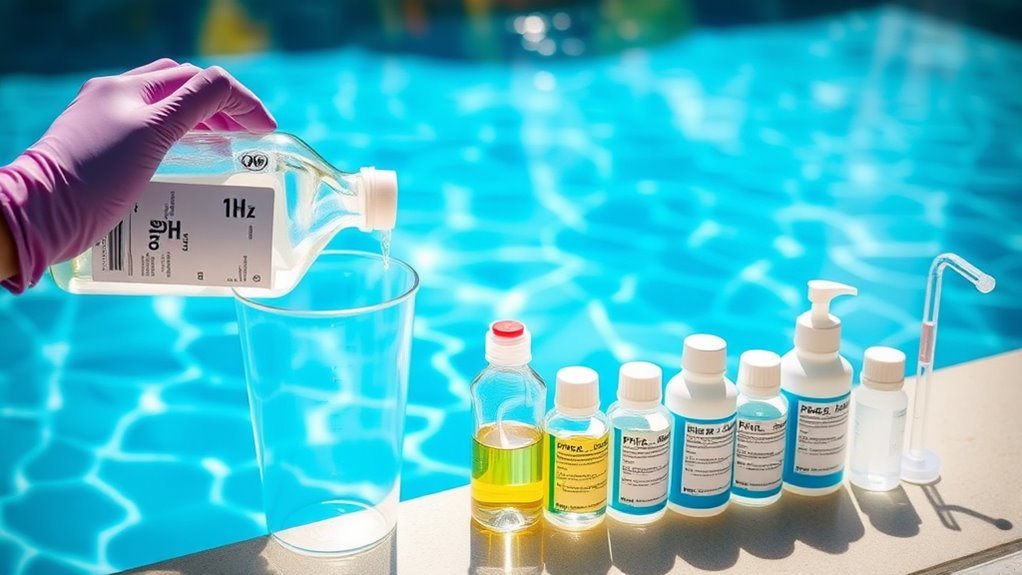
Once you’ve identified that your pool’s pH is too high, the next step is to select the right chemicals to bring it back into balance. The most common options are muriatic acid and sodium bisulfate, also known as dry acid.
Muriatic acid is a liquid and works quickly but requires careful handling due to its corrosive nature.
Sodium bisulfate is a safer, solid alternative that dissolves in water and lowers pH without the strong fumes.
Both effectively reduce pH, but your choice depends on convenience and safety preferences.
Avoid using household acids or unapproved chemicals, as they can damage your pool equipment or create unsafe conditions.
Always buy pool-grade products and ensure you follow manufacturer guidelines. This guarantees you get the right chemical strength for your pool size.
Step-By-Step Process to Adjust Ph Safely
Before you add any chemicals, you’ll want to test your pool’s current pH level accurately using a reliable test kit.
Once you know the pH, calculate the amount of acid needed based on your pool’s volume and the chemical’s instructions.
Determine the correct acid dosage by considering your pool’s size and following the product guidelines carefully.
Always wear protective gloves and eyewear before handling acids.
Slowly pour the acid into the deep end of the pool while the pump is running to help it disperse evenly.
Avoid adding all the acid at once; instead, add it in increments, retesting the pH after each application.
Wait at least 4 hours between adjustments to let the water circulate properly.
Once your pH reaches the ideal range of 7.2 to 7.6, stop adding chemicals.
This careful approach keeps your pool balanced and your swimming safe.
Tips for Maintaining Balanced Ph Levels
To keep your pool’s pH balanced, you’ll need to test the water regularly and adjust the chemicals as needed. Check the pH at least twice a week, especially after heavy use or rain.
Use pH increasers or decreasers to maintain levels between 7.2 and 7.6. Also, keep an eye on alkalinity since it affects pH stability. Proper circulation and filtration help distribute chemicals evenly.
| Task | Frequency | Recommended pH Range |
|---|---|---|
| Test pH | 2 times per week | 7.2 – 7.6 |
| Adjust chemicals | As needed | |
| Check alkalinity | Weekly | 80 – 120 ppm |
Frequently Asked Questions
Can Low Ph Damage Pool Equipment?
Yes, low pH can damage your pool equipment by causing corrosion on metal parts and degrading liners or plaster.
You’ll want to keep pH balanced to safeguard your investment and ensure everything runs smoothly.
How Often Should I Test Ph During Summer?
When it comes to pool care, don’t let things slip through the cracks—you should test your pH at least twice a week during summer.
If heavy use or rain occurs, check more often to keep water balanced and safe.
Are Natural Alternatives Effective for Lowering Ph?
Natural alternatives can work, but they’re usually less effective and slower than chemicals.
If you want reliable, quick pH adjustments, you’ll likely need traditional pool acids like muriatic acid or sodium bisulfate for best results.
What Ph Level Is Safest for Swimmers?
You want to keep your pool’s pH between 7.2 and 7.8—that’s the sweet spot where swimmers stay safe and comfortable.
Too high or low, and irritation or equipment damage could sneak up on you quickly.
Can Weather Affect My Pool’s Ph Levels?
Yes, weather can affect your pool’s pH levels. Rain can dilute chemicals, raising pH, while heat increases evaporation and chemical concentration, lowering pH.
You’ll need to test and adjust regularly to keep your pool balanced.
Conclusion
Now that you’ve mastered how to lower your pool’s pH, you’re ready to plunge into crystal-clear water like it’s a summer day in the 1950s. Keep testing regularly, choose your chemicals carefully, and follow the steps safely to maintain that perfect balance.
With just a little effort, your pool will stay inviting and comfortable all season long. Regular pH testing and proper chemical use are key to keeping your swimming pool water clean and balanced.
So grab your goggles and enjoy swimming in a perfectly balanced oasis, knowing you’ve successfully managed your pool’s pH for optimal water quality and swimmer comfort!