
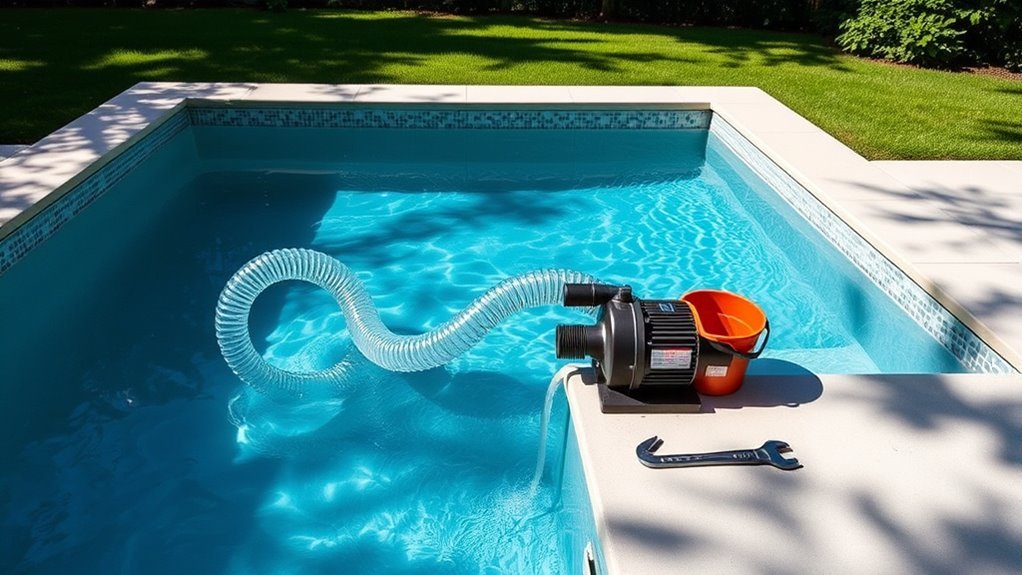
How to Empty a Swimming Pool in 10 Easy Steps
To empty your swimming pool in 10 easy steps, start by checking local rules and permits to ensure compliance. Then, turn off all pool equipment and power to avoid any electrical hazards. Remove accessories and clean debris from the pool to prepare for draining.
Next, choose a drainage method like a pump or gravity drain, and set it up properly for efficient water removal. Monitor water levels and equipment closely during the draining process to prevent any issues.
After the pool is empty, clean and store your pump carefully. Inspect the pool for any damage that might need repair. Finally, prepare the pool for refilling or storage to keep it in good condition.
Keep going to discover detailed tips for each step.
Check Local Regulations and Obtain Necessary Permits
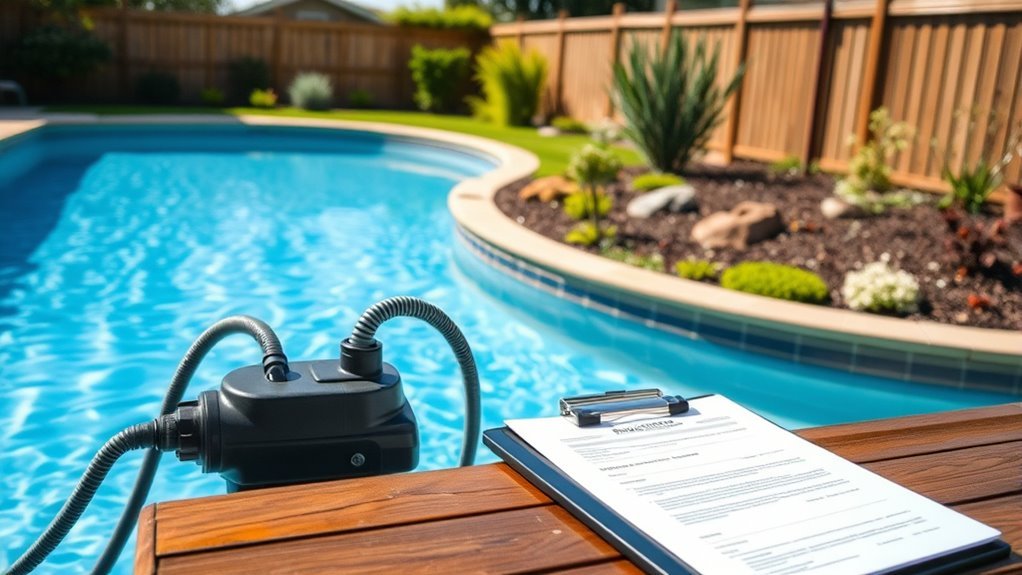
Before you begin draining your pool, check local regulations and obtain any necessary permits to avoid fines or legal issues. Different areas have specific rules about how and where you can discharge pool water.
Always check local rules and get permits before draining your pool to avoid fines or legal trouble.
Some municipalities restrict draining to the sewer system, while others allow it to go into storm drains or your yard. You might need a permit to guarantee your drainage won’t harm the environment or overload local sewer lines.
Contact your city or county’s water management department to understand the requirements. Also, check if there are timing restrictions, like avoiding peak water usage hours.
Doing this homework upfront saves you from costly penalties and protects your neighborhood’s water quality. Always follow official guidelines to drain your pool responsibly and legally.
Turn Off Pool Equipment and Power Supply
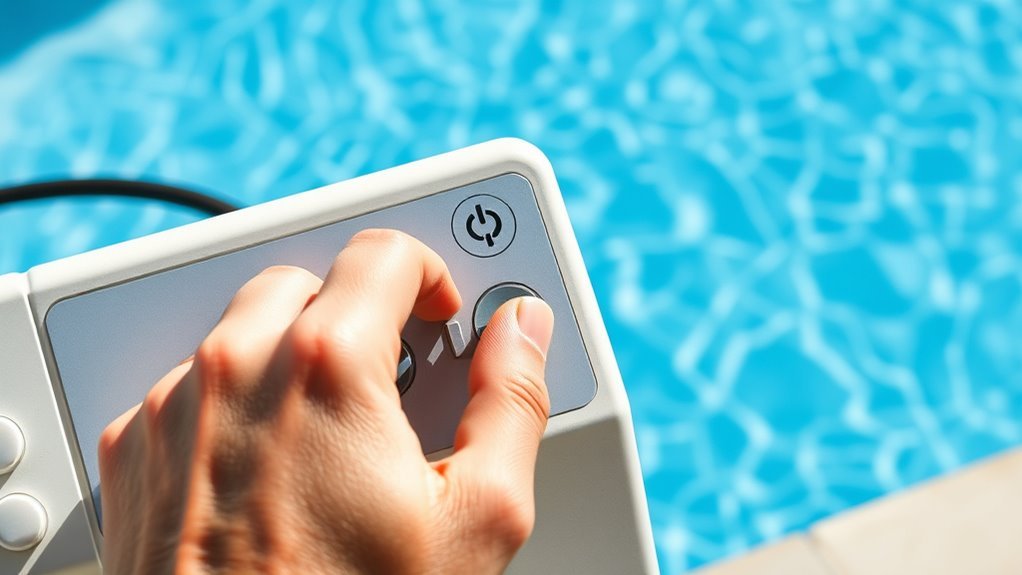
Once you’ve sorted out the permits and local rules, the next step is to turn off your pool equipment and power supply. Start by switching off the pool pump and any connected filtration systems to prevent damage while draining.
Locate the circuit breaker dedicated to your pool’s electrical system and flip it to the off position to cut power completely. This guarantees safety and protects your equipment from electrical hazards during the emptying process.
Don’t forget to unplug any additional devices like heaters or automatic cleaners. Taking these precautions is vital before you begin draining to avoid accidents and equipment malfunctions.
Once everything is powered down, you’re ready to proceed with emptying the pool safely and effectively.
Remove Pool Accessories and Clean the Pool
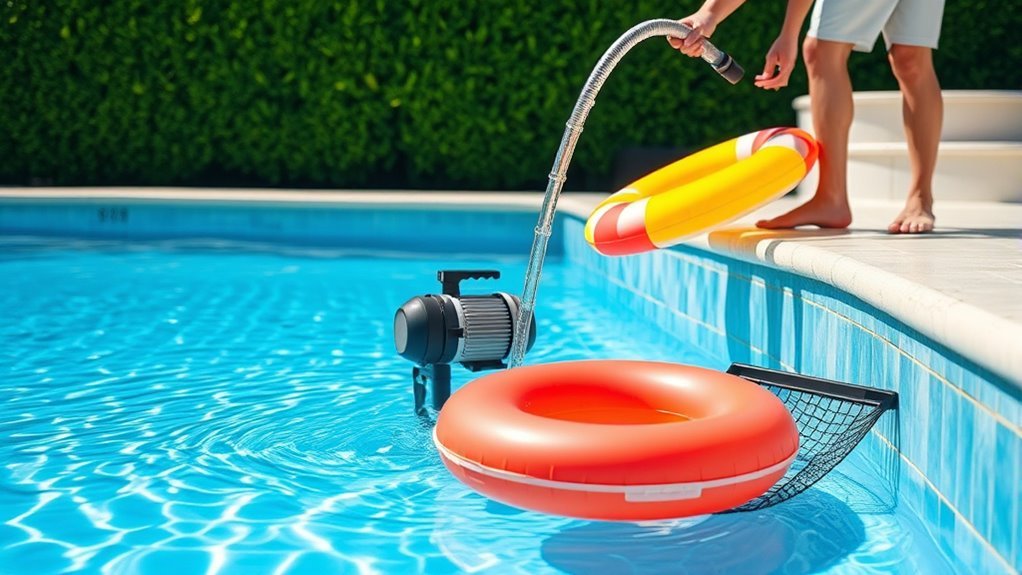
As you prepare to empty your pool, start by removing all accessories such as ladders, diving boards, and pool covers to prevent damage and make cleaning easier. Next, clear out leaves, debris, and any dirt from the pool floor and walls using a pool brush or vacuum. This step guarantees no residue remains that could cause staining or damage during the emptying process.
| Accessory | Cleaning Tip |
|---|---|
| Ladders | Wipe with mild detergent |
| Diving Boards | Rinse and dry thoroughly |
| Pool Covers | Shake off debris, air dry |
| Pool Brushes | Rinse after use |
| Vacuum | Check for clogs |
Taking these steps helps maintain your pool’s condition and prepares it for safe emptying.
Choose the Best Drainage Method
After removing accessories and cleaning your pool, the next step is deciding how to drain the water efficiently. You’ll want to contemplate several factors: the pool size, local regulations, and available drainage options.
Once your pool is cleaned, carefully consider size, local rules, and drainage methods before draining the water.
If your pool is small, draining the water into your yard might be fine. But for larger pools, you’ll need a method that handles volume safely without causing erosion or flooding. Check local rules to ensure you dispose of water properly, especially if it contains chemicals.
You might choose between gravity drains, siphoning, or pumps, depending on your setup and convenience. Also, ensure the drainage spot can handle the water flow.
Taking time now to pick the best method will save you headaches and protect your property.
Set Up a Submersible Pump or Use the Pool’s Drain
When you’re ready to start draining, setting up a submersible pump or utilizing your pool’s built-in drain provides the most effective way to remove water quickly.
If you choose a submersible pump, place it at the pool’s lowest point to maximize water removal. Make sure the pump is fully submerged and securely connected to a power source. Turn it on and monitor regularly to prevent overheating or clogging.
Alternatively, if your pool has a built-in drain, open the valve to let gravity do the work. Keep an eye on the flow rate and ensure the valve is fully open for ideal drainage.
Both methods save time and effort compared to manual methods, letting you empty the pool with minimal hassle.
Connect Hose to Direct Water Safely Away
Once your pump or drain is running, connect a hose to the outlet to guide the water away from your pool area. Make sure the hose is long enough to reach a safe drainage spot, like a garden or storm drain, avoiding your foundation or neighbors’ property.
Secure the hose tightly to prevent leaks or disconnection. Position the end on a slope or lower ground for smooth water flow.
| Step | Tip | Caution |
|---|---|---|
| Attach Hose | Use a hose clamp for security | Avoid loose connections |
| Choose Location | Pick downhill drainage points | Don’t flood nearby areas |
| Check Length | Ensure hose reaches safely | Hose too short causes backup |
| Position End | Keep hose end visible | Don’t block walkways |
Monitor Water Levels and Pump Operation
As you drain the pool, keep a close eye on the water levels and your pump’s operation to guarantee everything runs smoothly and safely. Regularly check the water level to ensure it doesn’t drop too low, which can cause your pump to run dry and overheat.
If the water level approaches the pump intake, pause draining and wait for it to stabilize.
Monitor the pump’s sound and vibration; any unusual noise may signal a problem like clogging or mechanical issues.
Also, inspect connections and hoses frequently for leaks or kinks that could reduce efficiency.
Staying attentive allows you to catch and fix issues early, preventing damage and ensuring the draining process finishes without interruptions or safety hazards.
Clean and Store Pump After Use
After you finish draining your pool, it’s crucial to clean and store the pump properly to maintain its performance and extend its lifespan. First, unplug the pump and disconnect it from hoses. Next, drain any remaining water inside the pump to prevent rust or damage. Then, clean the pump’s exterior and filter basket to remove debris and buildup.
Follow these steps to store your pump safely:
- Store the pump in a dry, shaded area to avoid exposure to sunlight and moisture.
- Cover the pump with a breathable cloth to keep dust and dirt away.
- Inspect and lubricate O-rings or seals to ensure they stay flexible.
Proper care now saves you time and money later.
Inspect Pool for Damage or Repairs Needed
Before refilling your pool, you’ll want to carefully inspect it for any damage or repairs that may be needed. Walk around the pool’s perimeter and look for cracks, chips, or loose tiles.
Check the pool walls and floor for any signs of wear or damage that might worsen once water pressure returns. Don’t forget to examine the pool’s plumbing, including pipes, drains, and skimmers, for leaks or blockages.
Inspect the pool’s coping and deck for cracks or uneven surfaces that could cause safety issues. Catching these problems now saves you from costly repairs later.
If you spot any damage, make a note and plan for repairs before adding water back in. This proactive approach helps protect your pool’s longevity and your safety.
Prepare the Pool for Refilling or Long-Term Storage
Once you’ve identified and addressed any damage, you can focus on preparing the pool for refilling or long-term storage. Whether you plan to use it soon or leave it empty, proper steps will safeguard your investment.
- Clean Thoroughly: Remove debris, scrub the walls, and ensure the pool surface is free from algae or stains to prevent buildup.
- Check Equipment: Inspect and service pumps, filters, and heaters. For long-term storage, drain and store equipment indoors to avoid damage.
- Balance Chemicals: If refilling soon, adjust pH and sanitizer levels. For storage, add a winterizing chemical kit to prevent algae and corrosion.
Frequently Asked Questions
Can I Use Pool Water for My Garden Irrigation?
Yes, you can use pool water for your garden irrigation, but you should check its chemical levels first. Dilute it if necessary to avoid harming plants, especially if it contains chlorine or other strong chemicals.
Make sure to test the water regularly to monitor any changes in its composition. Using pool water repeatedly without proper treatment can lead to soil and plant damage.
If possible, let the pool water sit uncovered for a few days to allow chlorine to dissipate before using it for irrigation. This helps reduce the risk of chemical harm to your garden.
How Often Should a Pool Be Drained Completely?
Generally, you shouldn’t drain your pool completely more than once every 3-5 years. Doing so too often can damage surfaces, disrupt chemicals, and stress the structure.
Stay savvy, and spot signs before draining drastically.
What Are the Environmental Impacts of Draining a Pool?
You risk harming local plants and wildlife by draining pool water containing chemicals. It can also cause erosion and water waste. Always drain responsibly, following local regulations, and consider recycling the water for irrigation or cleaning.
Can Algae Grow Faster After Draining a Pool?
Yes, algae can grow faster after draining your pool because stagnant water and exposed surfaces promote algae spores to settle and multiply.
To prevent this, clean thoroughly and maintain proper chemical balance before refilling.
Is It Safe to Drain a Pool During Winter?
Draining your pool in winter is like letting a sleeping dragon stir—it’s risky. You shouldn’t do it because freezing temperatures can crack the structure.
Instead, keep water levels balanced to protect your pool’s health all season.
Conclusion
Emptying your pool is like clearing a canvas, giving you a fresh start to create something new. By following these simple steps, you’re not just draining water—you’re making space for future fun, repairs, or peaceful rest.
Remember, every drop you remove brings you closer to renewal. So, take your time and respect the process.
Soon, your pool will be ready to splash back to life or rest until the next season calls. Proper pool maintenance and timely emptying are key to ensuring a clean and safe swimming environment.