How to Breathe While Swimming for Beginners
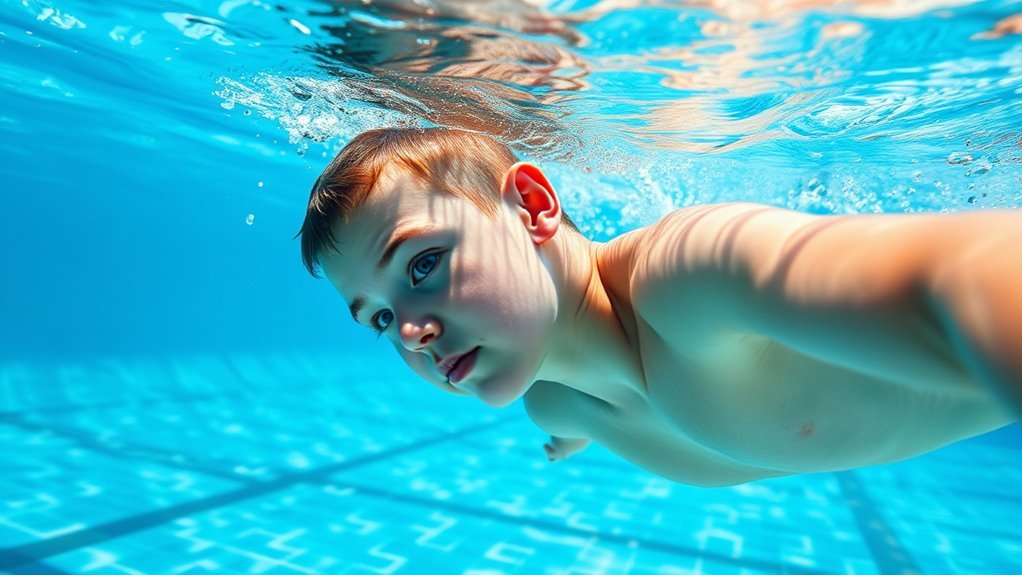
To breathe well while swimming, especially for beginners, it is important to learn the correct technique. Turn your head sideways as your arm pulls through the water and inhale quickly through your mouth. Keep one ear underwater and exhale fully and steadily through your nose or mouth before your next breath.
Breathe every 2-3 strokes to maintain rhythm and avoid lifting your head too high. Staying relaxed and consistent helps prevent fatigue and keeps your stroke smooth. With practice, you’ll find it easier and more natural to breathe efficiently in the water.
Understanding the Importance of Breathing in Swimming
Although breathing might seem simple, it plays an essential role in swimming performance and endurance. When you swim, your body demands a steady oxygen supply to fuel your muscles and maintain energy.
Without proper breathing, you risk fatigue, cramps, and decreased efficiency.
Improper breathing leads to fatigue, muscle cramps, and reduced swimming efficiency.
You need to coordinate your breath with your movements to avoid disrupting your stroke rhythm. Controlled breathing helps you stay relaxed, reducing tension and conserving energy.
It also improves your focus, allowing you to maintain a consistent pace.
If you neglect breathing techniques, you’ll tire quickly and struggle to keep up your momentum.
When to Breathe During Your Stroke
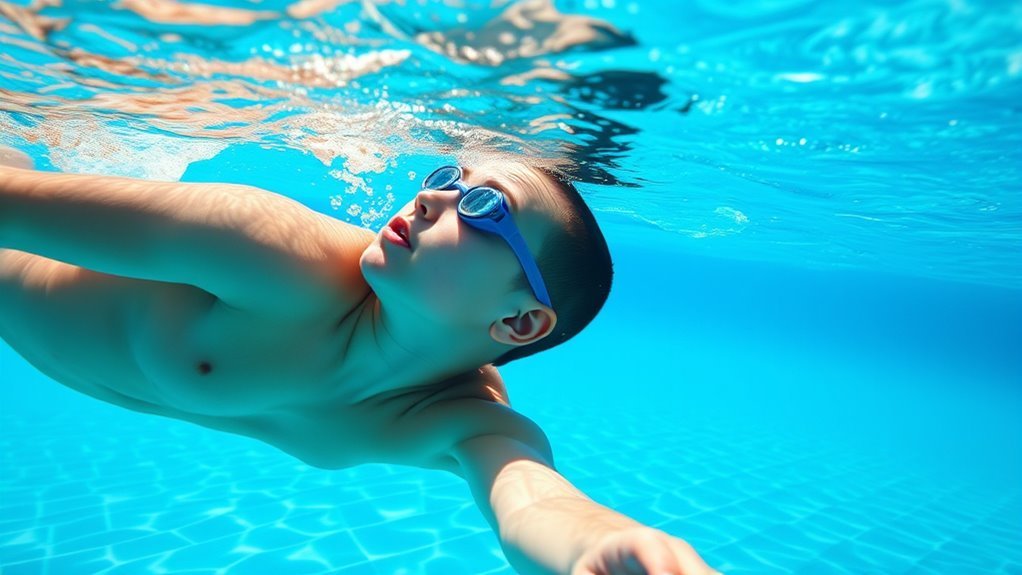
Knowing when to breathe during your stroke is key to maintaining rhythm and efficiency in the water. You should time your breath with your arm movements. Typically, you inhale as one arm pulls through the water and turn your head to the side.
Avoid lifting your head too high, as this can disrupt your body position and slow you down. Exhale continuously underwater, so you’re ready to take a quick, smooth breath when you turn your head.
Breathing every two or three strokes helps keep a steady pace and prevents fatigue. Remember, consistent timing lets you stay relaxed and conserve energy.
Practice this timing regularly, and you’ll find your swimming becomes more fluid and enjoyable.
Mastering the Side Breath Technique
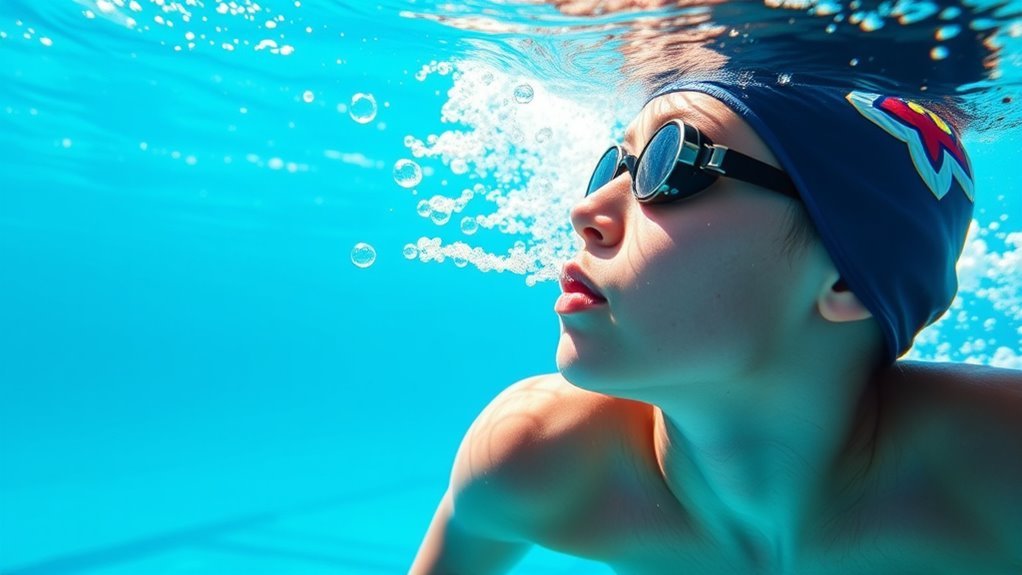
Timing your breath with your stroke sets the foundation, but mastering the side breath technique will help you breathe smoothly without interrupting your momentum. Turn your head just enough to inhale through your mouth while keeping one ear in the water. This minimizes drag and keeps your body aligned.
Exhale steadily underwater through your nose or mouth before your next breath.
| Step | Action |
|---|---|
| 1. Head Rotation | Turn head sideways, not upward |
| 2. Mouth Position | Inhale quickly through mouth |
| 3. Ear Placement | Keep one ear submerged |
| 4. Body Alignment | Maintain streamlined position |
| 5. Exhale Timing | Exhale fully underwater |
Practice this to make breathing seamless and natural during your swim.
Practicing Rhythmic Breathing Patterns
Once you get comfortable with the side breath technique, you’ll want to develop a consistent breathing rhythm that matches your stroke pattern. Start by breathing every two or three strokes, depending on your comfort and stamina.
This steady rhythm helps you maintain balance and conserve energy. Practice this rhythm slowly at first, focusing on timing your breath just as your head turns to the side. Use a metronome or count strokes to keep your breathing regular.
As you get more confident, increase your pace while maintaining the same breathing pattern. Remember, consistent rhythm reduces fatigue and improves your overall swim efficiency.
Keep practicing rhythmic breathing regularly, and it will soon become second nature during your swim sessions.
How to Exhale Underwater Effectively
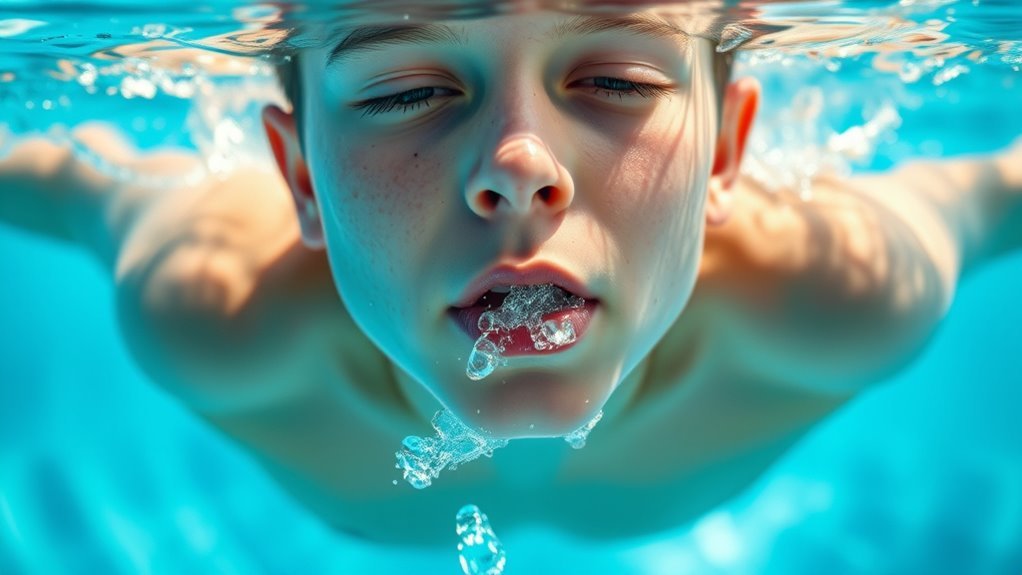
Although it might seem simple, exhaling underwater takes practice to master. You need to release air steadily through your nose or mouth while submerged, preventing air from trapping in your lungs.
Start by blowing bubbles gently; this helps maintain a consistent flow of air and avoids holding your breath, which makes swimming harder. Focus on controlled, continuous exhalation rather than quick bursts.
This technique ensures you empty enough air before turning your head to inhale, keeping your breathing smooth and efficient.
Practice exhaling while stationary, then progress to doing it during your stroke.
Over time, this will become natural, helping you maintain rhythm and avoid fatigue, essential skills for comfortable and effective swimming.
Tips for Relaxed and Controlled Breathing
When you stay calm and focused, your breathing becomes more relaxed and controlled in the water. To improve your breathing technique, try these tips:
- Maintain a steady rhythm: Coordinate your breath with your strokes to avoid rushing.
- Exhale fully underwater: Let out all the air smoothly to prepare for a quick, deep inhale.
- Keep your head low: Turn your head just enough to breathe, minimizing disruption to your body position.
- Practice rhythmic breathing: Use bilateral breathing (every three strokes) to balance oxygen intake and keep your stroke even.
Common Breathing Mistakes to Avoid
Mastering relaxed and controlled breathing sets a solid foundation, but it’s just as important to recognize common mistakes that can disrupt your rhythm and tire you out quickly.
First, avoid holding your breath underwater; it creates tension and reduces oxygen flow, making you feel fatigued faster.
Don’t lift your head too high to breathe. That breaks your streamlined position and slows you down.
Also, try not to breathe too frequently or irregularly; sticking to a consistent pattern helps maintain steady oxygen levels.
Finally, avoid shallow breaths; take full, deep inhales to maximize oxygen intake.
Drills and Exercises to Improve Your Breathing Skills
To improve your breathing skills, you need to practice specific drills that focus on timing, control, and relaxation. These exercises help you develop consistency and comfort while swimming.
Master breathing in swimming through drills that emphasize timing, control, and relaxation for greater comfort and consistency.
Try these four effective drills:
- Side Kicking Drill: Swim on your side, kicking steadily, and breathe every three kicks to build rhythm.
- Bubble Exhale Drill: Submerge your face and exhale slowly through your nose or mouth, focusing on smooth, continuous bubbles.
- Catch-Up Drill: Swim freestyle but pause one arm in front until the other “catches up,” allowing you to focus on your breath timing.
- Breath Control Drill: Swim several strokes, then hold your breath for a count, gradually increasing as you get comfortable.
Consistently practicing these drills will make breathing second nature in the water.
Frequently Asked Questions
What Type of Swimwear Is Best for Beginners Focusing on Breathing?
You’ll want a snug, streamlined swimsuit that won’t restrict your movement or cause drag. Opt for a simple one-piece or swim trunks made from lightweight, quick-drying material.
This will help you focus on controlled breathing and smooth strokes. Choosing the right swimwear can make a big difference in your comfort and performance as a beginner.
How Does Pool Temperature Affect Breathing While Swimming?
Cold pool water can make you gasp and disrupt your breathing rhythm, while warmer water helps you relax and breathe more smoothly.
You’ll find it easier to maintain steady breaths when the pool’s comfortably warm.
Can Breathing Techniques Improve My Overall Swimming Speed?
Yes, mastering breathing techniques can boost your swimming speed by improving oxygen efficiency and reducing fatigue.
When you control your breath, you swim smoother and stronger, letting you maintain a faster pace for longer periods.
What Equipment Can Help Beginners Practice Breathing?
Think of a snorkel as your breathing buddy, helping you glide like a dolphin without lifting your head.
Swim paddles and kickboards also support your rhythm, making it easier for you to focus on steady, confident breaths underwater.
How Does Altitude Impact Breathing in Swimming?
At higher altitudes, you’ll have less oxygen available, making breathing harder while swimming. You’ll need to take slower, deeper breaths and build your lung capacity gradually to adjust and maintain your stamina in thinner air.
Conclusion
As you learn to breathe while swimming, you’ll find your strokes smoother and your confidence growing—sometimes, the very moment you master a side breath is when everything else clicks.
By practicing rhythmic breathing and exhaling underwater, you’ll stay relaxed and in control, turning what once felt difficult into second nature.
Remember, every breath you take in the water is not just about survival—it’s your key to swimming stronger and enjoying every stroke.
Mastering how to breathe while swimming for beginners is essential for improving technique and building endurance in the pool.