
How to Put a Three-Month-Old in a Swimming Pool Safely
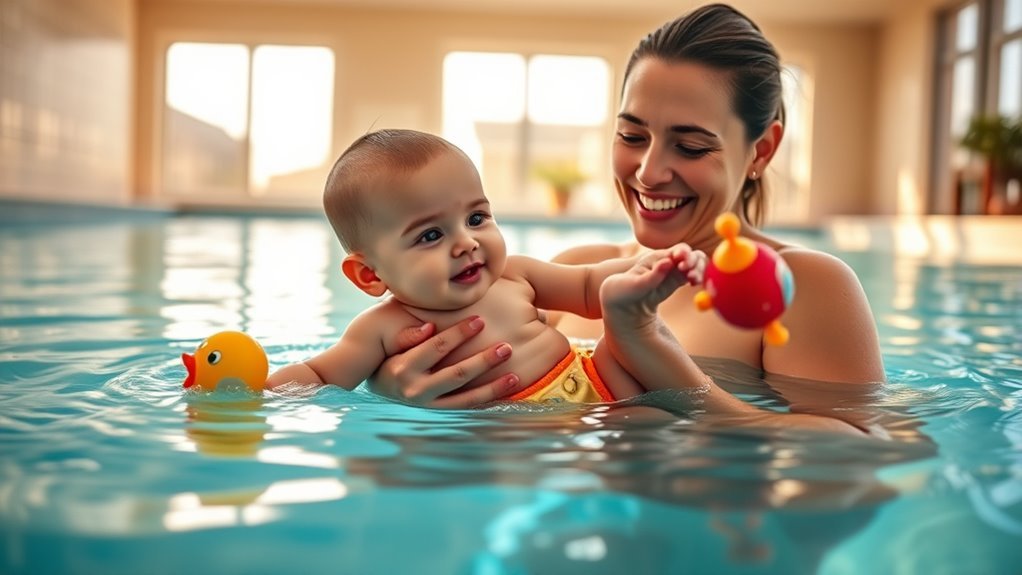
To safely put your three-month-old in a swimming pool, start by gently introducing water during bath time to build comfort. Choosing a clean pool with warm water, around 85°F, is essential for your baby’s safety and enjoyment. Make sure the pool is well-maintained to prevent any health risks.
Dress your baby in a snug swim diaper and keep swimming sessions short to prevent chills. Always hold your baby securely and watch for any signs of discomfort. Staying calm and relaxed helps build trust and ensures a positive first swimming experience.
Taking these steps will help your little one enjoy their first swim safely. There’s more to explore to make it a great experience, so continue learning about infant swimming safety and techniques.
Preparing Your Baby for Their First Swim
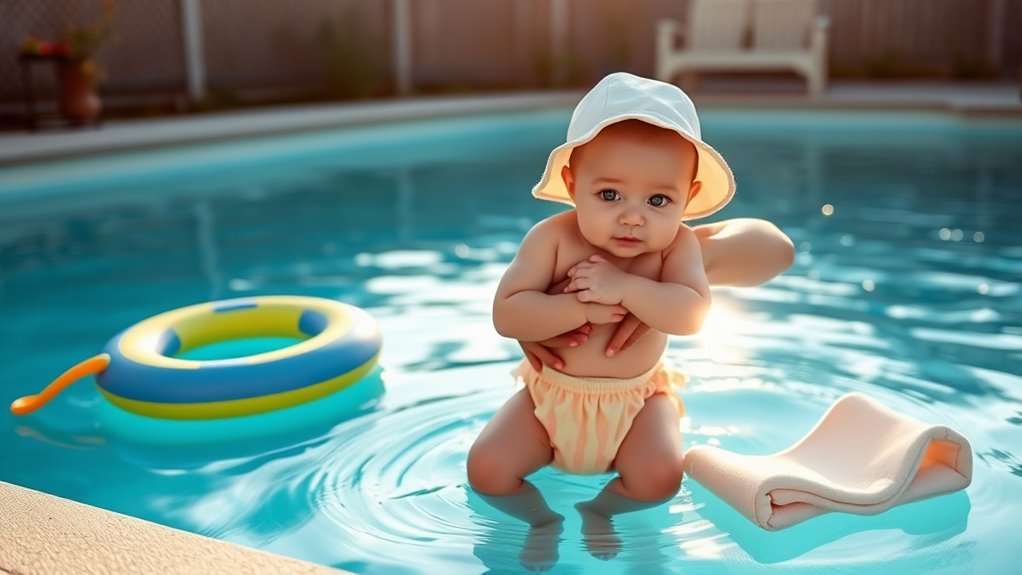
Before you introduce your three-month-old to the pool, make sure they’re comfortable with water by gently splashing their hands and feet during bath time. This helps your baby get used to the sensation without feeling overwhelmed.
Next, talk or sing to them softly to create a calm, reassuring atmosphere. Dress your baby in a snug swim diaper designed for infants, ensuring it fits properly to avoid leaks.
Keep your initial pool sessions short, just a few minutes, to prevent your baby from getting cold or tired. Always hold your baby securely and maintain eye contact to build trust and confidence.
Choosing a Safe and Clean Pool Environment
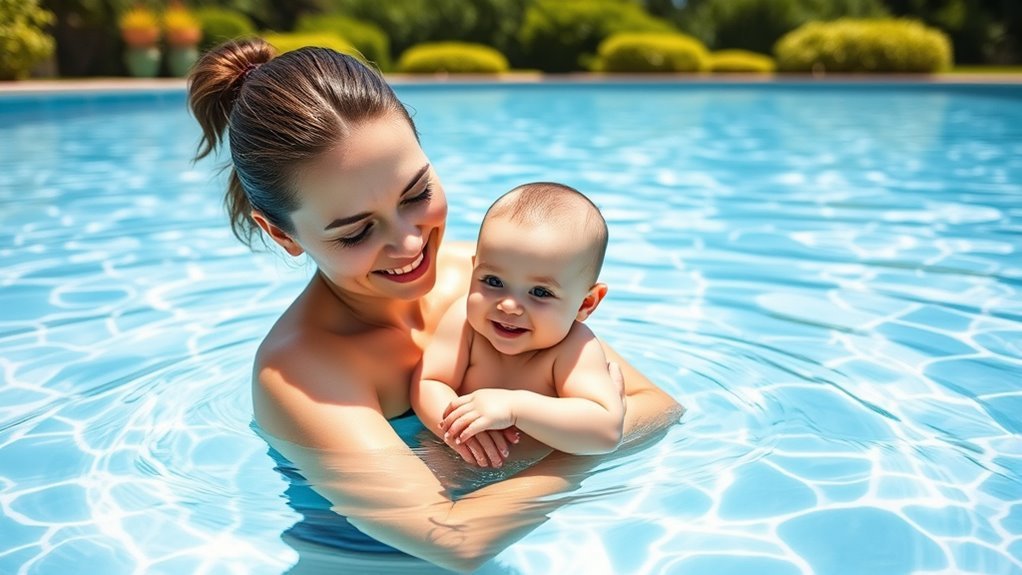
When selecting a pool for your three-month-old’s swim, you’ll want to make sure it’s both safe and clean to protect their delicate health. Choose a pool with clear water and well-maintained filtration systems to minimize harmful bacteria and contaminants.
Select a clean, clear pool with good filtration to ensure your infant’s health and safety.
Avoid pools that smell strongly of chlorine or show visible dirt or algae. Check that the pool area has secure fencing and non-slip surfaces to prevent accidents.
If you’re using a public pool, visit during off-peak hours to reduce exposure to crowds and germs.
Finally, confirm the water temperature is warm enough, around 85°F, to keep your baby comfortable and prevent chills.
Taking these steps ensures a safe, hygienic environment that supports your infant’s first swimming experience with confidence.
Essential Swimming Gear for Infants
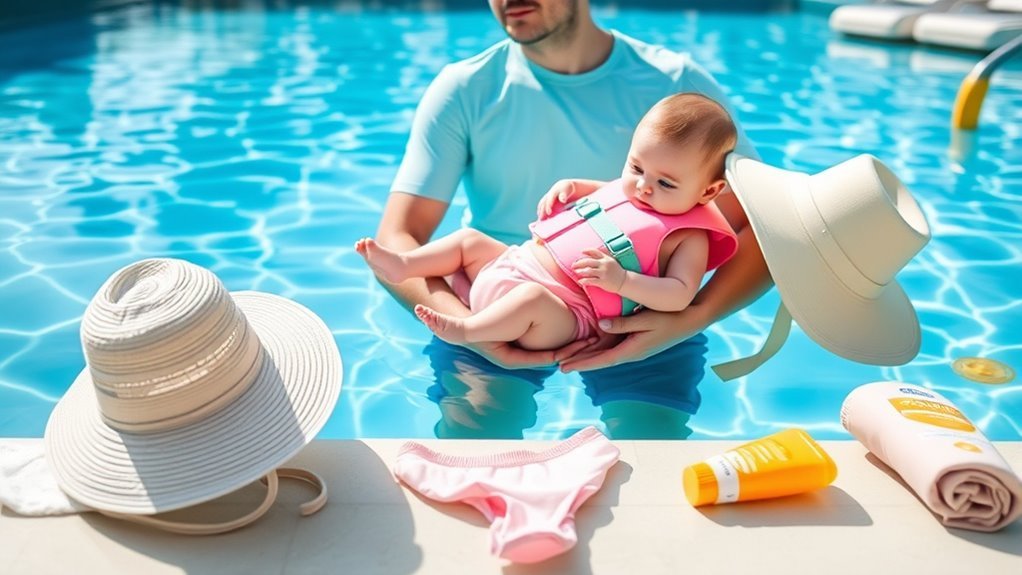
Ensuring your baby’s comfort and safety in the pool goes beyond picking the right environment—you’ll also need the proper swimming gear. Start with a well-fitted swim diaper to prevent any accidents in the pool.
Choose a baby swimsuit that offers UV protection and dries quickly to keep your infant warm and shielded from the sun.
A snug, infant-sized swim cap can help retain warmth, especially if the pool is cooler.
Consider a flotation device designed specifically for infants, but never rely on it alone for safety. Always stay within arm’s reach.
Finally, bring a soft, hooded towel to wrap your baby immediately after swimming, helping maintain body temperature and comfort.
Having these essentials ready ensures a safer, more enjoyable pool experience for your little one.
Monitoring Your Baby’s Comfort and Reactions
Monitoring Your Baby’s Comfort and Reactions
Although your baby may seem enthusiastic to explore the water, you need to watch closely for any signs of discomfort or distress. Your little one can’t tell you how they feel, so you have to be their voice.
Babies can’t express discomfort, so closely watch for signs they’re uneasy or distressed in the water.
Here’s how to monitor your baby’s comfort and reactions effectively:
- Observe facial expressions: Look for furrowed brows, crying, or grimacing, which may signal discomfort or cold.
- Notice body language: Tense muscles, stiff limbs, or squirming can indicate your baby isn’t relaxed or enjoying the experience.
- Watch breathing and sounds: Rapid breathing, gasping, or unusual noises might mean your baby feels overwhelmed or scared.
Step-by-Step Guide to Introducing Your Baby to Water
Before you place your baby in the water, take deliberate steps to make the introduction smooth and enjoyable for both of you. Start by holding your baby close on the pool’s edge, letting their feet touch the water gently. Speak softly and maintain eye contact to reassure them.
Next, slowly lower your baby into the water, supporting their head and neck securely. Keep your movements calm and steady. Allow your baby to get accustomed to the sensation by gently moving them around in the water for a minute or two.
Always watch their expressions and reactions closely. If they seem comfortable, you can gradually increase the time spent in the water. Remember to keep the experience positive, ensuring your baby feels safe and loved throughout.
Important Safety Precautions to Follow
Because your baby’s safety is the top priority, you need to follow specific precautions when introducing them to the pool. First, never leave your baby unattended, even for a second. Always keep your hands on them, ensuring constant supervision.
Always keep your baby within arm’s reach during pool time to ensure their safety at all times.
Second, check the water temperature. It should be warm, around 85°F (29°C), to prevent your baby from getting cold.
Third, limit the time in the water to just 5-10 minutes to avoid overexposure and fatigue.
Additionally, avoid crowded pools to reduce noise and distractions, and make sure the pool water is clean and well-maintained.
Post-Swim Care and Hygiene for Your Baby
Once your baby’s swim time ends, you’ll want to focus on proper post-swim care to keep their skin and health in check. Start by gently rinsing your baby with fresh, lukewarm water to remove chlorine or other pool chemicals. This helps prevent skin irritation and dryness.
After rinsing, pat your baby dry with a soft towel. Avoid rubbing, which can irritate delicate skin. Dress them in clean, dry clothes to keep them warm and comfortable.
Check their ears for any water and gently dry the outer ear to prevent infections. Finally, apply a baby-friendly moisturizer if your baby’s skin looks dry.
Keeping these steps consistent helps maintain your little one’s health and comfort after every swim session.
Frequently Asked Questions
Can Swimming Help Improve My Baby’s Motor Skills?
Yes, swimming can boost your baby’s motor skills by encouraging movement, coordination, and muscle strength. When you gently support them in water, you’re helping develop balance and confidence, which are essential for their overall physical growth.
This gentle exercise stimulates their senses and promotes better body awareness. As they kick and paddle, their muscles get stronger, which supports milestones like crawling and walking. Swimming also enhances their coordination, making everyday movements smoother and more controlled.
How Often Should I Take My Baby Swimming?
Don’t bite off more than you can chew—start with once or twice a week. This lets your baby adjust comfortably while you build confidence.
Keep sessions short and fun to make a splash without overwhelming them.
Are Swim Diapers Reusable or Disposable?
Swim diapers can be both reusable and disposable. You’ll find reusable ones made from fabric that you can wash, while disposable swim diapers are single-use and convenient for quick trips.
Choose what suits your needs best.
What Is the Best Age to Start Formal Swimming Lessons?
You’ll find that starting formal swimming lessons around age 1 is ideal. At this age, your child’s motor skills and awareness improve, making lessons more effective and enjoyable, while still focusing on water safety and comfort.
Can Swimming Prevent Common Infant Illnesses?
Swimming can help boost your baby’s immune system by improving circulation and promoting lung health, but it won’t completely prevent common infant illnesses.
Always make sure the pool is clean to reduce infection risks while enjoying swim time together.
Conclusion
Introducing your three-month-old to swimming can be a wonderful bonding experience when done safely. Did you know that babies introduced to water early are more likely to develop strong swimming skills and confidence?
Just remember to choose a clean pool, use proper gear, watch your baby’s reactions closely, and follow all safety precautions. With careful preparation and attention, you’ll help your little one enjoy their first swim while staying safe and comfortable.
Ensuring safety, comfort, and proper supervision are key when putting a three-month-old in a swimming pool. By following these tips, you can create a positive and secure aquatic experience for your baby.