How Long Does It Take to Swim a Mile
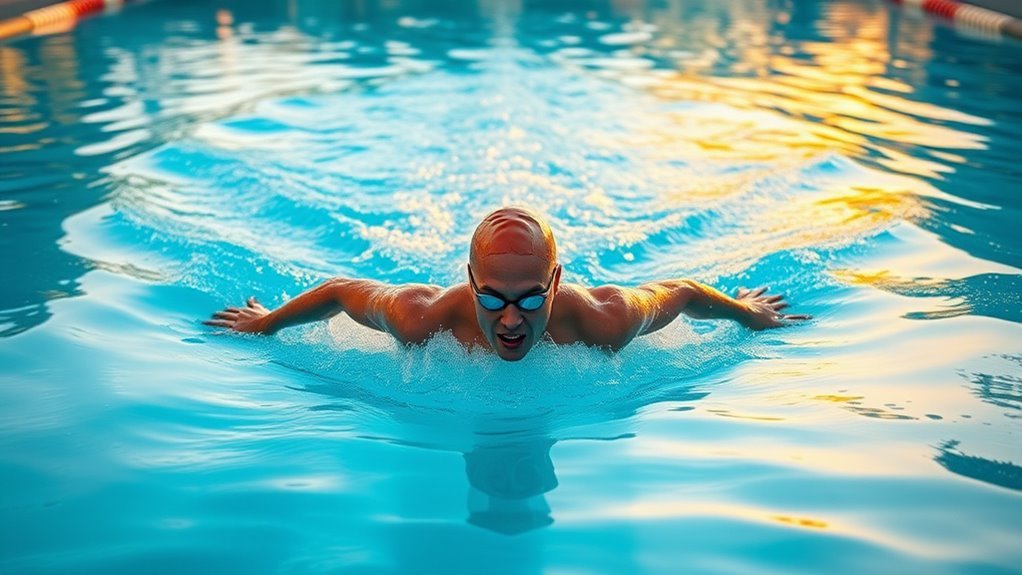
How long it takes you to swim a mile really depends on your experience and fitness. Beginners usually take 40–60 minutes, while intermediate swimmers often finish between 30 and 40 minutes. Competitive swimmers can complete a mile in as little as 15–22 minutes.
Your technique, endurance, and the pool environment also play big roles. With focused practice and pacing, you can improve steadily. If you’re curious, there’s plenty more to explore about boosting your mile swim time.
Average Time to Swim a Mile for Beginners
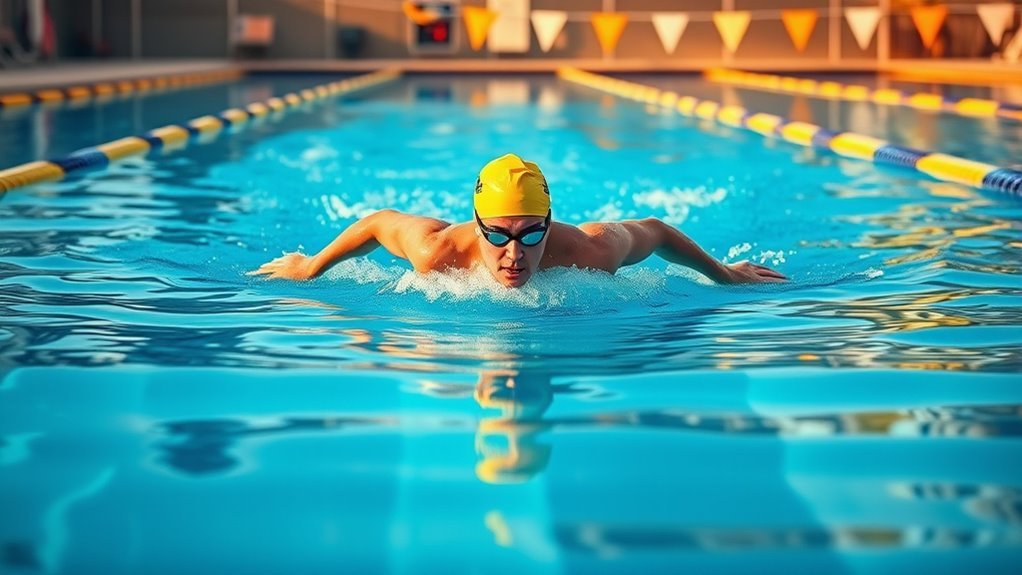
How long does it take you to swim a mile if you’re just starting out? For most beginners, completing a mile in the pool usually takes between 40 to 60 minutes. Your pace depends on your fitness level, swimming technique, and how comfortable you feel in the water.
You might find yourself pausing frequently to catch your breath or adjusting your strokes to maintain energy. Don’t worry if you’re on the slower side at first; building endurance takes time. Focus on consistent practice rather than speed, and you’ll see gradual improvement.
Intermediate Swimmers’ Mile Time Benchmarks

Once you’ve built a solid foundation, you’ll likely swim a mile in about 30 to 40 minutes as an intermediate swimmer.
At this stage, you’ve improved your technique and endurance, allowing you to maintain a steady pace without excessive fatigue.
You’ll notice your stroke becomes more efficient, and breathing patterns more controlled, helping you conserve energy throughout the swim.
Depending on your training frequency and intensity, you might edge closer to the 30-minute mark.
It’s common to swim at a pace of roughly 1:30 to 2:00 per 100 yards, balancing speed with stamina.
Remember, consistency is key. Regular practice will gradually lower your mile time.
Focus on refining your form and building aerobic capacity to see steady progress.
Competitive Swimmers’ Mile Swim Times

Although competitive swimmers train rigorously, you’ll find their mile times considerably faster, often ranging between 15 and 22 minutes. If you’re aiming to gauge where you stand or set goals, here’s what you can expect:
Competitive swimmers typically complete a mile between 15 and 22 minutes, reflecting their rigorous training and skill.
- Elite swimmers can finish a mile in about 15 to 17 minutes, showcasing exceptional speed and endurance.
- Strong age-group competitors typically clock between 18 and 20 minutes, reflecting well-developed technique and stamina.
- Competitive but less experienced swimmers usually complete the mile in 20 to 22 minutes, still demonstrating solid performance.
When you watch these times, remember that consistent training and technique refinement will help you improve.
Use these benchmarks to challenge yourself and track your progress as you dive deeper into competitive swimming.
Factors Affecting Your Mile Swim Time
Competitive swimmers set impressive mile times, but your own results will vary based on several key factors. Your fitness level, swimming technique, and experience all play significant roles in how quickly you complete a mile. Environmental conditions like pool length and water temperature also impact your swim time.
Understanding these factors helps you set realistic goals and track your progress effectively.
| Factor | Impact on Time | Why It Matters |
|---|---|---|
| Fitness Level | High | Better endurance and strength |
| Technique | Moderate to High | Efficient strokes save energy |
| Pool Length | Variable | More turns in short pools slow you down |
| Water Temperature | Moderate | Affects muscle performance |
Keep these in mind as you work on your mile swim.
Tips to Improve Your Mile Swim Speed
If you want to swim a mile faster, focusing on technique and consistent training will make a big difference. Improving your speed isn’t just about swimming harder; it’s about swimming smarter.
Here are three tips to help you boost your pace:
- Refine Your Stroke: Work on a smooth, efficient stroke to reduce drag. Streamline your body position and ensure your hand enters the water cleanly.
- Build Endurance and Speed: Incorporate interval training with varied speeds. Alternate between sprinting and steady pacing to enhance your stamina and power.
- Optimize Breathing: Practice rhythmic breathing to maintain oxygen flow without disrupting your form.
Tracking Your Progress and Setting Goals
Tracking your progress helps you see how far you’ve come and keeps you motivated to reach your swimming goals. Start by recording your swim times after each session, noting distances, stroke counts, and rest intervals.
Monitor your swim times, distances, and strokes to stay motivated and track your progress effectively.
Use a swim app or a simple journal to track these details consistently. Setting specific, achievable goals is essential, whether it’s shaving off 30 seconds or increasing your distance.
Break down your ultimate mile goal into smaller targets, like improving your 100-meter splits.
Regularly review your progress to adjust your training plan and celebrate milestones, no matter how small.
This structured approach keeps your focus sharp and your motivation high, turning incremental improvements into lasting success in swimming your mile faster.
Frequently Asked Questions
What Are the Health Benefits of Swimming a Mile Regularly?
Swimming a mile regularly boosts your cardiovascular health, builds muscle strength, improves endurance, and enhances flexibility.
You’ll also reduce stress, burn calories, and support joint health, making you feel fitter and more energized overall.
How Many Calories Does Swimming a Mile Burn?
You burn about 400 to 700 calories swimming a mile, depending on your speed, stroke, and body weight.
Is Swimming a Mile Better Than Running a Mile for Fitness?
Swimming a mile is better for low-impact, full-body fitness, especially if you’re protecting your joints.
Running builds bone strength and cardiovascular endurance faster, but swimming offers a gentler, effective workout you’ll enjoy more often.
What Equipment Is Best for Swimming a Mile Comfortably?
You’ll want a comfortable swimsuit, a good pair of goggles to protect your eyes, and a swim cap to reduce drag.
Additionally, using a kickboard or fins can help improve your technique and make swimming a mile more enjoyable.
Can Swimming a Mile Help With Mental Health and Stress Relief?
Yes, swimming a mile can boost your mental health and relieve stress. The rhythmic movements and water’s calming effect help clear your mind, reduce anxiety, and release endorphins, making you feel happier and more relaxed afterward.
Conclusion
Swimming a mile is like steering your own personal river—sometimes steady, sometimes challenging, but always moving forward. Whether you’re just dipping your toes in or racing like a pro, every stroke brings you closer to your goal.
Remember, it’s not just about the time on the clock but the strength and rhythm you build along the way. Keep pushing, and soon you’ll turn that mile into your own flowing victory.
Understanding how long it takes to swim a mile can help set realistic goals and improve your technique. With consistent practice, your pace will improve, making the journey as rewarding as reaching the finish line.