How You Can Go Swimming Safely With a New Piercing
You can swim safely with a new piercing by following essential aftercare tips to prevent infection and promote healing. First, wait at least 4 to 6 weeks to let the piercing heal properly before swimming. Avoid swimming in lakes, hot tubs, and ocean water as these environments pose a higher risk of infection.
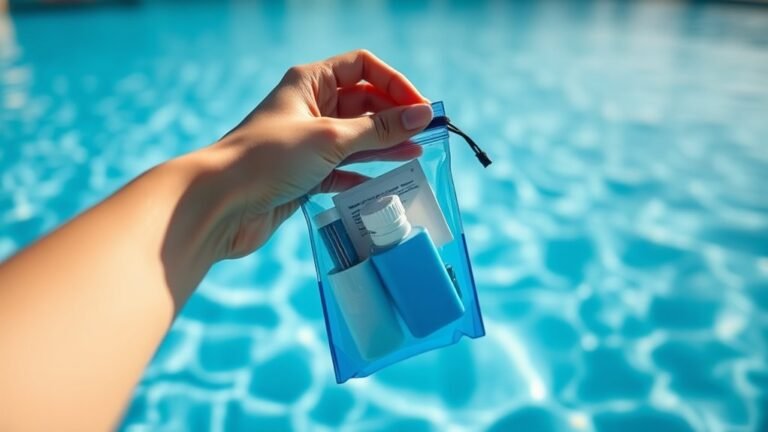
Use a waterproof cover to protect the piercing area when you do swim. After swimming, rinse the piercing gently with saline solution to remove any contaminants. Keep the area dry when you are not swimming to support the healing process.
Watch closely for signs of infection such as redness, swelling, or discharge. Do not remove the jewelry unless advised by a professional piercer or healthcare provider. By following these steps, you can protect your new piercing and enjoy swimming safely.
Discover more tips to ensure a smooth healing process and maintain your piercing’s health throughout the recovery period.
Understanding the Risks of Swimming With a New Piercing
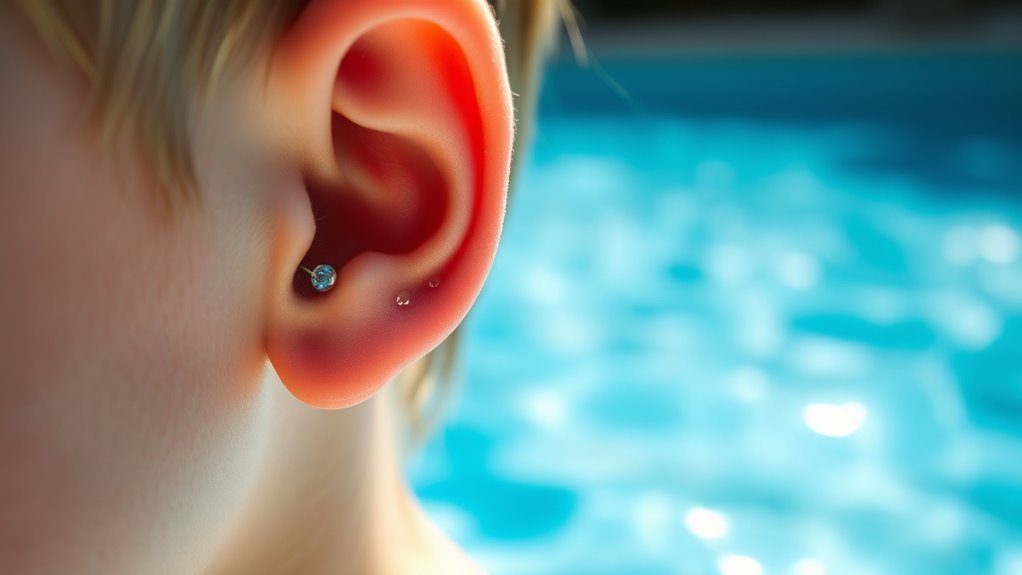
Although swimming can be invigorating, you should avoid it with a new piercing because it exposes the wound to bacteria and irritants. Pools, lakes, and oceans contain microorganisms that can easily infect an open piercing.
Avoid swimming with a new piercing to prevent exposure to bacteria and potential infections from water sources.
When your skin’s barrier is broken, these germs can cause redness, swelling, pain, or even serious infections. Chlorine and saltwater might seem clean, but they can irritate the sensitive tissue, delaying healing.
Additionally, water pressure and movement can agitate the piercing, increasing the risk of trauma or tearing. If you swim too soon, you might prolong discomfort and increase the chances of complications.
Protecting your new piercing means keeping it dry and clean until it’s fully healed, so you can avoid these risks and enjoy swimming safely later on.
Ideal Healing Time Before Swimming
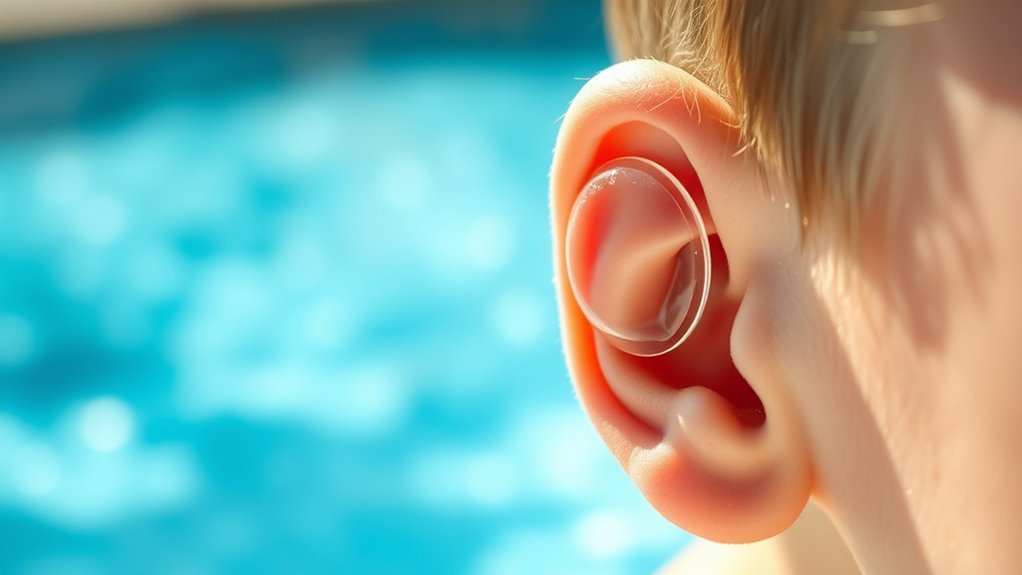
While every piercing and individual heals differently, you should generally wait at least 4 to 6 weeks before swimming with a new piercing. This healing period allows your skin to form a protective barrier, reducing the risk of infection from water exposure.
Keep in mind, some piercings like cartilage or tongue might take longer to heal, so listen to your body and follow your piercer’s advice.
If your piercing still feels tender, swollen, or shows signs of irritation, hold off on swimming.
Rushing the healing process can lead to complications that might require medical attention or even removal of the jewelry.
Prioritize proper aftercare during this time to guarantee a smooth recovery before you enjoy any water activities safely.
Types of Water to Avoid With a New Piercing
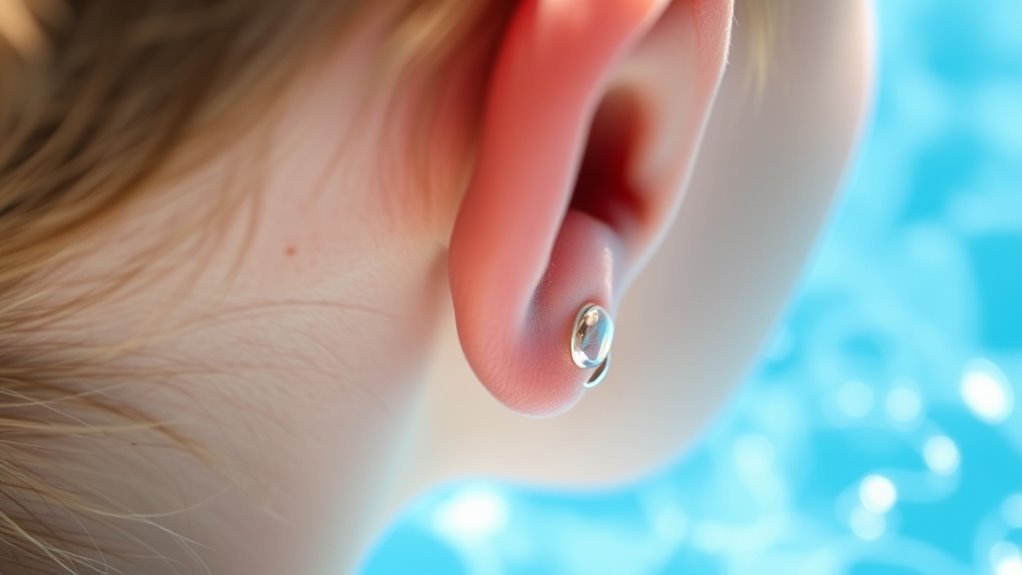
Since your new piercing is still healing, you should avoid exposing it to certain types of water that can harbor bacteria and irritants. Lakes and rivers often contain natural bacteria and pollutants that increase infection risk.
Avoid lakes and rivers during healing to prevent exposure to bacteria and pollutants that can cause infection.
Similarly, hot tubs and jacuzzis, with their warm temperatures and chemical imbalances, can irritate your piercing and delay healing. Avoid swimming pools if they’re not properly chlorinated, as the chlorine can irritate sensitive tissue.
Ocean water might seem clean, but it carries salt and microorganisms that can cause discomfort or infection when your skin is vulnerable. Stagnant water, like ponds or puddles, poses the highest risk due to bacteria buildup.
To keep your piercing safe, stick to clean, well-maintained environments and avoid any water sources that might expose your healing skin to harmful bacteria.
Using Waterproof Covers and Bandages
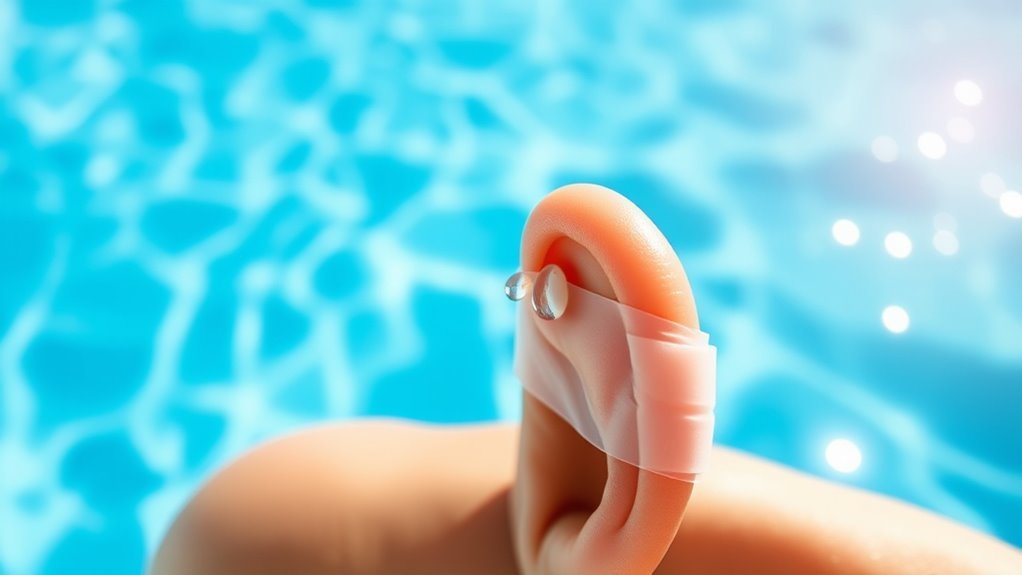
To protect your new piercing when swimming, you can use waterproof covers and bandages designed to keep water and bacteria out. These covers create a barrier, reducing the risk of infection by preventing direct contact with water.
Choose covers that fit snugly around the piercing to ensure no water seeps in. Change the bandage after swimming to maintain hygiene and avoid moisture buildup.
| Waterproof Cover Type | Best For |
|---|---|
| Silicone Covers | Small piercings |
| Plastic Film Wraps | Flat or surface piercings |
| Hydrocolloid Bandages | Sensitive or healing skin |
| Adhesive Bandages | Quick, temporary protection |
| Custom Molded Covers | Irregularly shaped areas |
Using the right cover helps you enjoy swimming while keeping your piercing safe.
Proper Cleaning Routine After Swimming
After swimming with waterproof covers or bandages in place, you’ll want to clean your piercing promptly to remove any lingering chlorine, salt, or bacteria. First, wash your hands thoroughly to avoid introducing germs.
Next, gently remove any coverings without disturbing the piercing.
Carefully take off any protective coverings, ensuring you don’t irritate or move your piercing.
Rinse the area with saline solution or a mild, fragrance-free saline spray to soothe and disinfect. Avoid using harsh soaps or alcohol, as they can irritate the healing skin.
Pat the piercing dry with a clean, disposable paper towel. Don’t rub, as this may cause irritation.
Repeat this cleaning routine twice daily, especially after swimming sessions, to promote healing and prevent infection.
Staying consistent with your cleaning will keep your piercing healthy and reduce complications during your swim recovery.
Choosing the Right Piercing Jewelry for Water Activities
When you’re planning to swim with a new piercing, choosing the right jewelry plays an essential role in protecting your healing skin. Opt for materials like surgical stainless steel, titanium, or biocompatible plastics, as they resist corrosion and minimize irritation.
Avoid cheap metals that can tarnish or cause allergic reactions when exposed to water. Make sure your jewelry has secure backs or closures to prevent it from slipping out during swimming.
Consider simple designs without intricate parts where bacteria or debris can hide. If you’re swimming in chlorinated pools or saltwater, these materials hold up better and reduce the risk of infection.
Choosing the right piercing jewelry helps maintain cleanliness and supports faster healing while you enjoy your time in the water safely.
Signs of Infection to Watch for After Swimming
Picking the right jewelry helps minimize infection risk, but you still need to watch for warning signs after swimming. If you notice redness that spreads beyond your piercing, swelling that worsens, or increasing pain, these could signal an infection.
Keep an eye out for unusual discharge, especially if it’s yellow or green and has a foul smell. Heat around the piercing site or persistent tenderness also suggests a problem.
Watch for yellow or green discharge, foul odor, heat, or tenderness around your piercing—these indicate potential infection.
Fever or chills are more serious signs and mean you should seek medical attention promptly. Early detection matters, so don’t ignore subtle changes.
If you spot any of these symptoms, clean the area gently and avoid submerging it further until you consult a professional. Staying vigilant helps you heal safely and enjoy swimming without setbacks.
How to Protect Your Piercing at the Beach
Although the beach offers an invigorating escape, its sand, saltwater, and sun can challenge your new piercing’s healing process. To protect your piercing, you’ll need to be extra cautious.
- Rinse your piercing with fresh water immediately after swimming to remove salt and sand that may cause irritation or infection.
- Cover your piercing with a waterproof bandage or protective patch to prevent direct contact with sand and bacteria.
- Avoid touching or twisting your piercing with sandy or unwashed hands, as this can introduce harmful germs and delay healing.
Tips for Swimming in Chlorinated Pools Safely
Just as saltwater and sand can irritate your new piercing at the beach, chlorinated pool water poses its own risks. Chlorine is a strong chemical that can dry out and inflame the delicate tissue around your piercing.
Chlorinated pool water, like saltwater and sand, can irritate and inflame new piercings.
To protect it, avoid submerging your piercing for long periods, especially during the first few weeks. Before swimming, clean the area gently with saline solution and dry it thoroughly.
Consider covering your piercing with a waterproof bandage to minimize exposure. After swimming, rinse your piercing with clean water and apply saline again to soothe and disinfect.
Avoid touching or twisting your jewelry while in the pool, as this can introduce bacteria. By taking these precautions, you help your piercing heal faster and reduce infection risks.
When to Consult a Professional Piercer or Doctor
If you notice persistent redness, swelling, or unusual pain around your new piercing, you should consult a professional piercer or doctor promptly. These signs may indicate an infection or improper healing that needs immediate attention to prevent complications.
Also, watch for any discharge that’s yellow or green, as this often signals infection. Don’t hesitate to seek advice if you experience fever or chills alongside piercing discomfort.
Here are three key situations to consult a professional:
- You see increasing redness, swelling, or warmth around the piercing site.
- The piercing produces foul-smelling discharge or pus.
- You feel systemic symptoms like fever, chills, or severe pain.
Taking action early helps ensure proper healing and reduces risks.
Frequently Asked Questions
Can Swimming With a New Piercing Affect My Tattoo Healing?
Yes, swimming with a new piercing can affect your tattoo healing by exposing both to bacteria and irritants, increasing infection risk.
You should avoid swimming until your piercing and tattoo are fully healed to protect your skin.
Are Saltwater Swims Better Than Freshwater for New Piercings?
Saltwater swims aren’t necessarily better for new piercings; the salt can help reduce bacteria but might irritate the skin.
Freshwater is gentler but can harbor bacteria. Avoid swimming until your piercing fully heals to stay safe.
Does the Type of Piercing Location Impact Swimming Safety?
Yes, the piercing location matters. Ear or nose piercings heal faster than cartilage or belly button ones.
Can Swimming Speed or Intensity Influence Piercing Healing?
Yes, swimming too fast or intensely can irritate your new piercing, increasing swelling or risk of infection.
Take it easy, avoid vigorous movements, and be gentle in the water to help your piercing heal properly and quickly.
Should I Avoid Certain Swimming Strokes With a New Piercing?
Yes, you should avoid swimming strokes that cause excessive friction or pressure on your new piercing. Gentle strokes like backstroke are better, while strong freestyle or butterfly moves might irritate and delay healing.
Conclusion
Swimming with a new piercing might seem harmless, but rushing in too soon can turn fun into infection. While the water invites you to relax, it also hides bacteria that threaten your healing. Waiting the ideal time before taking the plunge contrasts with the urge to dive right in.
By protecting your piercing and cleaning it properly afterward, you balance enjoyment with safety. This approach shows that patience now means healthier, happier swimming later. Remember, swimming safely with a new piercing requires care and attention to avoid complications and ensure proper healing.