How to Lower Alkalinity in Your Swimming Pool Step by Step
To lower your pool’s alkalinity, start by testing your water with reliable kits to know current levels. Maintaining proper alkalinity is crucial for a balanced swimming pool environment. Use muriatic acid or sodium bisulfate to reduce alkalinity safely—always wear protective gear.
Dilute acid in water, pour it slowly around the pool with the pump on, and wait 24 hours before retesting. Keep alkalinity between 80-120 ppm by testing regularly and maintaining proper filtration.
Follow these steps to keep your pool balanced and find out how to prevent future issues. Regular monitoring ensures a safe and enjoyable swimming experience.
Understanding Alkalinity and Its Impact on Pool Water
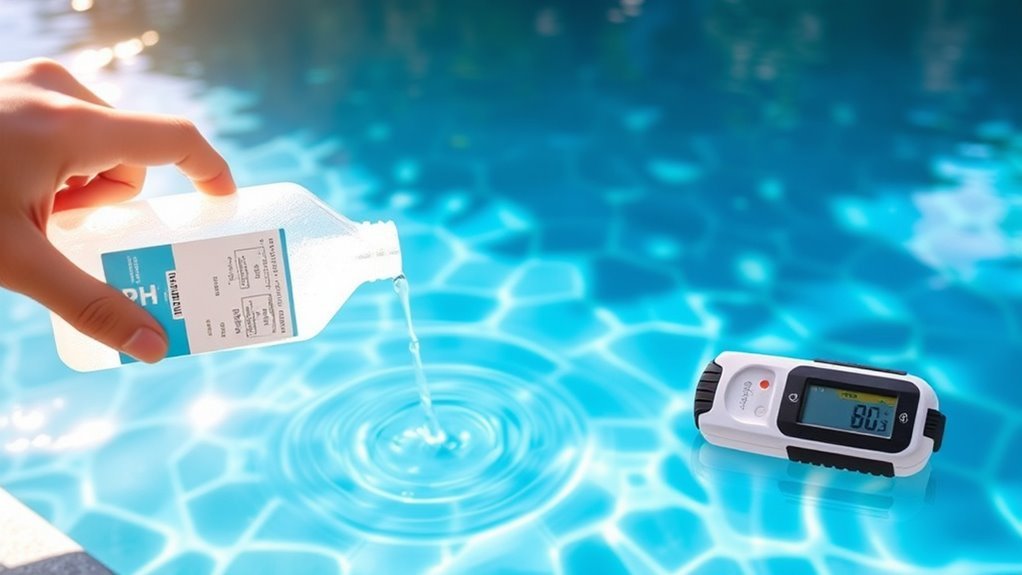
Although alkalinity might seem like a technical term, understanding it’s essential for keeping your pool water balanced. Total alkalinity refers to the water’s ability to neutralize acids, acting as a buffer that prevents rapid pH changes.
Total alkalinity acts as a buffer, stabilizing pool water and preventing sudden pH fluctuations.
When alkalinity is too high, your pool water can become cloudy, and chemicals won’t work as effectively. It can also cause scale buildup on pool surfaces and equipment, which leads to costly repairs.
On the other hand, low alkalinity makes your water acidic, increasing corrosion risks.
By grasping how alkalinity influences your pool, you’ll know why maintaining it within the ideal range is fundamental.
This understanding helps you take the right steps to keep your pool safe, comfortable, and inviting for swimmers all season long.
Testing Your Pool’s Alkalinity Levels
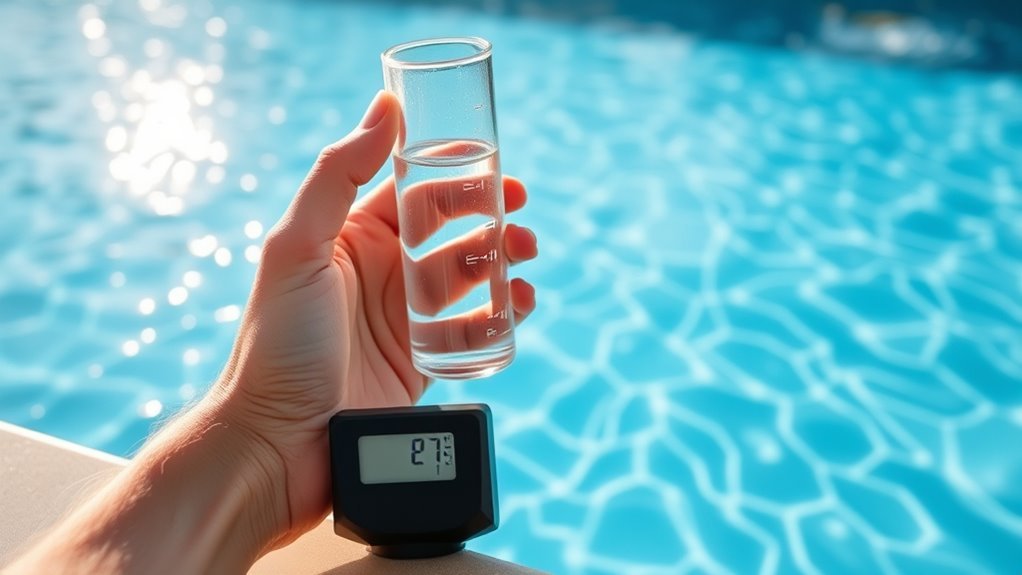
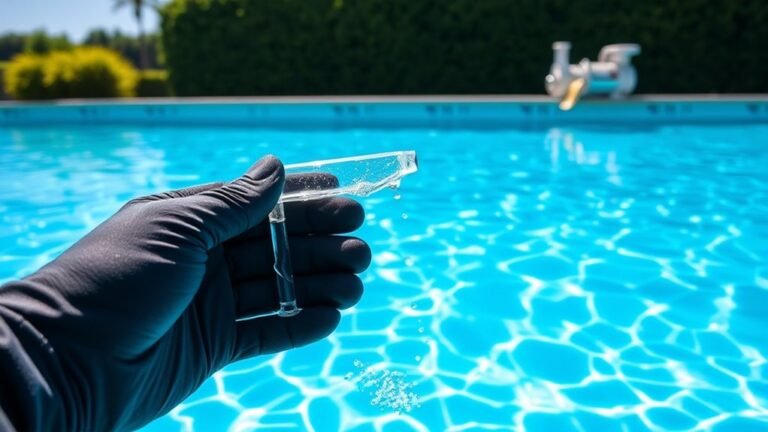
Now that you know why maintaining proper alkalinity matters, the next step is to measure it accurately. Testing your pool’s alkalinity ensures you take the right actions to keep water balanced and safe.
Here’s how to test it:
- Gather a test kit Use a reliable pool alkalinity test kit or test strips.
- Collect water sample Dip a clean container into the pool about 18 inches below the surface.
- Perform the test Follow the kit instructions carefully, adding reagents or dipping strips as directed.
- Read the results Compare the test colors to the chart provided to determine your pool’s alkalinity level.
Regular testing helps you spot imbalances early and maintain a healthy swimming environment.
Choosing the Right Chemicals to Lower Alkalinity
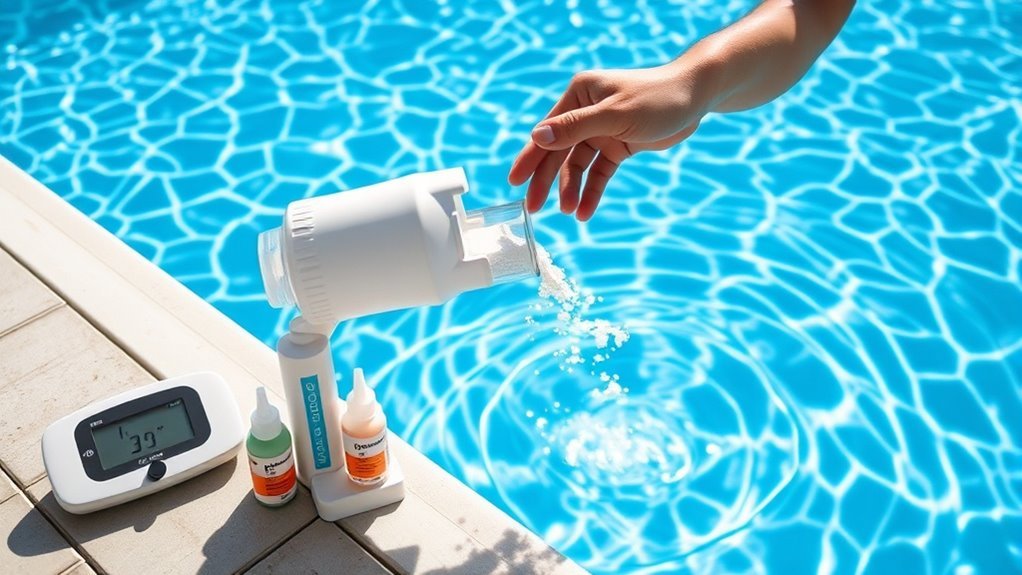
When your pool’s alkalinity is too high, you’ll need specific chemicals to bring it back into balance effectively. The most common choice is muriatic acid or sodium bisulfate, both of which lower alkalinity by neutralizing excess carbonate and bicarbonate ions.
You’ll want to pick the one that suits your handling comfort and pool type. Muriatic acid is powerful but requires careful handling, while sodium bisulfate is safer and easier to store.
Avoid using plain vinegar or other household acids—they’re not strong enough for pool maintenance.
Also, never mix chemicals; always add them separately to your pool water. Choosing the right chemical ensures you lower alkalinity without affecting other water parameters, keeping your pool safe and comfortable for swimmers.
How to Add Acid Safely to Reduce Alkalinity
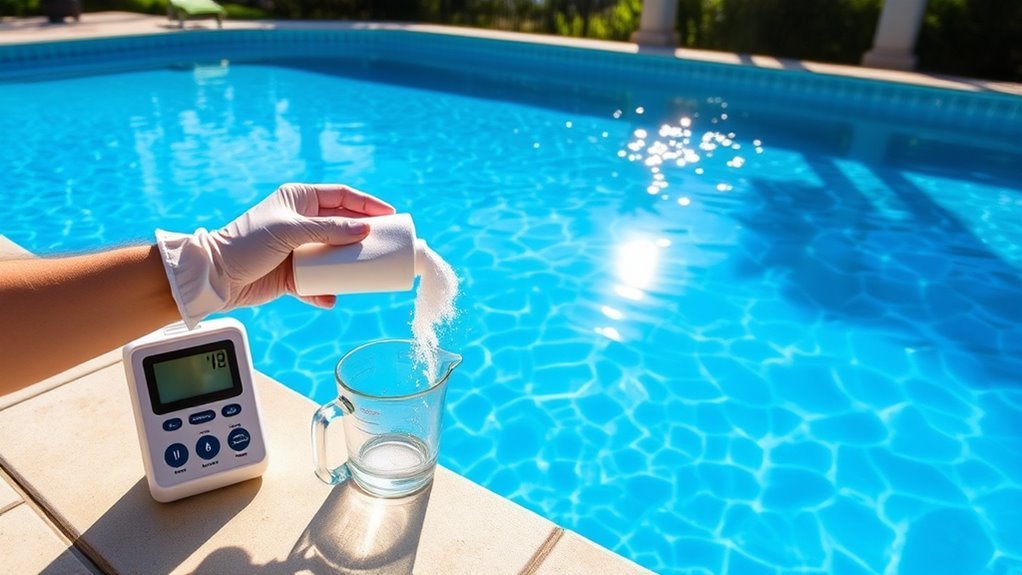
Since adding acid to your pool requires caution, you should always wear protective gear like gloves and goggles to prevent injury.
Follow these steps to add acid safely and effectively:
- Dilute the acid by slowly mixing it with water in a clean bucket, never the other way around, to prevent splashes.
- Add the diluted acid slowly around the pool’s perimeter while the pump is running to ensure even distribution.
- Avoid direct contact with the pool surface and equipment to prevent damage.
- Keep children and pets away during the process to ensure their safety.
Monitoring and Retesting After Treatment
How often should you check your pool’s alkalinity after adding acid? You should test it 24 hours after treatment to allow the acid to fully circulate and react. This gives you a clear picture of the new alkalinity level.
If it’s still high, you may need to add more acid, but always do so gradually.
After the initial 24-hour check, retest every few days until your alkalinity reaches the target range, typically between 80 and 120 ppm.
Keeping a consistent testing schedule helps you avoid overcorrection.
Use a reliable test kit or strips to get accurate readings.
Monitoring frequently ensures your pool stays balanced and safe, preventing damage to equipment and discomfort for swimmers.
Preventing High Alkalinity in the Future
To keep your pool’s alkalinity in check, you’ll want to establish a regular maintenance routine that includes frequent testing and careful chemical balancing. Preventing high alkalinity starts with consistency.
Here’s how you can stay ahead:
- Test your pool water at least twice a week to catch any changes early.
- Adjust pH and alkalinity levels gradually using recommended chemicals, avoiding overcorrection.
- Use fresh water for refills and backwashing to prevent mineral buildup that raises alkalinity.
- Keep your filtration system clean and functioning well to maintain proper water circulation and chemical distribution.
When to Call a Professional for Help
If you notice persistent high alkalinity despite your best efforts, it’s time to call a professional. Sometimes, the issue can stem from complex water chemistry or hidden factors like source water quality that require expert analysis.
You might also need professional help if you’re unsure about handling strong acids safely or if previous treatments haven’t worked. Experts can perform detailed testing, recommend precise chemical adjustments, and ensure your pool’s balance is restored without damaging equipment or surfaces.
Don’t wait too long. Prolonged high alkalinity can cause scaling, cloudy water, and damage to your pool’s filtration system. Calling a professional ensures your pool stays safe, clean, and enjoyable, saving you time, effort, and potential costly repairs down the line.
Frequently Asked Questions
Can High Alkalinity Affect Pool Equipment Longevity?
Yes, high alkalinity can harm your pool equipment by causing scale buildup and corrosion.
You’ll want to keep it balanced to protect pumps, filters, and heaters, ensuring they last longer and work efficiently.
Does Lowering Alkalinity Impact Chlorine Effectiveness?
Think of alkalinity as the pool’s shield; lowering it can make chlorine work harder, losing strength faster.
What Is the Best Time of Day to Adjust Alkalinity?
You should adjust alkalinity early in the morning or late evening when the sun’s less intense.
This helps prevent chemicals from evaporating quickly and guarantees they work effectively, giving you better control over your pool’s balance.
Can Natural Remedies Lower Pool Alkalinity Safely?
Think of your pool as a garden—natural remedies can be gentle rain, but they’re slow and uncertain.
You can’t safely rely on them alone; you’ll need precise chemicals to balance alkalinity effectively and protect your pool’s health.
How Does Alkalinity Interact With Ph in Pool Water?
Alkalinity buffers pH, so when you adjust alkalinity, pH changes less drastically.
If alkalinity’s too high, pH can spike unpredictably, making it harder for you to keep your pool water balanced and safe.
Conclusion
Did you know that keeping your pool’s total alkalinity between 80-120 ppm can prevent up to 70% of common water balance issues? By regularly testing and adjusting alkalinity, you’ll enjoy clearer, more comfortable water and protect your pool’s surfaces.
Just follow the steps to safely lower alkalinity when needed, and don’t hesitate to call a pro if things get tricky. Staying on top of this keeps your pool ready for endless fun!
Remember, maintaining the right alkalinity level is key to effective pool water balance and overall pool health. Lowering alkalinity correctly ensures your swimming pool stays clean, safe, and inviting all season long.